


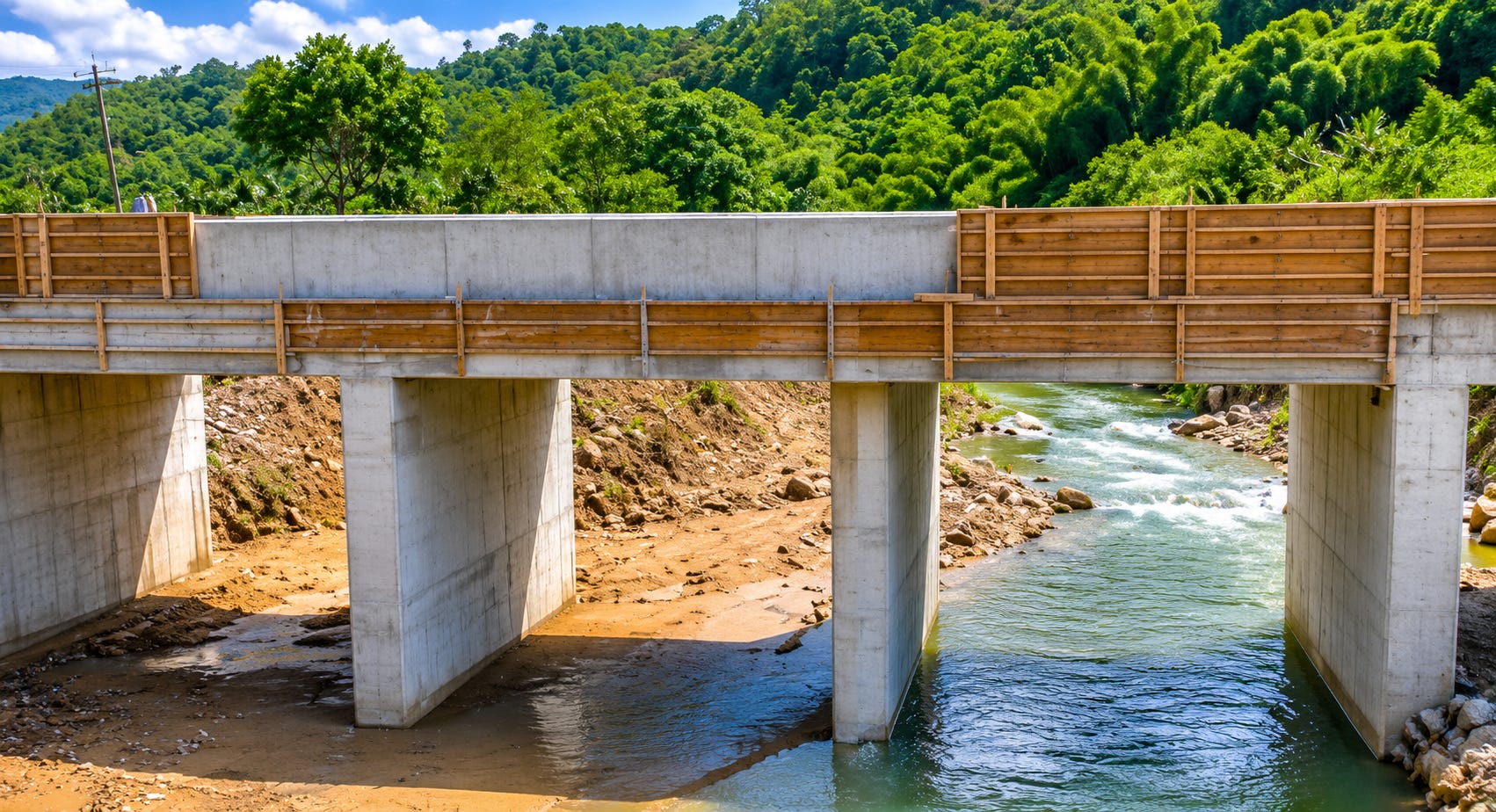
The Government’s decision to replace 55 bridges across Jamaica over the next 30 months signals one of the most significant infrastructure rebuilding efforts since Hurricane Melissa and highlights the increasingly important relationship between transportation networks, community resilience and long-term development.
The programme, recently approved by Cabinet, will see the majority of new bridge construction concentrated in western Jamaica, where several parishes experienced extensive damage during last year’s hurricane. The initiative follows the official opening of the new $230 million Troy Bridge, which reconnects communities along the Troy to Oxford main road at the Manchester and Trelawny border.
While bridges are often viewed simply as transport infrastructure, their role extends far beyond moving vehicles from one side of a river to another. In many rural communities they determine whether residents can access schools, healthcare, employment opportunities and markets during periods of heavy rainfall and flooding.
Infrastructure and Development
The decision to prioritise Hanover, Trelawny, Westmoreland, St James and St Elizabeth reflects the scale of disruption experienced in western Jamaica during Hurricane Melissa. Damaged crossings left some communities isolated and exposed the vulnerability of ageing infrastructure that was often designed for weather patterns and traffic volumes very different from those experienced today.
Jamaica’s network of approximately 875 bridges includes structures built decades ago, with some dating back more than a century. Many were constructed at a time when vehicle traffic was lighter, rainfall events were less intense and climate resilience was not a design consideration.
The replacement programme therefore represents more than routine maintenance. It reflects a broader shift towards infrastructure that can withstand stronger storms, heavier flooding and the realities of a changing climate.
For communities across western Jamaica, reliable transportation links can influence everything from agricultural productivity to tourism development. Businesses depend on predictable access routes, while residents rely on roads and bridges for daily economic activity.
The Property Connection
Although the programme is primarily an infrastructure project, it also carries implications for land values, housing stability and future investment.
Areas with dependable road access generally attract greater development interest and experience stronger long-term property demand. Improved infrastructure can enhance connectivity between rural communities and urban centres, making previously overlooked locations more attractive for residential and commercial activity.
In Jamaica, where discussions around housing supply, rural development and economic growth increasingly intersect, infrastructure investment often lays the foundation for future construction and expansion.
The rebuilding effort may also provide reassurance to homeowners and investors concerned about climate vulnerability. Properties are not assessed solely on the buildings that sit upon them. The resilience of surrounding roads, drainage systems and bridges increasingly forms part of how communities evaluate long-term security.
Building for a Different Future
The bridge programme arrives at a time when governments throughout the Caribbean are reassessing infrastructure standards in response to more frequent extreme weather events.
What once qualified as adequate engineering may no longer be sufficient. Rising river levels, accelerated erosion and increasingly unpredictable weather patterns are forcing authorities to rethink how public infrastructure is designed and maintained.
The challenge is not simply replacing what existed before, but creating assets capable of serving communities for generations under very different environmental conditions.
That approach appears to be shaping Jamaica’s latest bridge investment strategy.
Looking Ahead
As construction begins across the island, the success of the programme will ultimately be measured not only by the number of bridges completed but by the resilience they provide.
For western Jamaica in particular, the project represents an opportunity to strengthen connections between communities, support economic recovery and reduce the likelihood that future storms will leave residents cut off from essential services.
In a country where infrastructure and development are closely linked, the rebuilding of bridges is also a reminder that resilience is not built only through homes and buildings. It is built through the networks that connect people to opportunity, safety and each other.