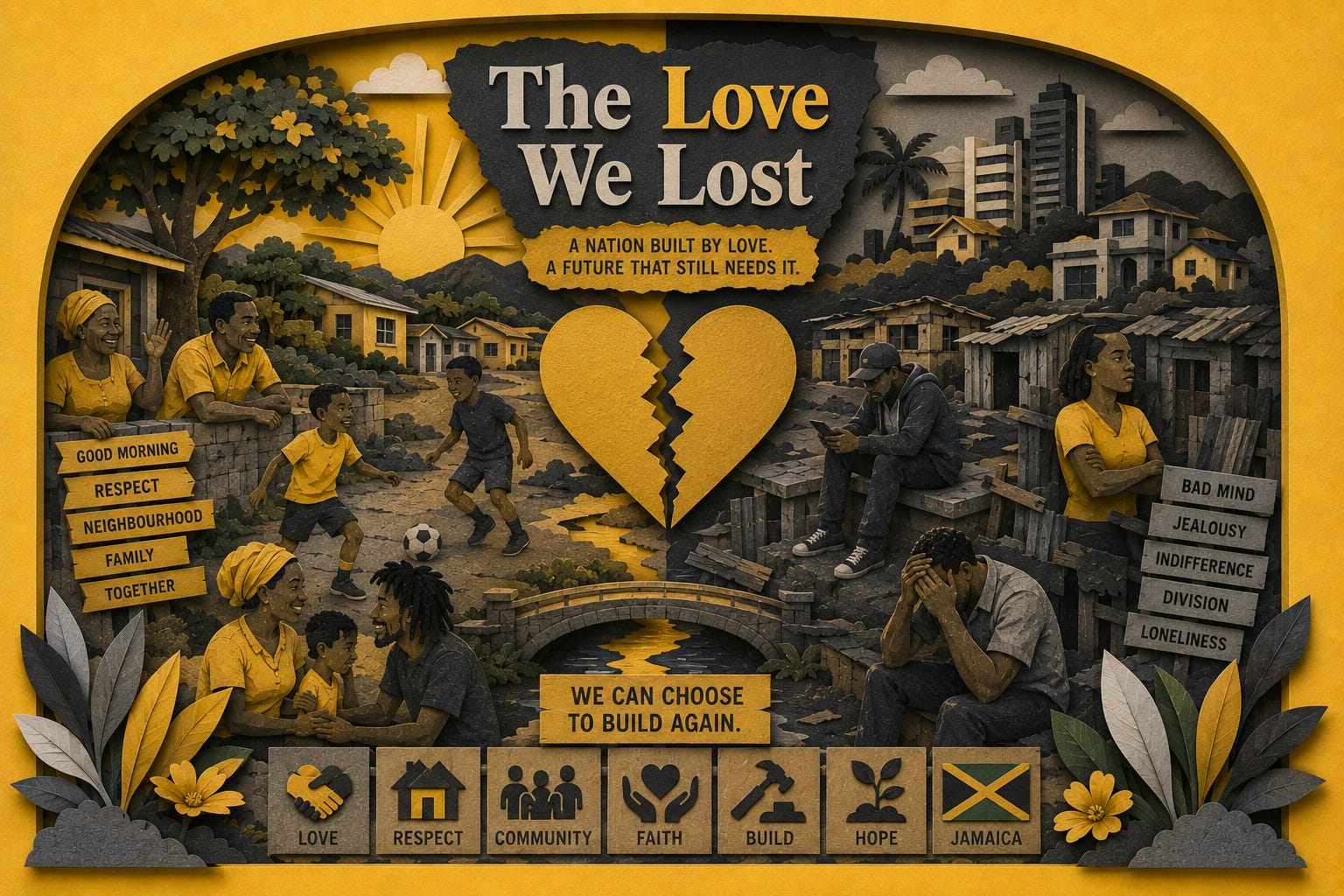
The Love We Lost
Jamaica built a global brand from struggle, faith, migration & survival. But in a harder world shaped by war, pressure & division, the country now faces a quieter question: can we still build together


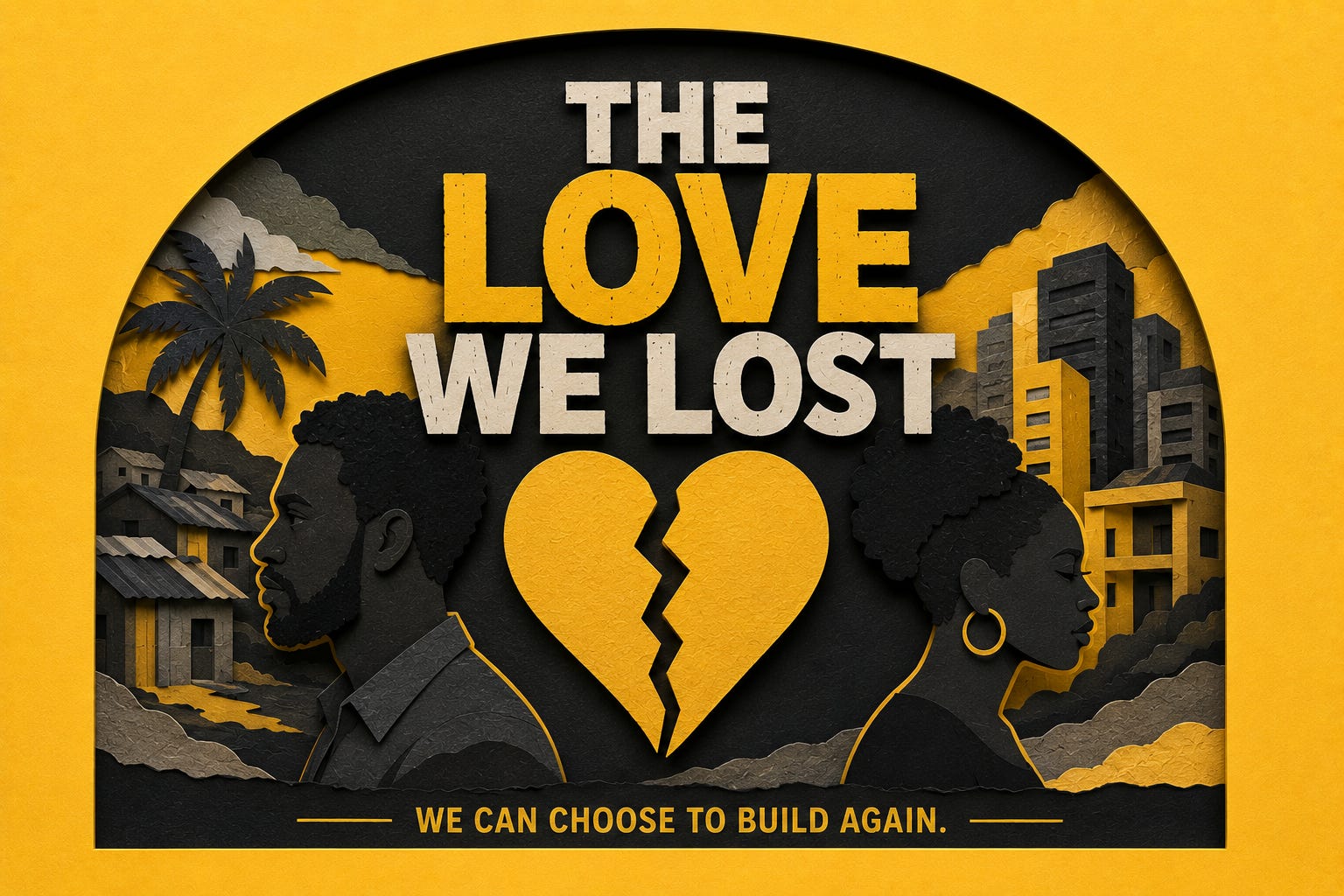
There was a time in Jamaica when people had very little, but somehow still had time for each other.
People spoke through zinc fences. Children played football in gullies and on dusty roads until dark. A neighbour might shout at you in the morning and still send over food in the evening. In communities marked by political violence, fear and poverty, there was still an odd and unmistakable sense of belonging. You could hear gunshots in the distance and still hear somebody say, “Mawnin” with warmth.
That contradiction has always existed here.
Jamaica has never been a simple place. This is an island born from conquest, slavery, rebellion, piracy, colonialism and survival. Morant Bay Rebellion did not emerge from comfort. Transatlantic Slave Trade did not leave behind soft societies. Port Royal was once called one of the wickedest cities on Earth.
So perhaps we should not pretend Jamaica was ever some peaceful paradise untouched by cruelty. Violence has long existed here. Political tribalism scarred entire communities during the 1970s and 1980s. In parts of Kingston and Spanish Town, colours alone could become death sentences. Families learned to stay indoors when tensions rose between supporters linked to the People’s National Party and the Jamaica Labour Party. Entire communities became politically fenced territories.
And yet, strangely, many Jamaicans still remember more humanity in those harder years than they sometimes feel today.
The country was poorer. Infrastructure was weaker. Opportunities were smaller. But there was often more community spirit holding things together.
Today Jamaica is more globally connected than at any other point in its history. We have smartphones, fibre internet, luxury developments, social media influence, foreign investment, global tourism brands, gated communities and expanding highways. But somewhere amid the growth, many people quietly ask the same question:
Where has the love gone?
Not romantic love. Social love. National love. Community love. The basic dignity people show each other in everyday life.
It is there in the way customer service can feel cold and impatient. It is there in hospitals where frightened people sometimes feel processed rather than cared for. It is there in workplaces where people are often viewed as disposable. It is there in real estate, business and politics, where success can attract resentment as quickly as admiration.
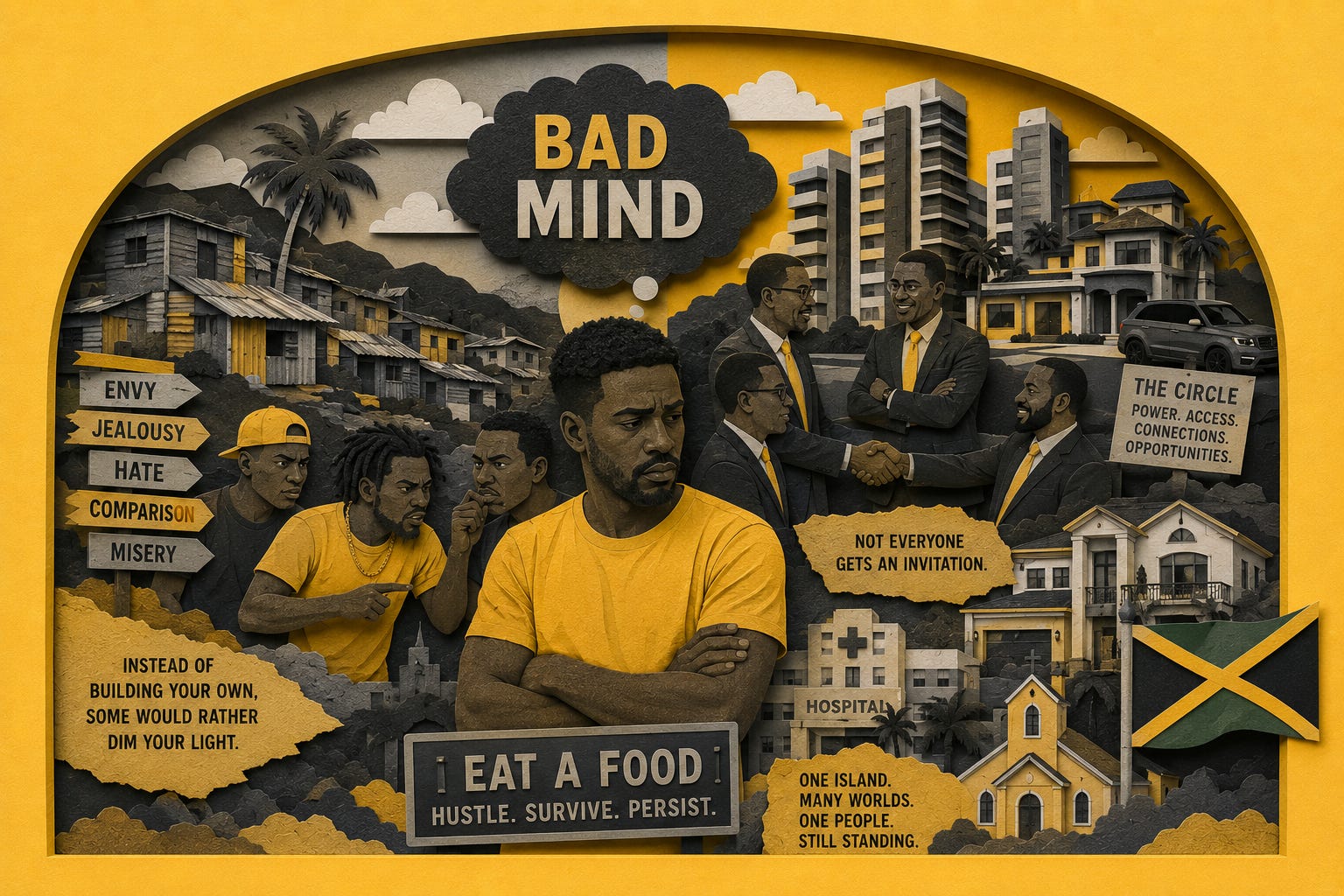
Jamaicans even have a phrase for it: bad mind.
It is one of the most recognisable cultural terms on the island and one of the hardest to explain abroad. It describes envy, but it is deeper than envy. It is the discomfort some people feel when they see others rising. It is the instinct to dim another person’s light instead of building your own.
And bad mind does not belong to one class.
It exists in poor communities and wealthy boardrooms alike. It can be found among struggling hustlers and among successful professionals who already have money, influence and security. Sometimes the person trying hardest to block your progress is not competing for survival at all. They simply do not want to see somebody else shine.
That reality shapes business in Jamaica more than many admit publicly.
In real estate, there are people who begin with powerful networks already built around them. Their customers are waiting before the business even opens. Their social circles feed opportunities directly into their hands. There is nothing inherently wrong with that. Many societies work this way. Communities support their own.
But for those outside the circle, the climb can be brutal.
The Jamaican phrase “eat a food” reflects survival economics. People hustle because they must. Some bend rules because the system itself often feels bent. Some become ruthless because they believe kindness is weakness in a competitive island economy.
This is not unique to Jamaica. United Kingdom has its own quiet forms of exclusion. United States has its own entrenched inequalities. Wealthy societies around the world often operate through invisible clubs, inherited privilege and unspoken pathways.
But Jamaica feels different because the island is so emotionally exposed. Everything is closer here. The divisions are visible. The contradictions sit side by side.
Extreme wealth beside zinc fences.
Luxury towers beside unfinished houses.
Tourist fantasies beside struggling public hospitals.
Christianity beside violence.
Warmth beside hardness.
And yet somehow the Jamaican identity still survives.
That may be one of the most extraordinary things about the island.
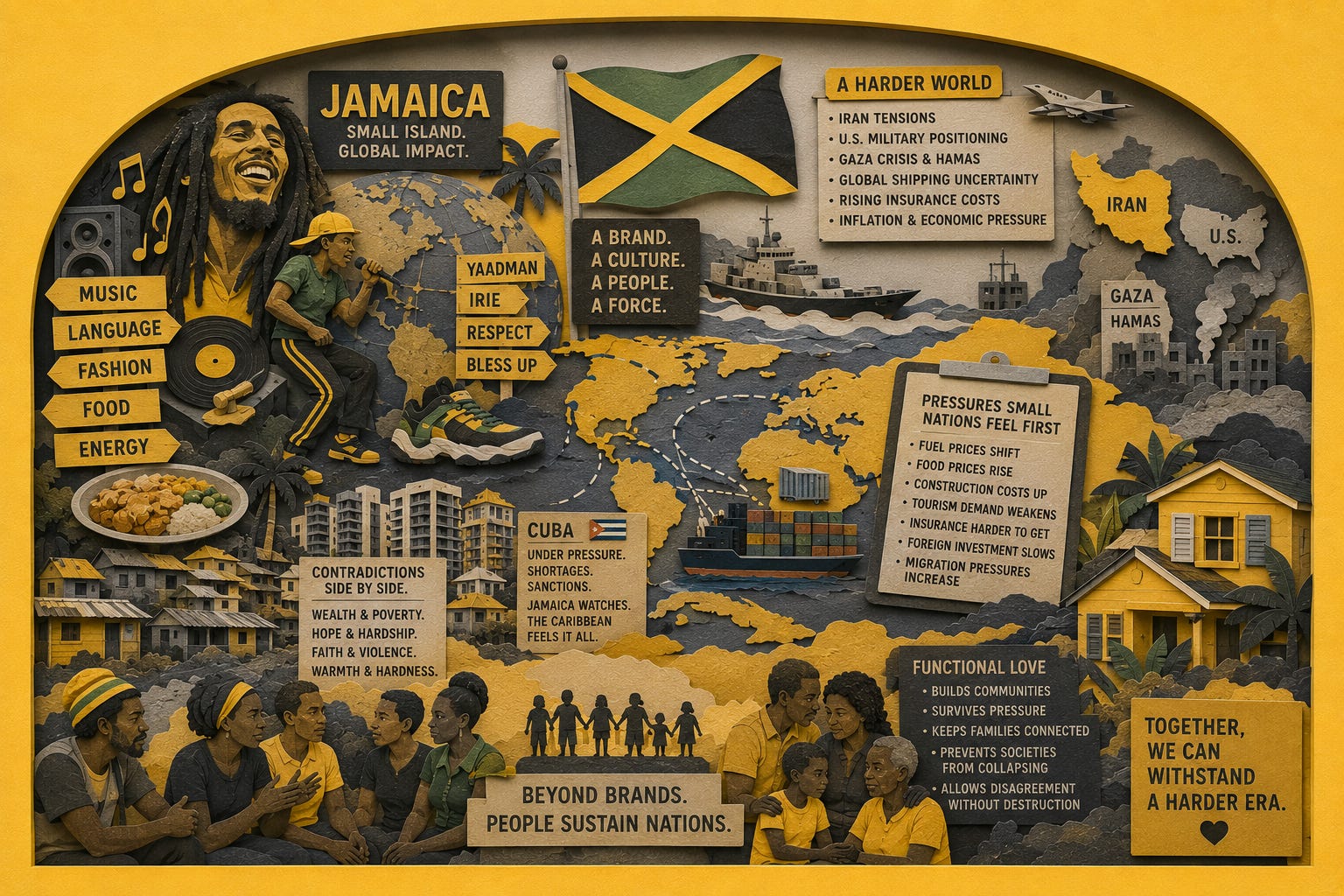
Jamaica remains one of the most culturally influential countries on Earth relative to its size. The music, language, fashion, food and energy of this small Caribbean nation continue to shape global culture decades after independence in 1962. Bob Marley became bigger than Jamaica itself. Dancehall travelled globally. Jamaican slang entered international vocabulary. The black, green and gold flag became a symbol recognised almost everywhere.
There is power in that.
But brands alone do not sustain societies.
People do.
And this is where the conversation becomes uncomfortable.
Because the modern world is becoming colder.
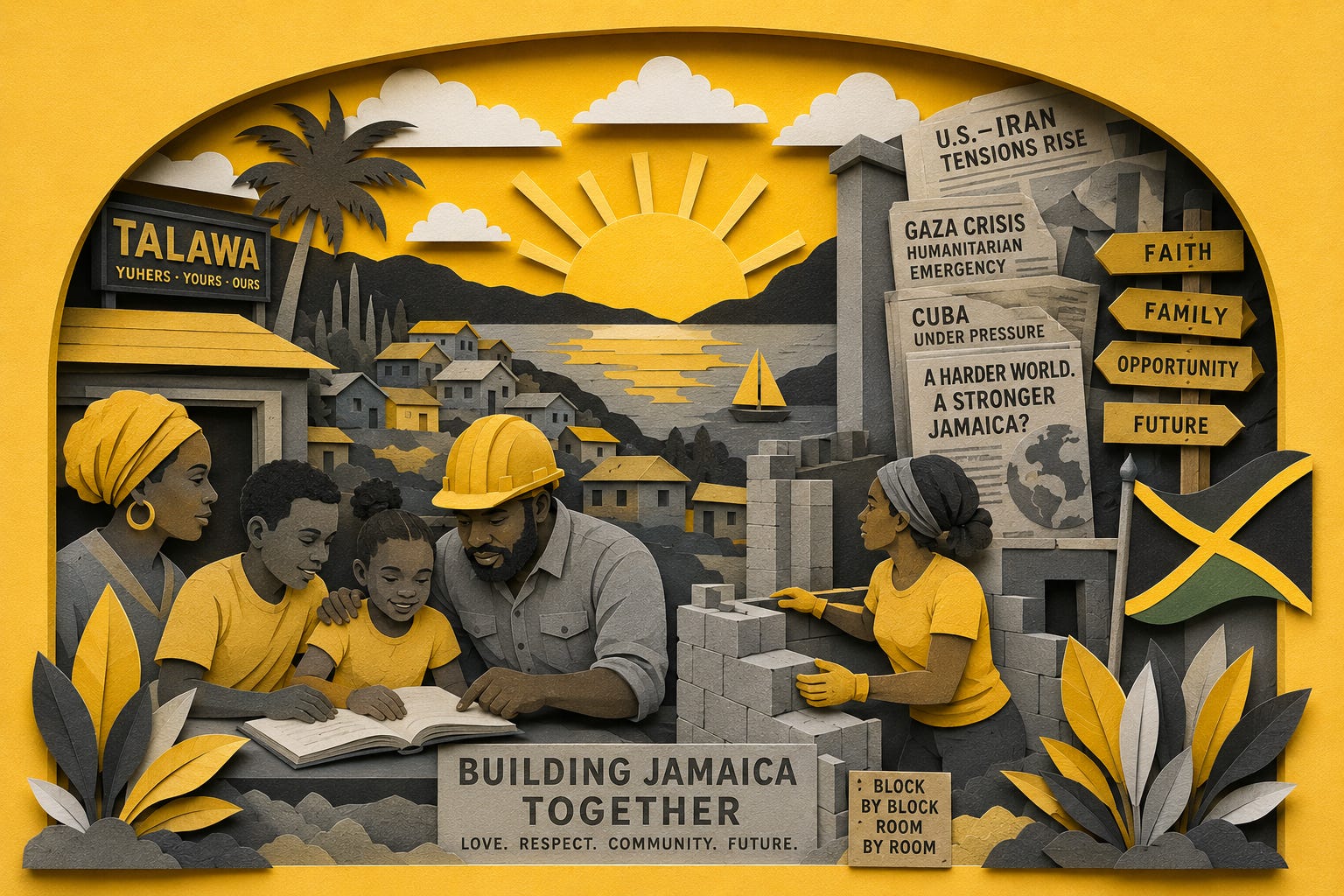
The geopolitical pressures now surrounding small countries like Jamaica are real. The ongoing tensions involving Iran, the military positioning involving the United States, the humanitarian crisis surrounding Gaza Strip and Hamas, the growing uncertainty in global shipping lanes, rising insurance costs, migration pressures and inflation are not distant television stories anymore.
Small island economies feel global instability quickly.
Fuel prices shift.
Food prices rise.
Construction materials become more expensive.
Tourism demand weakens.
Insurance becomes harder to access.
Foreign investment slows.
Migration pressures increase.
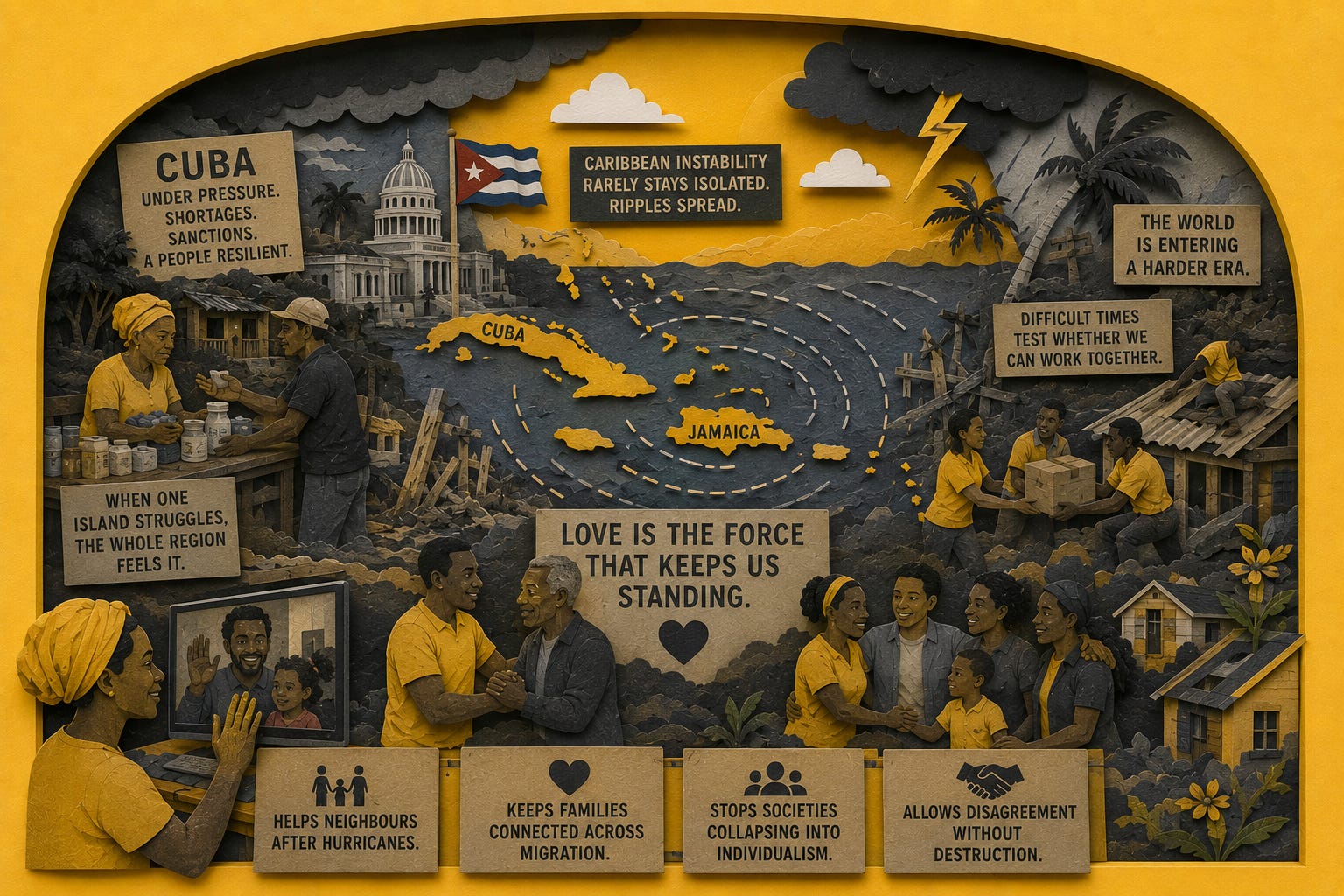
And nearby, Cuba continues to struggle under severe economic pressure, shortages and long standing sanctions. Jamaica watches closely because Caribbean instability rarely stays isolated. What affects one island often ripples across the region.
The world is entering a harder era.
And difficult eras test whether societies can actually work together.
This is why the conversation about love matters more than it first appears.
Not sentimental love. Functional love.
The kind that allows communities to survive pressure.
The kind that makes neighbours help each other after hurricanes.
The kind that keeps families connected across migration.
The kind that stops societies collapsing into complete individualism.
The kind that allows disagreement without destruction.
Because modern life increasingly rewards self promotion over community.
Social media encourages performance. Everybody becomes a personal brand. Everybody competes for visibility. Everybody sells an image. Everybody curates success. Meanwhile loneliness quietly expands beneath the surface.
Jamaica is not immune to this transformation.
The danger is that in chasing modernity, the island could slowly lose the very culture that made it globally magnetic in the first place.
One of the most important examples of that culture is hidden inside Jamaica’s housing traditions.
For decades, ordinary Jamaicans built homes room by room, block by block, year by year. A man might cast the foundation this year, put up walls two years later, add another room after migration money arrives from overseas, then finish the veranda years after that.
It is easy for outsiders to mock unfinished buildings across Jamaica. But those structures often represent resilience, sacrifice and intergenerational ambition.
A house in Jamaica is rarely just a house.
It is memory.
Inheritance.
Migration.
Status.
Survival.
Prayer.
Family.
Return.
In many ways, the unfinished house is Jamaica itself.
Still building.
Still becoming.
Still hoping.
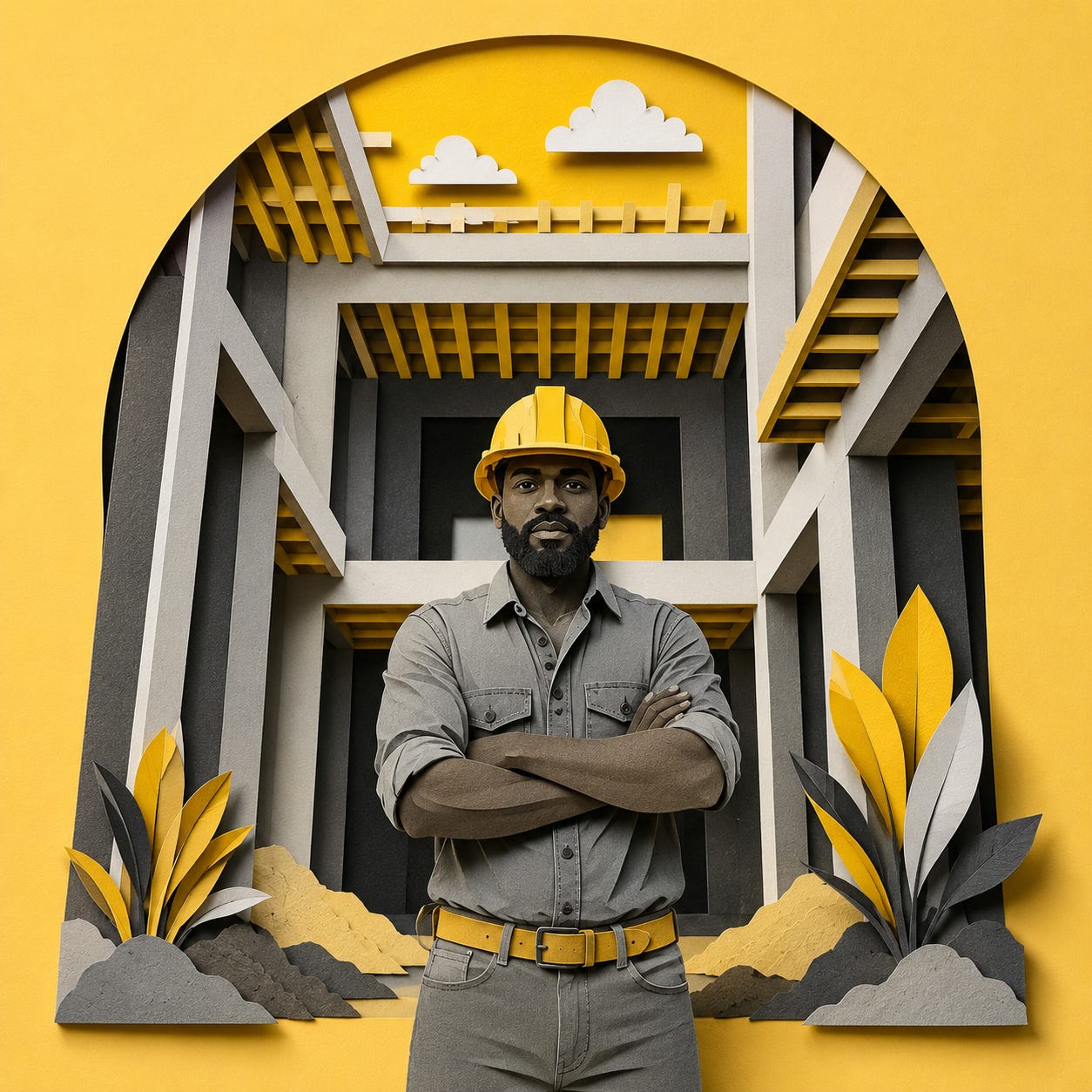
The challenge now is whether legislation, planning and investment can evolve to support that culture properly instead of ignoring it. If incremental building is deeply embedded in Jamaican life, then systems should adapt around that reality rather than pretending every citizen operates like a wealthy developer.
Support the people building slowly.
Help families secure titles.
Improve financing pathways.
Strengthen community planning.
Reduce corruption.
Expand infrastructure.
Protect ordinary people from predatory practices.
Do it properly.
Do it with dignity.
Do it with vision.
Because if Jamaica loses the ability for ordinary people to realistically build and belong, then something deeper than housing disappears.
A society without pathways eventually becomes a society without hope.
And that may be part of what some returning residents and investors quietly feel when they arrive.
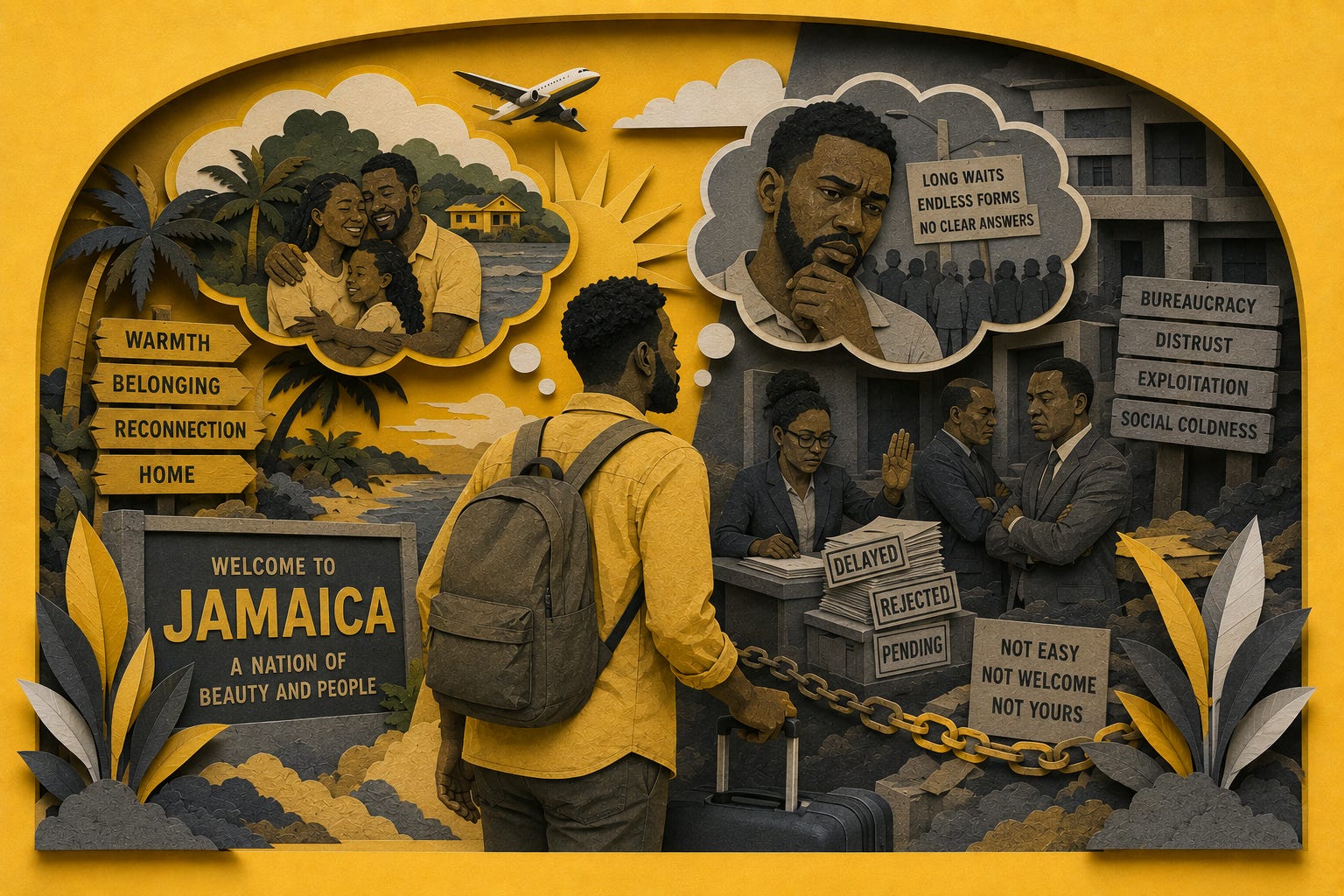
Many dream about Jamaica for years while abroad. They imagine warmth, belonging and reconnection. Then they encounter bureaucracy, distrust, exploitation or social coldness and begin wondering whether they truly belong after all.
That feeling is dangerous for a country so dependent on diaspora relationships, tourism and international goodwill.
Jamaica cannot survive only as a beautiful brand sold overseas. It must remain emotionally livable for the people inside it.
This is where faith also enters the discussion.
Jamaica still has one of the strongest visible Christian cultures in the Caribbean. Churches remain everywhere. Prayer remains woven into daily speech. Funerals, community meetings, political gatherings and family events still regularly invoke God.
Yet many people quietly sense a spiritual thinning beneath the surface.
Life moves faster now.
Attention spans shrink.
Families fragment.
Economic pressure consumes time.
Phones dominate silence.
People still go to church, but fewer seem deeply anchored by community itself.
And perhaps that is the deeper fear.
Not that Jamaica will lose its music or beaches or food or global image.
But that it may lose its spirit.
The spirit that once made poor communities feel rich in humanity.
The spirit that made strangers reason together.
The spirit that created laughter even inside hardship.
The spirit that carried generations through slavery, colonialism, migration and violence.
The future will demand more cooperation, not less.
Climate pressure is increasing. Economic shocks are intensifying. Migration patterns are changing. Technology is reshaping work. Artificial intelligence will disrupt industries globally. Small countries will need social cohesion to survive the decades ahead.
So the real question facing Jamaica is not simply economic.
It is moral.
Can the country still build together?
Can political tribes coexist without hatred?
Can successful people mentor instead of gatekeep?
Can communities support growth instead of fearing it?
Can the diaspora reconnect without suspicion?
Can Jamaica modernise without losing itself?
Those questions matter because the world outside is becoming more unstable, not less.
And in unstable times, nations either fracture or unite.
Jamaica has always somehow carried both the wicked and the wonderful together at the same time. That contradiction remains part of its identity. But perhaps the challenge now is deciding which side of ourselves we want leading the future.
The island still has extraordinary ingredients.
Talent.
Creativity.
Faith.
Global cultural influence.
Diaspora networks.
Natural beauty.
Survival instinct.
The question is whether enough collective will still exists to bind those ingredients together.
Maybe that sounds naive.
But most meaningful nations are built by people naive enough to believe things can improve.
Jamaica itself was built that way.