


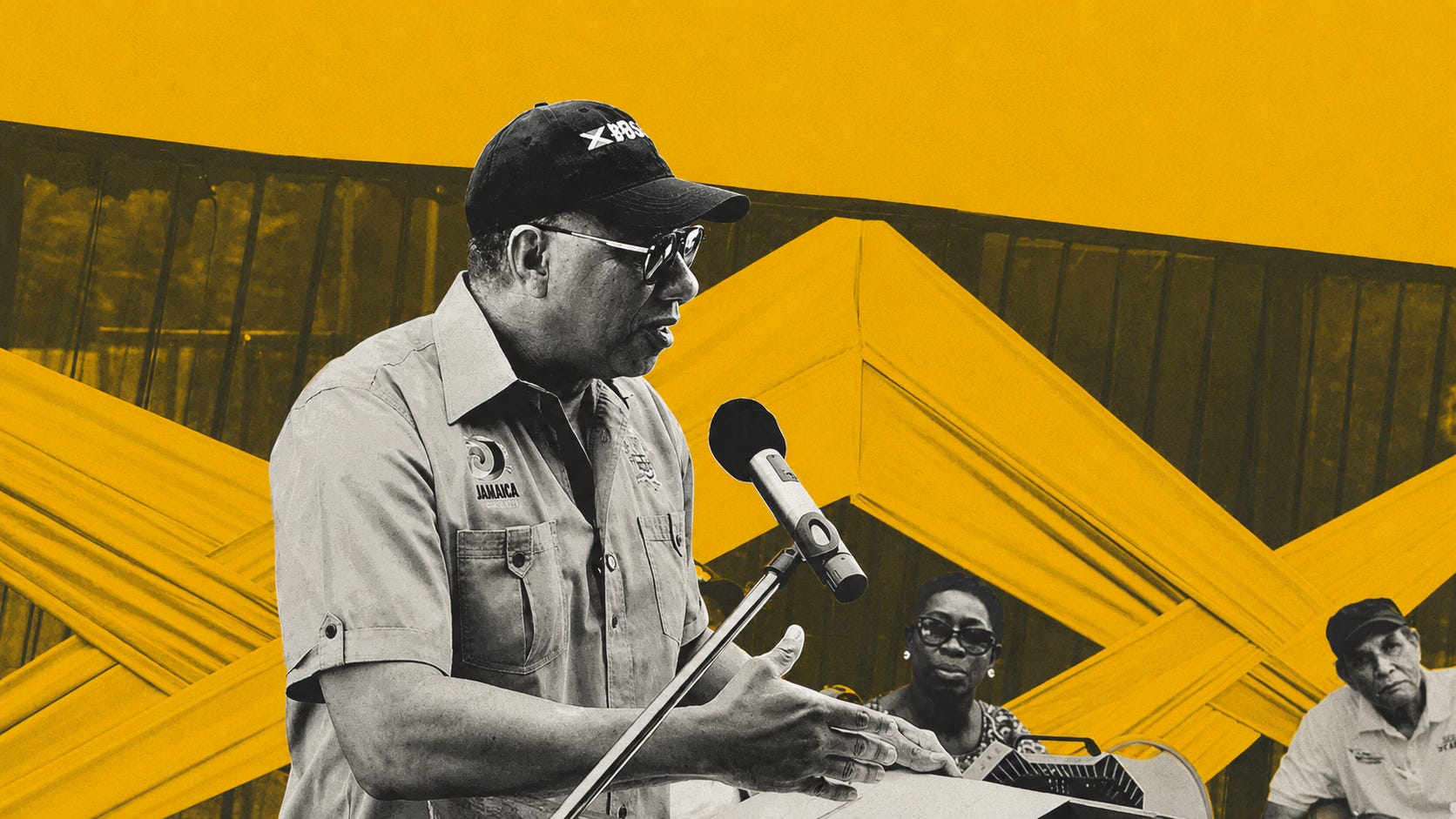
When Prime Minister Dr Andrew Holness handed over service lots to beneficiaries of the National Housing Trust’s Malvern development in St Elizabeth last week, his message was not really about land.
It was about patience.
In an era where social media often celebrates overnight success, luxury lifestyles and the appearance of wealth, the Prime Minister delivered a reminder that would have sounded familiar to many Jamaicans of previous generations: build what you can afford, build carefully, and build steadily.
For some, it may have sounded like simple advice. In reality, it touched on one of the most important questions facing Jamaica today.
How do ordinary Jamaicans build lasting wealth?
The answer is rarely glamorous.
It usually starts with something much less exciting than a luxury vehicle, an expensive vacation or a social media highlight reel. It often begins with a title, a piece of land, a foundation, and years of disciplined effort.
That may not make for viral content, but it has built countless Jamaican communities.
The handover of 27 serviced lots in Malvern represents something larger than a housing project. It reflects an important philosophy of development that has helped thousands of Jamaicans over the decades. Before a family can own a home, they often need a place to put one. Before a community can flourish, it needs roads, drainage, electricity and planning.
Those essentials are rarely celebrated, yet they are the framework upon which successful communities are built.
The Prime Minister was right to emphasise that a service lot is more than a parcel of land. It is an opportunity.
For many families, that opportunity may take years to fully realise.
Some beneficiaries will begin construction immediately. Others may spend years saving, planning and building in stages. There should be no shame in either approach.
In fact, incremental building has long been part of Jamaica’s housing story.
Across the island, countless homes have been constructed room by room, floor by floor and generation by generation. A foundation laid one year becomes a bedroom the next. A verandah appears a few years later. Eventually a family home emerges, not because of sudden wealth, but because of persistence.
That reality often gets overlooked in discussions about housing.
“We often talk about property prices, mortgages and development projects, but the real story of Jamaican homeownership has always been one of perseverance. Many of our strongest communities were not built overnight. They were built one sacrifice at a time.”
— Dean Jones
The Prime Minister’s remarks also touched on another truth that is frequently forgotten once the keys are handed over.
Owning a property is only the beginning.
Maintaining it is the real test.
Too often conversations about housing focus exclusively on acquisition. Yet every homeowner eventually learns that ownership comes with responsibilities. Roofs need repairs. Paint fades. Plumbing systems age. Driveways crack. Boundary walls deteriorate.
A property that is neglected eventually loses value, regardless of how attractive it once appeared.
This lesson is particularly relevant in Jamaica, where many families see property not only as shelter but as their primary store of wealth.
Unlike larger economies where wealth may be spread across stocks, retirement funds and investment portfolios, many Jamaican families hold a significant portion of their lifetime savings in land and housing.
The condition of that property therefore matters enormously.
A well-maintained home can support future generations.
A neglected one can become a financial burden.
This is why long-term planning is just as important as the initial construction budget.
Building within your means is not merely about completing a house. It is about ensuring you can sustain it.
That may sound obvious, but it is advice worth repeating.
There can be enormous pressure to build larger than necessary or to complete projects faster than finances comfortably allow. Yet financial strain has a way of turning what should be a source of security into a source of stress.
The strongest foundations are not always made of concrete. Sometimes they are made of realistic budgets and disciplined decision-making.
Perhaps one of the most significant points raised by the Prime Minister was his insistence that unsuitable lots should not be developed.
The decision to remove three lots from the original plan because of flooding concerns may not have pleased everyone, but it demonstrated something important.
Good development is not simply about creating more housing opportunities.
It is about creating the right housing opportunities.
Jamaica’s relationship with land has always required careful consideration. Geography, weather patterns, drainage systems and environmental realities all play a role in determining whether a location can support long-term residential development.
Ignoring those factors can create problems that last for decades.
The temptation to maximise every acre of available land can sometimes be strong. Yet responsible planning requires a willingness to acknowledge limitations when evidence demands it.
That approach ultimately protects homeowners.
After all, buying land is often one of the largest financial commitments a family will ever make.
People deserve confidence that their investment rests on sound planning rather than wishful thinking.
There is another aspect of the Prime Minister’s comments that deserves attention.
He spoke not only about individual properties but about communities.
That distinction matters.
Homeownership is frequently discussed as a private achievement. Yet communities succeed or fail collectively.
The appearance of a neighbourhood is shaped not only by individual homes but by the shared spaces between them.
Road verges, sidewalks, drainage channels, public spaces and community pride all contribute to property values and quality of life.
Anyone who has worked in real estate understands this reality.
Two identical houses can command very different values depending on the condition of the surrounding community.
People are not merely buying a house.
They are buying into an environment.
That is why community stewardship matters.
One person’s neglected frontage affects neighbouring properties.
One person’s pride can inspire an entire street.
In this sense, homeownership becomes something larger than ownership.
It becomes participation.
“The value of a home is measured by more than square footage. It is measured by the strength of the community around it and the opportunities it creates for the people within it.”
— Dean Jones
There is another encouraging aspect of the Malvern development that should not go unnoticed.
Nearly 70 per cent of the beneficiaries are women.
That statistic tells a story about changing patterns of ownership and economic participation in Jamaica.
Across the country, women continue to play an increasingly important role in property ownership, entrepreneurship and wealth creation.
Their growing presence among homeowners represents not just individual success but broader social progress.
Property ownership has long been recognised as one of the most powerful tools for economic empowerment.
It creates stability, supports family security and provides an asset that can be transferred across generations.
When more Jamaicans gain access to that opportunity, the benefits extend far beyond individual households.
Entire communities become stronger.
Yet while there is much to celebrate, the broader housing conversation in Jamaica remains complex.
Affordability continues to challenge many aspiring homeowners.
Construction costs remain elevated.
Financing can be difficult for younger buyers.
The dream of ownership often feels distant for those attempting to save while managing everyday expenses.
These realities cannot be ignored.
However, developments like Malvern demonstrate that progress is still occurring.
They remind us that the path to ownership is not always defined by large, completed houses. Sometimes it begins with something much smaller.
A title.
A plan.
A vision.
A commitment.
In many ways, the title itself may be the most significant asset.
A title transforms uncertainty into possibility.
It provides security.
It creates options.
It establishes a foundation upon which future decisions can be made.
And while a title alone does not build a house, it creates the conditions under which one can eventually be built.
Of course, land ownership can sometimes inspire grand dreams.
There is nothing wrong with ambition. Every homeowner imagines what their property might become.
The challenge is ensuring those dreams remain connected to practical realities.
After all, a house plan that belongs in Beverly Hills can become surprisingly expensive when introduced to a budget that belongs in Black River.
The humour hides an important lesson.
Sustainable development is rarely about impressing others.
It is about creating something durable, functional and financially manageable.
That philosophy may not attract headlines as easily as ambitious promises or grand announcements, but it has a much better track record of success.
As Jamaica continues to expand its housing stock and improve access to homeownership, that lesson deserves continued attention.
The country’s future will not be built solely by major developments, government programmes or private investment.
It will also be built by thousands of individual decisions made by ordinary Jamaicans.
Decisions to save.
Decisions to plan.
Decisions to maintain.
Decisions to invest in communities.
And decisions to think beyond the present moment.
Because at its heart, homeownership is not simply about today.
It is about tomorrow.
It is about creating something that outlives us.
It is about establishing roots that future generations can build upon.
That is why the image of a family receiving a service lot carries such significance.
It is not merely the transfer of land.
It is the transfer of opportunity.
And perhaps that is the most powerful message from Malvern.
A title may not be a house.
It may not provide immediate wealth.
It may not instantly solve every challenge facing aspiring homeowners.
But for many Jamaican families, it represents something just as important.
A starting point.
“The greatest wealth transfer often does not begin with cash. It begins with ownership, responsibility and a vision that stretches beyond a single generation.”
— Dean Jones
One lot.
One title.
One foundation.
One family at a time.
That is how communities are built.
And more often than not, that is how lasting wealth is created as well.