

After Hurricane Melissa: Jamaica Must Build Back Smarter, Stronger, and Together

By Dean Jones – Chartered Construction Manager, Project Manager, Surveyor, Realtor
Published October 31, 2025
A Nation Reshaped Overnight
When Hurricane Melissa tore through Jamaica with sustained winds nearing 185 mph, it wasn’t just another storm. It was a defining moment — one that has changed how we see our homes, our infrastructure, and our future as a nation.
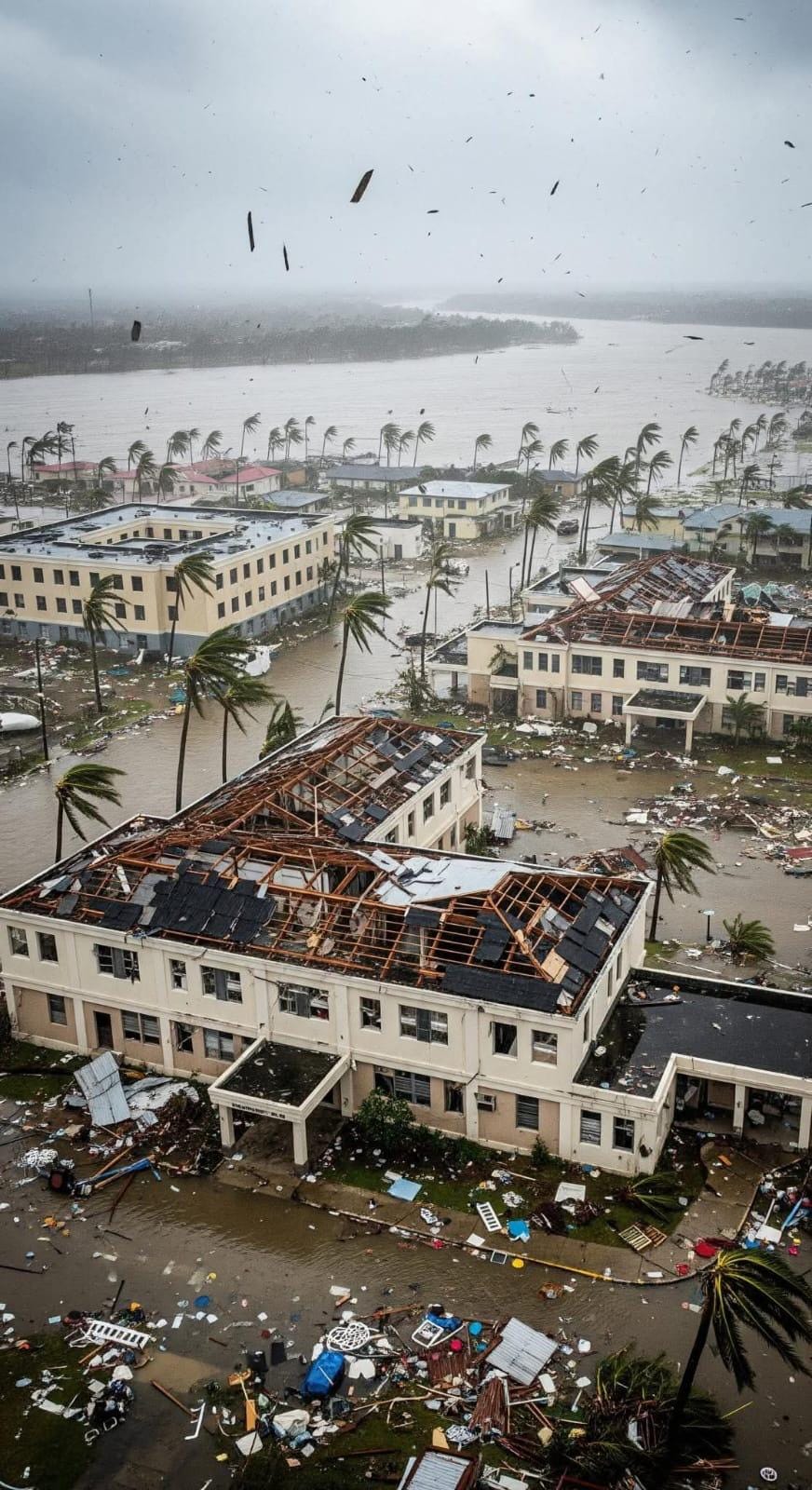
In areas like Westmoreland, Black River “ground zero”, and Treasure Beach, an estimated 80% of roofs are gone. Windows have been blown out, power lines twisted like vines, and entire communities left unrecognizable. The scenes resemble the aftermath of a war zone — as if a nuclear blast had erased what once stood proud. Families are homeless, many have lost loved ones, and countless Jamaicans remain without electricity or communication.
The scale of this destruction has brought Jamaica to a crossroads. We can rebuild the same way — vulnerable and unprepared — or we can finally choose resilience as our national blueprint.
A Personal Witness, A Professional Responsibility
Today, I stand among those trying to make sense of what’s left. During my live interview on CNN’s Isa Soares Tonight, I described what I saw outside my window and around Jamaica: blocked roads, collapsed trees, twisted metal, and homes ripped open.
“It was like a scene out of The Perfect Storm,” I said on air. “Just when you think it’s over, it gets worse.”
But beyond emotion, I spoke from a place of professional understanding. As a Chartered Construction Manager, Project Manager, Surveyor, and Realtor, I know the science behind what failed — and more importantly, what could have prevented it.
This disaster was not only about wind speed or rainfall. It was about the systems we haven’t built, the standards we haven’t enforced, and the lessons we haven’t applied.
The Hard Truth: We Build Vulnerability Into Our Homes
Too many homes across Jamaica remain unreinforced against hurricanes. In several parishes, houses were built decades ago without hurricane straps, proper foundation tie-downs, or modern roofing systems. Many of these structures were passed down through generations, loved but never upgraded — and Melissa exposed their weaknesses in seconds.
I have said this before and I’ll say it again: hurricane straps must become a legal requirement for all new construction and major renovations. These small metal connectors are inexpensive but life-saving. They tie roofs securely to walls and foundations, dramatically reducing the likelihood of catastrophic roof loss.
But that’s just one step. We must also ask hard questions about whether lightweight roofing materials are still viable in hurricane zones. Should certain communities — especially coastal ones — adopt reinforced concrete roofs as standard? The upfront cost is higher, but so is the cost of rebuilding every few years.
Reinforcing What Matters: Connectivity and Coordination
Resilience is not only about walls and roofs — it’s about connection. When Hurricane Melissa passed, mobile networks collapsed in many areas after the storm, not before. People who had credit couldn’t make calls; those with family abroad couldn’t check in.
It wasn’t the same everywhere — some regions held up better — but the pattern was clear: our communication systems are fragile when we need them most.
In a modern Jamaica, where digital transformation is government policy, no parish should be left in silence after a storm. Reliable connectivity must be treated as a national utility — as vital as water, roads, and electricity. Satellite redundancy, underground fiber resilience, and mobile tower reinforcement are not luxuries. They are lifelines.
The Economic Gap: Insurance and Inequality
There’s another reality many won’t talk about publicly: most Jamaicans are uninsured. The cost of property insurance in Jamaica is often ten to fifteen times higher than in the UK, putting it out of reach for average homeowners and returning residents.
So, when storms like Melissa strike, people rebuild out of pocket — brick by brick, paycheck by paycheck. This perpetuates inequality, slows recovery, and leaves thousands in emotional and financial distress.
We need a national dialogue about affordable disaster insurance, perhaps through public-private partnerships or cooperative housing models. If the financial system can innovate for credit cards and microloans, it can innovate for resilience too.
The Role of Government: Regulation and Implementation
The government cannot prevent hurricanes, but it can prevent avoidable losses. We must urgently review and enforce Jamaica’s building codes, ensuring that every new home meets wind-resistance standards. Municipal authorities must be trained and equipped to inspect, not just approve, projects.
We must also incentivize compliance — through tax breaks, lower permit fees, or housing grants for those who build to resilient standards. It’s not enough to say “build better”; we have to make it possible.
And while the spotlight is on construction, our communication networks deserve equal attention. Backup systems, emergency broadcast access, and redundancy planning should be written into policy — not discussed after each disaster.
A Nation in Mourning, But Also in Motion
We can’t ignore the human toll. Families have lost everything — homes, businesses, and in some cases, loved ones. Many remain displaced, sheltering with relatives or in temporary accommodation. The images from Black River are haunting — streets turned into rivers, rooftops peeled away, debris scattered like confetti after a catastrophe.
Yet amid the wreckage, Jamaica’s strength still shines. Communities are helping one another. Volunteers are clearing debris. Strangers are sharing food, water, and hope. That spirit of solidarity is the foundation we must build upon.
The Conversation Starts Now
We can no longer wait until the next storm to talk about resilience. The conversation must start now — about materials, standards, insurance, and technology. It must include government, the private sector, and every Jamaican who calls this island home.
“This is a huge blow to the economy,” I told CNN. “But it’s also a chance to learn and do better — to invest in smarter planning, sustainable design, and infrastructure that truly protects lives and livelihoods.”
As a professional who has worked across the UK and Jamaica — from the Palace of Westminster to Cranfield University — I know that true progress requires coordination and vision. We have the expertise. We have the capacity. What we need is unified action.
The next hurricane is not a matter of if, but when. Let Hurricane Melissa be the storm that changed how we build, how we connect, and how we protect.
We owe it to ourselves — and to the generations who will one day call this island home — to get it right.

Media or professional inquiries:
Dean Jones
Chartered Construction Manager | Project Manager | Surveyor | Realtor
+1 (876) 418-2524