


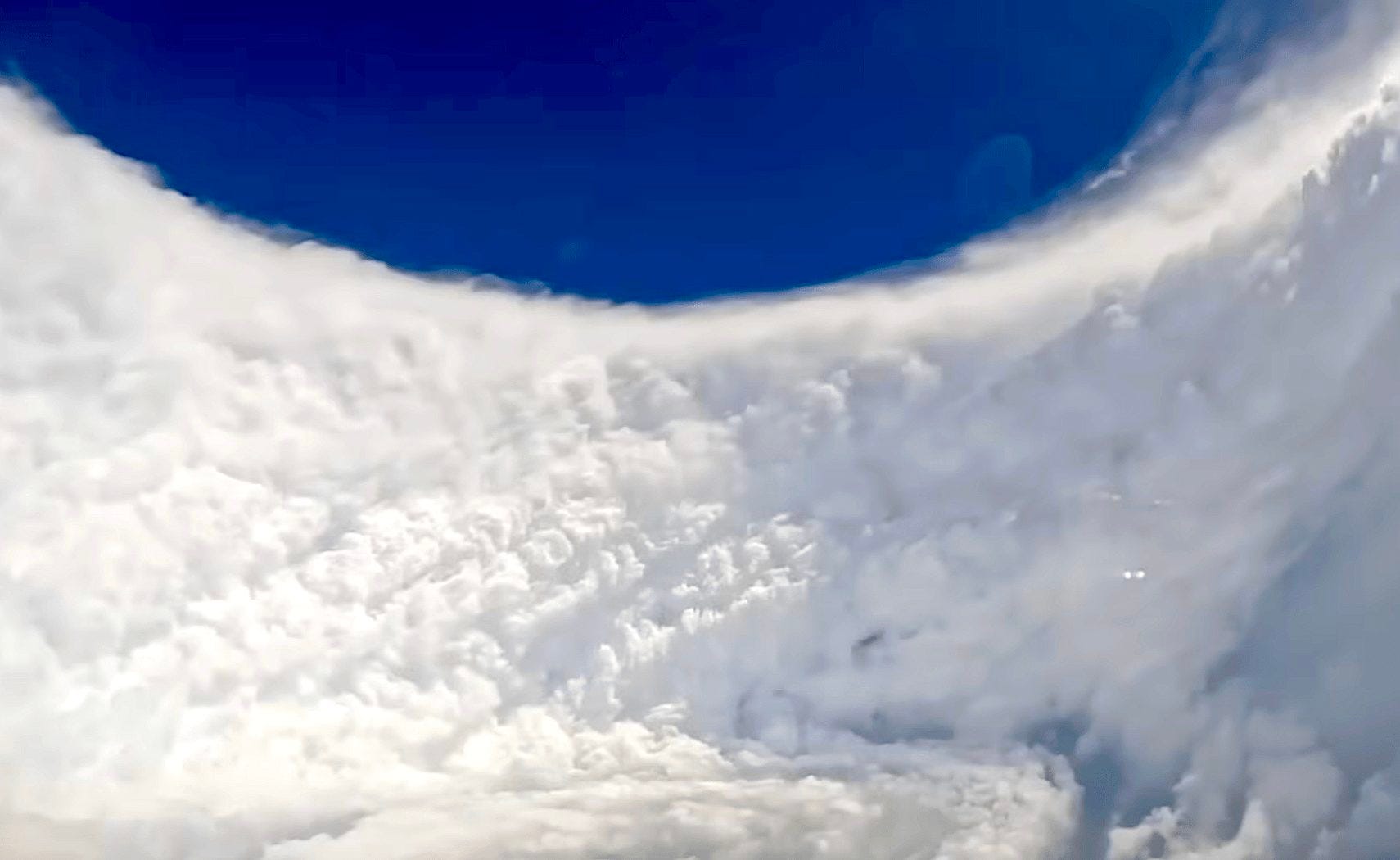
There are moments in a nation’s story when the landscape changes so suddenly, so violently, that the mind struggles to keep pace with the eyes. Hurricane Melissa was one of those moments—a storm that didn’t simply pass through Jamaica, but rearranged it, as if some giant, unseen hand decided to redraw the coastline, the farmlands, the future.
The headline numbers are staggering: USD $7 billion in damage—the equivalent of 30 to 40% of Jamaica’s GDP. To place that in perspective, it would be like the United States losing $8 trillion almost overnight. Economies aren’t built to absorb shocks like this, not in two days, not with this level of ferocity.
And yet here we are, taking account of what remains, what’s broken, and what can still be salvaged.
People are posting “Jamaica Strong” everywhere, holding the phrase up like a badge of honour. And yes, strength exists—woven into the culture, embedded in the people, etched into the land. But strength also has a price tag, and Hurricane Melissa has sent Jamaica the invoice.
This storm didn’t just destroy homes; it reset an economy. It changed the texture of the island—physically, emotionally, financially. Entire communities in St. James, Hanover, and Westmoreland now exist in a kind of suspended disbelief, as though they’re walking through the remnants of someone else’s disaster documentary.
The difference this time is that the damage is no longer abstract. It’s painfully measurable—laid out in broken roads, uprooted lives, and a national budget thrown into chaos.
The West: Where Familiar Places Became Unrecognisable
In the western parishes, the transformation is most jarring. Places that once felt permanent—anchored in memory—now look like sketches someone tried to erase and redraw in a hurry.
Montego Bay: When the Tourism Capital Goes Silent
The tourism corridors of Montego Bay are not merely scenic—they are the arteries that keep Jamaica’s economic heart beating. And for the first time in decades, those arteries have collapsed.
Hotels remain dark, silent shells.
Thousands of hotel workers woke up not just without power but without income.
Farmers who ordinarily supply the hotels—those who anchor the farm-to-tourism ecosystem—have lost entire harvest cycles.
Tourism in Jamaica is more than a holiday experience; it’s a lifeline. It funds schools, builds homes, pays for medicine, and underpins national development. To see it crippled in a matter of hours is to understand, viscerally, how climate events reach far beyond the shoreline.
The Rural West: St. Elizabeth, Westmoreland, Trelawny
Here, the damage reads like a catalogue of loss:
Roads sheared off their foundations.
Bridges collapsed like they were made of cardboard.
Entire livelihoods washed away in currents that were as relentless as they were unforgiving.
Recovery, for many, feels like a distant concept—something imagined and hopeful, but not yet tangible. Rural Jamaica always feels the brunt of national disaster twice: first from the storm itself, and then from the slow arrival of help.
Kingston: Power Restored, But At What Cost?
In Kingston, the lights are back on. Businesses are reopening. The pulse of the capital—always impossible to silence for long—has resumed. But beneath that hum is an uneasy truth: the cost of rebuilding will last for generations.
Kingston may stand upright more quickly, but it stands on the shoulders of a country buckling under the cost of recovery. The capital’s return to normality doesn’t diminish the scale of national trauma; it simply masks it.
There’s something almost haunting in the contrast:
Air-conditioners humming again in New Kingston.
Laptops glowing in office towers.
While across the island, parents are sweeping mud from bedrooms, farmers are staring at empty fields, and children are trying to understand why their school is no longer a building, but a memory.
Let that sink in:
USD $7 billion evaporated in 48 hours.
That’s not a repair bill—that’s a country’s future being rewritten mid-sentence.
A Region That Pays the Highest Price for the Lowest Emissions
There’s a cruel irony in all of this. The Caribbean emits less than 1% of global greenhouse gases, yet it routinely suffers the consequences of a warming planet more than almost anywhere else.
Climate events now strip away up to 8% of the region’s GDP every year. Imagine trying to rebuild a home while still paying the mortgage on the house that blew down last year. That’s the Caribbean’s reality. The compounding effect is not just financial—it’s cultural. It forces a rhythm of rebuilding into national identity.
Resilience, once a virtue, is beginning to feel like a burden.
When the world praises the Caribbean for “bouncing back,” it often fails to ask:
Why must they bounce so frequently? And at what cost?
Resilience Is Not Just a Story—It’s a Daily Ritual
In the days after Hurricane Melissa, what stays with you aren’t the numbers—they’re the scenes.
You see a mother sweeping mud from her living room, methodically pushing aside debris as if rearranging her life back into place.
You hear a child laughing in the rain—unaware of the economic tragedy unfolding around them. Their innocence becomes a kind of defiance.
You watch a farmer replanting seeds in soil still heavy with flood water, because hope doesn’t require perfect conditions. It just needs the willingness to begin again.
These moments are not charity cases. They’re not inspiration for viral videos or hashtags.
They are identity.
They are how a people stitch themselves back together.
They are endurance made visible.
And this is where the narrative diverges from the global headlines. Because while the world sees resilience as a romanticised trait, for Jamaicans—and for small island nations everywhere—it is a necessity. A cycle. An exhausting inheritance.
The Architecture of Recovery
Rebuilding an island is not unlike rebuilding a home after a catastrophe. There are structural questions, financial questions, emotional questions.
What foundations remain?
What can be salvaged?
What must be redesigned entirely?
What lessons must be embedded into the next blueprint?
After a storm of this scale, Jamaica faces choices that go far beyond replacing roofs or repaving roads.
1. Rethinking the Physical Landscape
Do coastal hotels rebuild in the same vulnerable places?
Should new homes be constructed further inland, higher up, or with radically different materials?
These aren’t simple decisions. They involve cost, culture, memory, and livelihoods. A coastline isn’t just geography—it’s identity.
2. Re-engineering Infrastructure
The roads that collapsed weren’t merely damaged—they were exposed. Exposed for being too old, too narrow, too unprotected. The next generation of roads, bridges, and public buildings cannot simply be rebuilds; they must be upgrades.
Climate-resilient infrastructure is not a luxury. It is a life-saving requirement.
3. Reinventing Economic Dependencies
When the tourism corridor goes silent, the entire country feels the tremor. Jamaica may need to diversify more aggressively—investing in green energy, digital economies, climate-smart agriculture, and manufacturing.
Diversification is not about abandoning tourism. It’s about creating economic insulation so that one storm doesn’t dismantle decades of progress.
4. Building a New Social Safety Net
The disaster has highlighted a gap that’s long been acknowledged but rarely addressed with urgency. There must be policies that protect workers, farmers, single mothers, elderly citizens, and small businesses when climate chaos strikes.
Because it will strike again.
Why Small Nations Can No Longer Carry This Alone
The question that lingers long after the storm clouds have cleared is not whether Jamaica is strong enough to rebuild. Jamaica has proved its strength again and again—not through slogans, but through sweat, tears, and ingenuity.
The real question is this:
How long are small nations expected to carry the weight of global negligence alone?
Because that’s what this is—global negligence.
When countries that contribute the least to environmental harm are forced to pay the highest price for it…
When resilience becomes a nation’s primary export…
When “bouncing back” is treated like destiny instead of consequence…
Something is profoundly wrong.
This is no longer a philosophical debate. It is not activism. It is not a plea. It is a fact. And the numbers tell the story better than any speech:
Less than 1% of emissions.
Up to 8% of GDP erased every year by climate disasters.
$7 billion lost in two days.
This imbalance is not sustainable. Morally. Economically. Planetarily.
The world cannot continue to rely on the resilience of the vulnerable as a replacement for global responsibility.
The Human Blueprint Moving Forward
If there is a single thread that carries through the aftermath of Hurricane Melissa, it is this: amid ruin, Jamaicans rebuild—not because they must, but because they always have.
There is a certain architectural poetry to that. Communities rebuilding not just homes but ecosystems of care. Neighbours lifting each other. Farmers sharing seeds. Teachers reopening makeshift classrooms. Fishermen repairing boats with borrowed tools and unbroken determination.
In these moments, Jamaica becomes its own blueprint—crafted not by engineers alone, but by ordinary people who understand that the strength of a nation lies in its quiet, unrecorded acts of endurance.
And so the story of Jamaica after Hurricane Melissa becomes a story of layered resilience:
The structural kind, where bridges are rebuilt.
The financial kind, where businesses reopen.
The emotional kind, where families piece together their sense of normality.
The cultural kind, where shared identity becomes the glue that holds everything in place.
A Future Built With Wider Horizons
If the world is serious about climate justice, then small island nations like Jamaica cannot continue to rebuild on their own. Not financially, not structurally, and not philosophically.
There must be partnerships rooted in fairness, not pity.
Investment that strengthens, not bandages.
Policies guided by justice, not convenience.
The Caribbean does not ask for charity. It asks for balance—for global systems that recognise the disproportionate burden carried by small nations, and for solutions that match the scale of the threat.
Because if resilience is the hallmark of the Caribbean, then fairness must become the hallmark of the world.
The Real Measure of Strength
When you step back and look at Jamaica now—at the broken coastlines, the damaged roads, the rooftops ripped away—you might think the story is one of devastation.
But look closer.
Look at the mother sweeping mud from her living room, shaping order out of chaos.
Look at the child laughing in the rain, joy undimmed by disaster.
Look at the farmer replanting crops in drenched soil, believing in a harvest he cannot yet see.
These aren’t just scenes from recovery. They are scenes of identity—of a people whose hope doesn’t depend on perfect conditions.
Strength isn’t loud here. It doesn’t need to be. It’s steady. It’s grounded. It’s lived.
But the question that must echo beyond Jamaica’s shores is simple, urgent, unavoidable:
How long must small nations carry this weight alone?
Until the world answers that truthfully, storms like Melissa will continue writing stories that are as preventable as they are painful.
And Jamaica—resilient, determined, unbroken—will continue rebuilding, not because it should have to, but because it refuses to do anything else.
Disclaimer
The views expressed in this article are for informational and reflective purposes only. While every effort has been made to ensure accuracy at the time of writing, details regarding economic impact, recovery efforts, and climate-related data may evolve as new information becomes available. This article does not represent official government assessments, financial advice, or scientific analysis of Hurricane Melissa. Readers are encouraged to consult verified sources, official statements, and professional experts when making decisions based on the topics discussed. The narratives and interpretations herein are intended to provide perspective on the broader social, economic, and environmental implications of climate events in Jamaica and the Caribbean.