


At first glance, Tropix Mammee Bay presents itself as a contemporary coastal apartment building that knows exactly what it wants to be — and, just as importantly, what it does not. It is not attempting the flamboyance of a resort, nor is it chasing the aggressively minimalist tropes of ultra-luxury architecture. Instead, it occupies a pragmatic middle ground: modern, composed, and commercially realistic, while still aspiring to a sense of calm, light, and place.
This is architecture that understands context — not just geographic, but economic and cultural.
Massing, Scale, and First Impressions
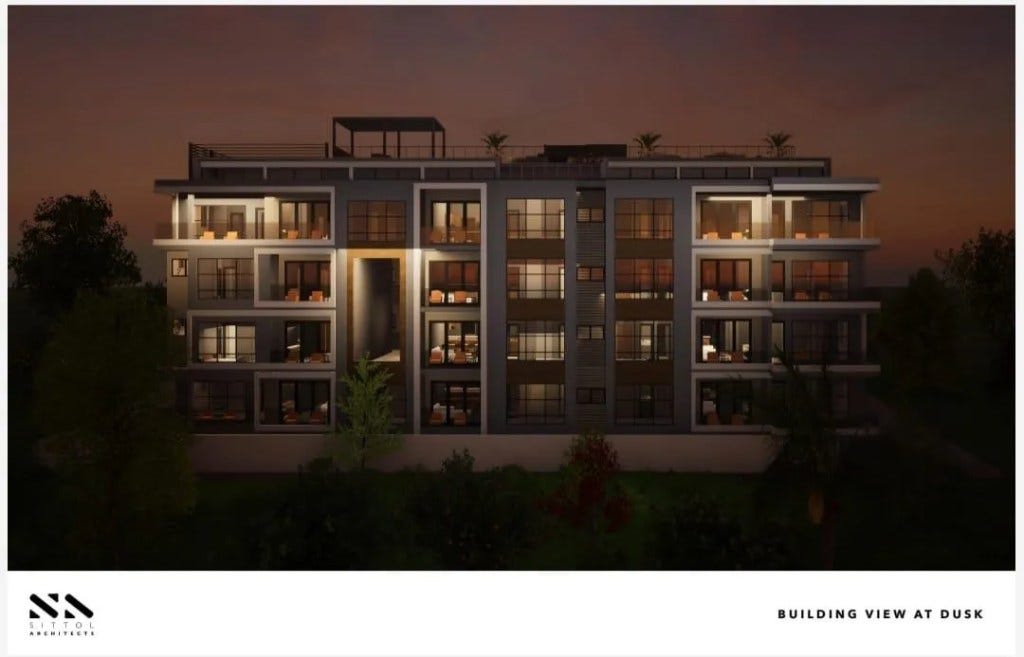
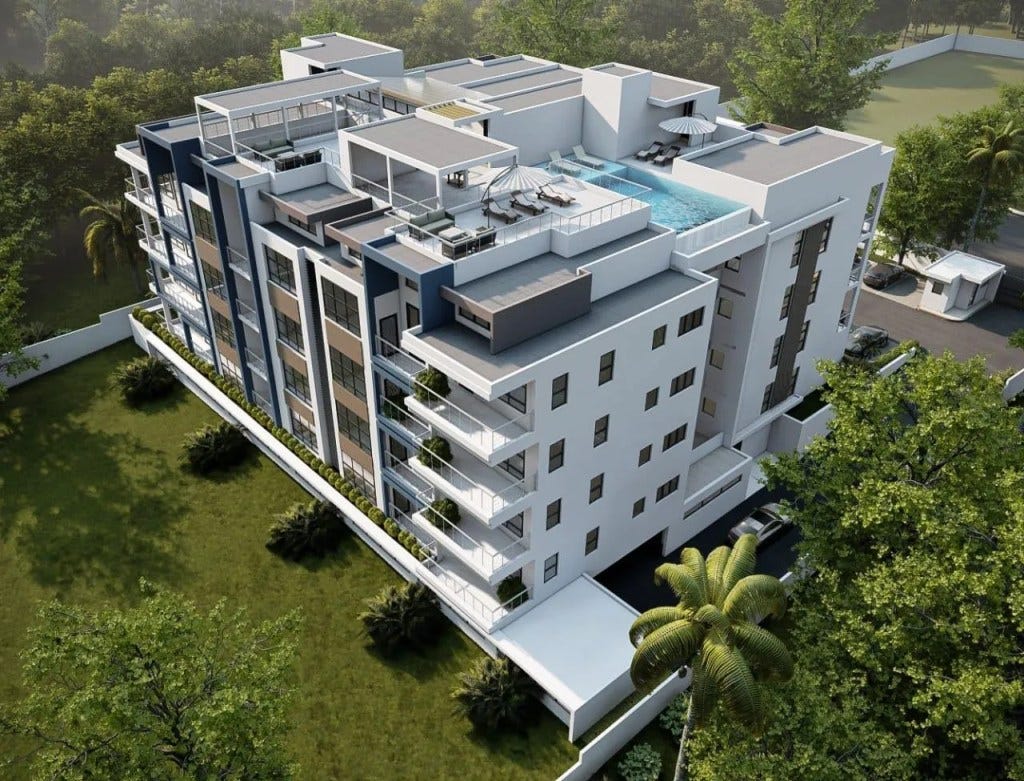
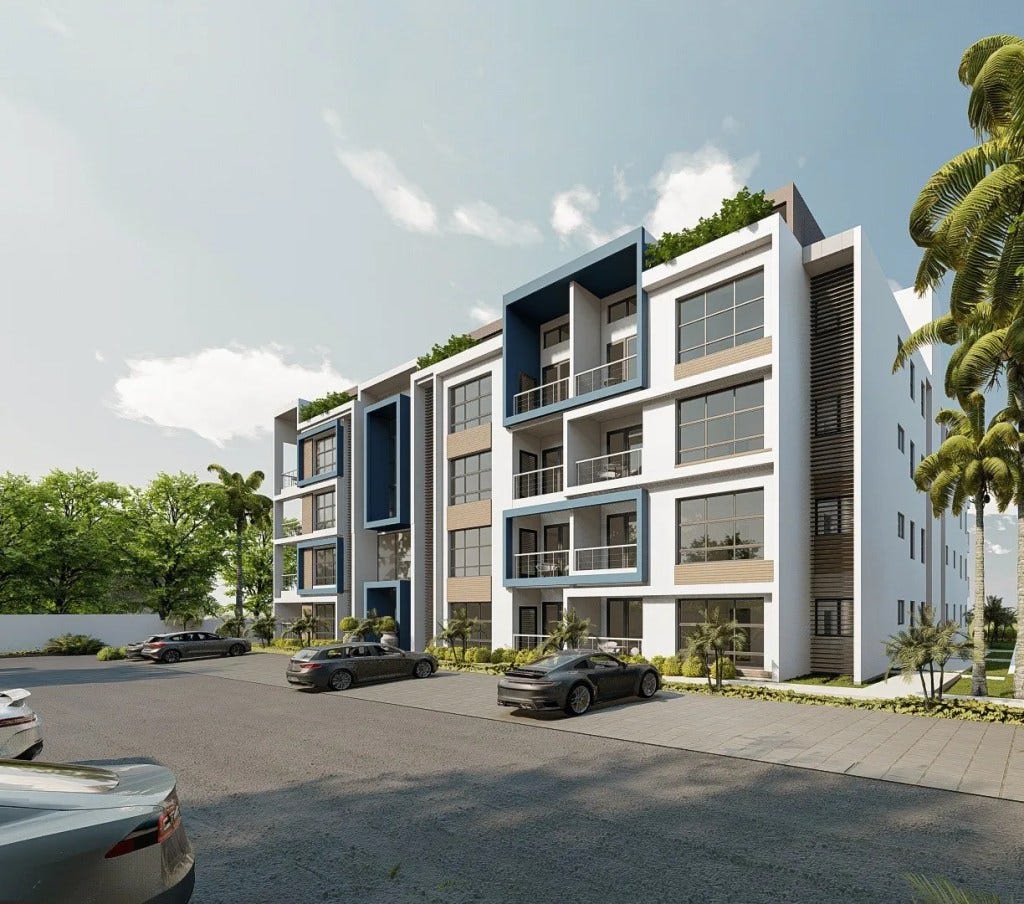
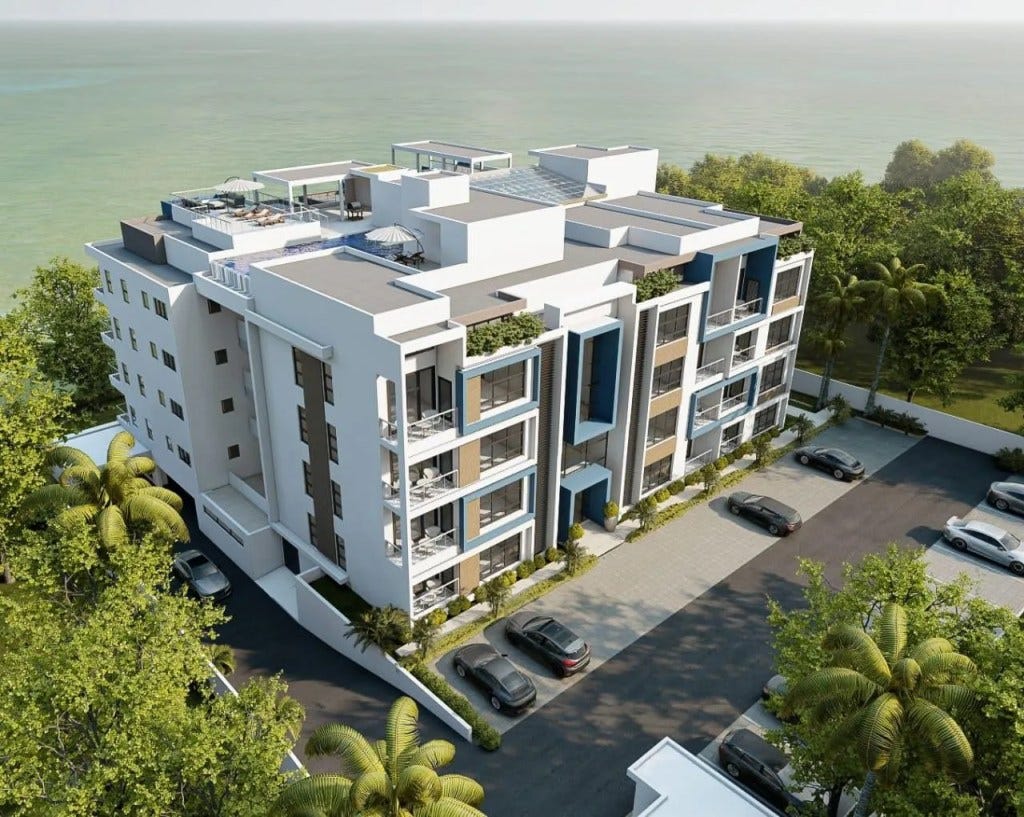
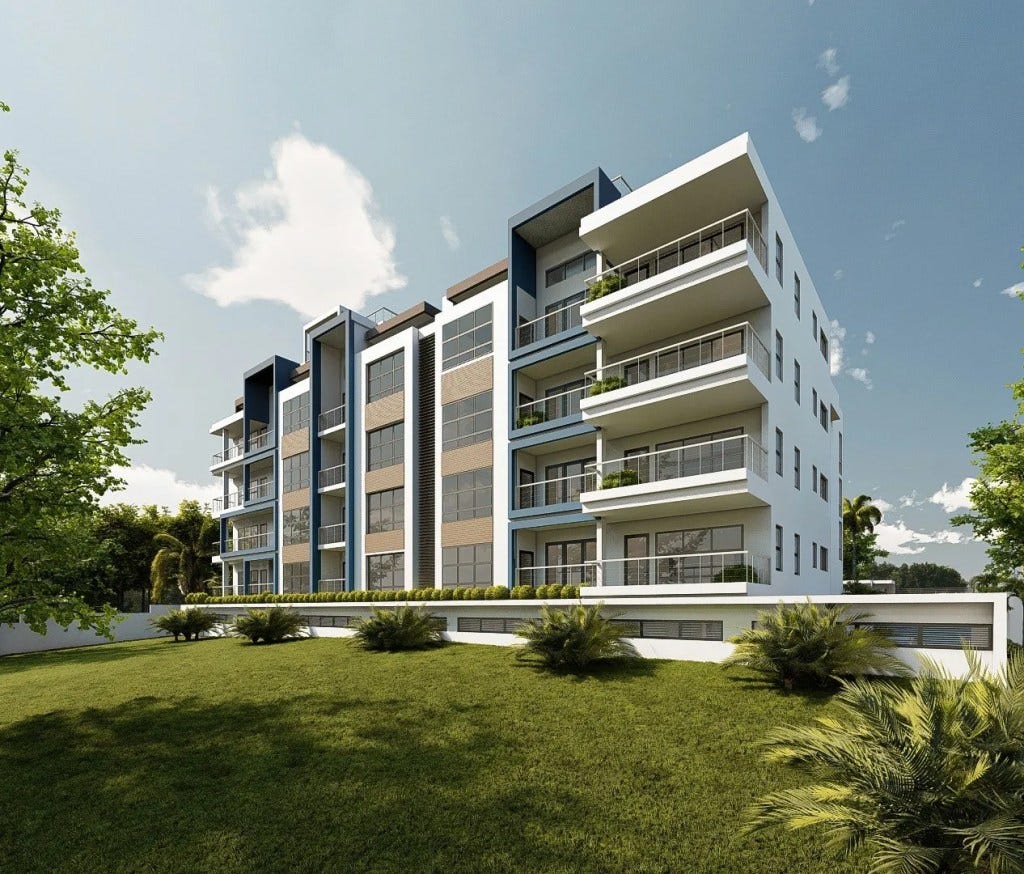
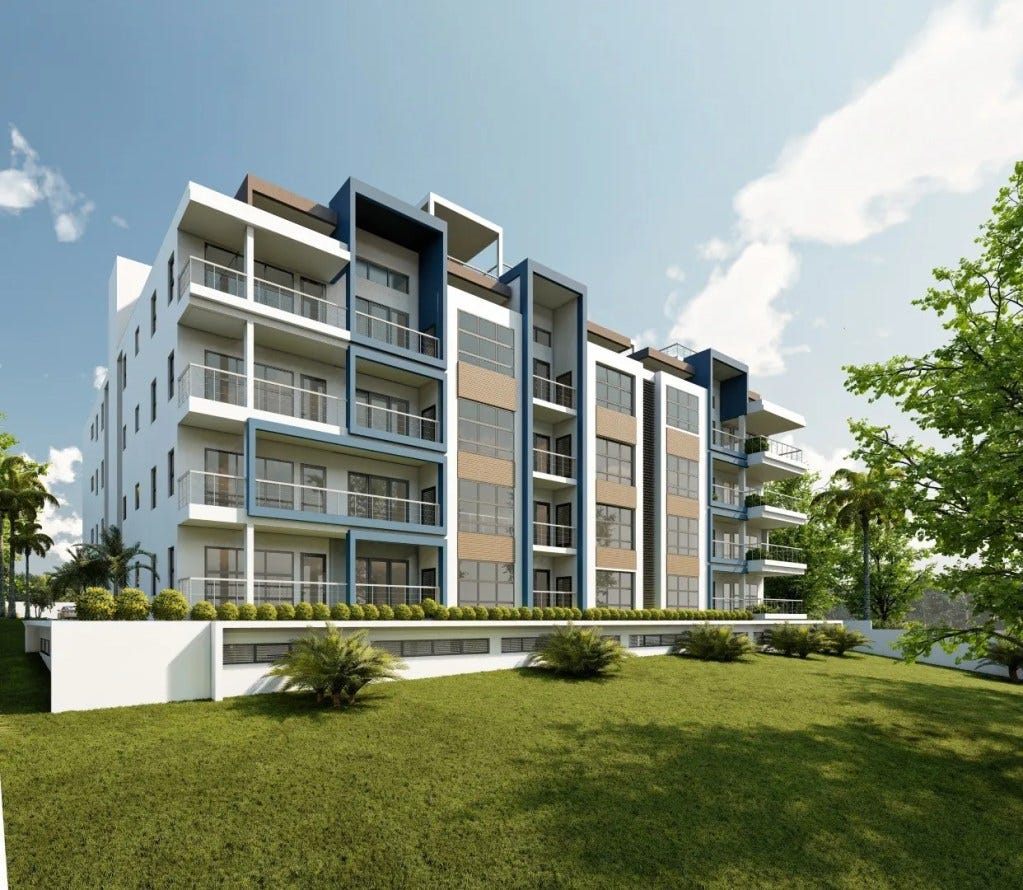
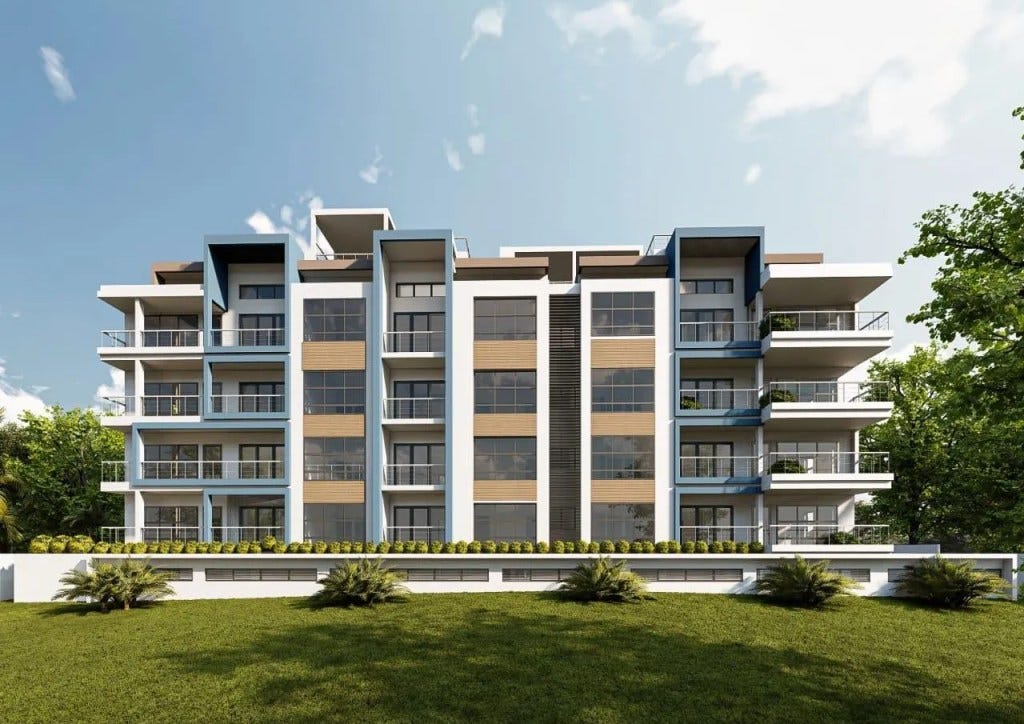
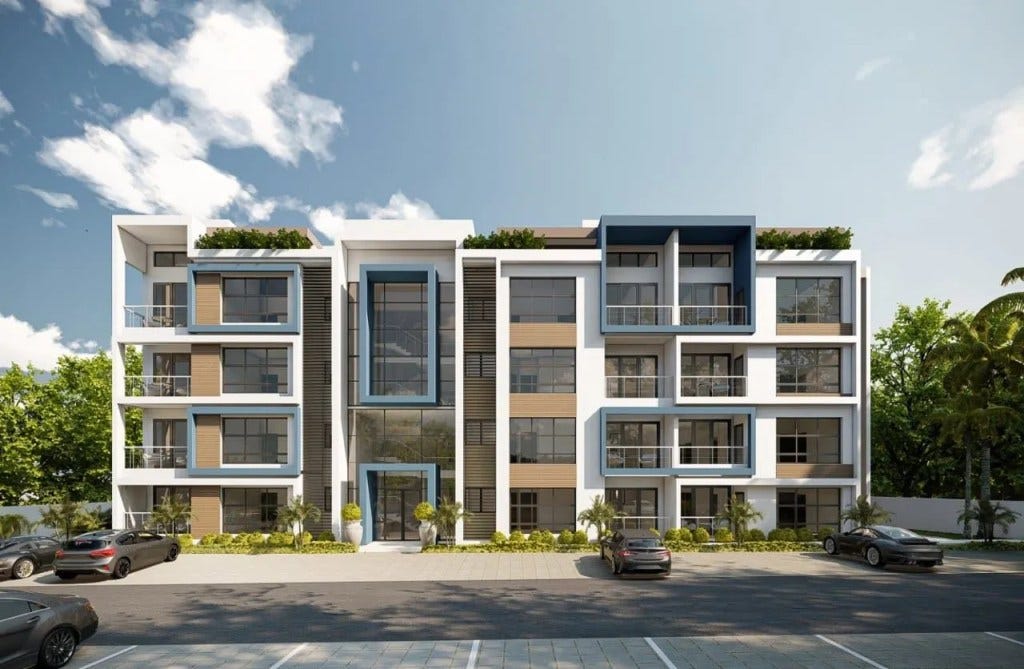
The building’s massing is deliberate and measured. At approximately four storeys, the structure avoids the visual aggression of high-rise coastal development, which can feel both alien and overbearing in parts of Jamaica’s north coast. Instead, the scale feels domesticated, almost residential in character, despite the density implied by a 24-unit scheme.
The façade is articulated into vertical bays rather than presented as a single flat plane. This is a sensible move. It breaks down the visual bulk of the building and introduces rhythm, shadow, and proportion. The projecting balcony frames — particularly the deep blue and muted grey tones — are doing more than just providing visual interest; they act as a unifying architectural language that repeats across elevations, tying the composition together.
There is restraint here. No unnecessary curves. No theatrical overhangs. No resort-style gimmicks. That restraint works in the building’s favour.
Material Palette and Façade Language
The materials — or at least their visual representations — suggest a careful balance between durability and warmth. Smooth rendered surfaces dominate, punctuated by sections of timber-effect cladding and vertical screening elements. These screens, likely intended for ventilation and shading, introduce a sense of environmental responsiveness without becoming overtly “eco-signalling.”
The colour palette is coastal but subdued: whites, soft greys, muted blues, and warm timber tones. This avoids the trap of becoming overly literal or kitsch. There is no attempt to mimic vernacular Jamaican architecture directly — no pitched roofs, no gingerbread detailing — but the building still feels appropriate to its climate and setting.
This is modern architecture that respects its environment without pretending to be something it isn’t.
Balconies, Openings, and Environmental Response
One of the strongest aspects of the design is the consistent provision of generous balconies. These are not token Juliet balconies; they are usable outdoor rooms. In a climate like Jamaica’s, this matters enormously. Balconies are not decorative appendages — they are part of how people actually live.
The deep reveals and projecting frames offer shade, reduce solar gain, and create a buffer between interior and exterior. Large glazed openings suggest an emphasis on daylight and cross-ventilation, though the effectiveness of this will ultimately depend on orientation, window specifications, and how residents choose to occupy the spaces.
What’s encouraging is that the architecture does not rely solely on air-conditioning as its environmental strategy. There is at least an attempt — visually and spatially — to acknowledge airflow, light, and outdoor living.
Internal Architecture: Space, Volume, and Experience
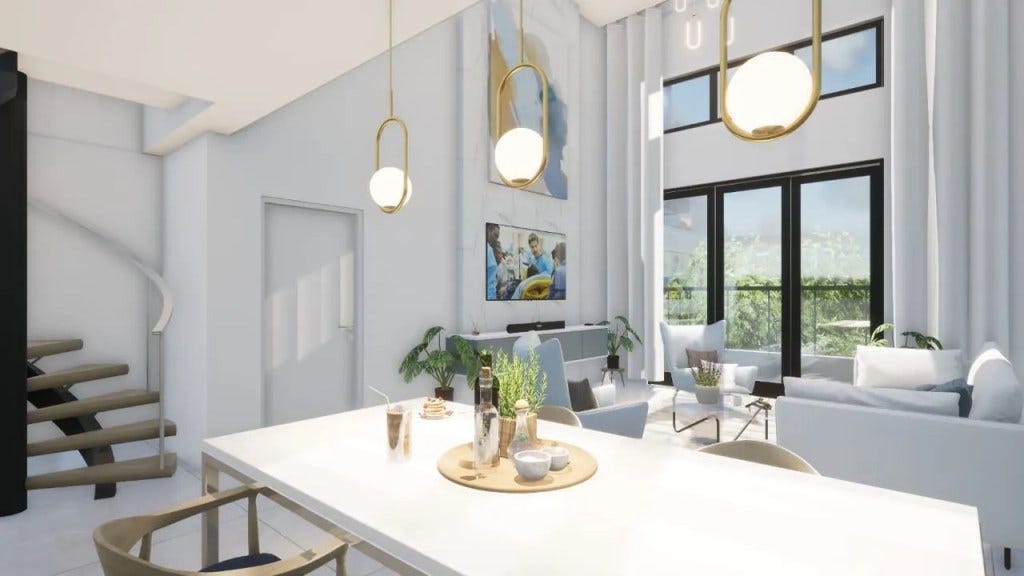
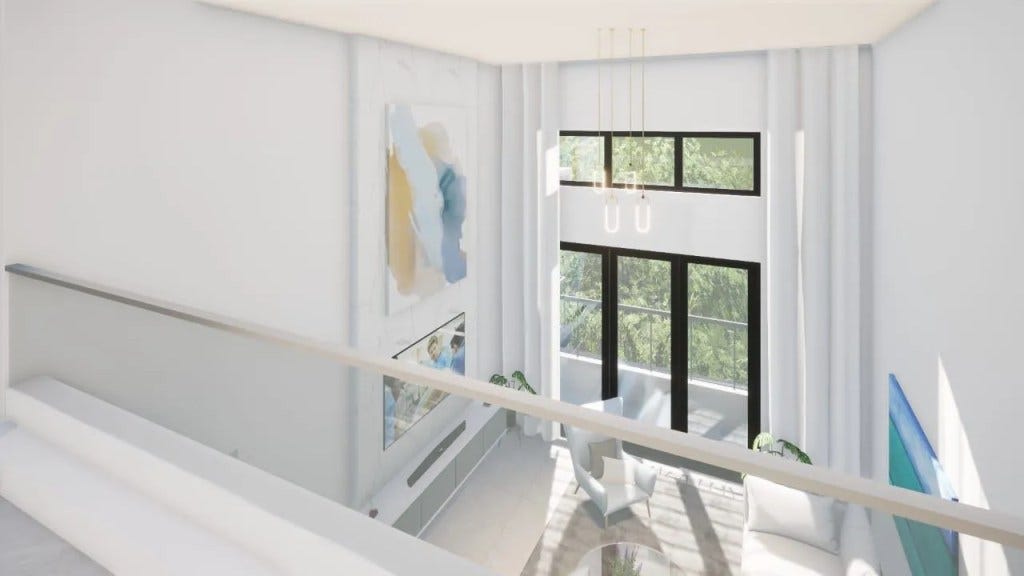
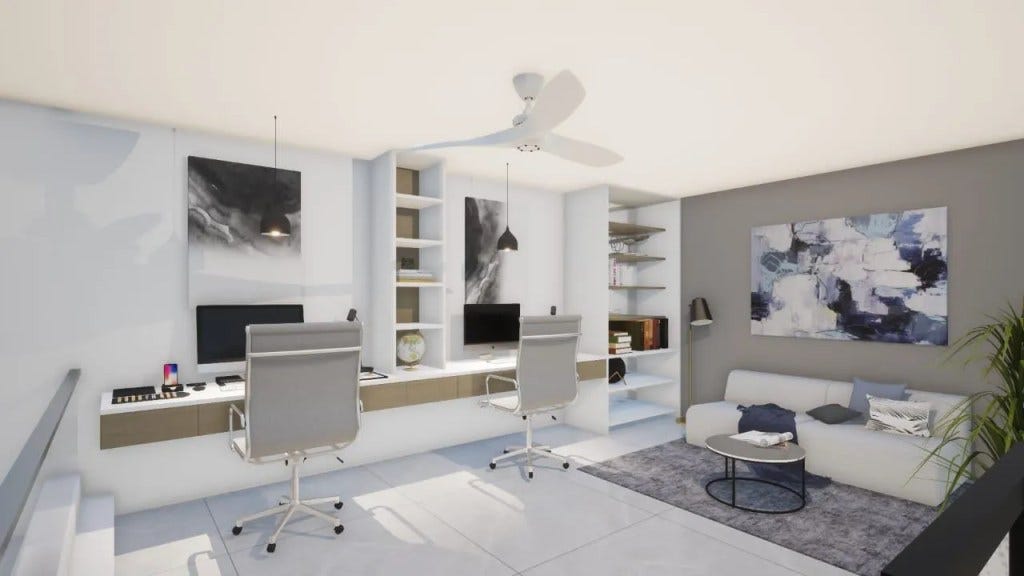
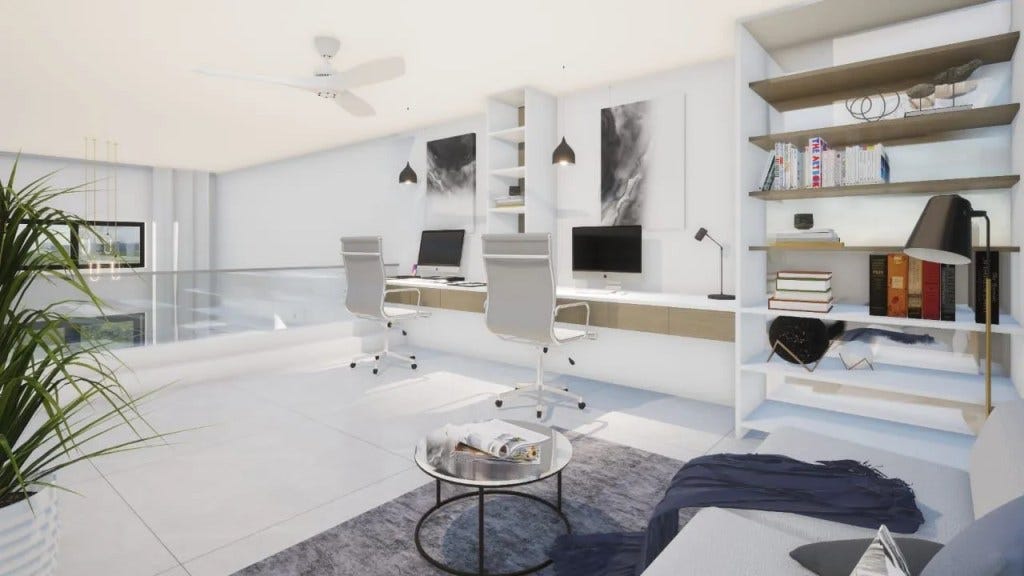
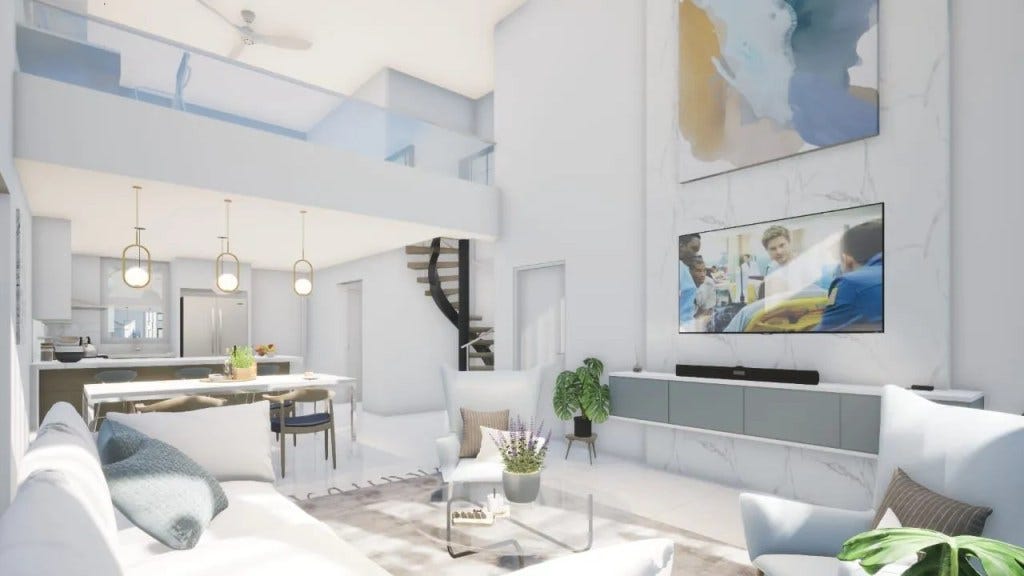
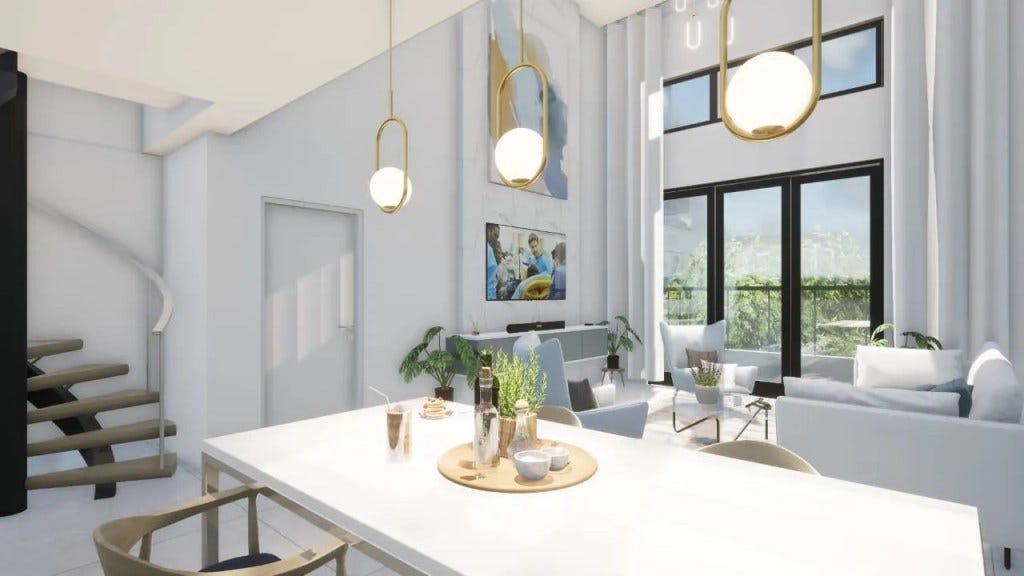
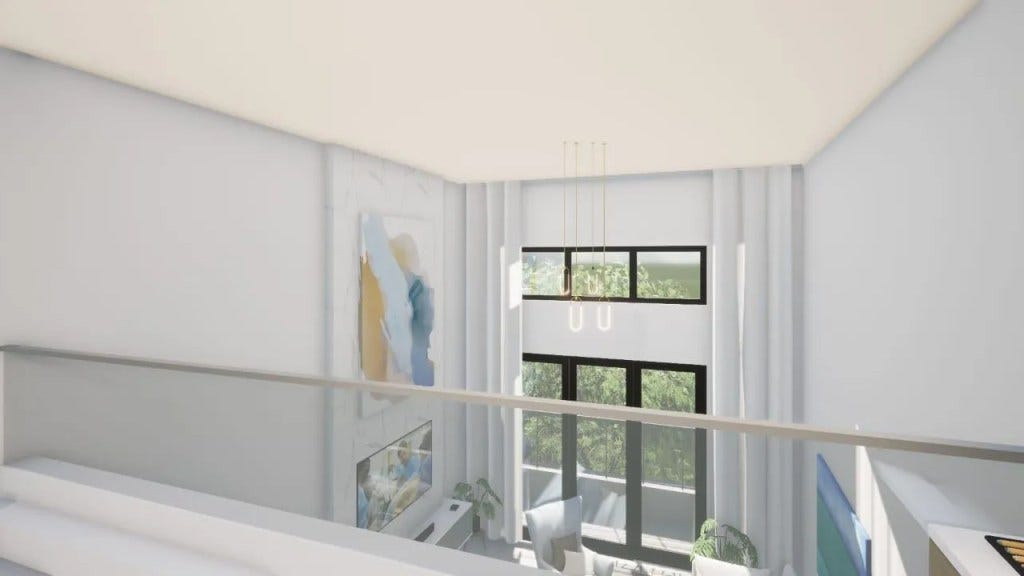
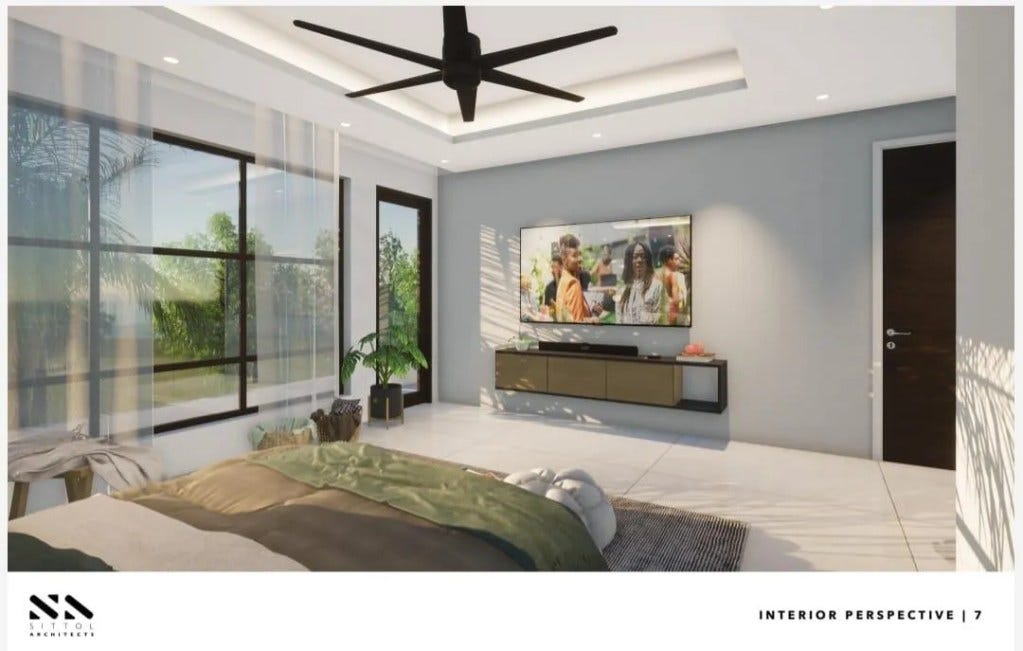
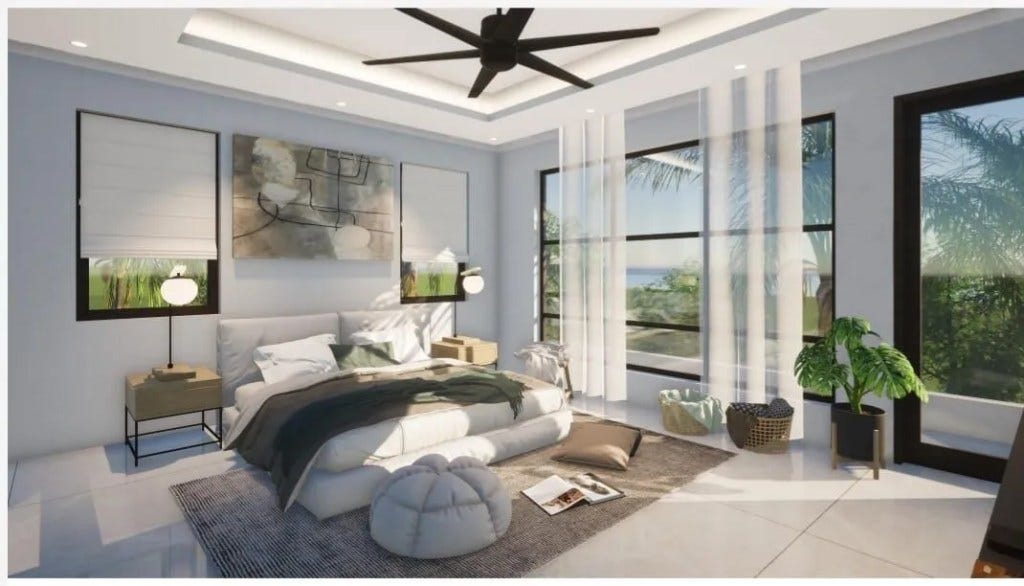
The interior renders tell a story of controlled ambition. The double-height living spaces in certain units, particularly the penthouse layouts, introduce drama and vertical generosity. This is a bold move in apartment design, especially in a market where efficiency often trumps spatial delight.
Double-height spaces are expensive in terms of square footage efficiency, and their inclusion signals a willingness to sacrifice density for experience — at least in selected units. The tall glazing, long curtains, and suspended pendant lights emphasise this verticality, creating interiors that feel more like lofts than conventional apartments.
However, it’s worth being clear-eyed here: double-height spaces are experiential luxuries. They are impressive, photogenic, and emotionally appealing — but they can also be acoustically challenging and thermally demanding. Their success will depend heavily on detailing, glazing performance, and mechanical design.
Kitchens, Living Areas, and Domestic Pragmatism
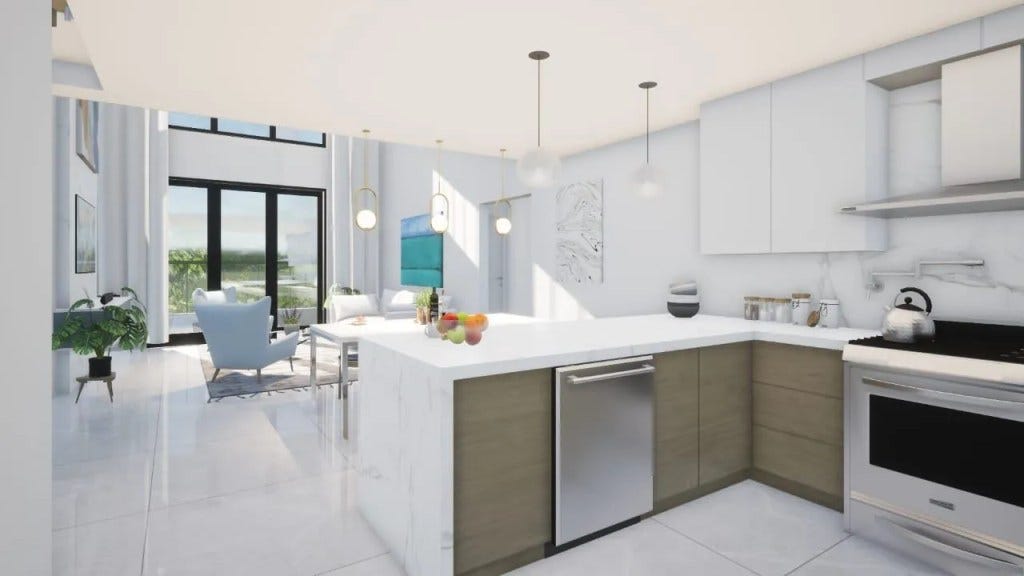
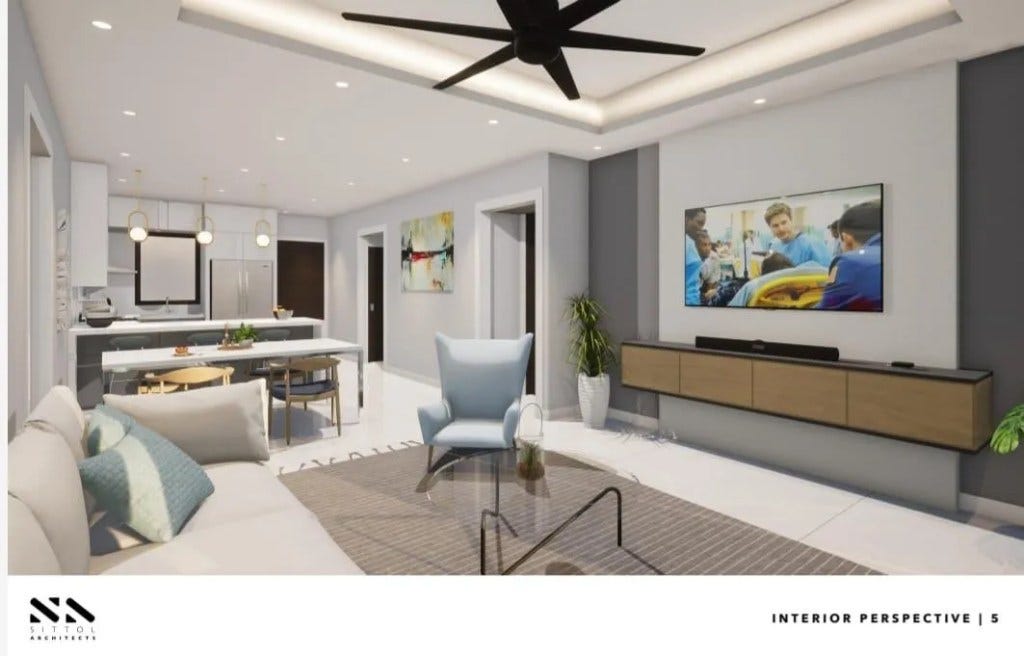
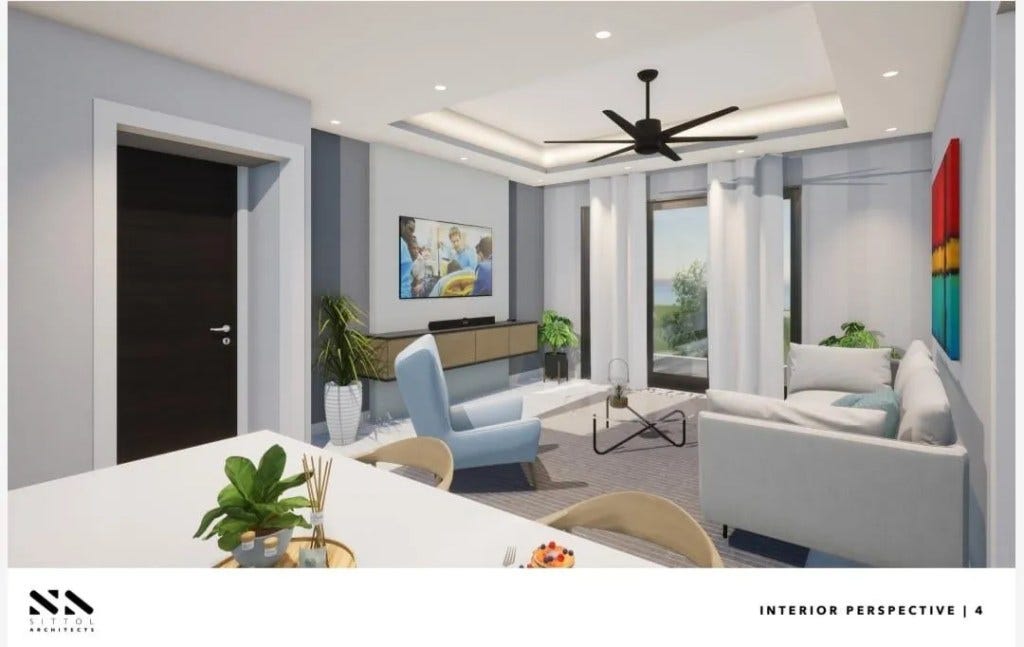
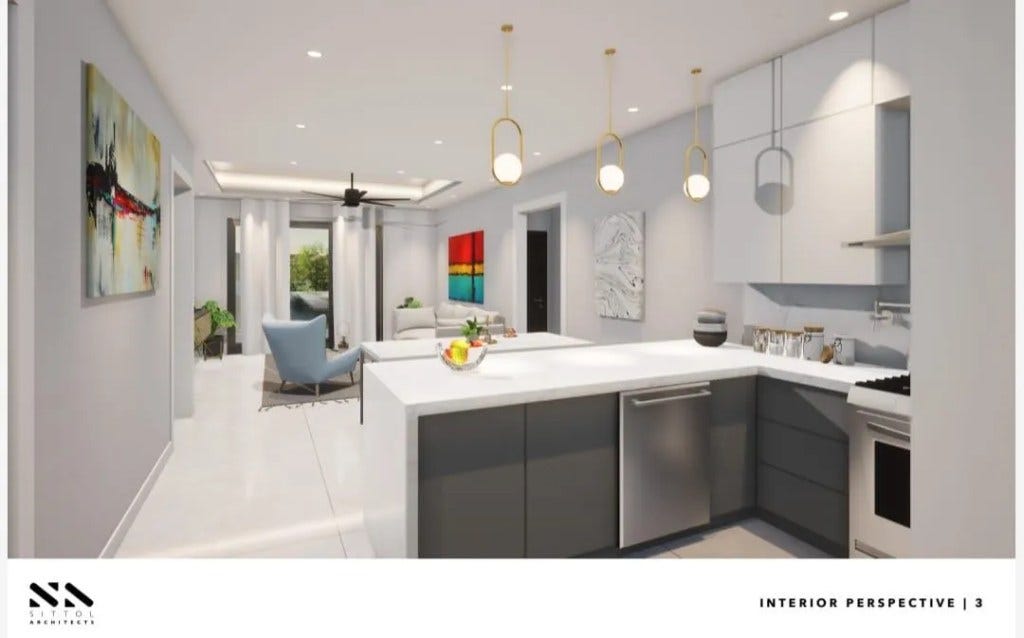
The kitchens are open-plan and contemporary, with island counters that double as social hubs. This reflects modern living patterns and aligns well with both owner-occupier and short-term rental use. The layouts appear logical rather than experimental: circulation is clear, sightlines are controlled, and the kitchen does not dominate the living space.
Material choices lean toward neutrality — light cabinetry, stone-effect counters, integrated appliances. This is sensible. Neutral interiors age better, photograph better, and allow residents to personalise without fighting the architecture.
There is no sense here of interior design trying to overshadow architecture. The two are working together, which is not always the case in speculative developments.
Circulation, Access, and Shared Spaces
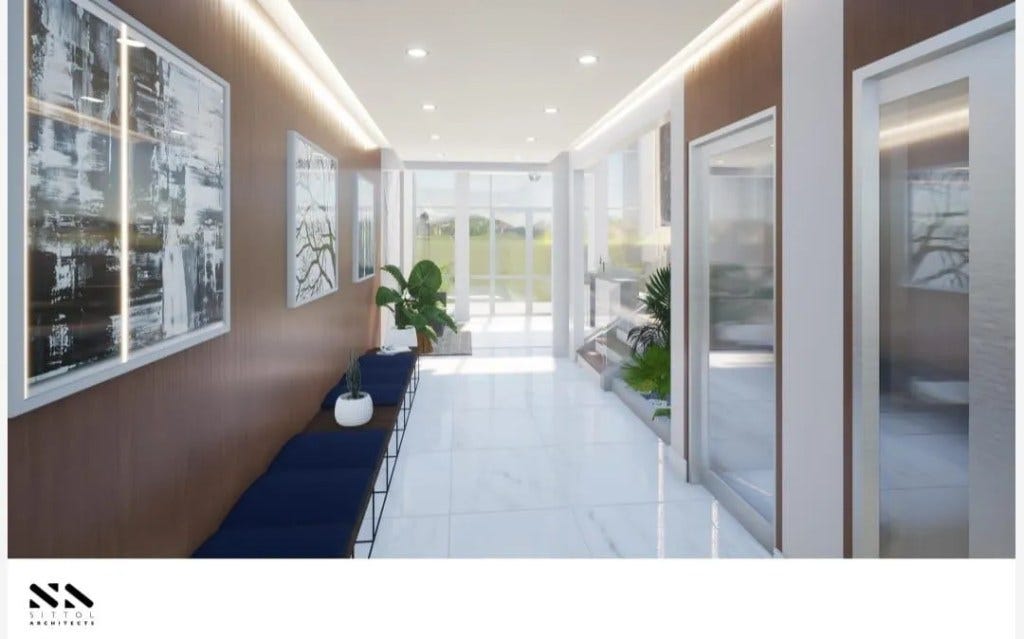
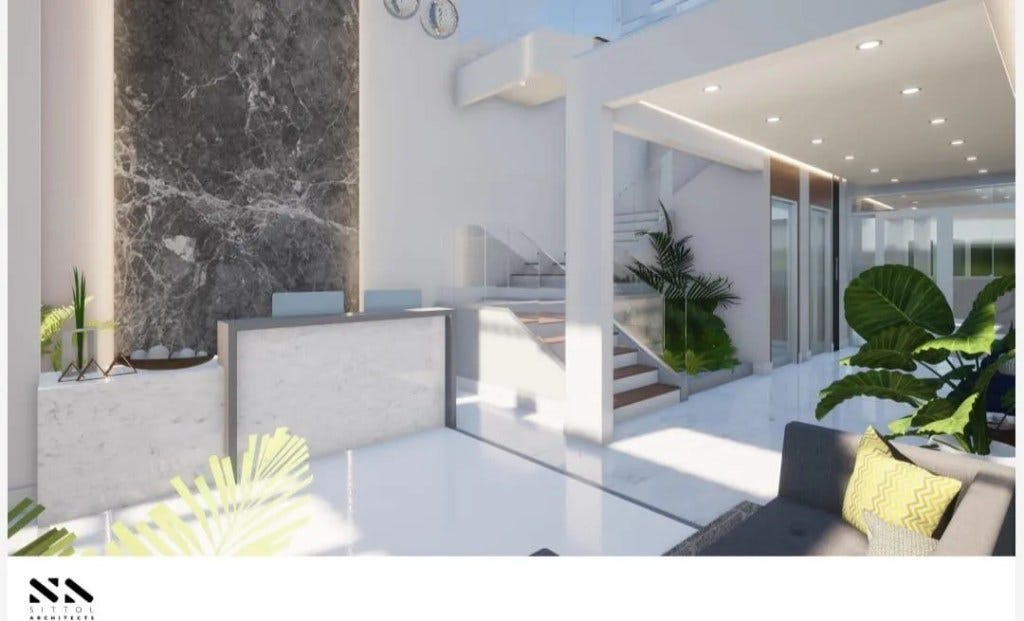
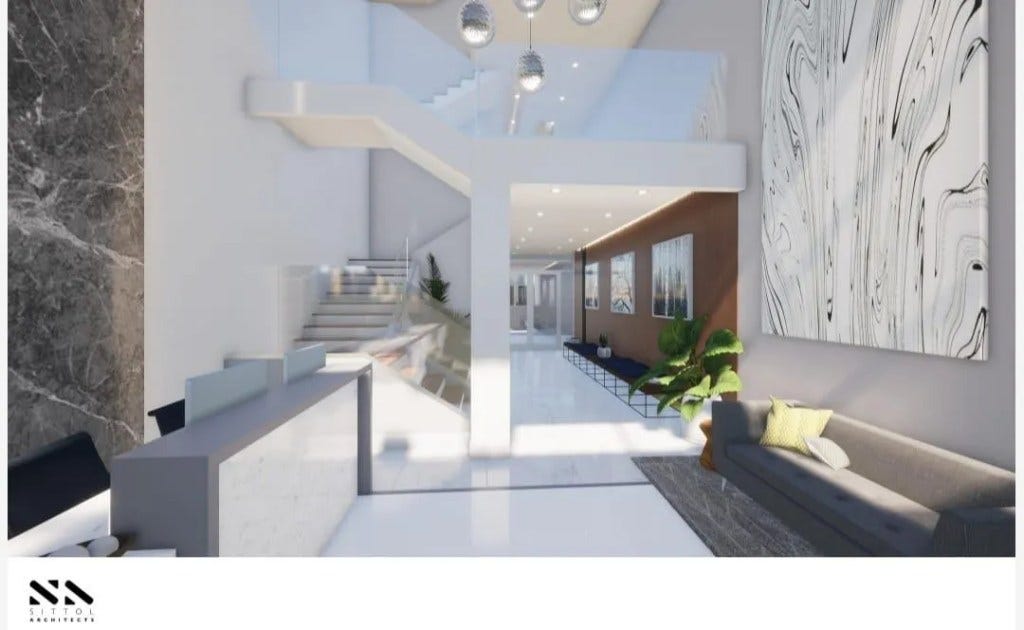
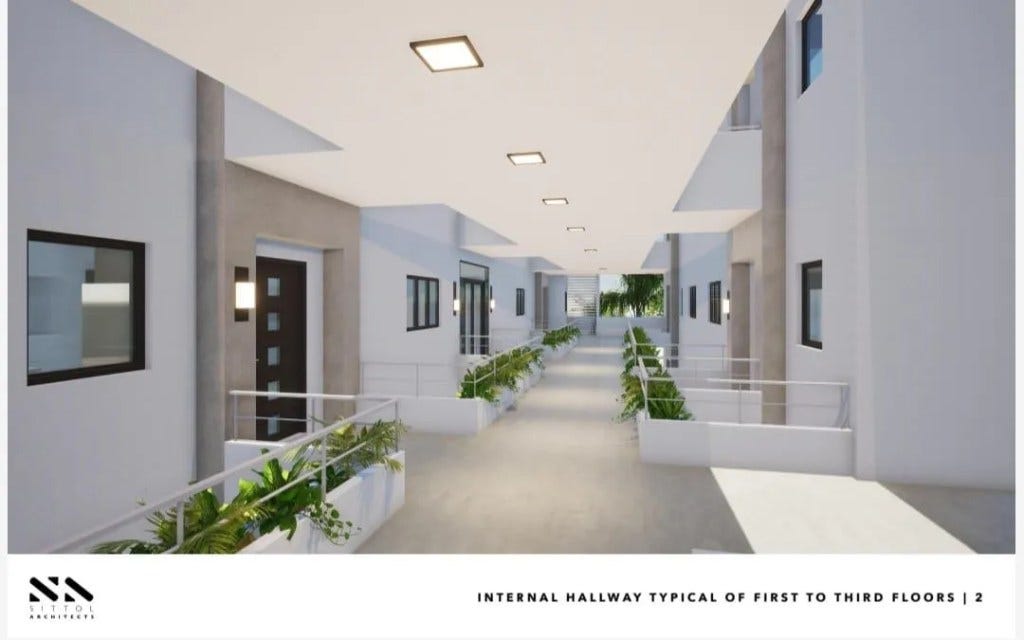
The schematic floor plans reveal a straightforward circulation strategy. Central stairs and lift cores serve multiple units per floor, suggesting efficiency rather than extravagance. This is not a building that wastes space on grand corridors or hotel-like lobbies.
From an architectural standpoint, this is honest. Shared spaces are functional, not theatrical. That may disappoint buyers looking for “wow-factor” communal interiors, but it will likely be appreciated by those who understand long-term maintenance costs and service charges.
The inclusion of an elevator serving all levels, including the roof terrace, signals a baseline commitment to accessibility and usability — again, practical rather than performative.
The Rooftop as Architectural Statement
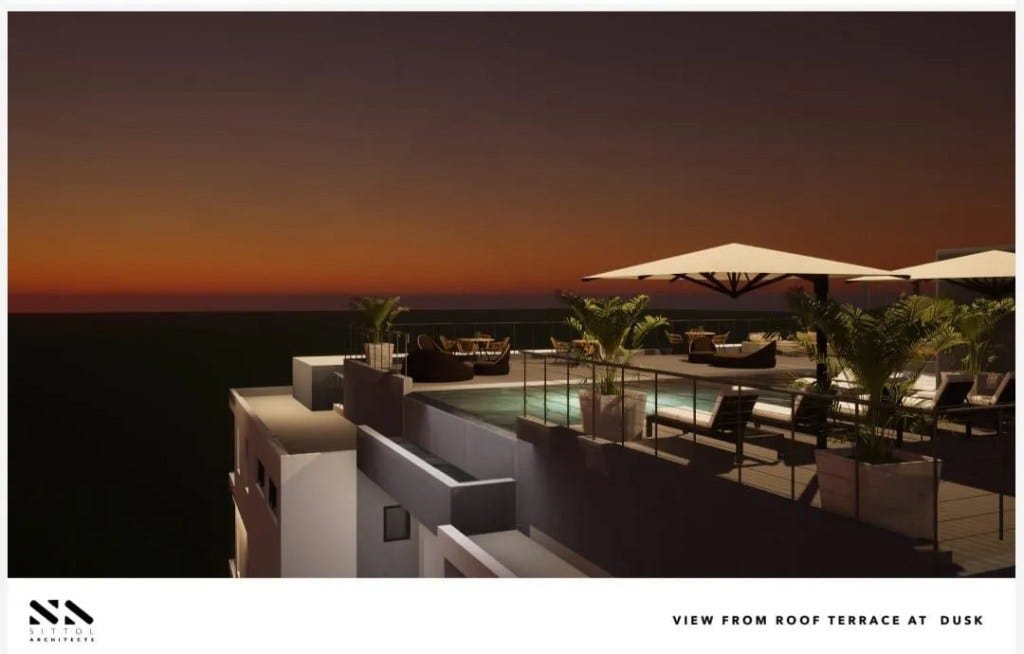
The rooftop is arguably where the building allows itself its most expressive moment. Rather than being an afterthought, it is positioned as a shared amenity — pool, gym, and panoramic views forming a collective experience for all residents.
Architecturally, this is significant. It redistributes privilege. Instead of reserving the best views exclusively for penthouses, the building offers a shared vantage point. This is a social decision as much as a spatial one.
From a design perspective, rooftops in tropical climates must work hard. They need shade, wind mitigation, and durable finishes. While the renders inevitably idealise the experience, the intention is sound: elevate communal life without resorting to excessive ornamentation.
What the Architecture Does Not Do
It’s important to note what Tropix Mammee Bay does not attempt:
It does not chase iconic status.
It does not push structural boundaries.
It does not experiment with radical form-making.
It does not pretend to be bespoke architecture masquerading as mass housing.
And that is not a criticism.
This is architecture that understands its role. It is not trying to be a manifesto. It is trying to be a building that works — climatically, financially, socially.
A Balanced Architectural Verdict
Seen through an impartial architectural lens, Tropix Mammee Bay is competent, thoughtful, and restrained. Its strengths lie in proportion, environmental awareness, and a clear understanding of its market. Its weaknesses, if any, are those inherent to all mid-scale developments: the risk that detailing, materials, or construction quality may dilute the clarity of the original design intent.
This is not architecture that shouts. It doesn’t need to.
It is architecture that sits comfortably in its place, offering residents light, space, and a sense of calm — qualities that, in the end, matter far more than spectacle.
“It’s not revolutionary — but it’s honest. And sometimes, honesty in architecture is the hardest thing to achieve.”
Disclaimer
This architectural commentary is provided for general information and editorial discussion purposes only. The observations and interpretations expressed are based on visual materials, architectural drawings, and illustrative renders available at the time of writing and do not constitute technical, structural, engineering, planning, or legal advice. All images, layouts, finishes, dimensions, and specifications are artist impressions and subject to change without notice. Final construction, materials, detailing, and performance may vary from those shown or described. No warranties, representations, or guarantees are made regarding the accuracy or completeness of the information contained herein. Prospective purchasers and readers are encouraged to carry out their own independent due diligence, including review of approved plans, specifications, and contractual documentation, and to seek professional advice where appropriate. This commentary is independent and non-promotional in nature and should not be relied upon as a basis for financial, investment, or purchasing decisions.