


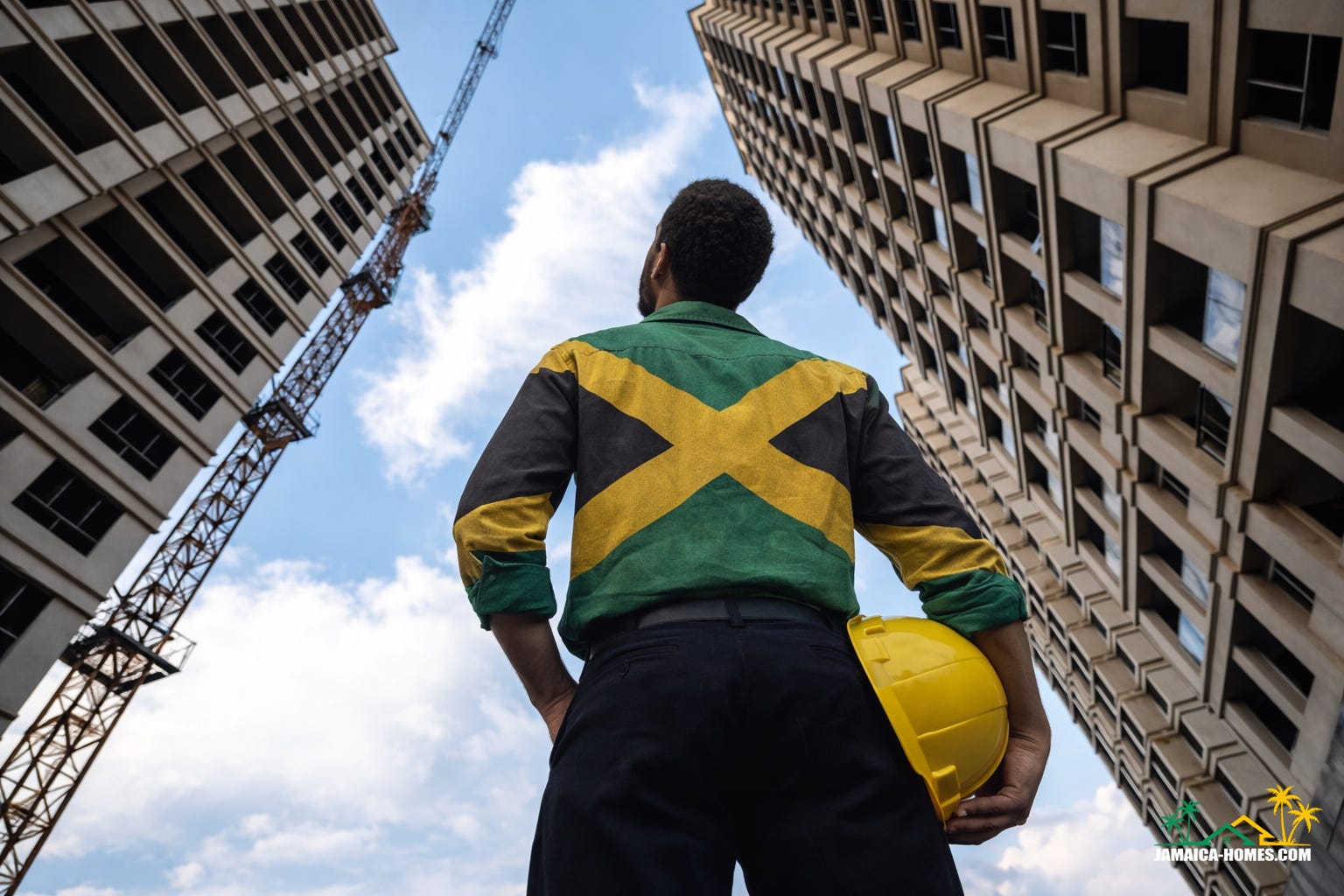
There is something quietly dramatic about a skyline in transition.
Cranes pierce the blue Caribbean sky. Concrete cores rise floor by floor. What was once open horizon becomes geometry — vertical, deliberate, ambitious. Jamaica is not simply building; it is evolving.
Across the Corporate Area, and increasingly in parishes once defined by low-rise sprawl, multi-storey residential buildings are becoming markers of a new chapter. This is not vanity architecture. It is a strategic inevitability. If we are serious about protecting our hillsides, safeguarding our coastlines, and preserving agricultural land, then building upward is not indulgence — it is stewardship.
And yet, as we rise, we must ask a more profound question: are we building beautifully… or are we building wisely?
The recent commitment by the Jamaica Fire Brigade to strengthen its readiness for high-rise incidents is both reassuring and necessary. Commissioner Stewart Beckford has confirmed deeper engagement at the design stage, enhanced high-angle rescue training, and the pursuit of additional aerial units. These are not cosmetic measures. They signal intent.
But intent alone does not guarantee resilience.
The essential question remains: are we designing buildings that merely satisfy regulation — or are we creating structures capable of anticipating failure?
Because history has already shown us what happens when we confuse compliance with safety.
The Grenfell Lesson
In 2017, Grenfell Tower burned.
Seventy-two lives were lost in a tragedy that was not caused by height, nor by ambition, but by systemic fragility. Materials that should never have been used were installed. Oversight faltered. Compartmentation failed. A building that met certain regulatory thresholds did not meet the deeper obligation of safeguarding human life.
The “stay put” doctrine — sound in theory when fire containment works — unravelled when the external façade ignited. The assumptions that underpinned the building’s fire strategy proved catastrophically optimistic.
Grenfell forced the United Kingdom to confront uncomfortable truths. Regulation was overhauled. Accountability sharpened. Transparency strengthened.
The lesson for Jamaica is not that high-rises are dangerous.
The lesson is that systems must be designed not for perfection — but for imperfection.
“Grenfell taught the world that compliance is not the same as safety. Regulations are the floor, not the ceiling. As we build higher in Jamaica, we must build smarter — not simply to pass inspection, but to protect lives when the unexpected happens.”
— Dean Jones, Founder of Jamaica Homes
From Passive Structures to Intelligent Buildings
Around the world, a fascinating transformation is underway.
In cities such as Shanghai, Singapore, Dubai, and increasingly across major American metropolitan centres, high-rise buildings are no longer inert containers of people. They are responsive organisms — alert, analytical, and interconnected.
Modern towers integrate fully addressable fire detection systems capable of identifying the precise origin of ignition within seconds. Intelligent smoke extraction and pressurised stair cores protect escape routes with engineering precision. IoT networks transmit real-time diagnostics to control rooms. Artificial intelligence algorithms monitor for thermal irregularities and system anomalies before a human even senses danger.
The building does not wait to be rescued.
It participates.
Airflow is redirected. Compartments are sealed. Sprinkler zones activate early and strategically. Fire command centres provide granular intelligence to responders before boots touch the lobby floor.
In such environments, the “stay put” strategy is not passive faith — it is a controlled, engineered reality.
The difference is profound. The structure itself becomes a collaborator in life safety.
Jamaica’s Moment
Jamaica stands at a rare inflection point.
Unlike older cities wrestling with mid-century towers and outdated systems, many of our emerging high-rise developments are new. We are not retrofitting legacy architecture. We are authoring our skyline from scratch.
That is an extraordinary privilege.
The Jamaica Fire Brigade’s involvement at the planning stage — scrutinising sprinkler zoning, material specifications, water storage capacity, and stairwell pressurisation — is critical. Decisions made on paper determine outcomes decades later.
Yet as a Chartered Builder and Founder of Jamaica Homes, I have observed a pattern that should prompt reflection. Many developments install systems that are technically satisfactory. They meet code. They pass inspection.
But they stop there.
They comply.
They could do more.
“We have the benefit of hindsight. We can see where other countries have faltered. Jamaica does not need to wait for a tragedy to innovate. We can choose to lead with intelligence now.”
— Dean Jones
The Complexity of Going Vertical
Verticality is elegant — but it is also unforgiving.
As density increases, so does intricacy. Evacuation choreography becomes more complex. Water supply demands intensify. Mixed-use towers amplify fire load variables. And under stress, human behaviour resists neat architectural assumptions.
High-rise living demands a cultural recalibration. Residents must understand protocol. Property managers must treat maintenance not as an afterthought but as a discipline. Regulators must enforce standards without dilution.
Technology is transformative — but culture sustains it.
Designing for Jamaica
We must resist the temptation to import solutions wholesale.
Jamaica’s climate is humid and hurricane-prone. Our power infrastructure, though improving, is not immune to interruption. Water storage strategies must account for pressure realities. Maintenance regimes must reflect local capacity.
Smart systems deployed here must be robust, resilient, and serviceable — not fragile showcases dependent on uninterrupted conditions.
Encouragingly, sophisticated fire systems already exist within certain Jamaican developments. The capability is present. The knowledge is accessible. The global precedent is well documented.
The question is philosophical as much as technical: do we standardise excellence — or do we settle for adequacy?
Fire Safety as Value
Developers must reconsider how they categorise life-safety systems.
They are not cost burdens.
They are value guardians.
Advanced fire engineering protects lives, yes — but it also protects asset longevity, insurability, investor confidence, and international credibility. As Jamaica attracts global buyers and institutional capital, scrutiny will intensify. Sophisticated markets increasingly examine fire engineering before underwriting risk.
Safety is no longer invisible infrastructure.
It is part of the value proposition.
“In a competitive property market, safety becomes part of your identity. Buyers are informed. Investors are analytical. The developer who integrates advanced life-safety systems today will lead tomorrow.”
— Dean Jones
The Larger Vision
Density, when executed with foresight, preserves what we love most about Jamaica. It protects hillsides from unchecked subdivision. It reduces infrastructural sprawl. It strengthens transport efficiency.
High-rise living need not erode our island’s character. In fact, it may safeguard it.
But only if it is designed with humility — and intelligence.
We are not retrofitting an inherited skyline.
We are shaping one.
“Jamaica is at a pivotal moment. We can build towers that merely look modern — or we can build systems that are truly intelligent. The skyline we create now will define not only how we live, but how we protect one another.”
— Dean Jones
Leading Without Tragedy
Too often, reform follows disaster.
Jamaica does not require a defining catastrophe to elevate its standards. The Jamaica Fire Brigade has shown foresight. Developers are engaged. Technology exists. International lessons are accessible.
What remains is resolve.
As the cranes continue their measured ascent, so too must our ambition for safety rise in tandem.
The skyline is climbing.
Now is the moment to ensure our standards climb with it.