


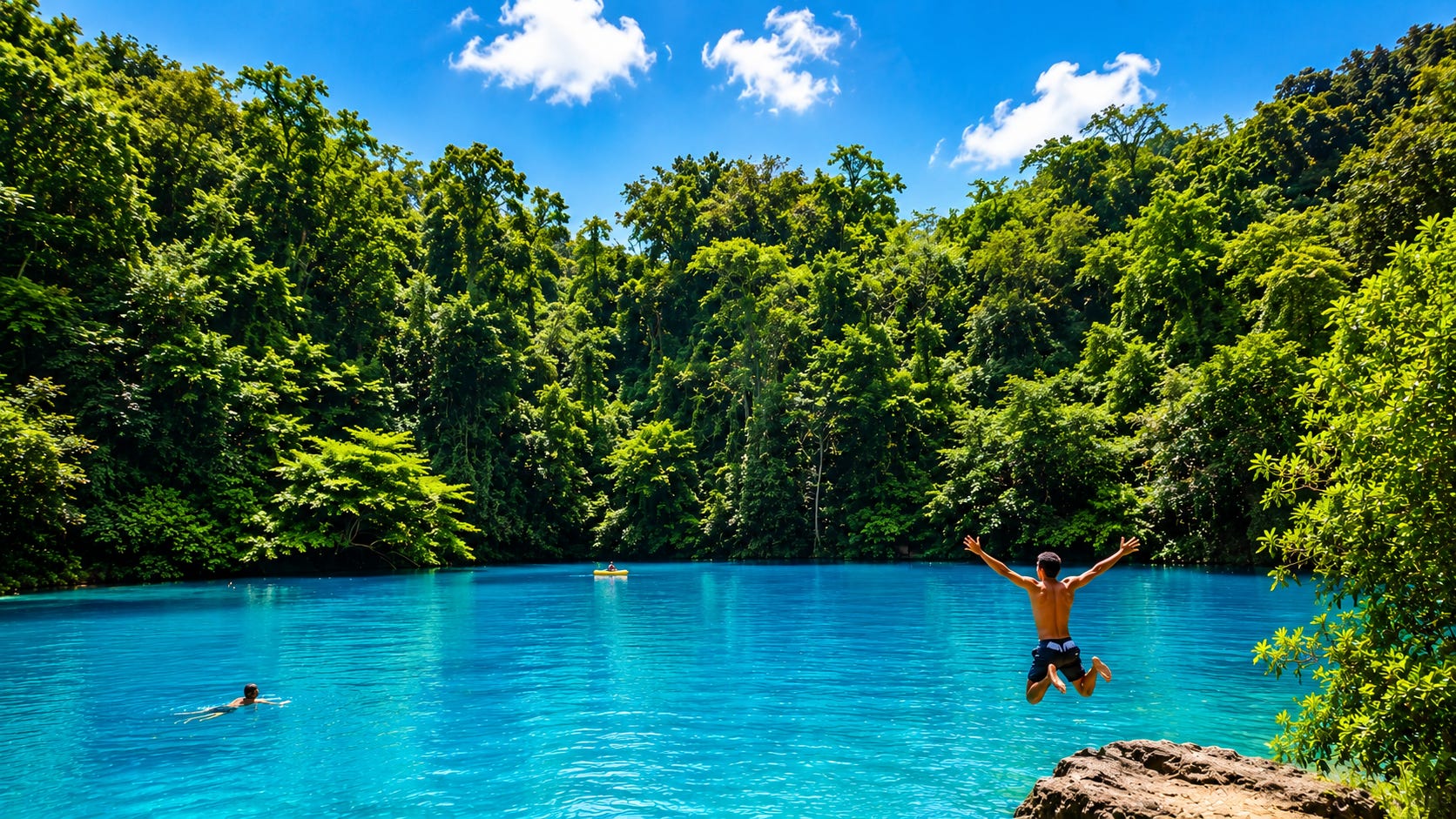
A renewed debate over public access to Portland’s Blue Lagoon has highlighted the growing challenge of misinformation in the digital age, after social media claims suggesting Jamaicans were being denied access to the attraction were contradicted by recent video evidence showing members of the public freely using the site.
The issue gained fresh attention after a widely shared video showed residents enjoying the lagoon while a visitor documented what he described as unrestricted access to the area. The footage directly challenged claims that Jamaicans had effectively been shut out of one of the country’s most recognisable natural attractions.
According to statements from the Jamaica National Heritage Trust, which manages the site, access to Blue Lagoon remains free to the public. The agency has also rejected allegations that entrance fees have been introduced and indicated that recent works at the location have focused on improvements including landscaping, signage, public facilities and visitor information.
The controversy raises a broader question about how quickly misinformation can shape public perception, particularly when it concerns nationally important locations. In an era where social media posts can reach thousands of people within hours, inaccurate claims often travel further and faster than corrections.
For Jamaica, this carries consequences beyond a single attraction in Portland. Tourism remains one of the country’s most important economic sectors, supporting employment, investment and development across multiple industries. Natural assets such as Blue Lagoon form part of the image Jamaica presents to the world. When false narratives gain traction, they risk undermining confidence in destinations that communities and public agencies have spent years maintaining and promoting.
The debate also reflects a growing tension between legitimate concerns about public access to beaches and coastal spaces, and the spread of claims that are not supported by evidence. Jamaica’s coastline has long been the subject of public discussion, with questions regularly raised about access rights, development and the balance between private investment and public enjoyment. Those conversations are important and should continue. However, they are best served by facts rather than speculation.
What makes misinformation particularly damaging is that it can erode trust in institutions and create unnecessary division within communities. Once a claim becomes established online, correcting the record often proves far more difficult than spreading the original allegation. Even when evidence emerges to the contrary, many people continue to believe the initial version of events.
There is also an economic dimension. Local vendors, tour operators, transport providers and small businesses depend on the reputation of Jamaica’s attractions. False claims that discourage visitors or create confusion can have real-world consequences for livelihoods, particularly in rural communities where tourism plays a significant role in supporting household income.
The Blue Lagoon episode serves as a reminder that public debate should be informed by evidence rather than assumption. Concerns about access, management or development deserve scrutiny, but they should be grounded in verifiable facts. Equally, public agencies must continue communicating clearly and transparently when misinformation emerges.
As Jamaica continues to market itself as a destination built around its natural beauty, culture and heritage, protecting public trust becomes almost as important as protecting the attractions themselves. Blue Lagoon is more than a scenic location. It is part of Jamaica’s national identity and an asset that supports economic activity far beyond Portland. Ensuring that conversations about such places remain rooted in fact is in the interest of everyone who benefits from their continued success.