

Britain Is Starting to Look Like the Fragile Country
Jamaica once stood on the edge of financial collapse while Britain represented stability. Two decades later, the comparison no longer feels as comfortable for the United Kingdom.


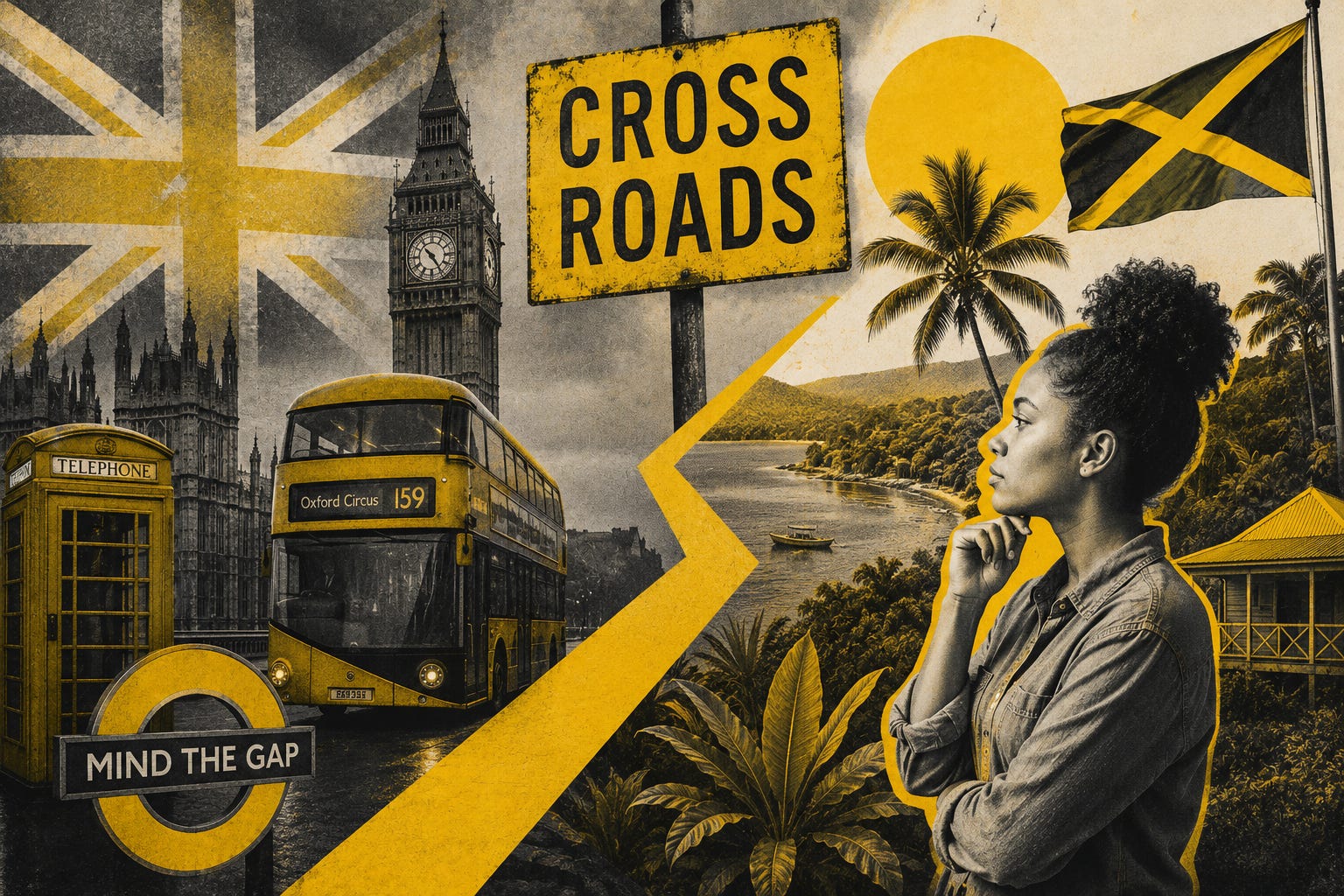
There was a time when Jamaicans looked at Britain as the model.
Stable government. Strong institutions. Predictable leadership. Energy security. Economic confidence. A country that appeared almost impossible to shake.
Meanwhile, Jamaica was carrying one of the heaviest debt burdens on Earth, battling crime, political tension, weak growth, and repeated economic shocks. By 2012 and 2013, Jamaica’s public debt had climbed to roughly 144 to 148 per cent of GDP, placing the country among the most indebted nations in the world.
Many believed the island was heading toward permanent economic instability.
Then came the long and painful restructuring period involving the International Monetary Fund.
The adjustment was brutal.
Taxes increased. Spending tightened. Public sector restraint became normal. Governments faced pressure to maintain fiscal discipline year after year regardless of politics. Jamaicans endured austerity, wage restraint, and economic pressure that touched almost every household.
But something important happened in the middle of all that hardship.
The country slowly became more stable.
Over roughly a decade, Jamaica cut its debt burden from around 144 per cent of GDP to approximately 72 per cent, one of the most dramatic debt reductions recorded anywhere in the modern era. More recent revised figures now place Jamaica’s debt ratio closer to 62.4 per cent of GDP.
The IMF itself has repeatedly praised Jamaica’s macroeconomic discipline and institutional reforms. In its 2025 Article IV consultation, the IMF described Jamaica as having an “enviable track record” of macroeconomic stability and prudent management.
That does not mean Jamaica is rich.
It does not mean Jamaica is easy.
It does not mean Jamaica solved crime, migration, low wages, housing affordability, brain drain, or vulnerability to hurricanes.
But it does mean something fundamental shifted.
The country learned discipline because it had no choice.
And now, ironically, parts of Britain appear to be learning the opposite lesson.
Six Prime Ministers. Possibly Seven.
Since the Brexit referendum in 2016, Britain has burned through six prime ministers.
David Cameron. Theresa May. Boris Johnson. Liz Truss. Rishi Sunak. Keir Starmer.
And if current political pressure continues, Britain could soon be discussing a seventh leader in roughly ten years.
Over the same approximate period, Jamaica has had essentially two prime ministers dominate political leadership, Portia Simpson Miller and Andrew Holness.
Think about that contrast carefully.
Britain, one of the world’s largest economies and historically one of its most stable democracies, now changes leaders with the rhythm of a developing political crisis.
Jamaica, the country once mocked for instability, now appears comparatively predictable.
Dean Jones of Jamaica Homes said the comparison would once have sounded absurd.
“Twenty years ago, nobody in Jamaica would have seriously argued that Britain should learn economic discipline from Jamaica. Today, people are quietly starting to say exactly that.”
Britain’s Energy Problem Is Bigger Than Politics
The UK’s problems are not simply about personalities.
This is deeper.
Britain is increasingly confronting the reality that decades of cheap energy assumptions, globalisation, and political complacency left the country dangerously exposed. Recent conflicts involving Russia, Ukraine, and instability connected to the Middle East have repeatedly exposed Britain’s dependence on imported energy.
Government debt has climbed sharply. UK public debt now sits around 95 per cent of GDP, levels not consistently seen since the post-war era.
Meanwhile, UK bond yields recently surged above 5 per cent, increasing borrowing pressure on government finances and exposing investor anxiety about Britain’s long-term economic direction.
The country has also suffered:
Major shocks since 2008
• The global financial crisis
• Brexit
• Covid 19
• The Ukraine war
• Energy inflation
• Middle East instability
• Rising migration tensions
• Weak productivity growth
• Housing affordability problems
• Regional inequality
Britain’s economic story increasingly sounds less like unstoppable Western dominance and more like a country struggling to maintain the living standards and institutional confidence it once took for granted.
Economic growth has remained sluggish for years. Productivity growth has stagnated. Real wages for many households barely moved for long periods following the 2008 financial crisis. Public frustration has deepened across large parts of the country outside London and the South East.
Even British publications have started openly asking whether the UK is becoming “ungovernable.”
The Numbers Behind Britain’s Pressure
Britain remains a massive economy with a GDP of roughly US$3.5 trillion. Jamaica’s economy is tiny by comparison at around US$20 billion.
But size alone does not protect a country from instability.
The UK now faces:
• Public debt approaching 100 per cent of GDP
• Weak productivity growth since 2008
• High energy import dependence
• Persistent inflation pressure
• Housing affordability problems
• NHS strain and ageing population costs
• Increasing political fragmentation
• Growing distrust in institutions
Meanwhile Jamaica, despite repeated hurricanes and global shocks, has managed to:
• Reduce debt dramatically over roughly a decade
• Maintain primary budget surpluses
• Improve foreign reserve positions
• Stabilise inflation more effectively than in previous decades
• Expand infrastructure investment
• Strengthen tourism recovery after Covid
• Build greater fiscal buffers against shocks
That contrast is beginning to attract international attention.
Relative Stability Matters
People with money are increasingly asking harder questions about where they place their capital, families, businesses, and long-term futures.
For decades Britain benefited from the assumption that Western democracies automatically offered superior stability, stronger institutions, and safer long-term investment conditions.
That assumption is now under pressure.
Global investors are becoming more sensitive to political fragmentation, energy dependency, debt exposure, taxation pressure, and declining confidence in institutions. Countries once viewed as unquestionably stable are now being reassessed through a far more cautious lens.
And relative stability matters.
In an era of political fragmentation and economic uncertainty, real estate increasingly follows confidence, not just wealth.
Across the Caribbean, diaspora investors, internationally mobile professionals, and regional businesses are increasingly reassessing how political stability, fiscal discipline, energy resilience, and social cohesion affect long-term investment decisions.
The Caribbean is increasingly being viewed not merely as a tourism region, but as a strategic alternative for people seeking geographic diversification and exposure outside increasingly volatile Western political environments.
The Psychological Shift Is Important
Perhaps the most fascinating part of this is psychological.
For decades, countries like Jamaica were taught to believe stability only existed elsewhere.
Britain represented order.
Jamaica represented risk.
But the modern world is reshuffling those assumptions.
Britain now faces:
• Leadership instability
• High debt costs
• Energy insecurity
• Housing pressure
• Political fragmentation
• Falling trust in institutions
• Deep cultural division
• Slowing growth
Meanwhile Jamaica, despite its vulnerabilities, has spent years quietly strengthening fiscal credibility, reducing debt, modernising infrastructure, and improving macroeconomic resilience.
Even after repeated natural disasters, the IMF recently noted that Jamaica now possesses stronger fiscal buffers and financing capacity than in previous decades.
Dean Jones said Jamaicans should not underestimate what the country has achieved.
“Jamaica still has serious problems. Nobody sensible denies that. But there is also a dangerous habit in this region of failing to recognise progress when it actually happens.”
“The truth is that many larger countries now look politically exhausted, economically stretched, and socially divided in ways Jamaicans once assumed only happened in smaller developing nations.”
Britain Still Has Huge Strengths
Britain remains one of the world’s largest economies.
London remains a global financial centre. British universities remain among the best on Earth. The UK still has enormous soft power, deep capital markets, world class research institutions, military influence, and global relevance.
Jamaica is not replacing Britain.
That is not the point.
The point is that stability is no longer guaranteed simply because a country is rich.
And discipline matters.
Jamaica was forced into discipline by crisis.
Britain spent decades assuming crisis was something that happened elsewhere.
Now both countries stand in a strange historical moment where a small Caribbean island that once stood on the edge of bankruptcy is increasingly being discussed internationally as an example of fiscal resilience and macroeconomic recovery.
That alone says something extraordinary about how much the world has changed.