

Britain's Social Media Ban Is About More Than Social Media
The debate is not simply whether children should be protected online. It is whether governments should decide how future generations access the digital world.


Democracies rarely expand their authority all at once.
More often, power grows incrementally, usually in response to a genuine problem that society wants solved. A crisis emerges. Public concern grows. Politicians promise action. New rules are introduced. Most people welcome the intervention because the issue at hand appears serious enough to justify it.
Britain’s decision to ban social media access for children under the age of 16 follows a familiar pattern.
The government argues that social media is contributing to anxiety, depression, bullying, self harm, exposure to harmful content and a range of other problems affecting young people. Many parents agree. Many teachers agree. Many mental health professionals agree. Several campaigners who have lost children under tragic circumstances have welcomed the move.
Viewed through that lens, the decision is understandable.
Yet some of the most important public debates are not about whether a problem exists. They are about whether the proposed solution creates new questions that society has not fully considered.
That is where Britain’s social media ban becomes interesting.
The issue is not simply whether children should be protected online. Most people support that objective. The bigger question is whether governments should increasingly determine how future generations interact with the digital world.
That debate is likely to continue long after the headlines surrounding this announcement have faded.
A Generation Raised Online
For many adults, social media remains something that was adopted later in life.
For today’s teenagers, it is something they have never lived without.
The modern internet is not merely a source of entertainment. It is where friendships are maintained, communities are formed, skills are learned and businesses are built. It is where political movements organise, where cultural trends emerge and where young people increasingly discover opportunities that previous generations could never have imagined.
A teenager in Kingston can learn coding from someone in California. A student in Manchester can watch university lectures from Singapore. A young entrepreneur can build an audience, launch a business and earn an income without ever leaving home.
None of this means social media is harmless. Far from it.
The evidence linking excessive online engagement to mental health concerns continues to grow. Parents are rightly worried about cyberbullying, online predators and algorithm driven content that can lead vulnerable young people into unhealthy spaces.
The challenge is that the internet has become both a source of opportunity and a source of risk.
Managing that balance is not straightforward.
As a result, governments around the world are increasingly being forced into decisions that previous generations never had to contemplate.
The Right Diagnosis, The Wrong Cure?
Many of the technology companies affected by the ban have criticised the decision.
Their argument deserves consideration.
They suggest that removing young people from mainstream platforms may simply push them towards less regulated corners of the internet where safeguards are weaker and oversight is virtually non existent.
History suggests there is some merit to that concern.
Young people have always found ways around restrictions.
They did it before smartphones existed.
They did it before social media existed.
They will almost certainly continue doing so.
The comparison frequently made by politicians is alcohol. Society accepts that some teenagers will find ways to drink despite age restrictions, yet still maintains laws limiting access because they establish a social standard.
That argument is reasonable.
The difficulty is that digital platforms differ from physical products. A bottle of alcohol cannot be hidden inside thousands of websites, applications and encrypted communities. The internet is adaptive. Restrict one pathway and another often emerges.
This is why some critics have described the policy as the right diagnosis but the wrong cure.
They do not necessarily dispute the existence of harm. They question whether prohibition is the most effective response.
The Question Beyond Social Media
The more significant issue may be what this decision reveals about the evolving relationship between governments and technology.
For much of the internet age, policymakers struggled to keep pace with innovation. Technology moved faster than legislation. Platforms expanded globally while governments reacted slowly.
That era may be ending.
Around the world, governments are becoming increasingly willing to regulate online behaviour, online speech, online commerce and online access.
Some of that regulation is necessary.
Consumers deserve protection.
Children deserve protection.
National security concerns deserve attention.
Yet every expansion of regulatory authority raises an important democratic question.
Where should the boundary exist?
“I don’t think the biggest story here is social media,” I recently said while reflecting on the announcement. “The bigger story is that governments are becoming more comfortable deciding how citizens engage with the digital world. That deserves scrutiny regardless of which political party happens to be in power.”
That is not an argument against regulation.
It is an argument for vigilance.
Healthy democracies depend on citizens who are willing to ask difficult questions even when they agree with the underlying objective.
Why This Matters To Property And Business
At first glance, this may appear far removed from real estate.
In reality, the connection is closer than many realise.
The property industry has undergone a profound digital transformation over the past decade.
People no longer discover homes exclusively through newspaper advertisements or estate agency windows. Buyers watch property tours on YouTube. Investors learn through podcasts. Developers build audiences on Instagram. Agents generate leads through social platforms. Consumers research neighbourhoods, schools and communities online long before arranging a viewing.
The digital economy increasingly overlaps with the property economy.
Many of tomorrow’s architects, surveyors, planners, developers and entrepreneurs are learning today through online platforms.
“Technology is no longer separate from economic participation,” I often tell clients and readers. “For many young people, digital access is becoming the front door to opportunity.”
That reality matters.
Because when governments regulate access to digital spaces, they are not merely regulating entertainment. They are influencing how future generations connect with information, education and economic opportunity.
Whether that influence proves positive or negative remains to be seen.
Lessons For Jamaica And The Caribbean
Britain’s decision should be watched carefully throughout the Caribbean.
Not because Jamaica should automatically follow Britain’s lead.
Nor because Britain is necessarily wrong.
Rather because this is a live experiment unfolding in real time.
Many of the concerns driving this policy exist in Jamaica as well. Cyberbullying exists. Online scams exist. Harmful content exists. Parents have legitimate concerns about what children encounter online.
At the same time, Caribbean nations face a different economic reality.
Digital connectivity represents one of the region’s greatest opportunities.
A small island nation can now access global markets, global education and global audiences in ways that were unimaginable a generation ago. Social media has helped Caribbean creators, businesses and entrepreneurs reach customers around the world.
That creates a dilemma.
How do societies protect young people without limiting the opportunities that digital access can provide?
There may be no perfect answer.
But there is a strong argument that digital literacy should receive as much attention as digital restriction.
Teaching young people how algorithms work, how misinformation spreads, how privacy functions and how manipulation occurs may ultimately prove as important as limiting access itself.
A Legacy Defining Decision
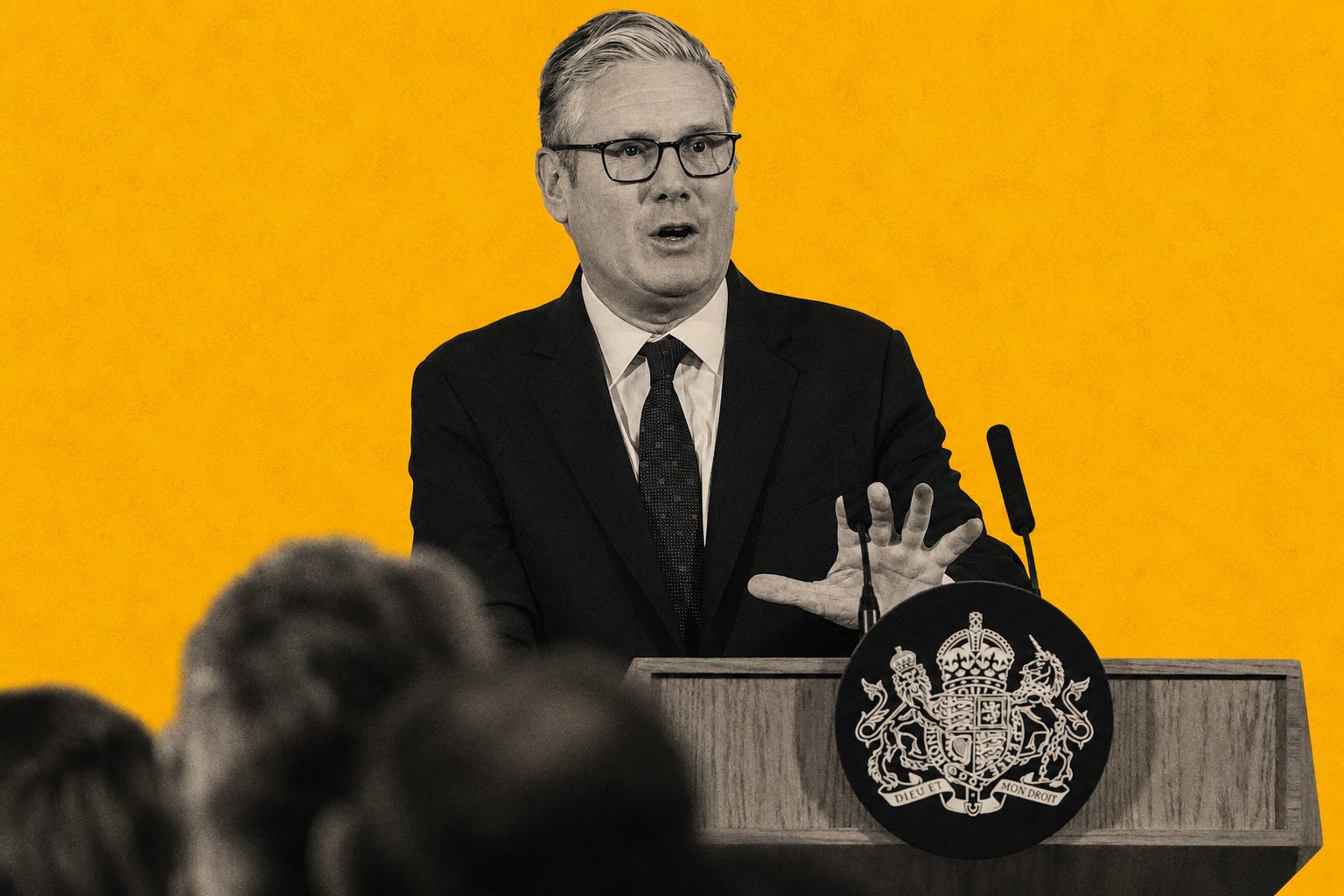
For Prime Minister Keir Starmer, this announcement may become one of the defining policies of his tenure.
Supporters will argue that he acted where others hesitated.
Critics will argue that government has reached too deeply into personal and family life.
Both interpretations are likely to persist for years.
The truth may ultimately lie somewhere between the two.
Social media has undoubtedly created challenges that previous generations never faced. Ignoring those challenges is not a serious option.
At the same time, governments must recognise that regulation rarely exists in isolation. Every intervention becomes part of a larger framework that shapes future policy decisions.
That is why the public conversation should not end with the question of whether social media is harmful.
The more important discussion concerns who decides how society responds to that harm.
Looking Beyond The Headlines
The easiest reaction to Britain’s social media ban is to view it as either a triumph or a disaster.
Reality is rarely that simple.
This is a serious attempt to address a serious problem. It deserves neither blind praise nor reflexive condemnation.
What it deserves is careful examination.
Because the most consequential political decisions are often those that appear entirely reasonable at the time.
Perhaps Britain will demonstrate that meaningful restrictions can improve the wellbeing of young people without creating unintended consequences.
Perhaps it will discover that technology adapts faster than legislation ever can.
Either way, the world will be watching.
The debate Britain has started is not really about Instagram, TikTok or Snapchat.
It is about the future relationship between citizens, technology and the state.
And that conversation is only just beginning.