


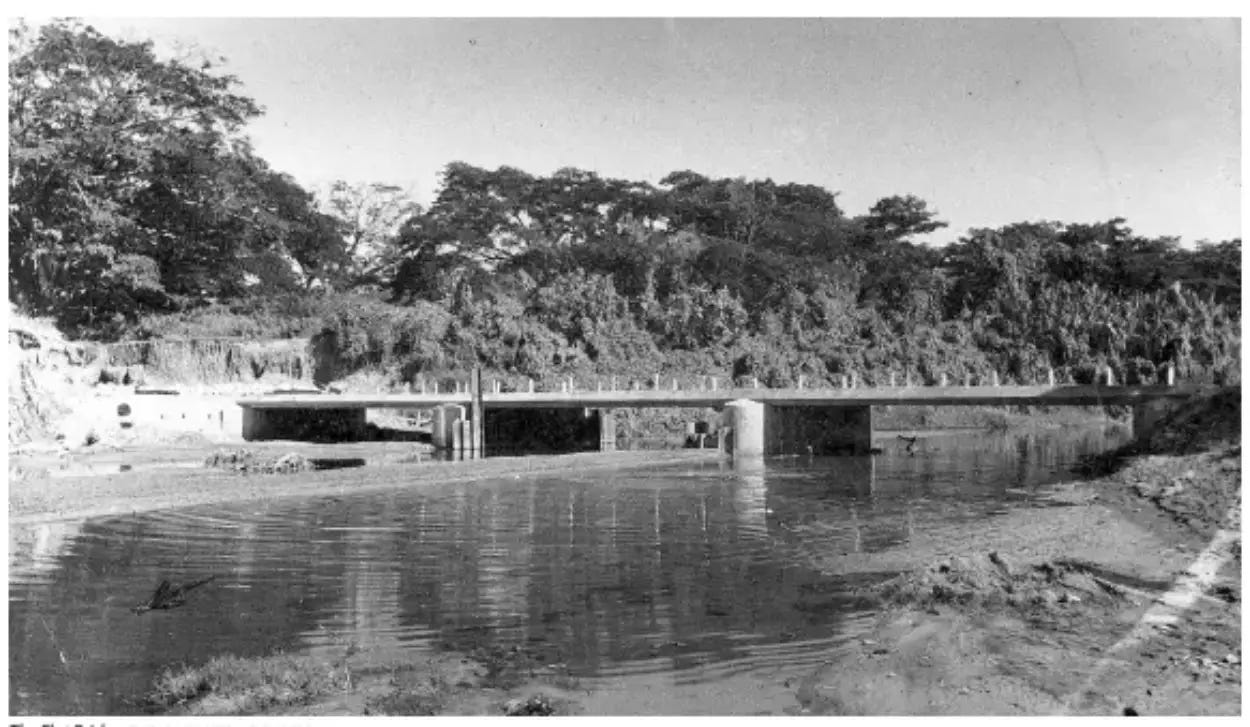
Of course, it can. Growing up in Jamaica, I was often told that Flat Bridge, located in the parish of St. Catherine, could not be widened or reinforced with barriers, and that many had tried and failed. I can’t speak much about those times, but with over 25 years in the fields of construction, architectural design, engineering, and surveying, I can confidently say: yes, it absolutely can.
However, as with most major projects, the key factors come down to a few crucial elements: money, time, logistics, and the will of the people and the government. If you need proof, look no further than the engineering feats accomplished in countries like China, where bridges span miles across deep oceans, or towering structures have been built against the most daunting natural challenges. The Rio Cobre River runs beneath Flat Bridge, but this is no competition for modern engineering.
Certainly, the road cut into the mountain around the bridge needs attention and some widening in parts, but this too is entirely achievable—and it would result in a much safer passage for the people. I’ve seen numerous images of vehicles going over the edge, and honestly, it’s time for a change.
The challenge with widening Flat Bridge lies in the technical aspects—mainly a careful study of the bridge’s structure and the bridge’s movement over time. Any widening would need to be structurally compatible with the existing framework. But if you ask me, the best approach would be to rebuild the entire bridge and factor in the roads as well. This could address a whole host of safety and accessibility concerns.
But there are several engineering hurdles that need to be considered. Seismic movement, which could affect the stability of the bridge, is one such concern. The Rio Cobre’s riverbed poses additional difficulties, being composed of loose sediment and boulders that make it hard to establish solid foundations for a wider structure. The river is known for sudden surges and unpredictable flooding, adding another layer of complexity. Furthermore, the surrounding land might not be able to support the weight of an expanded bridge without extensive reinforcement.
Beyond the technical and engineering challenges, there is significant resistance to change. Flat Bridge is one of Jamaica’s oldest bridges, dating back to the 18th century, and it holds immense historical and cultural value. Any plans to widen or alter it would likely face pushback from conservationists who aim to preserve its original structure and legacy.
So, what’s the alternative? Instead of widening Flat Bridge, why not build a new, modern bridge nearby? This way, we can address safety concerns and improve traffic flow without disrupting the historic charm of Flat Bridge. Preserving the original structure as a historical landmark, while still achieving the necessary safety improvements, could be a balanced solution.
Given the scale of the project, overseas experts should certainly be brought in to lend their expertise in bridge construction, engineering, and design.
In conclusion, here are five possible alternatives for improving the Flat Bridge situation:
Construct a new bridge nearby: Build a new modern bridge close to Flat Bridge, preserving the old structure as a cultural and historical landmark. This would mitigate safety issues and reduce traffic congestion without altering the original bridge.
Upgrade the existing bridge: Instead of widening, reinforce and modernize the current structure with additional safety measures, such as barriers or wider lanes. This would ensure the bridge meets current traffic needs without compromising its integrity.
Rebuild the bridge entirely: Remove the old bridge and replace it with a new, state-of-the-art structure designed to accommodate the increased traffic while maintaining environmental safety and aesthetic value.
Strengthen surrounding infrastructure: Focus on improving the roads leading to the bridge, ensuring that the entire access route is optimized for both safety and flow. This would alleviate some pressure from the bridge without altering its design.
Introduce a toll system: Consider implementing a toll on the new bridge or expanded access roads, with funds allocated for maintenance, upgrades, and environmental preservation efforts.
These options could dramatically improve safety and access to this crucial part of Jamaica’s infrastructure, while also supporting investment and real estate development in the surrounding areas. The wider context of this improvement goes beyond mere transportation—it’s about enhancing Jamaica’s potential as a hub for both local and international investment, boosting tourism, and improving the real estate market.
Let’s consider these options carefully and think about the long-term benefits for both Jamaica and its visitors.
Disclaimer: The views and opinions expressed in this post are those of the author and do not necessarily reflect the official position or policy of any organization or entity. The information provided is intended for general informational purposes only and should not be relied upon as professional advice. Always consult with qualified professionals for specific advice regarding construction, engineering, or historical preservation.