

Cuba, Jamaica and the Caribbean
Bruce Golding's reflections on Cuba offer a timely reminder of how diplomacy, trade and regional cooperation continue to shape Jamaica's future in an increasingly uncertain world.

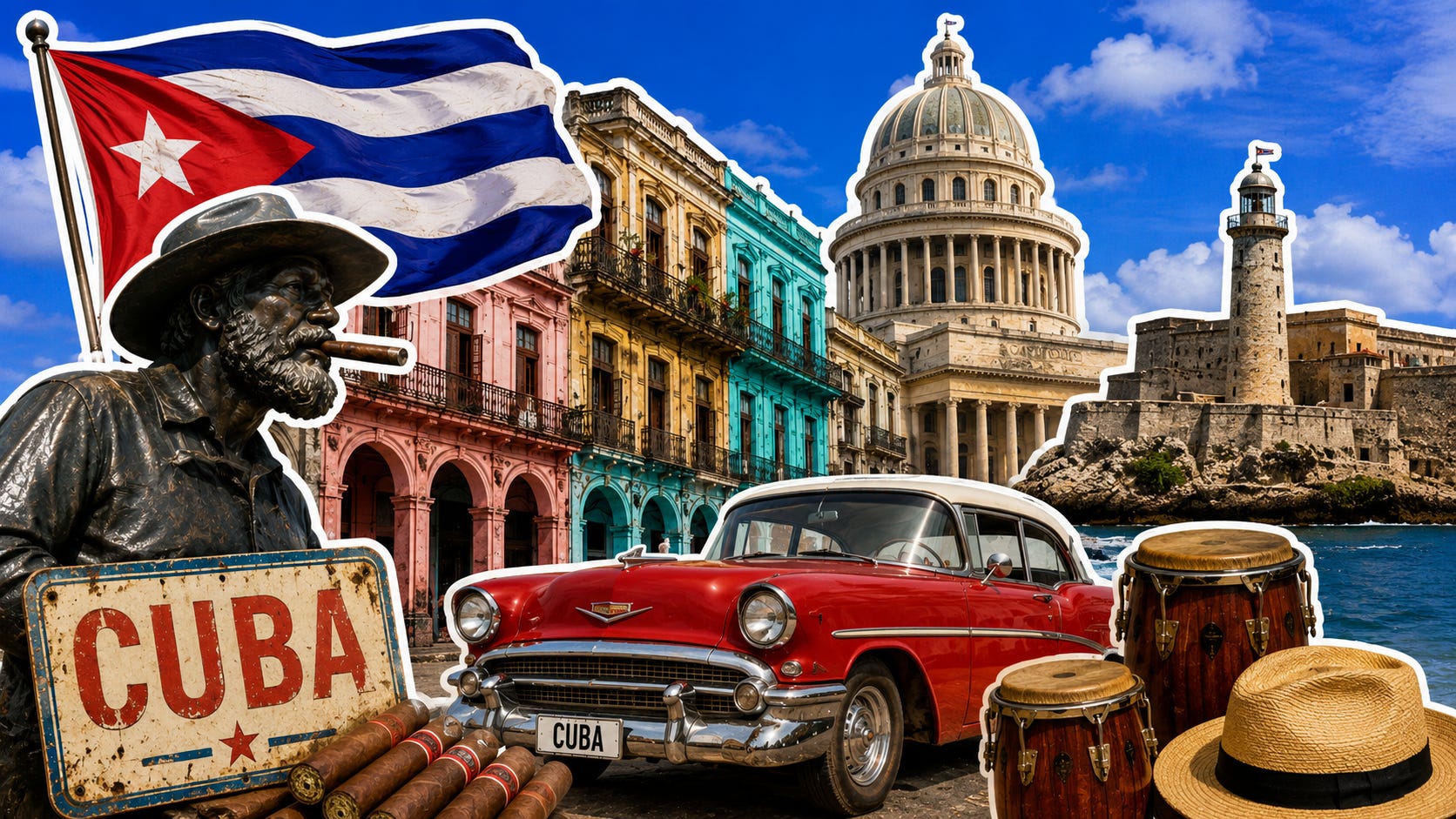
Editor’s Note: This article was inspired by remarks made by former Prime Minister Bruce Golding during a recent public discussion on Cuba, diplomacy and Caribbean affairs. The wider analysis and conclusions presented are those of Jamaica Homes.
The conversation about Cuba has never been only about Cuba.
For Jamaica and the wider Caribbean, developments in Havana have often carried implications far beyond the island itself. Trade, tourism, migration, healthcare, diplomacy, investment and regional stability are all influenced, directly or indirectly, by the relationship between Cuba and the wider world.
That reality was brought into focus once again during recent remarks by former Prime Minister Bruce Golding, who reflected on Cuba’s long and complicated relationship with the United States and the practical challenges that have shaped it over decades.
While Golding’s comments centred on Cuba, they also raised broader questions that remain highly relevant for Jamaica and the wider Caribbean. How should small states navigate relationships with major powers? Can long-standing disputes be resolved through dialogue and compromise? And what opportunities might emerge if old barriers begin to soften?
These are not merely diplomatic questions. They are economic questions. They are development questions. And for countries like Jamaica, they are questions that touch the everyday lives of ordinary people.
Golding suggested that one of the enduring challenges in United States-Cuba relations extends beyond ideology and political differences. He recalled discussions with Cuban leadership during his time as Prime Minister and reflected on the unresolved issue of assets nationalised following the Cuban Revolution.
For decades, public discussion of Cuba has often focused on political systems and ideological divisions. Yet Golding’s observations highlighted another reality: many international disputes are ultimately rooted in practical concerns involving property, compensation, trust and historical grievances.
Whether one agrees with his assessment or not, the point is significant.
When disputes are framed solely through ideology, compromise becomes difficult. When they are viewed through practical lenses such as compensation, valuation and negotiated settlement, opportunities for dialogue can emerge.
History is full of examples where nations eventually found ways to resolve issues once considered impossible to settle. That does not mean resolution is easy, nor does it guarantee success. It simply means that diplomacy often succeeds when parties focus on achievable outcomes rather than permanent disagreements.
For Jamaica, there is an important lesson in that.
Small countries rarely have the luxury of viewing international affairs as distant events. Decisions made in Washington, Beijing, London, Brussels or Havana can influence local economies, affect employment, shape investment flows and alter the prospects of entire industries.
Global events are no longer global in the abstract. They arrive quickly at our shores.
A change in travel policy can affect hotel occupancy. A change in trade policy can influence prices in supermarkets. A disruption in supply chains can increase construction costs. A shift in migration patterns can place pressure on labour markets.
For Jamaica, these realities are particularly important because the island’s economy is deeply interconnected with the wider world.
Tourism remains one of Jamaica’s most significant economic sectors. The industry supports not only hotels and attractions but also farmers, entertainers, transport operators, artisans, restaurateurs and thousands of small businesses.
Likewise, remittances continue to provide critical support to many Jamaican households. Funds sent home by family members abroad often help to pay school fees, medical expenses, mortgages, rent and everyday living costs.
International investment also plays a significant role in housing, infrastructure, commercial development and business expansion.
These connections create opportunities, but they also create vulnerabilities.
As a result, Caribbean leaders frequently find themselves balancing principle with practicality. They must protect national interests while recognising economic realities. They must maintain sovereignty while navigating relationships with much larger powers.
That balancing act is not unique to Jamaica.
Across the Caribbean, governments face similar challenges. Small island states operate within an international system where larger nations possess considerable economic influence. Trade access, tourism flows, financial regulations and migration policies can all have significant consequences for regional economies.
Recognising those realities does not represent weakness.
It represents realism.
As Dean Jones, founder of Jamaica Homes and Realtor Associate, observes:
“The future of the Caribbean will not be determined by the size of our islands, but by the quality of our decisions. Geography placed us here; wisdom will determine where we go next.”
The discussion surrounding Cuba also raises important questions about the future of regional cooperation.
For many years, Caribbean leaders have spoken about the importance of integration. Organisations such as CARICOM have sought to strengthen regional ties, improve cooperation and create opportunities for shared growth.
Progress has been made, but significant barriers remain.
Transportation between Caribbean islands can still be expensive and inconvenient. Trade within the region often faces regulatory hurdles. Professional mobility remains uneven. Food import bills continue to place pressure on national budgets.
At times, Caribbean nations appear to compete with one another more than they collaborate.
Tourism provides a useful example.
Many islands market themselves to similar visitor markets. Investment opportunities are often promoted in competition with neighbouring countries. Governments compete for airline routes, foreign direct investment and international attention.
Competition is natural and often healthy.
However, cooperation can be equally important.
A stronger Caribbean does not require weaker individual nations. In fact, regional cooperation can enhance national competitiveness by creating larger markets, improving resilience and attracting greater investment.
A more prosperous Cuba would almost certainly present both opportunities and challenges for the region.
In some areas, increased competition could emerge. Tourism is one obvious example.
Yet opportunities could also develop in areas such as healthcare, education, agriculture, logistics, renewable energy and cultural exchange.
The important point is that Caribbean countries should approach such developments strategically rather than emotionally.
Regional success is not a zero-sum game.
One country’s progress does not automatically require another country’s decline.
Sometimes the Caribbean behaves like a group of neighbours arguing over fence lines while overlooking the value of the entire community. The larger opportunity often lies not in winning the argument but in improving the neighbourhood.
That may sound simple, but it reflects a deeper truth about development.
The region’s greatest untapped resource may not be found beneath the ground or offshore. It may be found in cooperation itself.
This is particularly relevant at a time when the global economy is experiencing considerable uncertainty.
Geopolitical tensions, supply chain disruptions, inflationary pressures, climate-related challenges and shifting labour markets continue to reshape the international landscape.
In such an environment, resilience becomes increasingly important.
For Jamaica, resilience means more than recovering from setbacks. It means building an economy capable of adapting to change.
It means investing in infrastructure.
It means improving productivity.
It means strengthening education and skills training.
It means supporting entrepreneurship and innovation.
It means expanding opportunities in sectors ranging from technology and logistics to agriculture and renewable energy.
And it means recognising that long-term prosperity cannot rely too heavily on any single industry or source market.
Housing and real estate provide a useful lens through which to view these broader issues.
At Jamaica Homes, we often examine the housing market through local factors such as supply, affordability, financing and demand. Yet international developments also play a significant role.
Interest rates influence borrowing costs.
Tourism affects property investment.
Migration patterns shape housing demand.
Construction costs are affected by global supply chains.
Diaspora confidence influences purchasing decisions.
In other words, a discussion about Cuba can also become a discussion about Jamaica’s economy, investment environment and future development.
The Caribbean does not exist in isolation.
Every major geopolitical shift creates ripple effects that eventually touch local communities.
That is why conversations such as the one sparked by Golding’s remarks deserve careful consideration.
Not because Jamaica should adopt the position of one country or another.
Not because Caribbean nations should choose sides in every international dispute.
But because understanding these issues helps governments, businesses and citizens make more informed decisions about the future.
As Dean Jones notes:
“Progress begins when countries stop asking who wins the argument and start asking what creates the greatest opportunity for their people.”
That perspective may be particularly important for the Caribbean in the years ahead.
The region faces significant challenges, but it also possesses remarkable strengths.
Its people are resilient.
Its culture is globally recognised.
Its strategic location remains valuable.
Its entrepreneurial spirit continues to generate opportunity.
Its diaspora remains one of its greatest assets.
The challenge is translating those strengths into sustained economic growth and improved living standards.
That requires leadership.
It requires investment.
It requires long-term thinking.
And it requires an understanding that prosperity is rarely achieved through isolation.
History offers many examples of countries that remained trapped by old disputes.
It also offers examples of countries that found ways to move beyond them.
The future relationship between Cuba and the United States will ultimately be shaped by decisions made in Havana and Washington. Jamaica cannot determine those outcomes.
What Jamaica can determine is how prepared it will be for whatever future emerges.
It can strengthen its institutions.
It can diversify its economy.
It can deepen regional partnerships.
It can invest in its people.
And it can position itself to take advantage of opportunities as they arise.
As Dean Jones observes:
“History remembers those who defended their position. Prosperity usually belongs to those who prepared for the future.”
That may be the most important lesson to emerge from this conversation.
The issue is not whether Jamaica should be for Cuba or against Cuba. Nor is it whether the Caribbean should align itself with one global power or another.
The real question is whether the region can build a future defined by cooperation, resilience and practical solutions rather than old divisions.
For Jamaica, that question is becoming increasingly important.
And for the Caribbean, it may help shape the next chapter of its development story.