

Cuba's Deepening Crisis Fuels Calls for Change as US Pressure Intensifies

Havana, Cuba, 5 June 2026
Cuba’s economic and humanitarian crisis appears to be entering a more dangerous phase as worsening power shortages, food insecurity, collapsing public services and escalating political tensions with the United States combine to place unprecedented strain on the island.
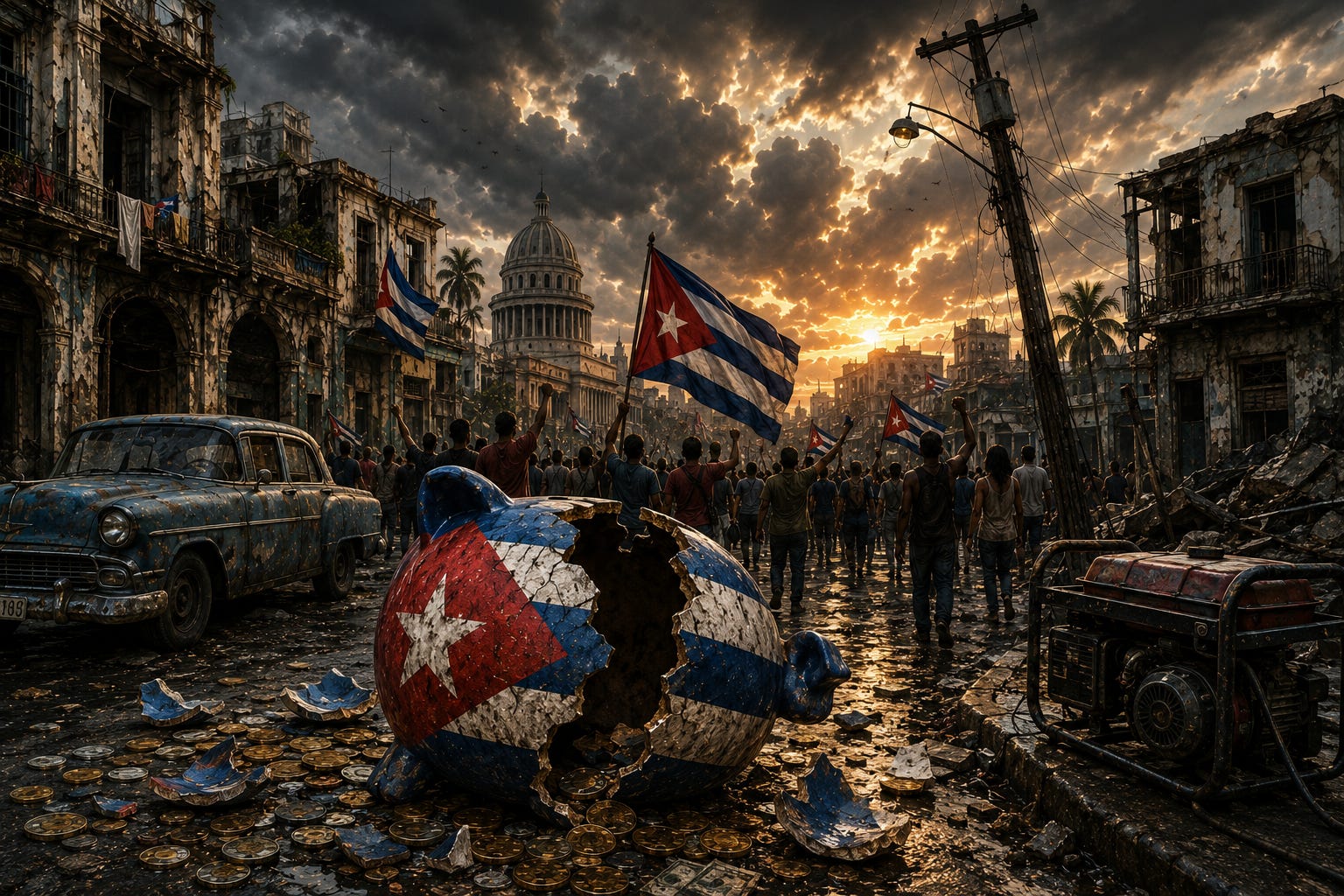
Across large parts of the country, prolonged electricity outages have become a defining feature of daily life. In some regions, residents report going days without power, disrupting access to water, transportation, refrigeration and basic household activities. The consequences are being felt in homes, hospitals and businesses alike.
The crisis has intensified after Cuba’s government acknowledged severe fuel shortages affecting electricity generation. The resulting blackouts have deepened existing economic hardships and further exposed the vulnerability of an already struggling population.
For many Cubans, survival has become an increasingly complex challenge.
Residents describe food shortages, deteriorating living conditions and growing frustration with the country’s leadership. Refrigerators sit unused because electricity is unavailable. Basic household appliances have become little more than decoration. In some communities, families rely on firewood to prepare meals when cooking fuel cannot be obtained.
The difficulties are particularly acute for pensioners and low income households.
Economic Reality Growing Harder
Cuba’s state salaries and pensions have failed to keep pace with inflation and rising living costs.
Although food remains available in certain parts of the economy, access is increasingly tied to foreign currency and remittances from relatives abroad. For many citizens who rely solely on state incomes, basic necessities have become increasingly difficult to afford.
The island’s long standing rationing system, once presented as a pillar of social protection, has also come under increasing pressure. Reports of shortages and delayed deliveries have become commonplace, while informal markets continue to expand as families seek alternative ways to secure food and medicine.
Healthcare services are facing similar challenges.
Medical professionals and residents have reported shortages of essential supplies, while fuel constraints have complicated transportation and emergency response services. The strain on public infrastructure reflects broader economic difficulties affecting much of the country.
Growing Public Frustration
The worsening conditions have coincided with a rise in public demonstrations and expressions of dissatisfaction.
Independent monitoring groups have reported a significant increase in protests over the past year, driven largely by concerns about food availability, electricity outages and broader economic conditions.
The Cuban government has responded by maintaining a firm security posture and rejecting suggestions that the country’s political system is responsible for the crisis. Officials continue to blame a combination of external pressures, including longstanding United States sanctions, alongside global economic challenges.
Critics of the government argue that internal policy failures and decades of economic mismanagement are equally responsible for the country’s decline.
That debate has become increasingly visible as ordinary Cubans confront deteriorating living standards and an uncertain future.
Washington Raises the Pressure
The situation has become more complicated following a series of actions by the United States aimed at increasing pressure on Cuba’s leadership.
On Thursday, Washington announced sanctions against Cuban President Miguel Díaz-Canel, members of his family and several other senior figures. The measures freeze any assets held within United States jurisdiction and restrict access to parts of the American financial system.
The sanctions follow a broader tightening of US policy toward Havana under President Donald Trump.
Recent measures have included expanded economic restrictions and heightened rhetoric regarding Cuba’s future. The developments come amid growing speculation about how Washington intends to address the island’s worsening instability.
Adding another layer to the dispute is the longstanding issue of property confiscated following the Cuban Revolution.
According to US estimates, certified claims linked to properties nationalised after 1959 are now valued at more than US$9 billion when accumulated interest is included. The issue remains one of the most persistent obstacles to any future normalisation of relations between Havana and Washington.
For many Cuban Americans whose families lost businesses, land and homes during the revolutionary period, the possibility of compensation or restitution has gained renewed attention amid the current political climate.
Caribbean Implications
While Cuba’s crisis is primarily a domestic issue, its effects are increasingly being felt across the wider Caribbean.
Migration pressures, economic uncertainty and concerns about regional stability have become growing topics of discussion among neighbouring states.
Cuba remains one of the Caribbean’s largest nations and an important player in regional diplomacy, healthcare cooperation and trade. Any significant deterioration in conditions could create ripple effects throughout the region, particularly for countries already managing their own economic and climate related challenges.
At the same time, regional governments continue to watch developments carefully, aware that instability in Cuba has historically carried consequences far beyond its borders.
An Uncertain Road Ahead
For now, there is little indication that either Havana or Washington is preparing to soften its position.
The Cuban government continues to defend its political system and reject foreign pressure, while the United States appears committed to increasing economic and diplomatic leverage.
Caught between those competing forces are millions of ordinary Cubans facing a daily struggle for electricity, food, healthcare and economic security.
Whether the current crisis ultimately produces reform, further confrontation or a negotiated path forward remains unclear.
What is becoming increasingly difficult to ignore, however, is the scale of the hardship now confronting many of the island’s citizens, and the growing sense that Cuba may be approaching a decisive moment in its modern history.