


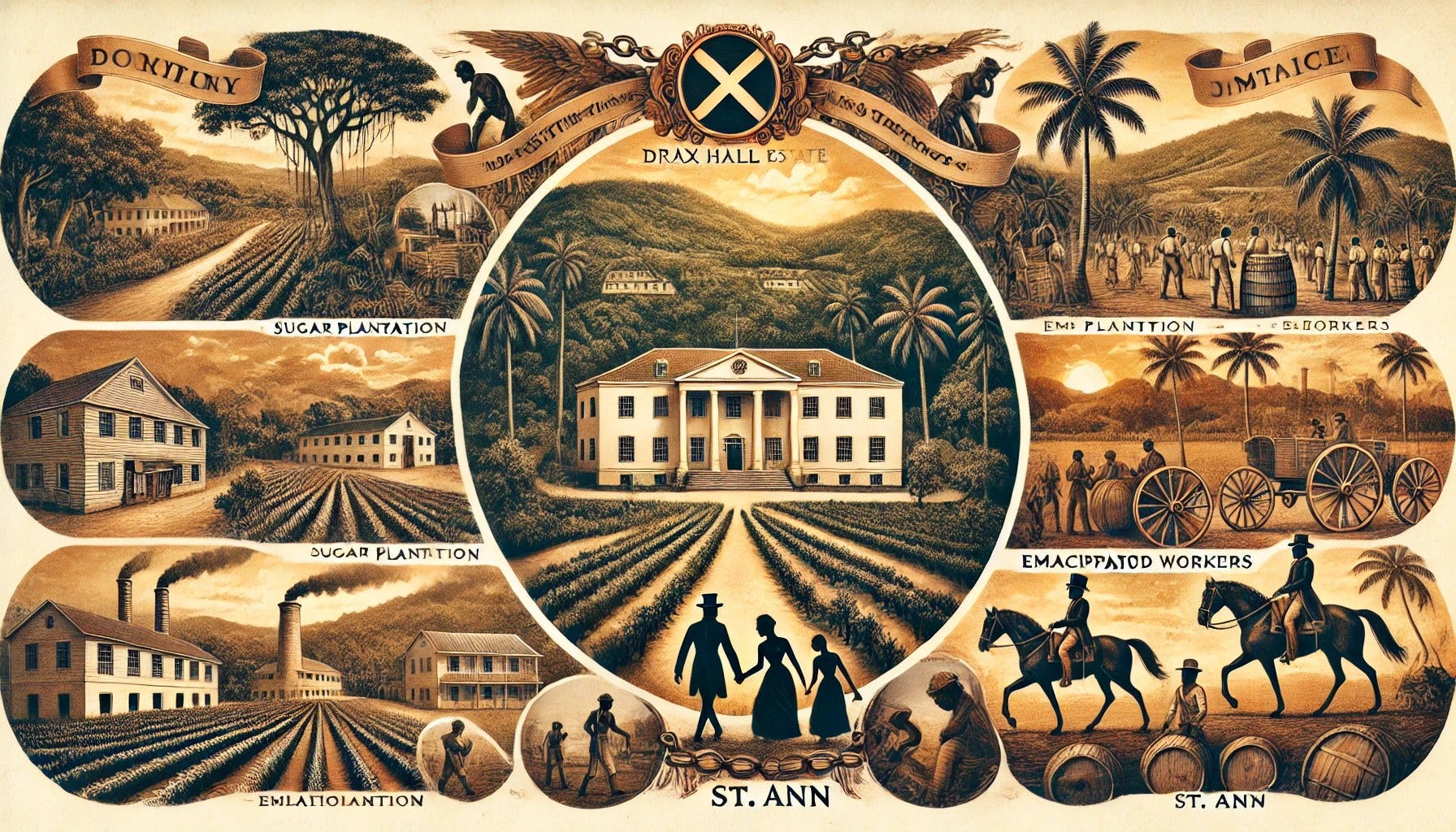
Drax Hall is a historical estate located in the parish of St. Ann, Jamaica, with a rich legacy dating back to the colonial era. The estate is named after the Drax family, who were prominent figures in Jamaica during the 17th and 18th centuries. Here’s an overview of its history:
The Drax Family and the Estate’s Beginnings
The history of Drax Hall is closely tied to the Drax family, specifically William Drax, an Englishman who arrived in Jamaica in the mid-1600s. He was granted extensive lands in St. Ann, including the land where Drax Hall would eventually be established.
The Drax family became known for their role in the island’s sugar industry and their significant landholdings. Like many other wealthy colonial families, they relied on the labor of enslaved Africans to manage and work the sugar plantations.
Plantation Era
During the 17th and 18th centuries, Drax Hall was a thriving sugar plantation. The estate was involved in the production of sugar, which was a major export during the colonial period. The plantation used slave labor, as did many estates in Jamaica at the time, contributing to the economy but also to the painful history of slavery on the island. The Drax family’s wealth and influence grew through the sugar trade and their control of this estate.
Post-Slavery and Decline of the Plantation Economy
The abolition of slavery in the British Empire in 1834, followed by the full emancipation of enslaved Africans in 1838, marked the beginning of significant changes for estates like Drax Hall. Many plantation owners struggled to adapt to the new labor system, and as the sugar industry began to decline, many estates fell into disrepair or were repurposed.
Drax Hall, like other sugar plantations, would have experienced a shift in its operation. Over time, the focus on sugar production waned, and the estate’s fortunes diminished, especially as the global demand for sugar decreased and new industries began to emerge in Jamaica.
Modern-Day Drax Hall
Today, Drax Hall is known for its historical significance and remains a notable location in St. Ann. While the estate itself is no longer a functioning plantation, its legacy continues to be remembered in Jamaica’s history.
The area surrounding Drax Hall has developed over time, with modern residential and commercial projects springing up in St. Ann. The estate and its surrounding region have become more integrated into the growing tourism and real estate sectors in Jamaica, with many visitors drawn to the area for its historical context and scenic beauty.
Legacy and Preservation
Although much of the original estate no longer exists, there are efforts to preserve the history of Drax Hall and its significance in Jamaica’s colonial past. Various artifacts and historical records from the plantation era, including those related to the Drax family and the use of enslaved labor, contribute to the broader understanding of Jamaica’s history during this time.
Today, the history of Drax Hall is an important piece of Jamaica’s cultural heritage, shedding light on the complexities of the island’s colonial history, the sugar industry, and the effects of slavery on the development of Jamaican society.
Conclusion
Drax Hall is a symbol of Jamaica’s colonial past, and while it no longer operates as a sugar plantation, it continues to hold historical importance in the country’s journey toward independence and modernity. It serves as a reminder of the complexities of Jamaica’s history and the enduring legacy of the plantation economy.