

Dreams Half-Built: Why Jamaica’s Unfinished Homes Hold the Key to Your Legacy

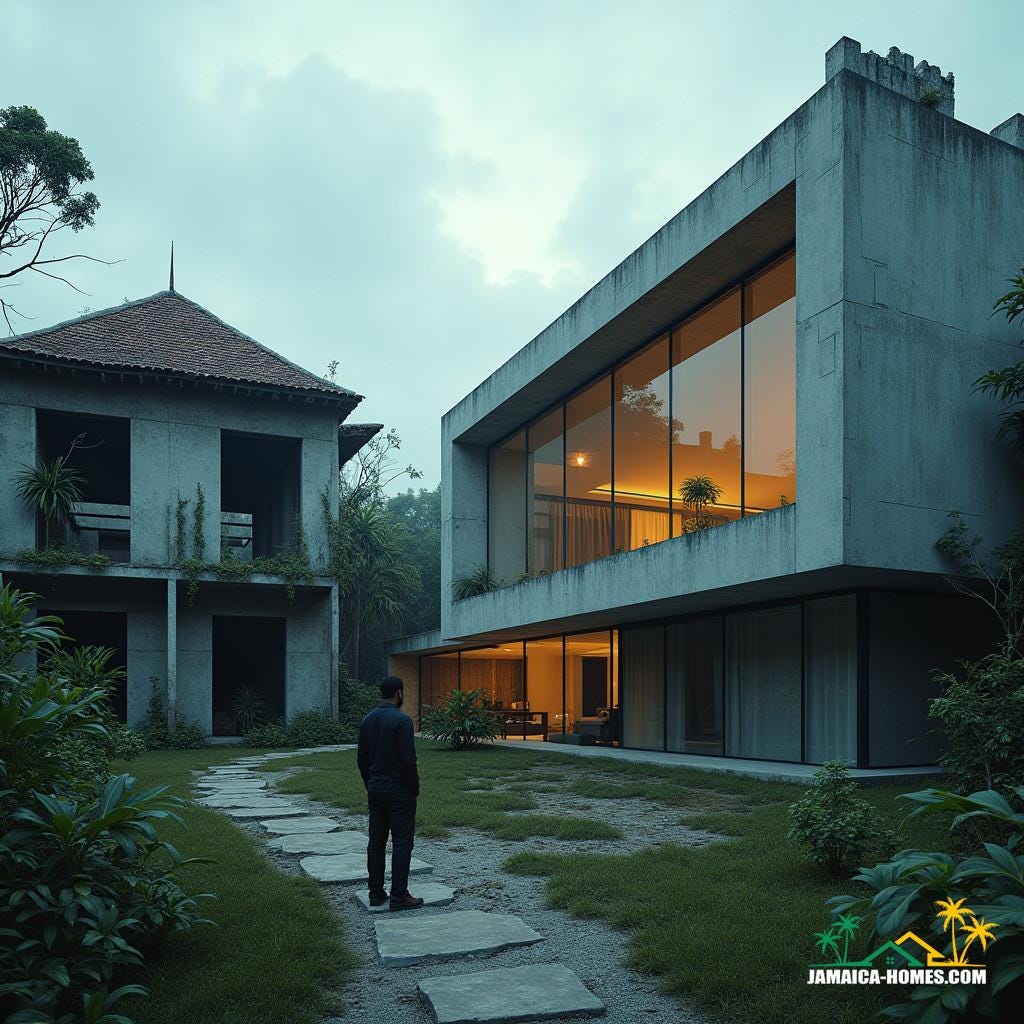
Scattered across the Jamaican landscape—from the hills of Manchester to the plains of St. Catherine—are concrete monuments to ambition, halted. They stand in silence: two-storey shells, rusted steel rods pointing at the sky, hollow staircases going nowhere. Some are draped in tarpaulin. Others cradle trees growing from their foundations. These are more than fixer-uppers. They are the unfinished dreams of a generation.
And yet… they are also your opportunity.
Fixer-uppers in Jamaica aren’t just about faded paint or a roof that needs patching. They are deeply woven into our island’s history—a story of migration, of sacrifice, of great plans interrupted by illness, heartbreak, bureaucracy, or death. These homes whisper of the Windrush generation, who left with hope, sent back barrels and blueprints, and dreamed of returning. Some did. Many never made it.
But the concrete remains. Still standing. Still waiting.
This is why fixer-uppers in Jamaica aren’t merely a smart financial decision—they are a living bridge between past hopes and future prosperity.
The Historical Roots of Jamaica’s Unfinished Homes
In the 1950s and 60s, thousands of Jamaicans left for Britain, Canada, and the U.S. under the promise of work and opportunity. Known as the Windrush Generation, many spent decades in cold flats dreaming of warm soil. They sent remittances to relatives, commissioned family land purchases, and funded “home back a yard” projects.
Entire homes were built one room at a time. Roofs poured when the next remittance came. Electrical wiring left dangling while waiting for the next job in Birmingham or Brooklyn. The goal was always to come home. But over time, life took its own turns. Children settled abroad. Parents aged. Plans got postponed. Some passed away before a single night was ever spent in the homes they built.
Today, those structures—ranging from 16-bedroom grand designs to humble two-room cottages—are part of Jamaica’s physical and emotional architecture.
And while many see them as failures, others see something else entirely.
“These buildings aren’t broken—they’re paused. The concrete may have cracked, but the vision is still alive. What someone else began, you can finish.” — Dean Jones, Founder of Jamaica Homes
Why Fixer-Uppers Are Jamaica’s Quiet Gold
1. They’re Priced for Potential
Fixer-uppers often sell at significant discounts—sometimes 30–50% below the market value of move-in-ready homes in the same area. This makes them a rare entry point into increasingly competitive locations like Portmore, Montego Bay, or sections of St. Ann.
2. Less Competition, More Room to Negotiate
While many buyers are chasing modern developments, fixer-uppers exist in a quieter corner of the market—one where fewer people are willing to do the work, but where wealth quietly builds for those who are.
3. Instant Equity Through Renovation
Unlike new builds where you pay a premium for someone else’s design, fixer-uppers allow you to create value. Every improvement—new tiles, solar water heater, secure fencing—adds measurable worth to your investment.
4. They’re Stories Waiting for a Final Chapter
These homes come with history. They aren’t hollow—they’re rich with meaning. Rebuilding them isn’t just property development. It’s legacy repair.
“In Jamaica, ownership is more than title. It’s inheritance, identity, and unfinished prayers poured into foundation blocks.” — Dean Jones
The Emotional Cost of Unfinished Dreams
Fixer-uppers carry emotional weight. They represent dreams deferred—not just of those who built them, but the generations after, who may have forgotten what these homes were meant to be.
Some of these houses were started with marriage in mind. Others were meant to house generations—children returning from foreign, aging parents who didn’t want to die abroad. But money ran out. Relationships ended. Illness struck. Bureaucracy choked progress. The house stood still while life moved on.
And now, there it sits—half-built, half-remembered.
But perhaps, not half-worthless.
Perhaps it’s time someone with courage walks into those doorless frames and says, “Let’s finish this.”
Things to Know Before You Buy a Fixer-Upper in Jamaica
1. Inspect What You Expect
Always get a detailed home inspection. Steel may have rusted, foundations may have shifted, or permits may need to be reviewed. Don’t rely on visual impressions—hire professionals.
2. Understand the Legal Paperwork
Is the land properly titled? Was the structure approved? Is there a family dispute over ownership? Jamaica has seen many unregistered lands and family land conflicts. Work with a reputable attorney and real estate professional to do full due diligence.
3. Budget for Surprises
Even if a house appears “half-finished,” restoring it may cost more than you expect. Material costs, labour delays, and structural fixes all add up. Always set aside 15–25% above your renovation estimate.
4. Work with Local Experts
Avoid hiring “a guy who knows a guy.” Use trusted, licensed contractors and realtors who know the area. Someone like Dean Jones of Jamaica Homes brings not just expertise, but relationships with surveyors, inspectors, banks, and town planners.
Jamaica’s Culture of the “Build-as-You-Go” Dream
For decades, the Jamaican way of building was incremental. No big bank loans. No flashy launches. Just block by block, year by year. Many fixer-uppers today are part of that culture—a culture of endurance.
It’s different from the West’s instant gratification. Here, real estate wasn’t about flipping. It was about building something that would outlive you.
And now, in the midst of economic shifts, rising housing costs, and increased demand from diaspora buyers, these half-finished homes are rising in value again. Investors see them. Developers see them. But what if you saw them, too—not as an outsider, but as someone meant to finish what was started?
Witty Connotation Alert: The Jamaican Grand Design
In Britain, there’s a show called Grand Designs, where families build elaborate dream homes, often going wildly over budget. In Jamaica, we had our own version: minus the cameras, plus the zinc sheets. Some dreamed of 9 bathrooms. Some never got past the kitchen.
But unlike the TV series, our “grand designs” often ended not in triumph, but in tarpaulin. Still—they weren’t failures. They were attempts. Bold ones. And now they’re available, waiting for someone with new plans, new money, or just new hope.
Who Is This Path For?
Not everyone. If you want a fully turnkey, granite-countertop, automatic-gate house, keep driving. But if you want to own something that grows, a fixer-upper might be for you.
Ideal for:
Returning residents looking to customise their dream retirement
Young professionals priced out of new builds
Investors seeking long-term rental income
Families willing to take the journey slowly, room by room
Let Dean Help You Finish the Story
Dean Jones, founder of Jamaica Homes and Realtor Associate at Coldwell Banker Jamaica Realty, has built a career connecting people to overlooked opportunities across the island. He doesn’t just see homes—he sees histories. His expertise can help you evaluate fixer-uppers not just for what they cost, but for what they could be.
“Every fixer-upper in Jamaica is more than bricks and steel. It’s a dream with a second chance. The only question is—will you be the one to finish it?” — Dean Jones
Final Thoughts: Owning the Legacy
Jamaica’s fixer-uppers are sacred ground. They’re not just housing options—they’re monuments to ambition, migration, and love. Yes, they need work. But they offer something rarer than polished tile and picket fences: a chance to finish what someone once believed in.
You won’t just gain property. You’ll inherit a legacy—and shape it with your own two hands.
Because here in Jamaica, concrete never forgets. And neither do dreams.