

Earthstrong 81: Bob Marley, Jamaica, and the Meaning of Owning a Piece of the Rock

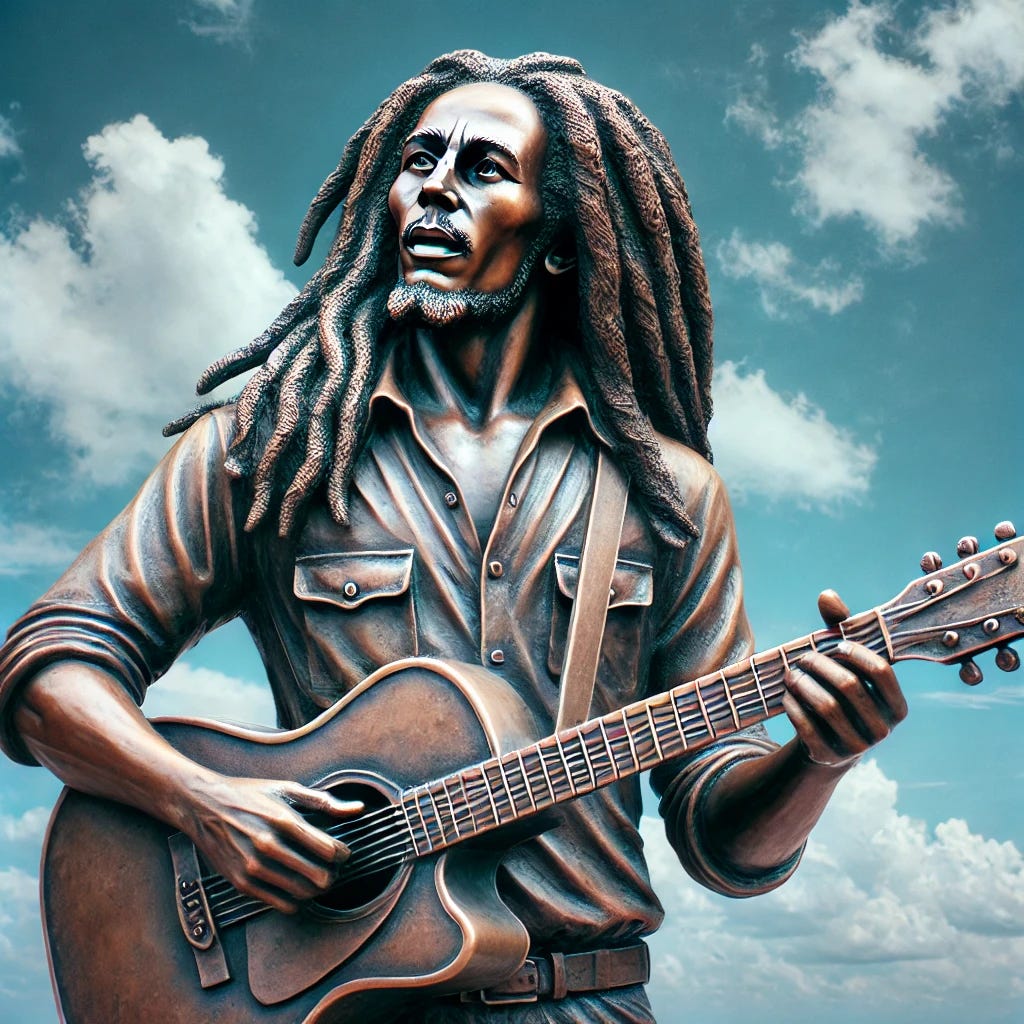
This morning, Jamaica woke up conscious.
Not hurried. Not distracted. Conscious.
From Nine Mile in St Ann to New Kingston, from rural districts to the diaspora watching the island clock, today carries a particular weight. It is the birthday of Bob Marley — an Earthstrong that has never belonged to nostalgia alone.
At 10:15 a.m., the day is still becoming itself. Sound systems are being set up. Museum gates are preparing to open. Radio stations are already deep in Marley’s catalogue. Families are talking. Young people are listening — some for the first time, some again, differently.
This is not yet celebration.
It is recognition.
Why Bob Marley’s Birthday Still Stops the Country
Bob Marley was born on 6 February 1945, in Nine Mile, St Ann, into a Jamaica that did not yet know independence and had barely tasted emancipation beyond the legal text. He would grow up to become Jamaica’s most globally recognised voice — but he never spoke over the people. He spoke from them.
Every year, his birthday forces a pause because Marley represents something Jamaica still hasn’t fully resolved:
What does freedom actually look like when lived?
As writer and real-estate thinker Dean Jones of Jamaica Homes reflects:
“Bob Marley didn’t sing about freedom as a finished event. He treated it as a condition you have to keep working on — socially, mentally, economically.”
That is why today still matters.
A Day Marked by Intention, Not Spectacle
As of this morning, events are expected to unfold across the day — but the tone is already set.
At 56 Hope Road, Marley’s former home and now the Bob Marley Museum, staff, musicians, historians, and visitors are preparing to mark the day not just with music, but with memory. This house matters because it grounds greatness in something ordinary: a Jamaican home, a yard, a community.
Elsewhere, Emancipation Park stands ready — its statues silently reminding passers-by that freedom is not an abstract idea, but something rooted in bodies, land, and history.
Across the island, today also sits within Reggae Month, reinforcing Marley’s role not as a lone genius, but as part of a wider cultural movement that gave Jamaica global voice long before it had global power.
Emancipation, Independence, and the Space Between
Jamaica carries two defining dates:
Emancipation (1838) — freedom from enslavement
Independence (1962) — freedom of governance
Bob Marley was born between them, into the long shadow of both.
He understood something many still struggle to articulate:
Legal freedom does not automatically become lived freedom.
Marley’s music constantly circled the gap:
Between being free and feeling free
Between having rights and having power
Between being Jamaican and owning Jamaica
Dean Jones puts it plainly:
“Independence gave us a flag. Emancipation gave us movement. Ownership — land, homes, assets — is what turns those things into permanence.”
This is where Bob Marley’s relevance sharpens, not softens, with time.
Land, Roots, and the Jamaican Question of Belonging
Bob Marley rarely sang directly about land titles or property law — but his work is saturated with the language of roots, grounding, exile, and return.
Those are not metaphors Jamaicans invented by accident.
In Jamaica, land has always been emotional, political, and spiritual:
Family land passed without paperwork
Homes built incrementally, not instantly
Generations living on property they occupy but don’t own
This reality still shapes modern Jamaica.
Today, conversations around:
Real estate
Housing access
Diaspora investment
Regularisation of land
are not separate from Marley’s legacy — they are extensions of it.
As Dean Jones writes:
“Owning a piece of the rock is not about status. It’s about anchoring your family’s story so it doesn’t drift with every economic wave.”
The Jamaican Dream, Reconsidered
For decades, the Jamaican dream was survival.
Then it became escape.
Now, increasingly, it is continuity.
Today’s Jamaicans — especially younger ones — are asking different questions:
What can I pass down?
How do I avoid starting from zero?
How do I stay connected to Jamaica without being trapped by it?
Bob Marley’s life offers a blueprint:
Global reach. Local grounding.
Dean Jones observes:
“Marley proved you can belong to the world without abandoning where you come from. Property ownership works the same way — it gives you options without erasing your roots.”
In this sense, investing in land or housing is not greed.
It is strategy.
It is cultural preservation by practical means.
Passing Something Forward
As Jamaica marks Bob Marley’s birthday this morning, many parents are quietly thinking beyond the music.
They are thinking about:
Children
Security
Inheritance
Stability in an unstable world
Marley left music.
But music alone does not pay school fees, secure housing, or protect families from displacement.
This does not diminish culture — it challenges Jamaicans to complete it.
Dean Jones writes:
“Culture without assets survives emotionally, but not structurally. Bob Marley gave us identity. It’s on us to give the next generation infrastructure.”
Why This Morning Matters
At 10:15 a.m., nothing has finished yet.
No final song has been sung.
No crowd has dispersed.
That is precisely the point.
Bob Marley’s birthday is powerful because it never feels concluded.
It feels ongoing.
His message still sits uncomfortably inside Jamaica’s reality:
We are free, but still becoming free
We are proud, but still vulnerable
We are global, but still negotiating ownership at home
As the day unfolds, music will play.
Tributes will come.
Quotes will circulate.
But the deeper question will remain long after tonight:
What will Jamaicans build on this rock?
Dean Jones leaves it here:
“Bob Marley didn’t leave us comfort. He left us responsibility. Earthstrong is not a celebration of what was — it’s a check on what we’re doing next.”
This morning, Jamaica is awake to that question.
And that may be the most fitting tribute of all.