


This is not a rebuke against single-parent families. Jamaica has many extraordinary mothers who have raised strong, capable children on their own. Anyone who has lived long enough on this island knows that the resilience of Jamaican women is one of the pillars of the nation. Many households have been held together by mothers who worked tirelessly, sometimes with very little, to give their children a chance.
But this reflection is about something broader than household structure. It is about home environment, community, and the cultural fabric of Jamaica—the values that once defined how families lived, worked, worshipped, and dreamed together.
There was a time when the grandparents were the matrons and patriarchs of the family. They were not just elders; they were anchors. Their homes were gathering places for the entire clan and often for the wider community. Their authority came not from wealth or status, but from respect earned through discipline, faith, and hard work.
In many Jamaican families, including my own, the week revolved around church. Jamaica has long been one of the most religious societies in the Caribbean, with Christianity deeply woven into everyday life. If you came from an Adventist background, the gathering might happen on Saturday. If it was another denomination, Sunday was the day.
After church, families gathered at the grandparents’ home. Children came, their parents came, cousins came, neighbours passed through. Food was shared, stories exchanged, and lessons about life quietly passed from one generation to the next.
That was the Jamaica many of us grew up knowing.
The Isaacs Family Tradition
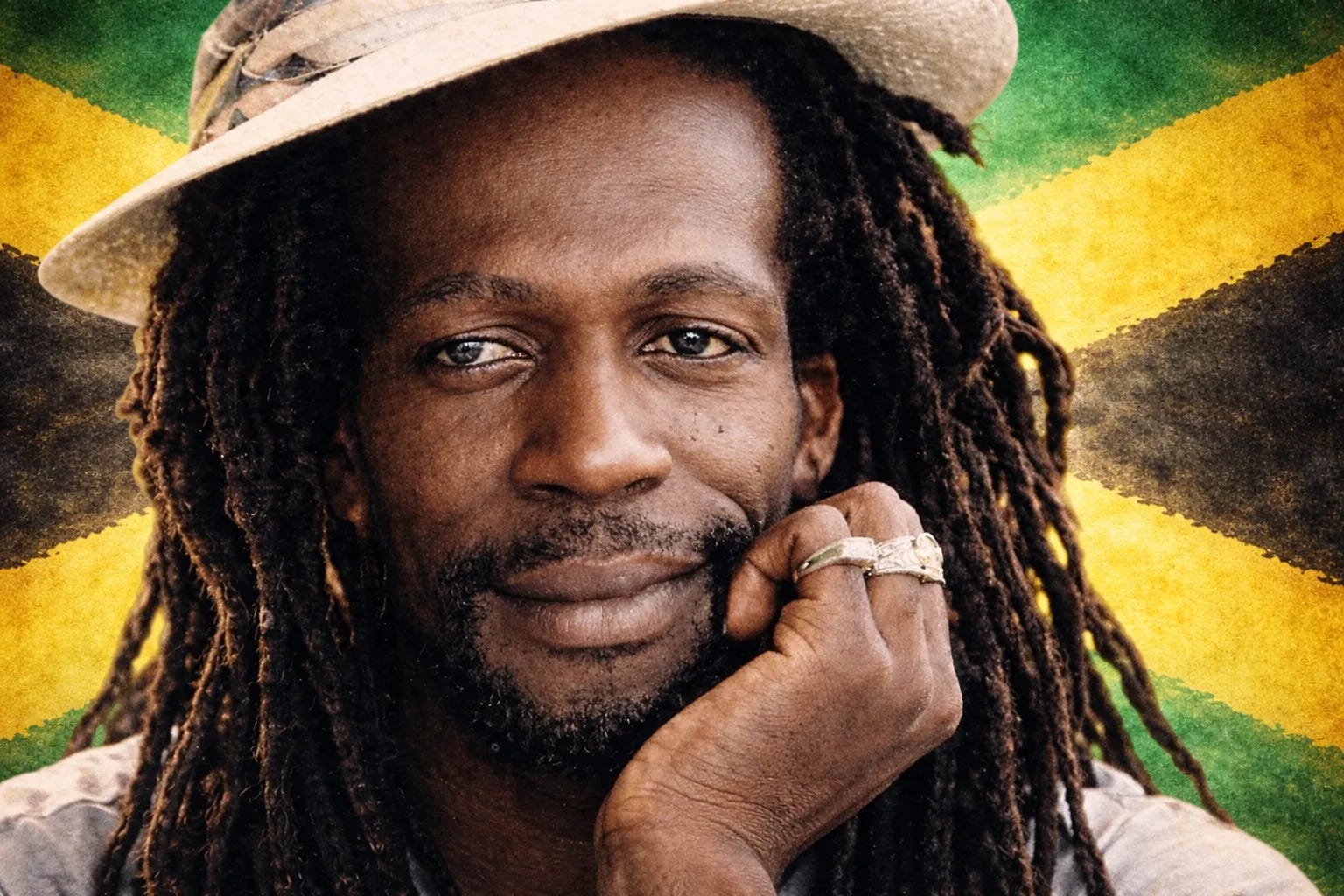
I grew up within the Isaacs family, a family connected to the legendary reggae artist Gregory Isaacs.
Gregory Isaacs would later become one of Jamaica’s most influential musicians, known worldwide as the “Cool Ruler” for his smooth, soulful style that defined lovers rock reggae in the 1970s and 1980s. Songs like Night Nurse, Love Is Overdue, and Rumours travelled far beyond Jamaica’s shores, carrying the island’s culture into the world.
But behind the music was the same Jamaican family culture that shaped so many of us.
Families like ours were rooted in discipline, community, and faith.
My grandparents had standards. Those standards came from their upbringing in Jamaica and the values that shaped earlier generations. They believed in holding your head high, respecting others, and contributing to the community around you.
My grandmother was known for cooking for everyone. Pastors, neighbours, family friends—there was always food. Her house was known as a place of hospitality.
In the church community, people would ask:
“Have you been to Sister Isaacs’ house? Have you tasted her chicken?”
And people would smile, because they already knew the answer.
She cooked as though twenty people were always coming, even when fewer might arrive. Somehow, with very little money, she stretched every pound, every dollar, every ingredient. She could go to the market and return with enough food to feed half a congregation.
The house was never empty.
The Journey of the Windrush Generation
To understand families like mine, you have to understand the migration story that shaped modern Jamaica and the Caribbean diaspora.
In 1948, the ship HMT Empire Windrush arrived in Britain carrying hundreds of Caribbean migrants. That moment became the symbol of what we now call the Windrush Generation.
Thousands of Jamaicans travelled to Britain after World War II to help rebuild the country. They worked in factories, hospitals, transport systems, and construction.
My grandparents were part of that wider story.
They arrived in Britain with very little but with enormous determination.
My grandmother worked hard and eventually became a ward clerk in a hospital. She took pride in the cleanliness and organisation of the wards she managed. This was before the days when hospital infections became such a major issue in the UK system. She ran things properly.
My grandfather worked in factories initially, but when he realised he was not being paid fairly, he left and built his own carpentry business.
He worked until the day he died.
That was the mentality of the Windrush generation. They were builders. They believed in independence, dignity, and ownership.
They partnered with others in the traditional Caribbean “partnering” or “pardner” system, where groups contributed money regularly to help each other invest and build.
They saved.
They invested.
They bought property.
When my grandfather bought his house in Britain, it was not small. It was a large multi-storey house with a basement, big enough to accommodate multiple families.
And that was intentional.
He often told me:
“If you’re buying a house, make sure it’s big enough to make money.”
For many Caribbean migrants, property was not just shelter. It was a strategy for survival and advancement.
People rented rooms to newly arrived relatives or friends from Jamaica. Houses became stepping stones for others arriving from the Caribbean.
That spirit of helping each other climb was powerful.
Jamaica’s Historical Foundations
These values did not appear out of nowhere.
They are rooted in the long and complex history of Jamaica.
Before European colonisation, the island was inhabited by the Taíno. Their society was organised around communal living, agriculture, and trade.
In 1494, Christopher Columbus arrived in Jamaica during Spain’s expansion into the Caribbean. Spanish rule lasted more than a century before the island was captured by England in 1655.
Under British colonial rule, Jamaica became a plantation economy built on enslaved African labour. The brutality of slavery shaped the island profoundly, but so did resistance.
Figures like Sam Sharpe led rebellions that contributed to the abolition of slavery in the British Empire in 1834.
After emancipation, many formerly enslaved people built free villages, establishing independent communities rooted in church, land ownership, and family.
That pattern—faith, family, and land—became one of the foundations of Jamaican culture.
By the twentieth century, Jamaica had developed strong community networks, but economic opportunity remained limited. Migration became one of the pathways forward.
First to Panama during the canal construction.
Later to Britain, Canada, and the United States.
And eventually across the world.
Childhood in Jamaica
Despite migration, the connection to Jamaica remained strong.
I remember spending time in St. Catherine, going to places like Spanish Town and Elshire Beach. Back then, Elshire was a proper beach—wide and open.
As children we would play with truck tyres in the water, floating out in the sea.
A simple treat like festival and fish could make a day feel special.
Sometimes the best part was simply riding on the back of a pickup truck with friends from the community.
Spanish Town felt alive. You could walk through places like Monk Street and people knew who you were.
That was the nature of Jamaican communities in those days.
Everybody knew everybody.
If you belonged to a family that was known in the area, the entire community kept an eye on you.
There was freedom, but there was also accountability.
And my grandmother was strict.
There were rules.
Preparation for Sabbath began long before sunset. Clothes had to be ready. The house had to be clean. Haircuts done. Shoes polished.
Those rituals were not just about religion.
They were about discipline and dignity.
Jamaica’s Cultural Voice
While families like mine were building lives at home and abroad, Jamaica was also shaping global culture through music.
Artists like Bob Marley, Dennis Brown, and Gregory Isaacs became ambassadors of Jamaican identity.
Gregory Isaacs, in particular, brought a smooth emotional style to reggae that resonated around the world.
His music spoke about love, struggle, vulnerability, and life in Kingston’s communities.
But like many artists of his era, his journey reflected the complexities of Jamaican society—talent, creativity, hardship, and resilience intertwined.
Reggae itself became more than music. It became a voice for Jamaica.
It told stories about poverty, injustice, spirituality, and hope.
It carried Jamaica’s cultural spirit into every continent.
The Changing Family Landscape
Over the decades, Jamaica changed.
Urbanisation increased. Economic pressures intensified. Migration patterns shifted again.
And in many places, the traditional extended family structure began to weaken.
That is not unique to Jamaica. It has happened across the world.
But the effects are visible.
When families operate as units—when grandparents, parents, and children remain connected—knowledge flows across generations.
Investment thinking flows across generations.
Discipline flows across generations.
When that structure breaks down, communities can lose something important.
Again, this is not a criticism of single-parent families. Many single parents raise extraordinary children.
But when two adults pull in the same direction, it creates stability.
Two incomes.
Two sources of guidance.
Two people investing in the same future.
Even the Bible reflects that wisdom when it says that two are better than one, because they can support each other.
Investment and the Future
One of the biggest lessons passed down through generations like my grandparents’ was investment thinking.
They did not chase flashy things.
They saved.
They bought property.
They thought about the next generation.
In Jamaica today, we sometimes forget that mindset.
We focus on short-term gain rather than long-term legacy.
Contracts are signed that benefit the present moment but may not consider the future of the country.
Sometimes people complain about returnees coming back and investing.
But returnees bring capital, skills, and experience.
They create jobs.
They build homes.
They stimulate the economy.
Similarly, foreign investors who come to Jamaica are not responsible for protecting Jamaica’s interests. They are responsible for protecting their own.
It is our responsibility—as Jamaicans—to negotiate wisely and strategically.
That requires planning, unity, and leadership.
The Problem of “Bad Mind”
One cultural challenge that sometimes undermines progress is what Jamaicans call “bad mind.”
Bad mind is more than jealousy.
It is the desire to pull someone down rather than lift them up.
But when someone close to you succeeds, that success can create opportunities for others.
Instead of tearing people down, we should study what they are doing and learn from it.
Communities grow when people collaborate.
Families grow when people collaborate.
Countries grow when people collaborate.
Building Together
The old Jamaican way included cooperation.
Families partnered together to buy land.
Four families might buy a piece of land and slowly build homes.
Two families might share a property and expand over time.
These models still work today.
What they require is trust, discipline, and long-term thinking.
Lessons from the Past
Those Saturday dinners with my grandparents were not just family gatherings.
They were informal schools of life.
Conversations about work, faith, money, and responsibility happened naturally around the table.
Those discussions planted seeds.
Even when resources were limited, the mindset was expansive.
Think big.
Work hard.
Save.
Invest.
Help others.
Those lessons stayed with me.
Despite struggling with a learning disability early in life, I refused to let it define my future.
I focused on my strengths—design and creativity.
Eventually I studied at Central Saint Martins in London and continued my education further.
Throughout that journey, the foundation that sustained me was not wealth.
It was family support.
A home.
A sense of belonging.
Jamaica Today and Tomorrow
Jamaica today is very different from the Jamaica of the 1960s or 1970s.
The country is navigating globalisation, technology, and new economic opportunities.
But even as we move into a digital future, we must not discard the values that built our communities.
Faith.
Family.
Respect.
Investment.
Community cooperation.
Those principles helped generations of Jamaicans survive slavery, colonialism, migration, and economic hardship.
They can still guide us forward.
A Time for Reflection
There is a time for everything.
A time to travel.
A time to return.
A time to build.
Right now, for many of us, this is a time to give back.
To share knowledge.
To invest.
To strengthen communities.
And to rebuild the cultural foundations that once made Jamaican families so strong.
Because when families are strong, communities are strong.
And when communities are strong, nations prosper.