


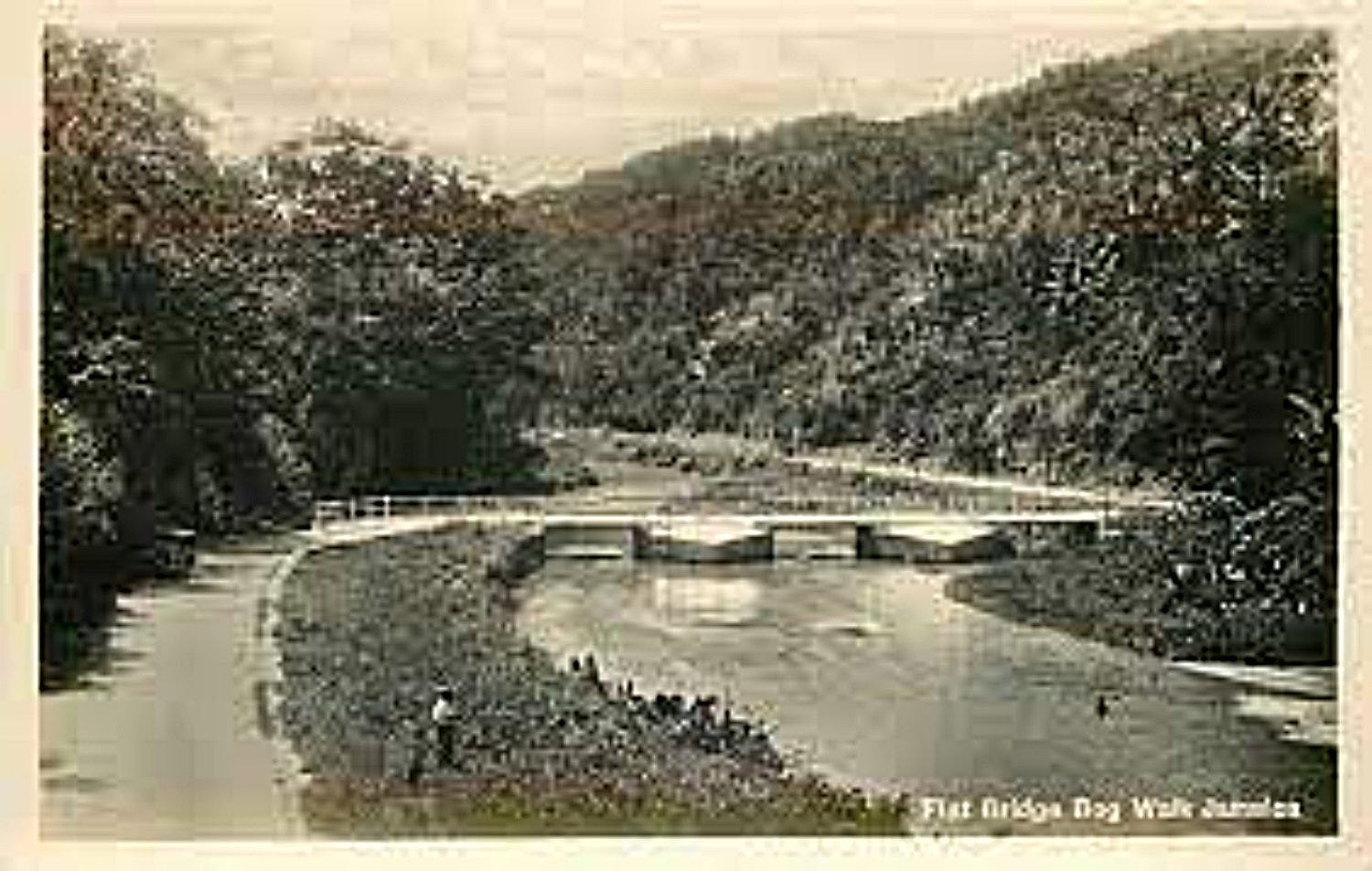
Flat Bridge, located in the parish of St. Catherine, Jamaica, stands as a significant historical and architectural landmark. While the exact date of its construction is uncertain, historical records confirm its existence post-1724. Edward Long’s History of Jamaica (1774) provides a detailed description of the bridge, highlighting its flat design, composed of planks on a timber framework. This structure rests on two piers and two buttresses extending from the riverbanks, reinforced with interlaced piles, braces, and masonry. The bridge served as a vital link across the Rio Cobre, facilitating transportation and commerce in the area.
The construction of Flat Bridge was labor-intensive and deeply tied to the history of plantation slavery. The sixteen plantations in the Bog Walk area were mandated to supply one enslaved worker per fifty to contribute to the River Road, often called Sixteen Mile Walk. These enslaved individuals performed perilous tasks, including excavating gravel, marl, lime, sand, and stone from the gorge, resulting in numerous fatalities. Contracts for timber supplies and the employment of masons were regulated through local vestry meetings, underscoring the community’s reliance on enslaved labor and local resources.
The bridge has undergone several modifications since its original construction. Between 1881 and 1915, its wooden floor was replaced with iron girders and buckle plates salvaged from the May Pen bridge’s original flooring. By the 1930s, metal handrails were installed for added safety but were later replaced with wooden ones, which the river repeatedly washed away. Today, semi-circular spheres serve as the only protective barriers on the bridge, offering minimal safety while preserving its historic aesthetic.
Flat Bridge is recognized as one of Jamaica’s oldest bridges, bearing witness to the island’s colonial history, the resilience of its engineering, and its significance in facilitating trade and travel. Despite its age and susceptibility to the forces of nature, the bridge remains a testament to the ingenuity and labor of its builders, standing as a cherished symbol of Jamaica’s rich heritage.