


Let’s establish one thing upfront: I am not that Dean Jones—the famed Australian cricketer and coach. Yet, for reasons unbeknownst to me, that’s the conclusion many jump to upon hearing my name. Do I harbour a love for cricket? Not particularly. But I respect the game profoundly. My father was a cricket coach, and I’ve felt the sting of a well-placed red ball since I was seven. Let me assure you, no amount of padding can dull that particular lesson.
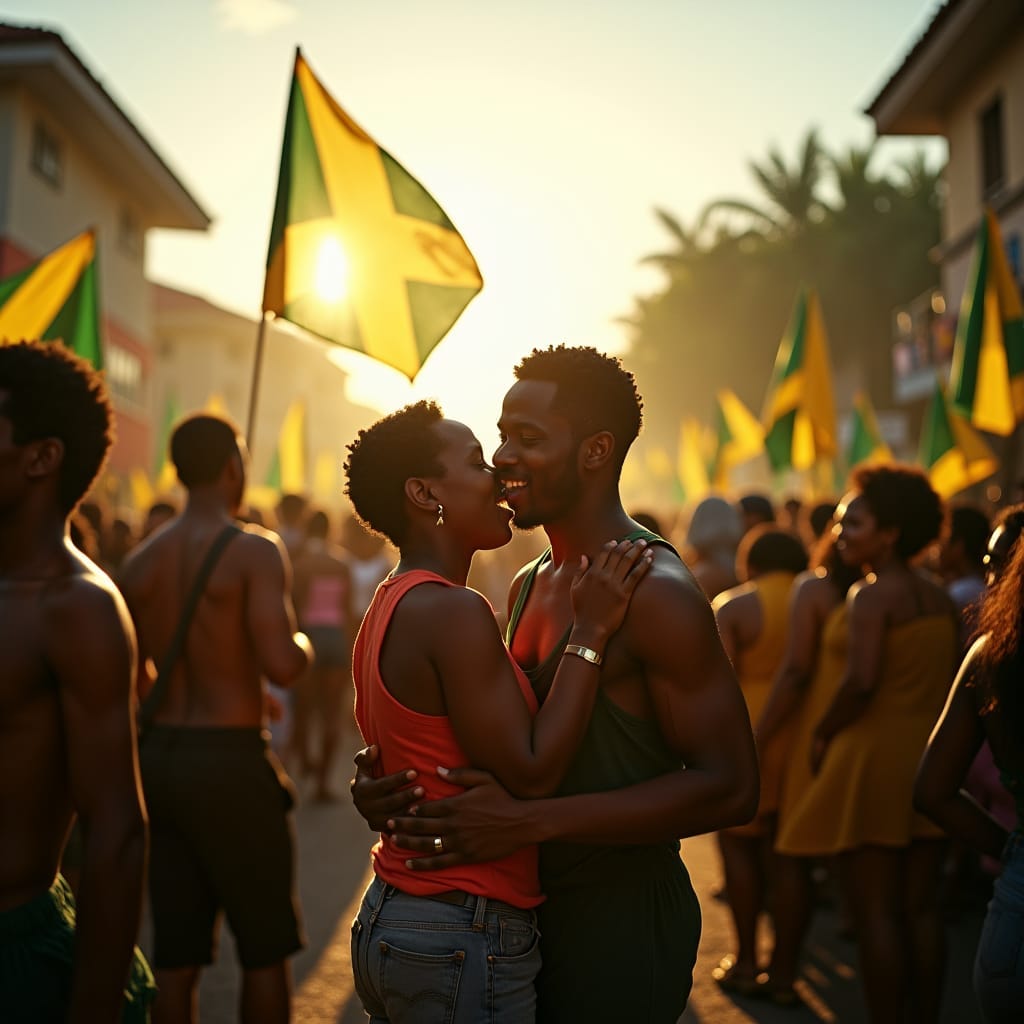
But this tale isn’t about wickets or centuries—it’s about something far more enduring. It’s about the quiet, persistent journey between two places: Brixton in South London and Islington, nestled in the emerald hills of St. Mary, Jamaica. It’s a story of migration and belonging, of what it means to inhabit two worlds—neither fully here nor there—and the enduring importance of place, both metaphorical and literal.
Islington and Brixton: Two Anchors Across the Atlantic
Islington is the sort of town where mornings begin not with traffic but with rooster crows and the smoky sweetness of breadfruit roasting on coal stoves. Brixton, by contrast, is a vibrant urban tapestry—alive with the pulse of reggae, the scent of jerk chicken blending with chip-shop oil, and the hum of a hundred languages echoing down Electric Avenue.
At first glance, these two corners of the Black Atlantic appear to exist on opposing ends of the spectrum. But probe beneath the surface, and a shared heartbeat reveals itself. Their connection is rooted in history—specifically, the great Caribbean migration of the 20th century.
In 1948, the Empire Windrush docked at Tilbury, ushering in a new chapter. Jamaicans—many hailing from places like Islington—answered Britain’s call for labour. Nurses, rail workers, bus conductors, and factory hands—the lifeblood of a post-war economy—arrived in droves. And in Brixton, many found both refuge and resilience.
Why We Left: Aspirations and Adversities
Those who departed the verdant hills of St. Mary for the grey pavements of South London didn’t do so lightly. Post-colonial Jamaica, though rich in spirit and soil, offered limited economic promise. Even in agriculturally lush areas like Islington, opportunities were scarce. Britain, “the Mother Country,” glistened with the lure of stability and upward mobility.
Yet migration wasn’t solely driven by hardship. It was underpinned by ambition. Jamaicans were, and are, proud, educated, and industrious. They didn’t simply seek escape—they sought elevation. Britain’s promise of modernity, prosperity, and order beckoned.
The reality was sobering. The welcome was often frigid. Housing was ramshackle, employment precarious, and racism unrelenting. “No Blacks, No Irish, No Dogs” read the signs in too many windows. But the community endured—forming tight-knit networks of mutual support and cultural preservation.
Returnees and the Rhythms of Repatriation
By the 1970s and ’80s, a noticeable reversal occurred. As Britain’s economy faltered and Jamaica’s post-independence confidence grew, many who had “made it” in England began returning home. They came not as exiles but as investors, visionaries, and retirees. They built spacious homes—colloquially dubbed “British mansions”—complete with tiled floors, ornamental gates, and sprawling verandas. These were more than dwellings; they were declarations of success.
Yet reintegration proved elusive for some. Children born and bred in the UK struggled with patois, climate, and culture. Infrastructure in rural Jamaica was patchy—water unreliable, electricity intermittent, healthcare inadequate. Many returnees felt unmoored, caught between two realities that no longer fully fit.
And so, the migration loop continued. A new generation departed for North America or the UK, while others remained rooted in ancestral land—tending memory, inheritance, and a sense of belonging across oceans.
Land, Legacy, and the True Meaning of Real Estate
This ongoing ebb and flow has reshaped the property landscape. In rural parishes like St. Mary, demand for land has risen—driven not only by local needs but by the steady stream of diaspora investment. Remittances, which account for over 16% of Jamaica’s GDP according to the Bank of Jamaica, have been funnelled into construction, renovation, and land acquisition.
In contrast, Brixton has experienced an opposite transformation. Once a haven for Caribbean families, it now teeters under the weight of gentrification. Those who bought modest terraced homes in the 1970s found themselves sitting on prime real estate. Some cashed out; others were gradually squeezed out—displaced by developers and priced out by posh coffee shops and glossy flats. The Caribbean soul of Brixton, while still palpable, has grown quieter under the glare of affluence.
For many, “home” has shifted from a physical location to an emotional and cultural inheritance. To own land in Islington is to affirm one’s origin. It is to hold onto something fixed in a world that feels increasingly in flux.
Historical Moments That Moved Us
Several legislative and historical milestones served as turning points:
1948 – The Windrush landing: British Nationality Act confers rights of residence to Commonwealth citizens.
1962 – Jamaican independence: National optimism rises, but uncertainties lead many to remain abroad.
1968 & 1971 – Commonwealth Immigrants Acts: Harsh restrictions on new migration shift settlement patterns.
1990s–2000s – Legal ambiguities: Long-settled Jamaicans face bureaucratic entanglements, culminating in the 2018 Windrush Scandal.
2000s onward – Diaspora mobilisation: Campaigns encourage investment in homeland development, particularly in real estate.
These events didn’t just shape borders—they shaped identities.
A New Generation Reclaims the Narrative
Today, we are witnessing a renaissance of sorts. The grandchildren of the Windrush generation are reclaiming their heritage—often through property. Some are purchasing land in Jamaica, building eco-villas, launching digital businesses, and positioning themselves not as emigrants but as visionaries. Jamaica is no longer viewed merely as a place to retire—but as a vibrant platform for innovation, legacy-building, and cultural reconnection.
Meanwhile, in Brixton, grassroots movements push back against gentrification. Community land trusts and cooperative housing initiatives work to preserve cultural heritage and defend affordability. The same defiant energy that fuelled past resistance pulses through the next generation.
In Closing: Not That Dean Jones
So no—I’m not the cricketer. I’m Dean from the hills of Islington, St. Mary, who walked Brixton’s streets and navigated two cultures with one heart. My story isn’t unique. It’s part of a larger, living narrative written by thousands who straddle the line between yard and abroad.
And in this tale, real estate is not just a transaction. It is memory made concrete. It is dignity set in stone. To own a home in Islington or Brixton is to hold a piece of our collective story—one of resilience, reinvention, and return.
We may leave, we may return, we may wander—but through land, we remain tethered. It’s not just about property. It’s about permanence. About saying, “We were here. We mattered. And we still do.”