

From Kingston to Jerusalem
How Jamaica’s forgotten Jewish history suddenly feels relevant again in a world shaken by war, identity, migration, and the fear of what comes next


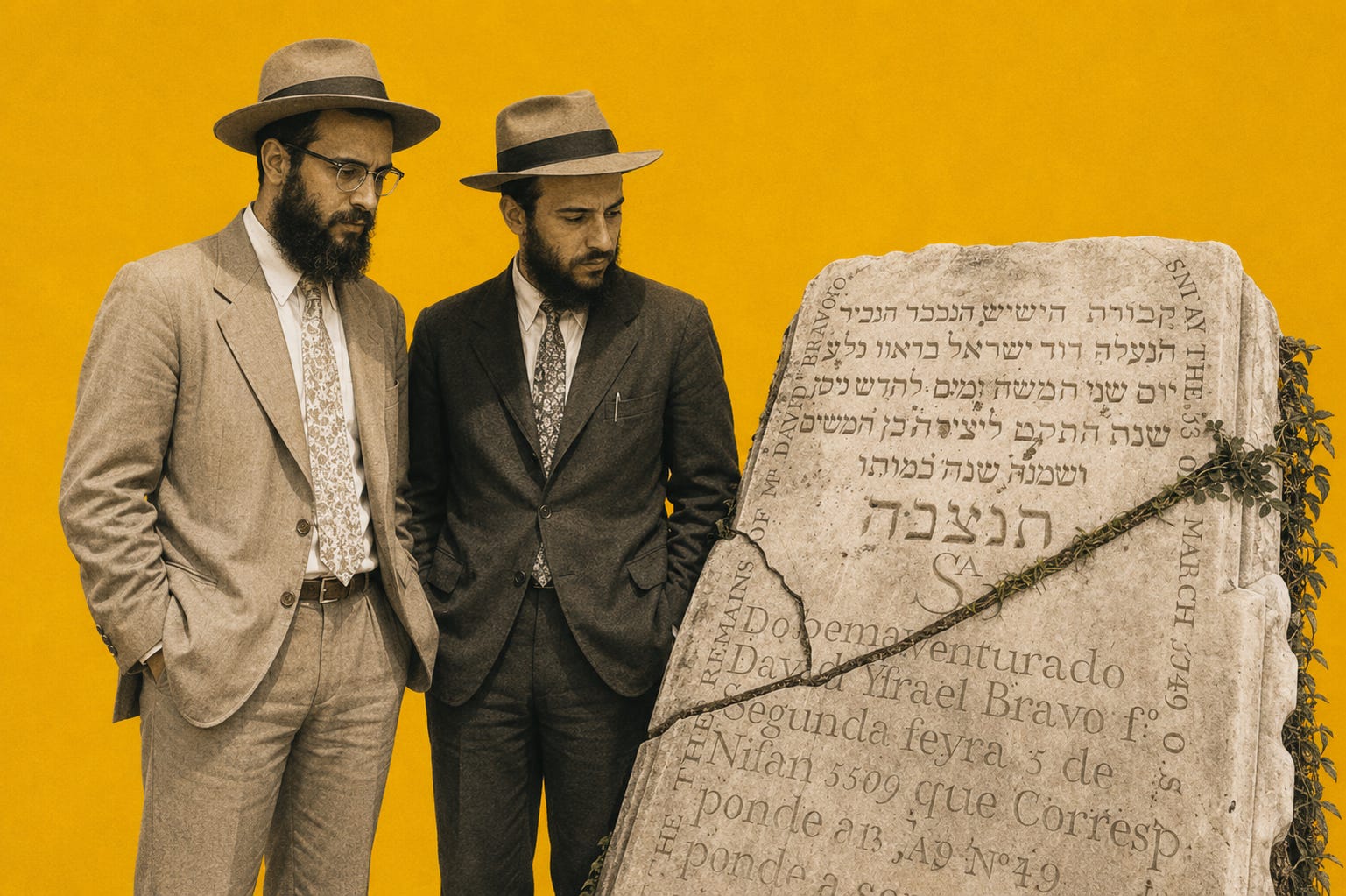
As tensions between Israel and Iran continue to unsettle global markets, rattle oil routes, divide political opinion, and stir deep religious emotions across the world, an unlikely place is quietly re entering the conversation.
Jamaica.
Not politically. Not militarily.
But historically.
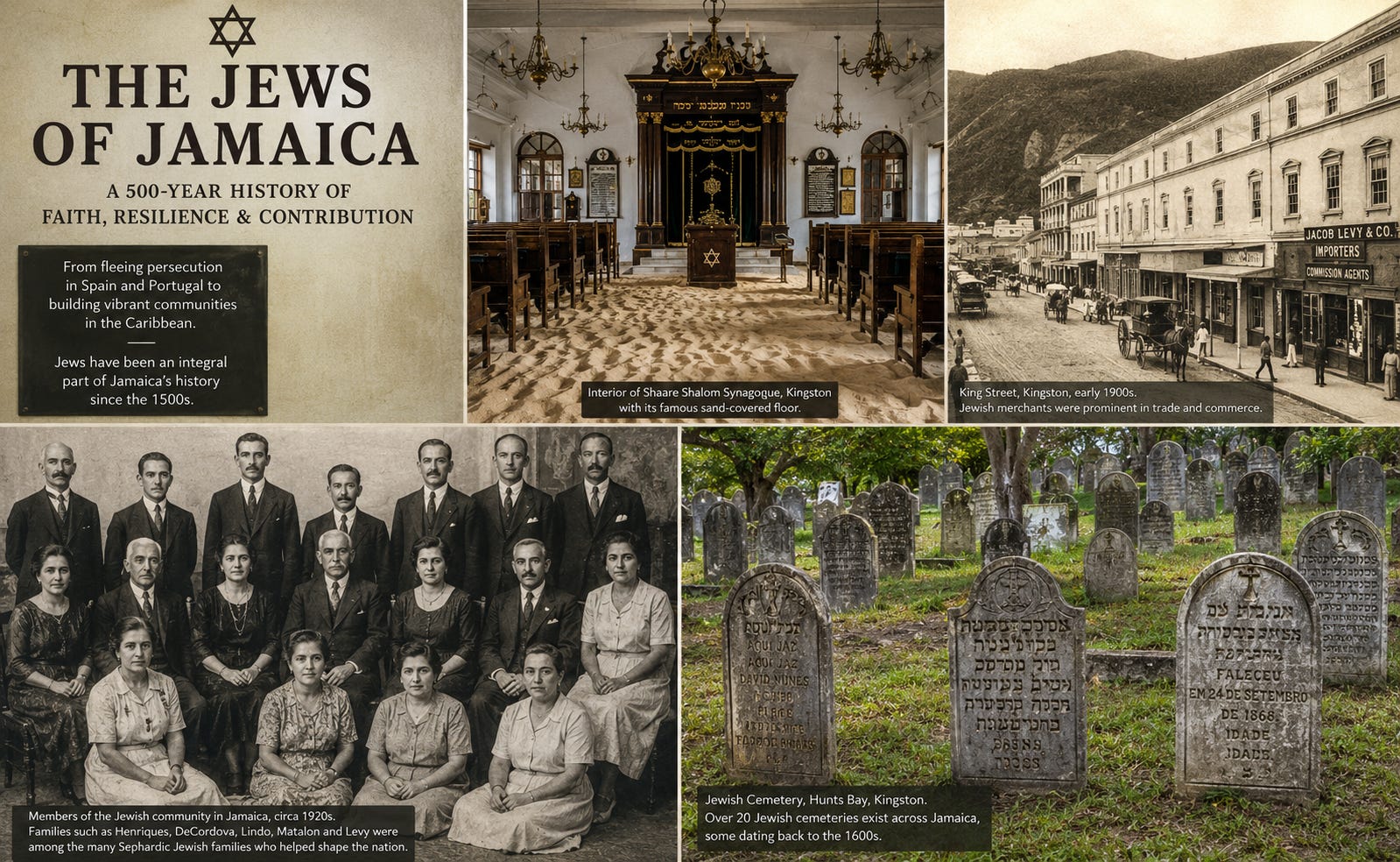
Because hidden beneath Kingston’s streets, buried in old cemeteries, carried in family names, and preserved inside a synagogue with sand beneath its floorboards, lies one of the oldest Jewish stories in the Americas. A story shaped by exile, persecution, migration, commerce, survival, and the search for safety in an unstable world.
And suddenly, centuries later, parts of that story feel strangely modern again.
The Jews of Jamaica were never directly involved in the modern Iran Israel conflict. Yet their history forms part of a much larger Jewish experience that still shapes how many Jews around the world understand fear, refuge, identity, and survival today.
It is a story that began not in the Caribbean, but in the shadows of medieval Europe.
A People Forced to Flee
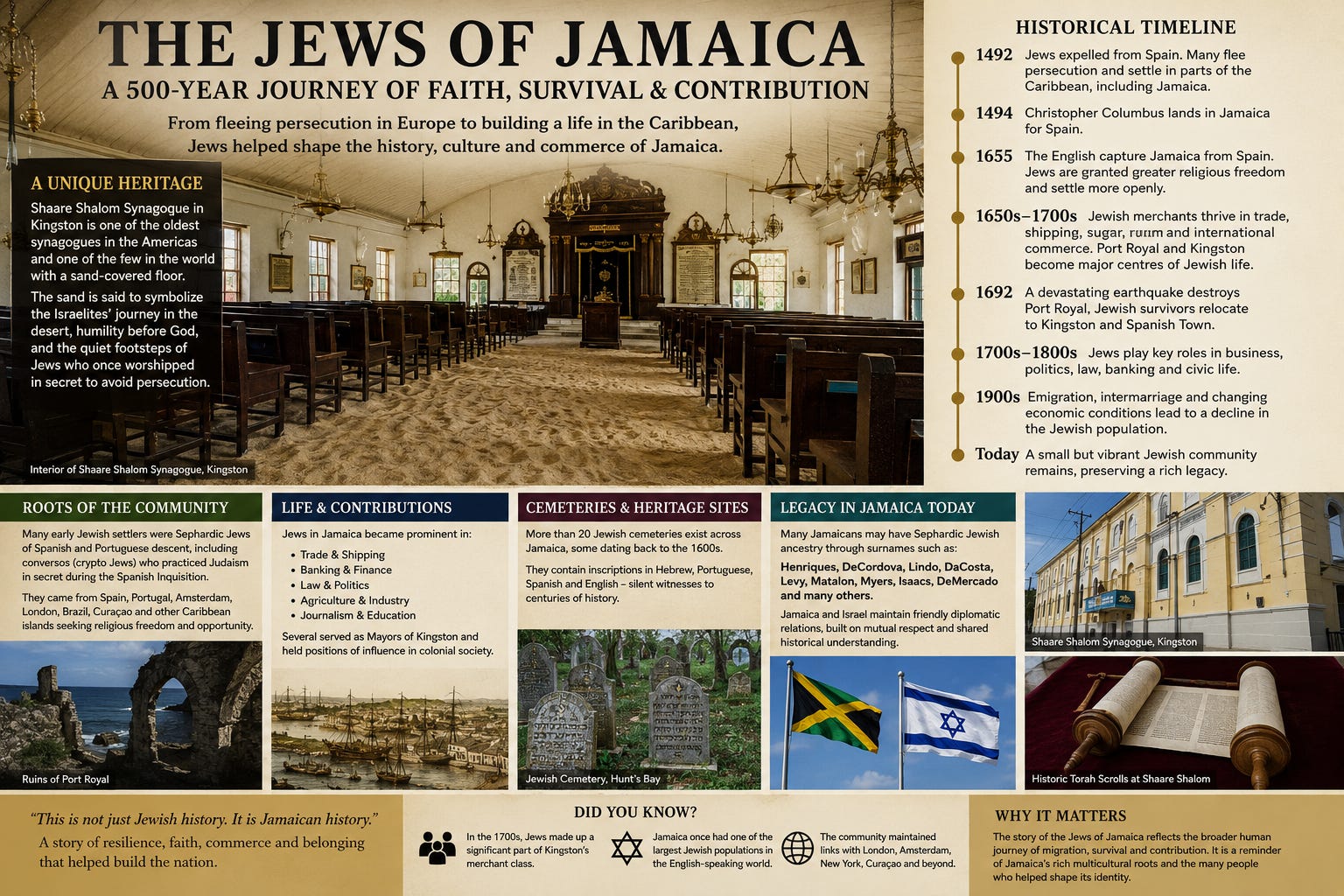
In 1492, Spain’s Catholic rulers ordered Jews to convert to Christianity or leave the country entirely.
Portugal soon followed.
For thousands of Jewish families, the choice was brutal. Conversion, exile, imprisonment, or death.
Some fled openly. Others remained behind while secretly practising Judaism in hidden rooms and whispered rituals. These became known as “crypto Jews” or “conversos” people outwardly appearing Christian while quietly protecting their Jewish identity beneath the surface.
Around the same time, Christopher Columbus was sailing westward toward the Caribbean.
As Spain expanded across the Americas, some Jewish families eventually found their way into the colonies, including Jamaica, first claimed by Spain in 1494.
For many, Jamaica became something rare in that era.
Distance.
Distance from Europe. Distance from inquisitors. Distance from the machinery of persecution that had consumed so much of Jewish life across Spain and Portugal.
Then came another turning point.
When Britain Captured Jamaica
In 1655, the English seized Jamaica from Spain.
The political shift transformed the island’s future and dramatically changed life for Jews living there. Under British rule, Jews were gradually allowed far greater religious freedom than under Spanish Catholic authority.
Suddenly, Jamaica became more than a hiding place.
It became a refuge.
Sephardic Jews from Amsterdam, London, Brazil, Curaçao, and other trading centres began arriving more openly. Merchant families established businesses, synagogues, shipping links, and commercial networks stretching across the Atlantic world.
Some of the surnames still familiar in Jamaica today trace back to that period:
Henriques
Levy
DaCosta
DeCordova
Lindo
Matalon
Myers
Isaacs
DeMercado
For centuries, these families became part of the commercial and social fabric of Jamaica itself.
Many Jamaicans today may unknowingly carry Sephardic Jewish ancestry through old family lines stretching back generations.
Kingston, Trade, and the Business of Survival
The rise of Jewish life in Jamaica coincided with the explosive growth of Port Royal and later Kingston as major commercial centres.
The Caribbean in those centuries was not peaceful paradise. It was one of the most fiercely contested economic regions on Earth. European empires battled constantly for wealth, territory, shipping lanes, sugar, and control.
Jamaica sat directly in the middle of it all.
Jewish merchants became deeply involved in trade networks connecting Europe, the Caribbean, North America, and South America. They traded goods, financed voyages, managed shipping relationships, and helped build commercial systems that linked Jamaica to the wider Atlantic economy.
And in some ways, those old trade realities echo strangely today.
One of the greatest fears surrounding the current Iran Israel conflict is not simply military escalation itself, but disruption to global shipping routes, particularly around the Strait of Hormuz, one of the world’s most important oil corridors.
When instability threatens major trade routes, small island economies feel it quickly.
Fuel prices rise. Insurance costs climb. Shipping slows. Investor confidence weakens.
Jamaica knows this vulnerability well.
The island still depends heavily on imported fuel, international trade, tourism confidence, and stable global markets. A serious escalation involving Iran could eventually affect:
electricity prices
food costs
airline travel
construction expenses
shipping fees
real estate confidence
History has a strange habit of repeating its pressures through different machinery.
Centuries ago, wars between European powers disrupted Caribbean commerce. Today, tensions in the Middle East send tremors through global markets that still reach Jamaica’s shores.
The Synagogue With Sand on the Floor
In downtown Kingston stands one of the most extraordinary reminders of this forgotten history.
The Shaare Shalom Synagogue remains one of the oldest synagogues in the Americas and one of only a handful in the world with a sand covered floor.
The first time you walk inside, the silence feels different.
The sand softens every footstep.
Some traditions say the sand symbolises the Israelites wandering through the desert after the Exodus. Others believe it reflects humility before God.
But another explanation carries particular emotional weight.
Some believe the sand represents secrecy itself. A reminder of centuries when Jews muffled their footsteps while worshipping secretly during the Spanish Inquisition, terrified of being discovered.
That symbolism suddenly feels hauntingly contemporary.
Because at the heart of modern Israeli psychology is an idea deeply connected to Jewish historical memory: that safety can never be assumed permanently.
For many Jews worldwide, Israel is viewed as a historic refuge against persecution and antisemitism.
That mindset was not born only from the Holocaust. It stretches across centuries of exile, expulsions, pogroms, forced migrations, and survival stories scattered across Europe, North Africa, the Middle East, and places like Jamaica itself.
The Emotional Weight of Diaspora
The modern State of Israel was established in 1948 partly as a homeland for the global Jewish diaspora, the scattered Jewish communities spread across continents after repeated expulsions and migrations.
Jamaican Jews formed part of that diaspora story.
Sephardic Jewish communities stretched from Spain and Portugal into North Africa, the Ottoman Empire, the Caribbean, Latin America, and eventually Israel itself. Though separated geographically, many shared similar traditions, surnames, customs, and collective historical memories.
That does not mean Jamaican Jews shaped today’s conflict directly.
They did not.
But their history helps explain the emotional backdrop through which many Jewish communities interpret modern threats involving Israel and Iran.
The fears surrounding missile attacks, regional hostility, antisemitism, and existential insecurity are often viewed not as isolated political disputes, but through a much longer historical lens of survival.
A people who spent centuries learning how quickly protection could disappear rarely forget that lesson entirely.
Jamaica’s Religious Lens
The conflict has also revived interest in biblical prophecy and Middle Eastern history among many Christians globally, including in Jamaica, one of the world’s most religious societies.
Ancient Persia, modern day Iran, appears throughout biblical texts. Jerusalem occupies central spiritual importance across Judaism, Christianity, and Islam alike.
As tensions rise, many Jamaicans are following events not only politically, but spiritually.
That renewed attention has quietly sparked fresh curiosity about Jamaica’s own Jewish history, a chapter many people never fully learned in school.
And perhaps that is one of the strangest consequences of global instability.
Sometimes war abroad forces nations to rediscover forgotten pieces of themselves.
The Quiet Legacy Hidden Across Jamaica
Today, Jamaica’s active Jewish population is relatively small.
Yet the historical footprint remains surprisingly large.
It survives in:
old cemeteries
merchant records
architecture
family names
business history
oral traditions
Kingston’s commercial foundations
It survives in the sand beneath the synagogue floor.
It survives in the idea of Jamaica itself as a crossroads, a place where displaced people arrived carrying fragments of older worlds and built something new together.
The Jews of Jamaica helped shape trade, commerce, and urban life on the island during critical periods of its development. Their story became woven into the wider Jamaican story of migration, reinvention, survival, and cultural blending.
And now, as the modern world again wrestles with conflict, identity, religion, borders, fear, and the search for security, that history suddenly feels less distant than it once did.
Because beneath the headlines about Iran, Israel, oil markets, diplomacy, and war, there remains something profoundly human that Jamaica’s Jewish story still understands.
What it means to search for safety in an uncertain world.