

From Persia to Port Royal: What the Long Histories of Iran and Jamaica Teach Us About Land, Power, and Property

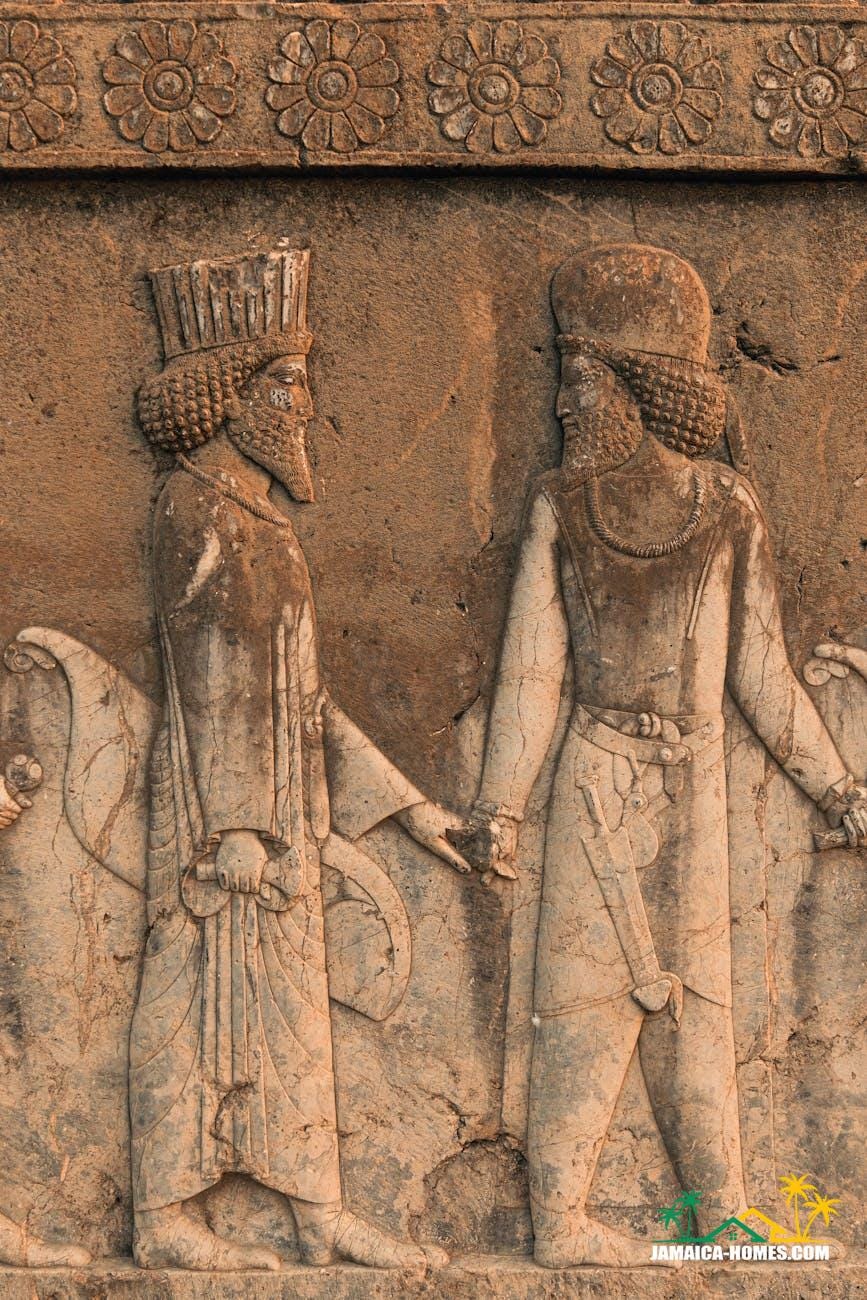
History is often told through wars, kings, revolutions, and religion. Yet beneath those dramatic events lies something quieter but far more enduring: land. Who controls land, who works it, who owns it, and who has the right to live on it—these questions shape civilizations more deeply than most political speeches ever will.
If we step back and place Iran and Jamaica side by side, two places that appear worlds apart, we begin to see something fascinating. One is an ancient civilization stretching back thousands of years across a vast plateau between Asia and the Middle East. The other is a Caribbean island whose modern identity was forged in the crucible of colonialism, slavery, and independence. Yet both histories can be understood through a similar lens: the struggle over land, property, and power.
In real estate language, civilizations are essentially long-term property stories.
Iran represents one of the oldest continuous land civilizations in the world. Jamaica represents one of the most dramatic examples of how land ownership systems can be violently reshaped in a short period of history. Together they illustrate how property systems shape societies.
Understanding these stories does more than satisfy curiosity—it explains why land ownership, property law, and housing remain central issues in both societies today.
The Deep Roots of Land in Iran
The story of Iran begins long before the modern nation-state. Archaeological evidence suggests organized societies in the region more than 5,000 years ago, particularly in the ancient civilization of Elam, centered around the city of Susa.
From the beginning, control of land and water determined power.
Iran’s geography forced early societies to organize themselves around agriculture, irrigation, and trade routes. The Iranian plateau sits between major civilizations—Mesopotamia, Central Asia, and South Asia. Whoever controlled the plateau controlled vital economic corridors.
By the 6th century BCE, a leader named Cyrus the Great founded the Achaemenid Empire, one of the largest empires the world had ever seen. This empire stretched from Egypt to India.
But what made the Achaemenids remarkable was not simply conquest—it was administration of land.
They created systems that governed:
taxation of agricultural land
royal estates
provincial land governance
road networks linking cities and markets
This was essentially one of the earliest large-scale land management systems in human history.
Property was political power.
Later empires—the Parthians and Sasanians—continued to organize society around landholding elites, agricultural estates, and taxation systems. Even religion was tied to land, particularly under Zoroastrianism, where agricultural stewardship held moral significance.
Then came a major transformation.
The Islamic Transformation of Iranian Land
In the 7th century, Arab Muslim armies defeated the Sasanian Empire. Iran entered the Islamic world.
The transformation was religious and cultural—but also economic and property-based.
Islamic law introduced new land concepts:
waqf (religious endowments)
state land
private agricultural ownership
Mosques, schools, and charitable institutions were funded through land endowments. These waqf properties became a major feature of urban and rural landscapes.
Persian culture and governance soon resurfaced within the Islamic framework. Iranian dynasties governed vast territories across Central Asia and the Middle East.
Land remained the foundation of power.
Centuries later, the Safavid dynasty (1501) unified Iran and declared Shi’a Islam the state religion, giving the country a unique identity that continues today.
Yet the land system remained hierarchical.
Large estates controlled by elites coexisted with peasant farmers and tribal land structures.
By the 19th century, foreign powers—particularly Russia and Britain—began influencing Iran’s economy and land policies.
Eventually, modernization pressures led to political reform movements.
The most dramatic change arrived in 1979 with the Iranian Revolution, which overthrew the monarchy and created the Islamic Republic.
Even then, land remained central. Revolutionary leaders redistributed some property and altered ownership structures, reflecting the belief that land concentration had contributed to inequality.
Iran’s long history shows that while regimes change, control of land remains a constant theme.
Jamaica: A Land Story Told in Centuries Instead of Millennia
If Iran’s history stretches across five thousand years, Jamaica’s modern land story unfolds across just a few centuries—but with extraordinary intensity.
Before Europeans arrived, Jamaica was home to the Taíno, Indigenous Caribbean people who settled the island around 800 CE.
Their society was organized around villages, farming, fishing, and communal land use.
Land was not privately owned in the modern sense.
Instead, it was part of a shared cultural and ecological system.
That system collapsed almost overnight when Christopher Columbus arrived in 1494.
Spain claimed Jamaica, and colonial rule began.
Within a few decades:
Indigenous populations were devastated by disease and forced labour
African slaves were introduced
land was reorganized for colonial production
Plantations became the organizing principle of Jamaican land.
In real estate terms, Jamaica was transformed into a monoculture agricultural estate economy.
Sugar dominated.
The British Plantation System
In 1655, Britain captured Jamaica from Spain.
This marked the beginning of one of the most profitable plantation systems in the Atlantic world.
Land ownership became extremely concentrated.
Large estates dominated the landscape, producing sugar, rum, and other commodities for export.
The labour system was brutal.
Hundreds of thousands of enslaved Africans were transported to Jamaica to work plantations.
The plantation was not just an agricultural unit—it was a complete land control system.
It included:
cane fields
mills
housing for enslaved workers
warehouses
ports
The economic structure revolved entirely around property and export.
Resistance, however, never stopped.
Some enslaved people escaped into Jamaica’s mountains and formed Maroon communities, creating autonomous settlements outside colonial control.
These communities forced the British to negotiate land treaties in the 1730s, granting them territory and relative independence.
This was one of the earliest examples of land sovereignty struggles in Jamaica.
Emancipation and the Land Question
Slavery ended in the British Empire in 1834, with full emancipation by 1838.
But freedom did not automatically grant land ownership.
This was the critical issue.
Formerly enslaved people wanted land.
Plantation owners wanted labour.
The result was a struggle that shaped Jamaica’s social structure for generations.
Many freed people established small peasant farms, often on marginal land.
These communities became the foundation of Jamaica’s rural culture.
But land inequality persisted.
Large estates remained dominant in many areas.
By 1865, frustration erupted in the Morant Bay Rebellion, led by Paul Bogle. The uprising was rooted partly in poverty, land hunger, and economic exclusion.
The British response was brutal, and the island was placed under tighter colonial rule.
Yet the land question never disappeared.
Side-by-Side Timeline: Iran and Jamaica
PeriodIranJamaica3000 BCEElam civilization emergesNo recorded settlement600 BCECyrus the Great builds Persian Empire—330 BCEAlexander conquers Persia—224 CESasanian Empire dominates region—600–800 CEIslamic conquest transforms IranTaíno settle Jamaica1501Safavid dynasty establishes Shi’a Iran—1494—Columbus arrives in Jamaica1534—Spanish establish capital at Spanish Town1655—Britain captures Jamaica1739—Maroon treaties grant land autonomy1834—Slavery abolished1865—Morant Bay Rebellion1905Iranian Constitutional Revolution—1944—Universal adult suffrage in Jamaica1962—Jamaica gains independence1979Iranian Revolution creates Islamic Republic—PresentRegional power with ancient state heritageCaribbean democracy with global cultural influence
Land, Power, and Identity
What emerges from this comparison is something powerful.
Iran’s land story is about continuity.
Empires rose and fell, but Iranian civilization persisted across millennia. The cultural identity tied to land never disappeared.
Jamaica’s land story is about disruption and reinvention.
Indigenous land systems were destroyed. Plantation economies dominated. Yet out of that upheaval emerged a society defined by resilience, creativity, and community.
Where Iran’s property history reflects imperial administration, Jamaica’s reflects colonial transformation.
Yet both countries show how deeply land shapes identity.
A Modern Real Estate Perspective
Today, both societies continue to grapple with land questions.
In Iran, land policy intersects with:
urbanization
housing affordability
religious land endowments
state land management
Cities like Tehran have experienced massive expansion.
In Jamaica, real estate issues revolve around:
housing shortages
informal settlements
tourism development
diaspora investment
land titling
Jamaica’s housing market is heating up, with growing demand for urban apartments, gated communities, and investment properties.
Yet the legacy of colonial land concentration still influences development patterns.
Even modern debates about housing affordability or property titles echo historical land struggles.
What These Histories Teach Us
Looking at Iran and Jamaica side by side reminds us that real estate is never just about buildings.
It is about history.
Land holds memory.
Every property transaction sits on top of layers of past ownership, power struggles, and social change.
In Iran, that story stretches back five thousand years.
In Jamaica, it unfolds across just a few centuries but carries extraordinary intensity.
Yet both histories show the same truth:
Civilizations rise on land.
Empires govern land.
Revolutions redistribute land.
And ordinary people fight, generation after generation, for the simple right to have a place to live and belong.
In the end, the story of nations is often the story of property.
Not the buildings.
But the land beneath them.