

From Ruin to Redemption: Turning Jamaica’s Forgotten Houses into Generational Wealth

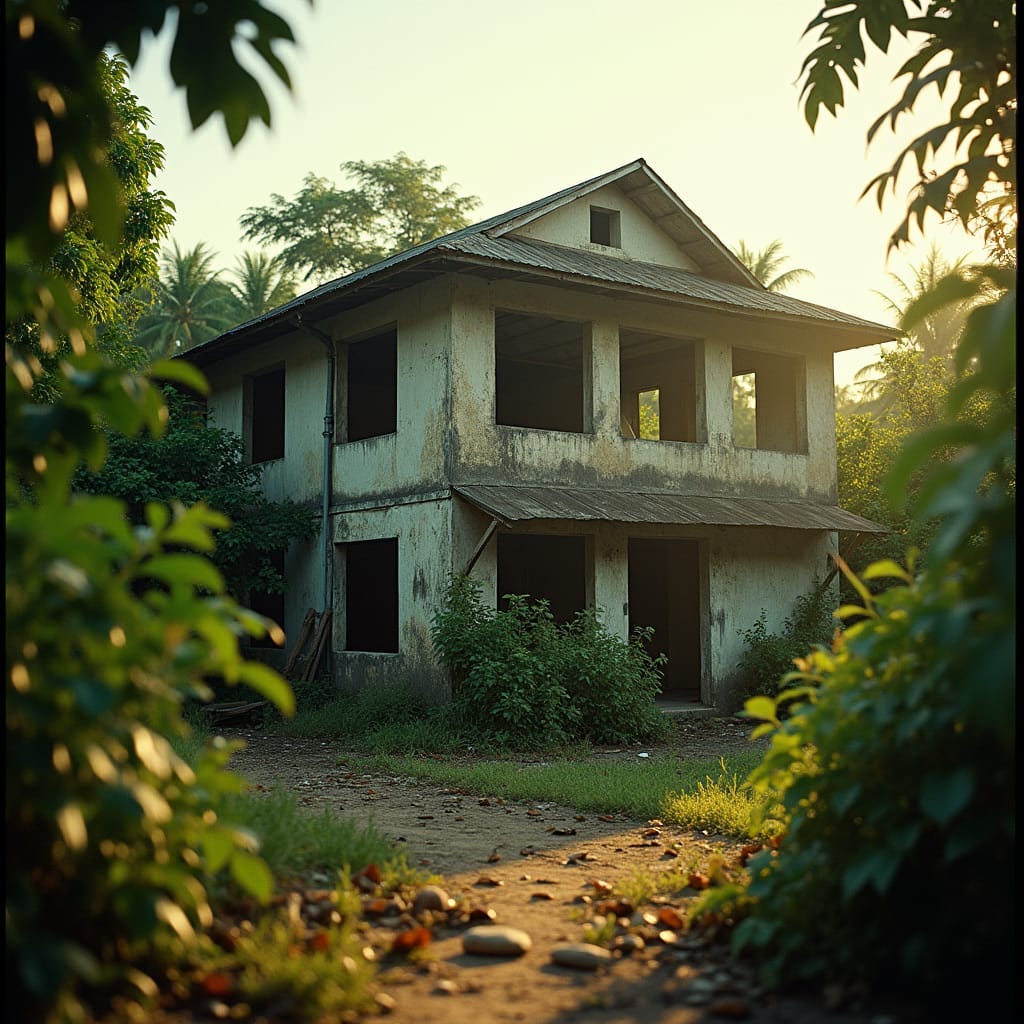
Across Jamaica, from the hills of St. Andrew to the plains of Clarendon and the quiet corners of St. Mary, a quiet movement is unfolding. It is not loud. It is not glamorous. It does not come with glossy brochures or polished show homes.
It begins with an old gate hanging off one hinge.
A house without a roof.
Windows long gone.
Trees pushing through cracked concrete.
And a buyer who sees possibility where others see problems.
In recent years, there has been a steady rise in interest in older properties priced under JMD $20 million—and even more notably, under JMD $10 million. These are not tidy fixer-uppers. Many are incomplete “whole-finished” dreams. Some were built slowly over decades. Others were abandoned halfway through construction. A few have endured years of neglect.
Yet people are buying them.
Why?
Because in a housing market where prices continue to climb, these properties represent access. Access to land. Access to ownership. Access to opportunity.
But access alone is not strategy.
And optimism alone is not structure.
As Jamaica rebuilds, recalibrates and regains strength, investing in distressed properties must be approached with wisdom, patience and skill. Done well, it can create generational transformation. Done poorly, it can become a financial sinkhole.
Let us walk through this carefully, thoughtfully, and in a way that respects both the risks and the possibilities.
The Foundation: The First Question That Matters
Before paint. Before tiles. Before kitchen cupboards.
Ask about the foundation.
In Jamaica, foundations matter deeply—not just symbolically, but structurally. Soil types vary across parishes. Some areas are more prone to shifting. Others hold water differently. Coastal regions face salt exposure. Hilly terrain introduces drainage challenges.
If the foundation is compromised, you are not renovating. You are rebuilding.
Cracks in walls may signal superficial damage—or something more serious. Uneven floors may indicate settlement issues. Columns may appear solid while the footing beneath them tells another story.
This is not guesswork. A qualified engineer or experienced building professional must assess the structure before you commit serious funds.
As Dean Jones, Founder of Jamaica Homes and Realtor Associate, often says:
“A house can look tired and still be strong. But if the bones are weak, beauty will only hide trouble for so long.”
The “bones” matter.
If they are sound, you may have an opportunity.
If they are not, you need to adjust your budget—or walk away.
The Walls: Straight or Storytelling?
Walls tell stories.
Are they plumb?
Were they reinforced properly with steel?
Was the builder meticulous—or did they cut corners?
In Jamaica, many homes were built gradually. A man works overseas. He sends barrels and remittances. Blocks are laid in phases. A ground floor appears. Years later, someone adds a few blocks for a second floor. The dream grows slowly.
Sometimes that dream stalls.
You will find houses where the ring beam was never completed. Structures where reinforcement is inconsistent. Homes with visible signs of water intrusion due to unfinished roofing.
Some of these buildings are structurally salvageable. Others are cautionary tales.
This is where experience matters.
It is easy to be emotionally drawn to a large structure on generous land. But size does not equal quality. A half-finished two-storey building is not automatically a bargain. It may require far more capital than starting modestly and building properly from scratch.
This is not about fear. It is about realism.
The Roof: More Than Shelter
A missing roof in Jamaica is not a small issue.
Exposure to years of rainfall and sun accelerates deterioration. Timber rots. Steel corrodes. Concrete weakens under prolonged moisture infiltration. Electrical systems, if previously installed, are often unsalvageable.
Where a roof is gone, expect deeper damage than meets the eye.
Even where a roof exists, inspect carefully:
Is it properly anchored?
Was it built to withstand high winds?
Has it been patched repeatedly instead of replaced?
Are there signs of termite activity in timber framing?
In a climate like ours, resilience is not optional. It is foundational to long-term value.
As Dean Jones reflects:
“Resilience is not just about surviving storms; it’s about building in a way that your children won’t have to start over.”
That philosophy should guide every renovation decision.
Utilities: The Hidden Costs
Often overlooked in distressed properties are the systems you cannot see at first glance.
Electrical wiring may be outdated or unsafe. Plumbing may have been installed in stages without coherent planning. Septic systems may require full replacement. Water tanks may be cracked or contaminated.
Connecting to NWC or JPS can involve upgrades and inspections. These costs must be factored into your budget early—not as afterthoughts.
A property priced at $8 million can quietly become a $20 million project if infrastructure upgrades are ignored.
This is where discipline separates dreamers from successful investors.
Skills Required: This Is Not for Everyone
Let us be honest.
Not everyone should buy a roofless house.
Some individuals thrive on transformation. They have patience. They understand budgeting. They can supervise contractors. They are willing to make hard decisions when unexpected issues arise.
Others are better suited to move-in-ready homes.
There is no shame in either path.
Sometimes people overseas see a “bargain” online and imagine a quick refurbishment. They bring optimism, energy and a can-do spirit. That spirit can indeed carry a project forward. But it must be paired with grounded local knowledge.
As Jamaicans say, “If yuh bite off more than yuh can chew, yuh might choke.” And in real estate, choking often looks like stalled projects and drained savings.
One witty truth quietly circulates in property circles: some renovations cost so much that the only thing left original is the owner’s optimism.
Optimism is beautiful. But it must be supported by planning.
Budgeting with Margin
In Jamaica’s renovation environment, always build in contingency.
Materials fluctuate in price. Skilled labour varies in availability. Delays happen. Transport costs add up. Permit processes take time.
A prudent investor does not budget to the last dollar. They allow margin—sometimes 15% to 25% above projected renovation costs.
It is not pessimism. It is maturity.
And maturity in property investment is what protects families from financial strain.
Legal Due Diligence: Quiet but Critical
Before even assessing walls and roofs, title must be clear.
Is the property properly registered?
Are there multiple heirs involved?
Are there outstanding property taxes?
Is there a caveat lodged on the title?
In Jamaica, inheritance complexities sometimes linger for years. A house may appear available for sale while underlying ownership issues remain unresolved.
Never skip legal due diligence.
Generational wealth is built on clean documentation.
The Emotional Pull of “Whole-Finished” Dreams
There is something deeply Jamaican about unfinished houses.
They represent ambition. Migration. Sacrifice. Hope.
Some were paused because life intervened—illness, economic hardship, shifting priorities. Others remain incomplete because funding ran out.
When you purchase such a property, you are not only buying concrete and steel. You are inheriting a story.
Treat that reality with respect.
Where possible, speak with previous owners or neighbours. Understand the building’s history. It may guide your renovation decisions and even help you avoid repeating past mistakes.
Is It Worth It?
For the right person, yes.
A structurally sound property acquired below market value and renovated thoughtfully can significantly increase equity. It can provide rental income. It can become a family home that would otherwise have been unaffordable.
In certain communities, these renovations also uplift neighbourhoods. One restored house encourages another. A once-neglected street begins to breathe again.
That ripple effect matters.
As Dean Jones wisely puts it:
“Property is never just about land; it’s about legacy. When you rebuild wisely, you don’t just change a structure—you change a family’s trajectory.”
That is the deeper opportunity here.
When to Walk Away
Strength in real estate is not just knowing when to buy. It is knowing when to walk away.
If structural assessments reveal deep foundational failure.
If renovation costs exceed post-renovation market value.
If legal complications become prolonged and uncertain.
If the project would financially stretch you beyond safety.
Walking away is not failure. It is wisdom.
There will always be another opportunity.
Community Impact and Responsibility
Rehabilitating distressed properties is not merely a private venture. It shapes communities.
Poorly executed renovations can introduce safety hazards. Incomplete projects can become neighbourhood eyesores. Conversely, quality restoration raises standards and pride.
Investors carry responsibility.
Build to proper codes.
Use qualified professionals.
Avoid cutting corners.
Shortcuts in construction often become long-term costs.
The Generational Perspective
Jamaica’s property landscape is evolving. Land is finite. Demand continues to rise. Younger generations face higher entry barriers than those before them.
Buying and restoring older properties may be one of the few accessible pathways into ownership for some families.
But the key word is restoring—not patching.
True restoration respects engineering, legal processes and financial prudence.
If approached carefully, a JMD $9 million distressed property, renovated strategically, can become a $25 million asset over time. More importantly, it can become stability. A home children grow up in. An asset leveraged for education or business.
This is how generational wealth quietly forms—not overnight, but through deliberate steps.
Final Reflection: Vision with Discipline
There is courage in seeing potential in what others overlook.
There is honour in rebuilding rather than abandoning.
But there must also be discipline.
Before you fall in love with cracked walls and wide verandas, bring in professionals. Before you imagine rental income, confirm structural integrity. Before you celebrate a “deal,” calculate full renovation costs.
This moment in Jamaica’s housing story calls for thoughtful rebuilding—one property at a time.
Not every roofless house is a treasure.
Not every incomplete structure is an opportunity.
But for the right individual—with patience, skill, financial planning and resilience—these forgotten buildings can indeed become powerful success stories.
And perhaps that is the real lesson.
In Jamaica, we do not simply renovate structures. We restore dignity, create stability, and shape futures.
Approach wisely.
Build carefully.
And when you rebuild, do it in a way that honours both the past and the generations still to come.