


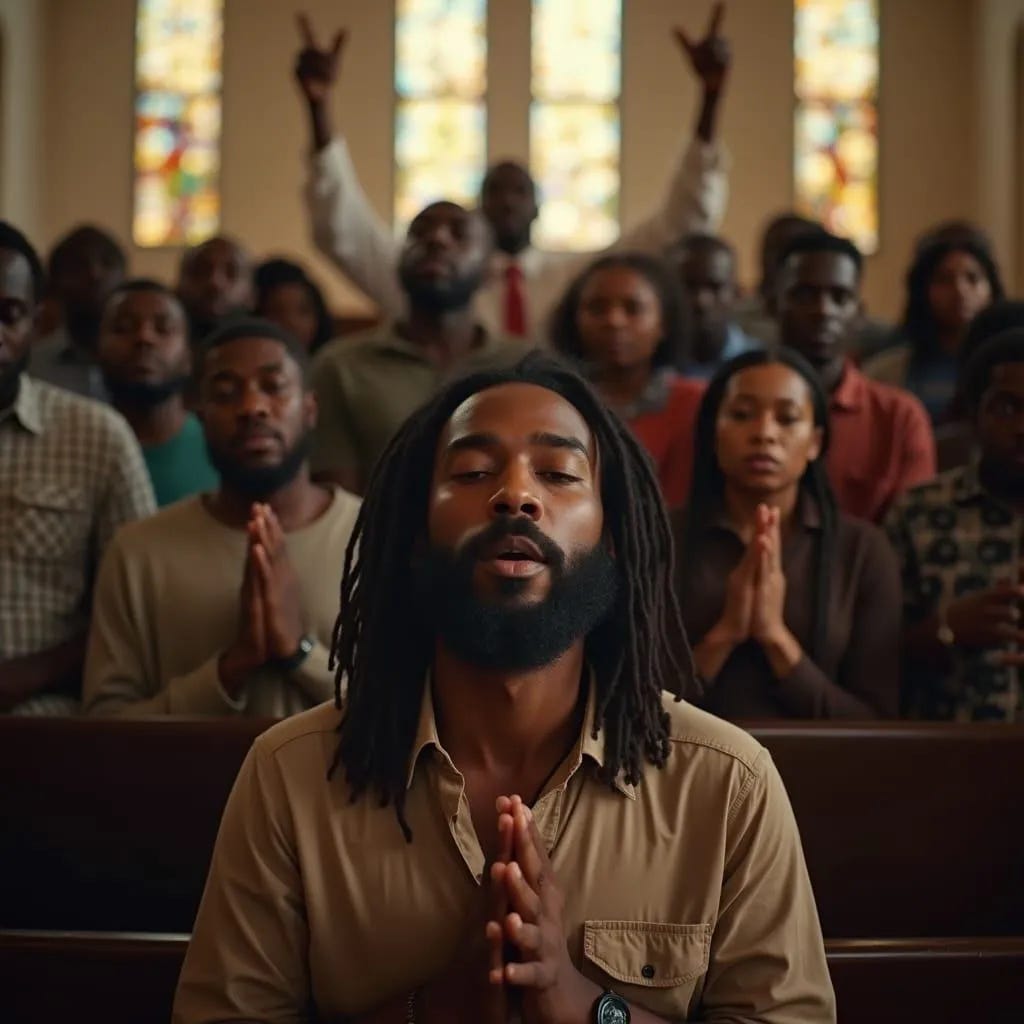
“Hear my cry, O Lord,
Attend unto my prayer.
From the end of the earth will I cry out to Thee,
When my heart is overwhelmed,
Lead me to the Rock that is higher than I.”
— Hear My Cry Oh Lord
Hurricane Melissa was devastating.
Truly devastating.
A powerful, record-breaking system — almost unnerving in how it behaved. It gathered strength over warm waters, slowed, stalled, pulled in more energy, and grew into something that felt less like weather and more like an uncontrollable force. Then it moved — following what seemed like the path of least resistance — tearing through Black River, cutting across Westmoreland, pushing past Montego Bay, and leaving its mark as it went.
Living through it was frightening. Not just because of the wind or rain, but because of the uncertainty. The waiting. The listening. The wondering what would come next.
And yet, as overwhelming as it was, one truth keeps rising to the surface.
“When my heart is overwhelmed,
Lead me to the Rock that is higher than I.”
This reflection isn’t about whether one is Christian, religious, or spiritual in a formal sense. But Jamaica has always been a deeply spiritual place. Faith — in God, in community, in endurance — is woven into the culture. In times of crisis, people don’t only look at the sky; they look inward, and they look upward.
It could have been much worse.
Had the eye of the storm cut directly through the centre of the island — Kingston straight across — the consequences would have been profound. The capital is not just a city; it is the heartbeat of governance, commerce, logistics, and coordination. A direct hit there would have brought the country to a near standstill.
Or imagine the storm moving horizontally across the island — Kingston to St Ann’s Bay, through Ocho Rios — the scale of devastation would have been historic.
That didn’t happen.
Some may call it luck. Some may call it geography. Some may call it grace.
Jamaica’s mountainous terrain has always played a quiet but powerful role in our survival. As storms approach, the elevation disrupts their momentum. Wind shear increases. Systems weaken. Energy disperses. The mountains don’t eliminate the damage — but they reduce the blow. Nature, in its own way, intervenes.
“For Thou hast been a shelter for me,
And a strong tower from the enemy.”
This is where resilience comes in.
Resilience is not pretending storms won’t come. They will.
Resilience is not denying damage. It happens.
Resilience is what comes after — how people rebuild, rethink, and respond.
And that’s where this conversation meets real estate.
Jamaica’s real estate story — past, present, and future — is inseparable from resilience. Land here has never been cheap, and it’s not getting cheaper. But value is not only about price; it’s about learning. About building smarter. Planning better. Respecting terrain, drainage, climate, and history.
Storms force reflection:
How we build
Where we build
What we protect
What we insure
What we leave vulnerable
They remind us that development without foresight is fragile.
This moment invites us to look honestly at where we’re coming from, where we are now, and where we’re going. To accept that climate realities are not theoretical anymore. To acknowledge mistakes — poorly planned developments, ignored flood plains, undervalued infrastructure — and to do better going forward.
Optimism doesn’t mean denial.
Optimism means believing that growth can be smarter, stronger, and more resilient.
“From the end of the earth will I cry out to Thee…”
That cry is not only spiritual. It is civic. Cultural. Generational.
Jamaica has been tested many times before — by storms, by economics, by history — and each time, the country has found a way to stand back up. Not unchanged, but wiser.
This is not just a story about a hurricane.
It’s about a people.
An island.
A future that must be built with intention.
Stronger foundations.
Clearer vision.
And resilience — not as a slogan, but as a way of life.