

Hormuz Closure Sends Shockwaves Through Global Energy Routes
Energy disruption abroad begins to tighten costs at home, exposing how global conflict quietly shapes Jamaica’s housing market

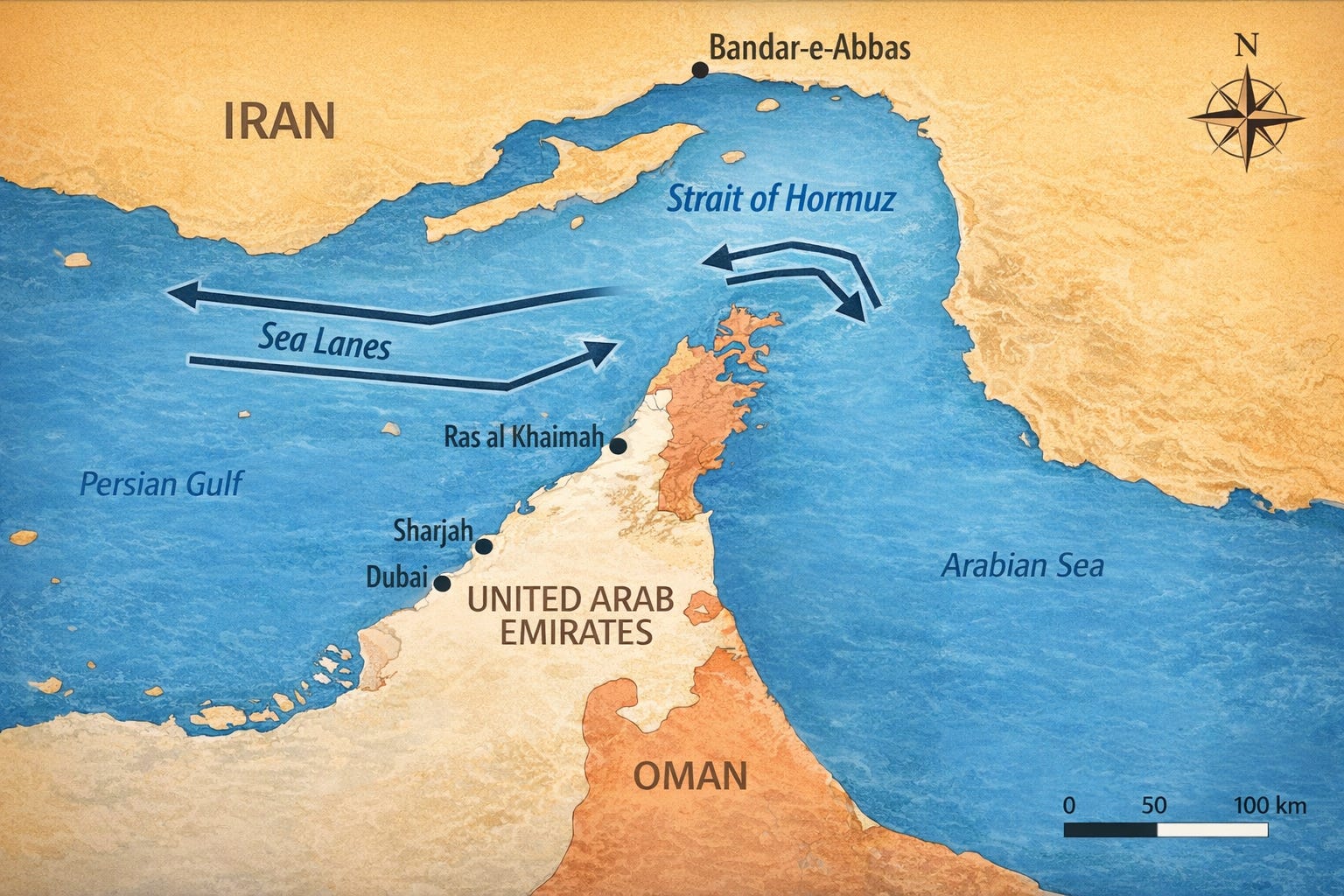
Iran has again restricted passage through the Strait of Hormuz, a key route for global oil and gas shipments
Reports of attacks on vessels have heightened risks for commercial shipping and energy supply chains
Oil prices are rising, with immediate implications for import-dependent economies like Jamaica
Higher energy costs are expected to filter into construction, housing affordability, and household expenses
Iran’s renewed closure of the Strait of Hormuz has intensified global concerns over energy supply and maritime security, as reports of vessel attacks and restricted passage disrupt one of the world’s most critical shipping corridors. The move, tied to escalating tensions with the United States, is already pushing oil prices upward and raising fresh questions about the stability of global trade routes that underpin economies far beyond the Middle East, including Jamaica.
The strait, a narrow but vital passage connecting the Persian Gulf to the Arabian Sea, typically carries around a fifth of the world’s oil and liquefied natural gas. Its intermittent closure over recent weeks, now reinforced by direct warnings from Iran’s military authorities, has significantly reduced tanker traffic and heightened risks for commercial shipping. Reports of gunfire incidents involving tankers and merchant vessels, alongside threats to target ships entering the waterway, have added to the uncertainty.
For Jamaica, the implications are indirect but immediate. The island’s economy, like many small states, is deeply exposed to global energy prices. Fuel imports drive electricity generation, transportation, construction costs, and ultimately the affordability of housing. When oil prices rise sharply, as they have during previous disruptions in the strait, the effects ripple quickly through the domestic economy.
Higher fuel costs translate into increased expenses for building materials, shipping, and on-site construction activity. Cement production, steel imports, and heavy equipment usage all depend on energy inputs. Developers, already navigating tight margins and fluctuating demand, may delay or scale back projects if volatility persists. In practical terms, this can slow housing supply at a time when demand remains structurally high.
The impact extends beyond construction sites. Mortgage affordability, though influenced primarily by local interest rates, is sensitive to broader inflationary pressures. If energy-driven inflation rises, it can influence monetary policy decisions, potentially keeping borrowing costs elevated. For prospective homeowners, particularly first-time buyers, this compounds an already challenging path to ownership.
Renters, too, are affected in quieter but significant ways. Landlords facing higher operating costs, from electricity to maintenance, may pass on some of those increases. Over time, this contributes to a gradual upward pressure on rents, especially in urban centres where demand remains strong and supply constrained.
The current crisis also highlights a deeper structural issue for Jamaica’s housing future: exposure to external shocks. The island does not produce oil at scale, and its reliance on imported energy leaves it vulnerable to geopolitical events far beyond its control. Each disruption, whether caused by conflict, natural disaster, or supply chain breakdown, reinforces the link between global instability and local housing affordability.
There are longer-term considerations as well. Periods of sustained energy volatility often accelerate interest in alternative approaches to development. Energy-efficient housing, renewable integration such as solar systems, and more resilient building practices become not just environmental choices but economic necessities. In Jamaica, where sunlight is abundant but adoption remains uneven, the current moment may quietly shift how developers and homeowners think about long-term cost stability.
At a national level, the situation underscores the importance of energy diversification strategies and infrastructure resilience. While these are not traditionally framed as housing issues, they are inseparable from the cost and security of shelter over time. A home is not just a structure, it is a system dependent on power, water, and the wider economy.
Dean Jones, founder of Jamaica Homes, said the renewed disruption serves as a reminder of how interconnected property markets are with global forces. “Events thousands of miles away can influence whether a young family in Jamaica can afford to build, buy, or even maintain a home. Energy is not separate from housing, it sits at the centre of it.”
As tensions around the strait continue, attention will remain fixed on whether the disruption is temporary or part of a longer pattern of instability. Oil markets have already shown signs of strain, with prices climbing during previous phases of the conflict. Any sustained blockage or escalation could deepen these pressures.
For Jamaica’s property sector, the outlook is one of cautious watchfulness. Developers, investors, and households alike are likely to adopt a wait-and-see approach, balancing immediate needs against uncertain cost trajectories. Some projects may proceed with revised budgets, others may pause until conditions stabilise.
What is clear is that the effects of the crisis will not be confined to shipping lanes in the Gulf. They will be felt in construction yards, mortgage discussions, and household budgets across Jamaica. In a market already shaped by limited supply and rising expectations, external shocks such as this do not create new challenges so much as intensify existing ones.
The closure of the Strait of Hormuz is, at its core, a geopolitical event. But for Jamaica, its significance lies in what it reveals about vulnerability, resilience, and the quiet dependence of housing on forces far beyond the island’s shores.