

Informal Settlements Strain Jamaica’s Housing Future
Unplanned communities are raising infrastructure costs, limiting land use, and deepening Jamaica’s housing divide

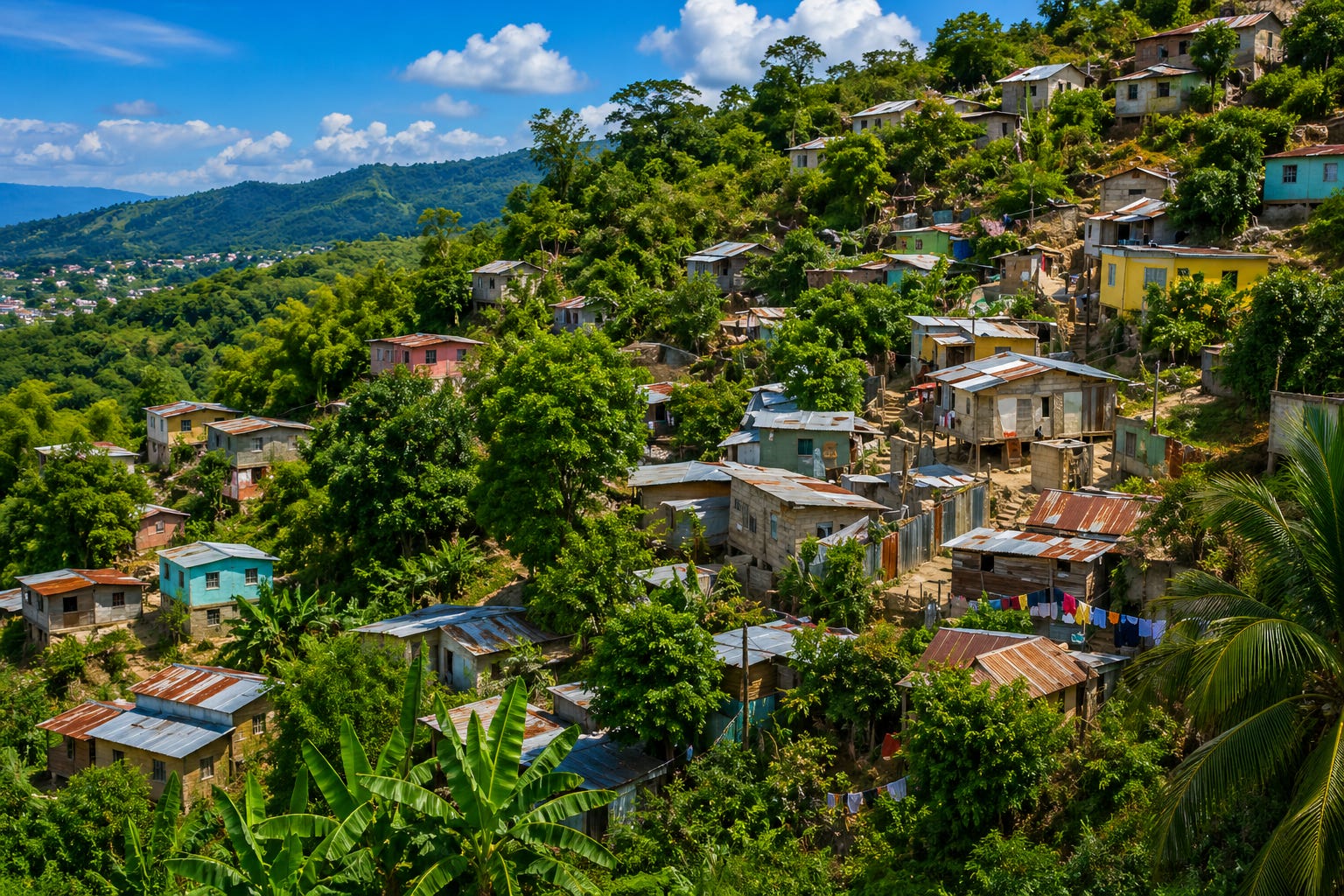
The Government has renewed warnings about the long-term risks of unplanned housing, highlighting how informal settlements are quietly reshaping Jamaica’s land use, infrastructure costs, and housing market stability.
Speaking at a recent housing development launch, Andrew Holness cautioned that irregular land occupation is not just a social issue but a structural one, limiting where roads, schools, and essential services can be built. His remarks come at a time when Jamaica is already facing a persistent housing deficit and rising development pressures.
Land Use Under Pressure
At its core, the concern is about land, how it is used, and how early decisions shape decades of development. When settlements emerge without planning approval, they often occupy land that may later be needed for national infrastructure. This creates a quiet but costly conflict between present shelter needs and future growth.
For the real estate sector, this has several implications. Land that could have supported structured housing schemes, commercial expansion, or transport corridors becomes fragmented. Developers face higher acquisition and consolidation costs, while the State must navigate compensation, relocation, or redesign of infrastructure routes.
Over time, this reduces the efficiency of land markets. It becomes harder to assemble large, viable parcels for development, and more expensive to deliver housing at scale.
The Cost of Retrofitting Communities
The Prime Minister pointed to a key economic reality, it is far more expensive to retrofit informal communities than to build properly from the start. This is a critical issue for Jamaica’s housing strategy.
Regularising informal settlements often requires installing roads, drainage, sewage systems, and utilities in areas that were never designed to accommodate them. In dense or poorly laid out communities, even basic service delivery becomes complex.
For homeowners within these areas, the impact is equally significant. Without formal tenure, residents may struggle to access mortgages, insurance, or resale opportunities. Properties exist, but they sit outside the formal financial system, limiting their value as assets.
This creates a two-tier housing market, one formal and financeable, the other informal and constrained.
Housing Supply and Informality
The persistence of informal settlements is closely tied to Jamaica’s housing shortage. When formal supply cannot meet demand, particularly at lower income levels, households find alternative ways to secure shelter.
This is where the issue becomes more nuanced. Informality is not simply a planning failure, it is also a response to affordability constraints, access to land, and the pace of housing delivery.
The Government’s target of 150,000 housing solutions signals recognition of this gap. Developments such as the Galina Housing project in St. Mary, which will deliver serviced lots and modest homes, are part of an effort to provide structured alternatives.
Yet the scale of demand suggests that supply must not only increase, but also align with what people can realistically afford.
Infrastructure, Value, and Market Stability
From a market perspective, unplanned settlements introduce long-term uncertainty. Infrastructure networks become less predictable, service delivery costs rise, and surrounding property values can be affected by uneven development patterns.
Planned communities, by contrast, tend to support stable property values because they are integrated into wider systems, roads, utilities, schools, and transport. Informal areas, even when vibrant and socially cohesive, often lack this structural integration.
This distinction matters for investors, lenders, and policymakers alike. It shapes where capital flows, how risk is assessed, and which communities benefit from long-term growth.
A Structural Challenge, Not a Temporary One
The warning from the Office of the Prime Minister reflects a broader reality. Informal settlements are not a short-term anomaly, they are part of Jamaica’s evolving housing landscape.
Addressing them requires more than enforcement. It demands coordinated planning, faster housing delivery, accessible financing, and a clear framework for land use that balances immediate needs with future development.
As Jamaica continues to urbanise and expand, the way land is occupied today will define the country’s infrastructure, housing quality, and economic resilience for decades to come.