

Inside Jamaica’s Rising Luxury Apartment Market: The $50 Million One-Bedroom Shift

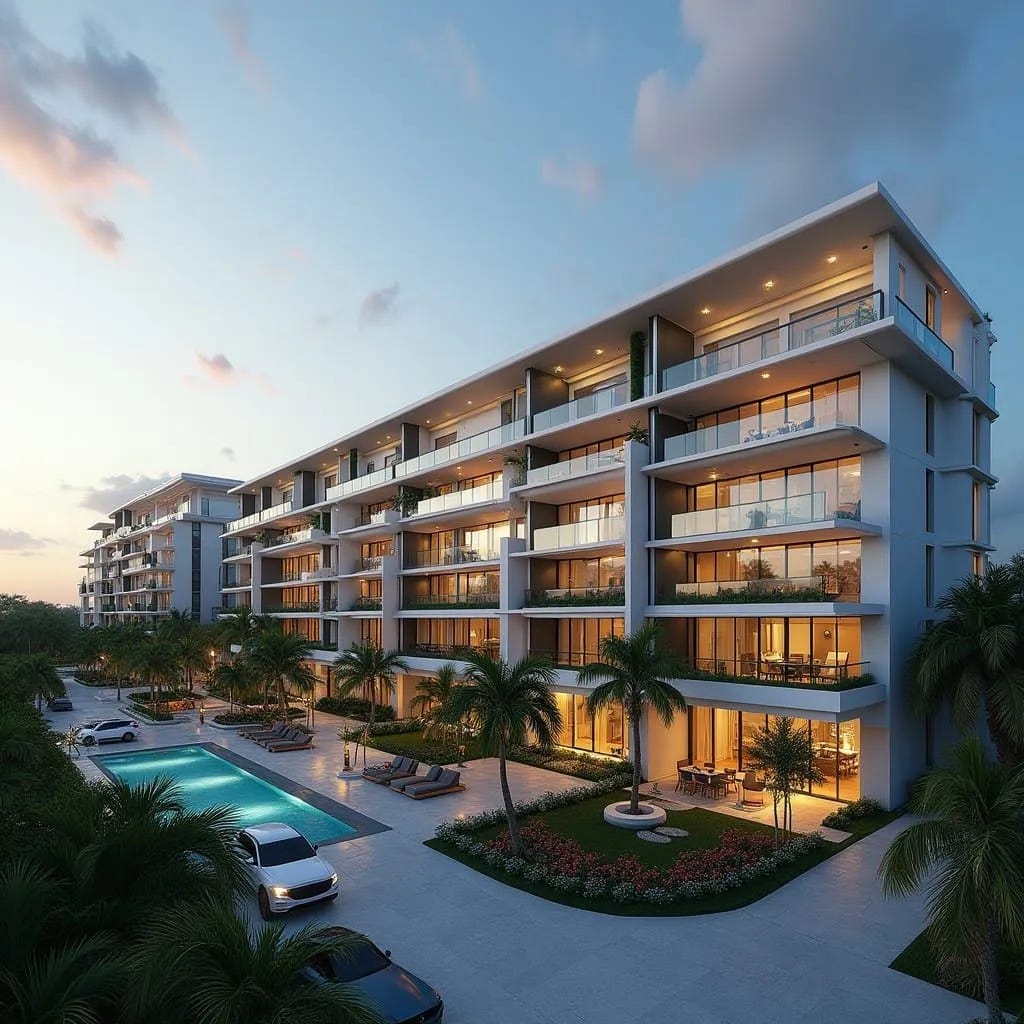
There is a quiet moment in every housing market when numbers stop being just numbers and begin to tell a story. Jamaica’s emergence of one-bedroom apartments priced beyond $50 million is one such moment. Not because it is unprecedented globally, but because of what it says about where Jamaican real estate has come from—and where it may be heading next.
To understand why this matters, it helps to step back.
Jamaican housing has always been deeply tied to land. For generations, value was measured horizontally: acres, yards, boundaries marked by stone or wire, family homes built incrementally over decades. Ownership was often less about design statements and more about permanence—something to pass down, something that anchored families to place.
Apartments arrived later, and cautiously. In the post-independence years, they were largely functional: solutions for density, proximity to work, or government-led housing needs. Luxury, when it existed, was usually expressed through space rather than elevation—large homes in established neighbourhoods, coastal villas set well back from the road, quiet confidence rather than spectacle.
What has changed is not simply price. It is form.
Today, in parts of St. Andrew, the most valuable residential real estate is increasingly stacked, layered, and vertical. A one-bedroom apartment—once shorthand for compromise—can now command prices that rival long-standing family homes. These are not accidental outcomes. They are the product of land scarcity, rising construction costs, global exposure, and a recalibration of what “prime” really means in a small island economy.
Along the north coast, particularly in St. James, St. Ann, and St. Mary, this shift takes on a different character. Here, value is shaped by view, access, and lifestyle. One-bedroom units are designed as distilled experiences—sunrise balconies, controlled access, short-term rental potential, and proximity to tourism infrastructure. They are small by plan, but ambitious by intention.
Yet it would be a mistake to assume that price alone defines success.
At this level of the market, time stretches. Buyers are fewer. Decisions are slower. These units often sit longer, waiting for the right purchaser rather than the next one. That is not a weakness; it is the nature of the upper end. Luxury rarely rushes.
Below this tier, however, the market moves with far more urgency.
Apartments priced closer to the reach of the professional Jamaican household—dual-income families, returning residents, carefully financed first-time buyers—tend to sell faster and in greater numbers. They sit closer to what developers quietly refer to as the “absorption zone”: the point where affordability, bank lending, and everyday life intersect. It is here that volume is built, communities form, and housing policy quietly finds its footing.
As Dean Jones, founder of Jamaica Homes, observed:
“Jamaican real estate has always been about security first and aspiration second. What we’re seeing now is those two ideas starting to overlap—but they don’t overlap evenly across the market.”
That unevenness matters.
The rise of $50 million one-bedroom apartments sits alongside a broader national push to expand housing supply at more attainable levels. Planning focus, infrastructure investment, and public–private collaboration increasingly point toward scale—toward developments that can be delivered in numbers and sustained by local demand. Developers working in parishes such as St. Catherine are often navigating this dual reality: flagship projects that test the ceiling, and larger schemes that quietly support the floor.
There is also a design tension at play. As planning frameworks tighten around density, setbacks, and unit mix, apartments are being shaped as much by approval parameters as by end-user needs. Over time, how a space is lived in can diverge subtly from how it was first conceived. This is not unique to Jamaica—it is a familiar feature of maturing urban markets—but it adds complexity to how value is understood, particularly when size alone no longer tells the full story.
Looking outward helps provide perspective.
Compared regionally, Jamaica still sits below prime pricing in places like Barbados, where luxury apartments have long been normalised. Internationally, comparisons with Florida are unavoidable. Despite hurricanes, insurance pressures, and climate risk, coastal Florida continues to command prices well above Jamaica’s, buoyed by scale, liquidity, and global capital flows.
That contrast reinforces a quiet truth: Jamaica’s market has been undervalued for much of its modern history. Geography, culture, and brand recognition have always been strengths; what lagged was infrastructure alignment and consistent delivery. As those gaps narrow, prices respond.
But price growth alone is not progress.
Real housing maturity is measured by balance—by how well a market serves investors and residents, aspiration and access, today’s buyers and tomorrow’s families. The risk at the top end is not excess, but distraction: mistaking the most expensive units for the most important ones.
Dean Jones puts it more plainly:
“The future of Jamaican housing won’t be decided by the highest prices we achieve, but by how many Jamaicans can realistically participate in ownership without stretching beyond stability.”
That perspective matters, particularly now.
The $50 million one-bedroom apartment is a marker, not a model. It tells us that Jamaica can support sophisticated, high-value residential product. It tells us that international confidence is real. But it also sharpens the question of who housing is for, and at what scale.
Historically, Jamaican real estate has been patient. Homes were built slowly. Value accumulated quietly. What feels like acceleration today is, in many ways, a long-delayed alignment with global norms. The challenge is ensuring that alignment does not outrun local realities.
As the market continues to evolve, the most enduring developments may not be the ones that break price records, but those that strike proportion—between ambition and affordability, density and dignity, growth and grounding.
In that sense, the story of Jamaica’s $50 million one-bedroom apartment is not a story about excess. It is a story about transition. And like all transitions, its success will be judged not by how high it climbs, but by how steadily it carries people with it.
Disclaimer: This article is for general information and commentary purposes only and does not constitute legal, financial, or investment advice. Readers should seek professional guidance appropriate to their individual circumstances.