


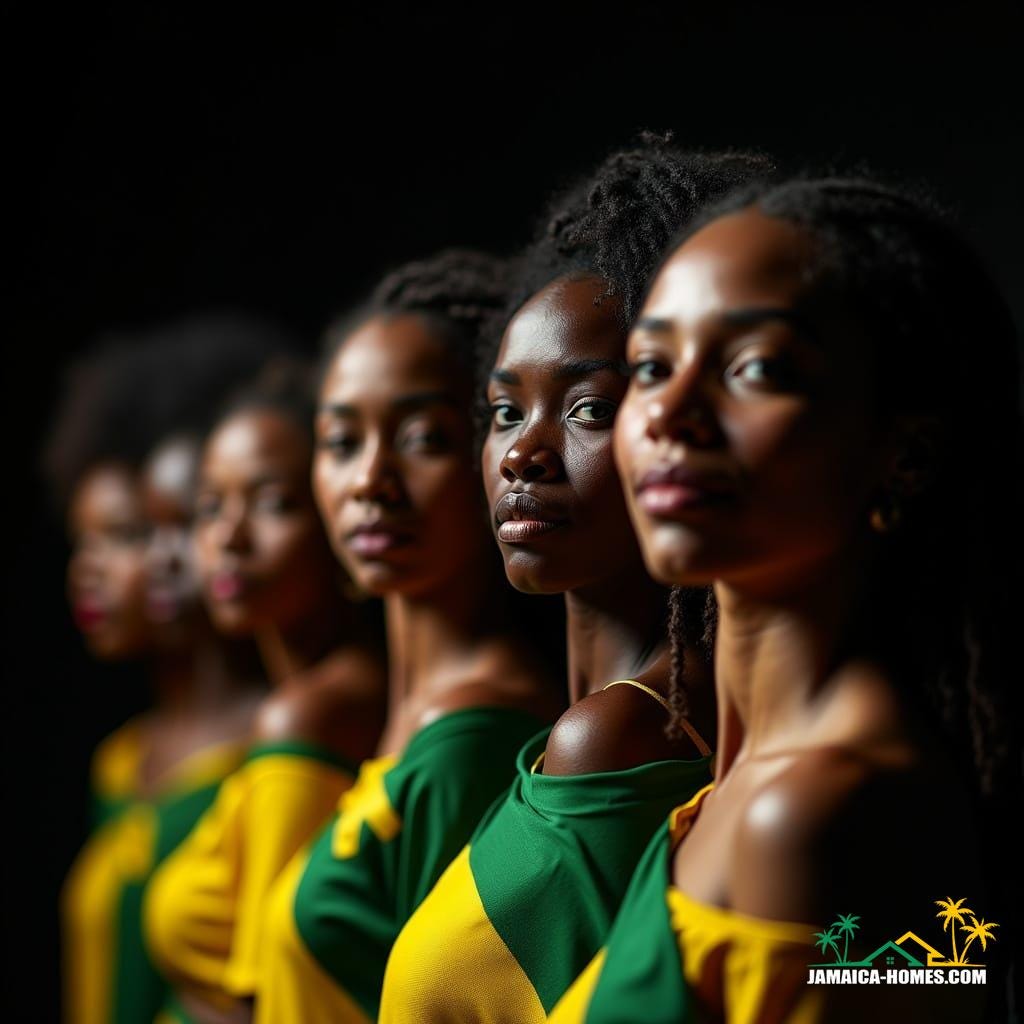
Every year on March 8, the world pauses to observe International Women’s Day. It is a day dedicated to recognising the achievements of women and acknowledging the ongoing journey toward gender equality. Across continents and cultures, the day serves as both celebration and reflection — celebration for the progress made, and reflection on the work that remains.
In Jamaica, the significance of International Women’s Day runs deep. This island’s story has always been intertwined with the courage, ingenuity and resilience of women. Long before the modern language of gender equality took hold, Jamaican women were already doing the work — raising families under immense hardship, sustaining communities, leading movements, shaping culture and building the foundations of the society that exists today.
The Jamaican story, after all, is not just one of institutions, governments and economic development. It is a story of homes. And homes are where nations truly begin.
A house may be built with concrete blocks and steel, but a home is built with values, sacrifice and care. Within those homes, across generations, women have played a central role in nurturing the social fabric that holds the country together. Mothers, grandmothers, sisters and daughters have long carried the quiet responsibility of shaping the character of the nation.
If one travels back to the earliest chapters of Jamaica’s history, the presence of strong women is unmistakable. The name that towers above all others is Nanny of the Maroons, Jamaica’s only female National Hero. Her leadership during the Maroon resistance against British colonial forces in the eighteenth century remains one of the most extraordinary stories of courage in the Caribbean.
Nanny was not simply a warrior. She was a strategist, a spiritual leader and a protector of her people. In the mountainous terrain of eastern Jamaica, she helped build and defend communities where formerly enslaved Africans could live freely, outside the reach of colonial authority. These settlements were more than military outposts. They were homes — places where families could live, grow and preserve their culture.
That vision of securing space for people to live freely remains one of the earliest expressions of what home means in the Jamaican context.
From those beginnings, the influence of Jamaican women expanded into nearly every aspect of national life. As the island moved through the brutal realities of slavery and into the uncertain years following emancipation, women became the anchors of community survival. They worked in fields and markets, raised children under difficult conditions, and maintained fragile family structures at a time when social systems were often stacked against them.
Even as formal power structures rarely recognised their leadership, women quietly held communities together.
In the nineteenth century, one Jamaican woman would take her compassion and knowledge far beyond the island’s shores. Mary Seacole became internationally known for her work during the Crimean War. Drawing on traditional Caribbean healing practices learned from her mother, she established the “British Hotel” near the battlefield and treated wounded soldiers with extraordinary dedication.
Seacole’s story reflects something deeply Jamaican: resourcefulness in the face of rejection. When official institutions denied her entry into formal nursing roles, she did not retreat. Instead, she created her own path and earned global admiration through sheer determination and skill.
Her story is echoed in the lives of many Jamaican women who refused to accept the limits placed before them.
As the twentieth century approached, women began to assert themselves more visibly in public life. Among them was Una Marson, a poet, playwright and activist who became one of the earliest voices advocating for women’s rights in Jamaica. She was the first Jamaican woman to edit and publish a magazine and later became a pioneering broadcaster at the BBC.
Marson understood something fundamental about national identity: a country cannot fully progress if half its population is excluded from opportunity. Her writing and activism challenged the cultural norms of her time and opened doors for the generations of women who would follow.
Around the same period, Jamaica’s artistic and cultural identity began to take shape in new ways. At the centre of that transformation stood Edna Manley, widely regarded as the mother of modern Jamaican art. Through her sculpture, Manley gave form to the emotional and social experiences of a people on the brink of independence.
Her work captured the strength and resilience of ordinary Jamaicans — the labourer, the mother, the struggling family — and placed those figures at the centre of national consciousness.
If Manley shaped Jamaica’s artistic identity, another woman would shape its cultural voice. Louise Bennett-Coverley, affectionately known as Miss Lou, did something quietly revolutionary: she celebrated the Jamaican language itself.
For decades, Jamaican Creole had often been dismissed as informal or inferior. Miss Lou turned that assumption on its head. Through poetry, theatre and storytelling, she demonstrated the richness, humour and intelligence embedded within Jamaican speech. In doing so, she helped Jamaicans see their own culture with pride.
These women were not simply artists or writers. They were nation-builders, helping Jamaicans understand themselves and their place in the world.
In politics, Jamaican women would eventually reach the highest levels of leadership. Portia Simpson-Miller made history when she became Jamaica’s first female Prime Minister, a milestone that reflected decades of progress in expanding opportunities for women in public life.
Meanwhile, leaders such as Olivia Grange have played significant roles in cultural development and public administration, shaping policies that influence national identity and community life.
Beyond politics and culture, Jamaican women have also carried the nation’s flag proudly on the global sporting stage. Few examples capture this better than Shelly-Ann Fraser-Pryce, whose extraordinary success in international athletics has inspired countless young Jamaicans.
Her journey — from humble beginnings in Kingston to becoming one of the most decorated sprinters in history — speaks to a broader truth about Jamaican women: resilience, discipline and an unwavering commitment to excellence.
Yet while these well-known figures deserve recognition, the story of Jamaican women extends far beyond public fame.
The country has also been shaped by teachers who devoted their lives to education, nurses who served communities through generations, entrepreneurs who built businesses from modest beginnings, and mothers who worked tirelessly to ensure their children had opportunities they themselves may never have had.
These everyday acts of dedication form the quiet architecture of a nation.
And at the centre of that architecture is the home.
A nation can build highways, hospitals and office towers, but its future ultimately depends on what happens inside homes — the values taught around kitchen tables, the discipline instilled in children, the resilience nurtured during difficult times.
Dean Jones, founder of Jamaica Homes, believes that recognising the role of women in Jamaican society must include recognising the role they play within the home.
“International Women’s Day is not only about celebrating achievements that take place in public life,” said Jones. “It is also about recognising the leadership that takes place quietly inside homes across Jamaica. Families are the building blocks of any nation, and in many Jamaican households it is women who guide, nurture and strengthen those families.”
Jones says the relationship between housing and family life is often overlooked in national conversations.
“A house can be built or purchased,” he said. “But what truly defines a home is what happens inside it. It is within those walls that children learn their values, families support each other and communities take shape. When we talk about building a stronger Jamaica, we must also talk about strengthening the homes where the next generation is being raised.”
In many ways, the story of Jamaica can be read through the homes that dot the island’s landscape — from the hillside communities of rural parishes to the bustling neighbourhoods of Kingston and Montego Bay.
Within those homes are stories of perseverance: mothers stretching limited resources to provide for their families, grandmothers passing down traditions and wisdom, young women striving to create better futures for their children.
Across generations, Jamaican women have often carried responsibilities that extend far beyond what society formally recognises. They have balanced work and family, navigated economic challenges and provided emotional stability during times of uncertainty.
Their contributions cannot always be measured in statistics or political milestones, yet they remain fundamental to the nation’s development.
Today, Jamaica stands as a country rich in culture, resilience and global influence. Its music, athletic excellence, artistic expression and entrepreneurial spirit have reached audiences around the world.
Behind much of that success lies the influence of women who have nurtured talent, preserved traditions and encouraged ambition within their families and communities.
International Women’s Day therefore offers more than an opportunity for recognition. It invites reflection on the values that sustain a society and the people who quietly uphold those values every day.
In Jamaica’s case, many of those people are women.
From the fearless leadership of Nanny of the Maroons to the cultural brilliance of Miss Lou, from the global compassion of Mary Seacole to the sporting triumphs of Shelly-Ann Fraser-Pryce, Jamaican women have repeatedly demonstrated their ability to lead, inspire and transform.
But perhaps their greatest contribution lies in the spaces that rarely make headlines — the homes where children are raised, dreams are nurtured and communities begin.
Because in the end, the strength of any nation is not measured only by its economy or its institutions. It is measured by the values carried within its homes and the people who shape them.
And throughout Jamaica’s history, women have been at the very heart of that story.