


By Dean Jones, Founder of Jamaica Homes
There is a story about real estate in Jamaica that rarely gets told properly.
Most people talk about property as numbers: square footage, rental yield, price per acre, beachfront value. But that is not the real story of Jamaican real estate.
The real story begins with family.
It begins with grandparents who believed that a house was more than a building. A house was stability. A house was dignity. A house was a base from which a family could rise.
If you want to understand investing in Jamaican real estate, you have to understand the Jamaican family.
And if you want to understand the Jamaican family, you must go back to the 1930s.
The Early Foundations: Jamaica Before the Property Market
In the 1930s Jamaica was not a place where ordinary people spoke about “real estate investing.”
Land belonged largely to estates, wealthy landowners, and the remnants of the colonial plantation system.
But something important was already happening.
Families were building.
Sometimes they built with wood.
Sometimes with zinc.
Sometimes slowly—one room at a time.
A father might pour a foundation one year.
Add two rooms another year.
Put on a roof five years later.
That was Jamaican real estate before the word “investment” ever entered the conversation.
It was survival.
It was vision.
And it was always about family.
The Quiet Financial System Jamaicans Created
Long before banks trusted Caribbean migrants, Jamaicans had already invented their own financial systems.
They called it partnering.
A group of people would contribute money weekly into a pool. Each month, someone would receive the “draw.”
That money might build a room.
Buy land.
Pay passage to England.
Or help someone start again.
Partnering financed countless Jamaican homes long before mortgage institutions existed.
My grandparents understood that system well.
They believed in something very simple:
“Save first. Spend after.”
— Dean Jones, Founder of Jamaica Homes
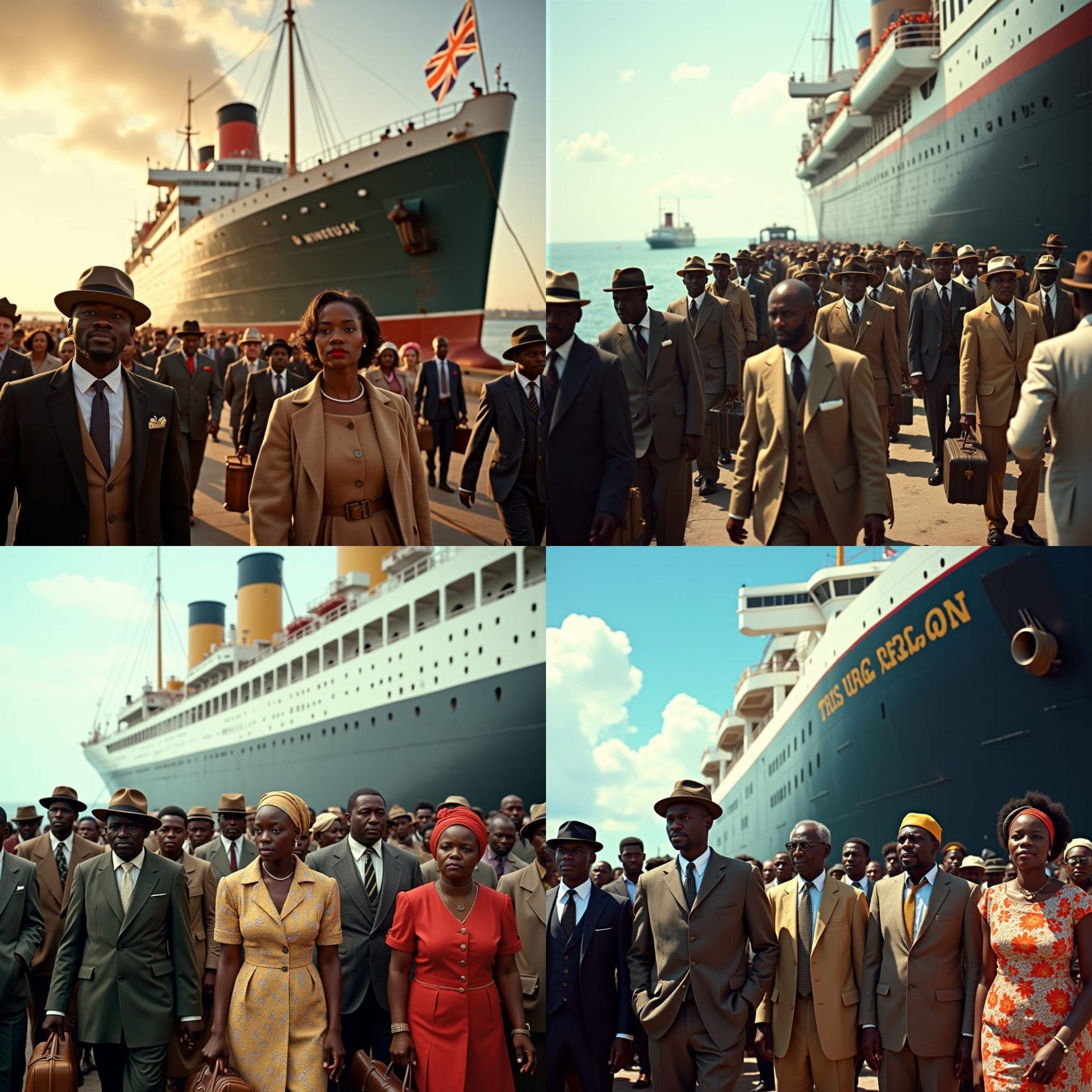
The Windrush Generation and the Property Strategy
After the Second World War, Britain needed workers.
Factories were short of labour.
Hospitals needed staff.
Transport systems needed drivers and mechanics.
So Caribbean people travelled to the United Kingdom.
They were not beggars.
They were skilled people, tradesmen, nurses, clerks, craftsmen.
But the reception they received was often brutal.
Many Caribbean families endured racism that younger generations today would struggle to imagine.
Windows smashed.
Alcohol bottles thrown through homes.
Spitting in the street.
Yet the Windrush generation did something remarkable.
They worked.
They saved.
And they bought property.
Sometimes a house was bought with three families contributing.
Sometimes five.
A large house might contain multiple families from Jamaica all sharing the cost.
My grandfather believed strongly in this model.
He once told me something that stayed with me for life.
“If you’re going to buy a house, buy a big one.
A small house feeds only you.
A big house feeds the future.”
— Dean Jones
That thinking shaped an entire generation of Jamaican property owners in Britain.
Large Victorian houses.
Multiple floors.
Basements.
Rooms rented to family members and new arrivals.
Those houses became the economic engine that lifted many Caribbean families into stability.
The Matriarchs Who Ran the Households
Behind every successful Jamaican household there was usually a formidable grandmother.
My grandmother was exactly that.
In the community she was known simply as Sister I.
Her kitchen was famous.
Pastors visiting England were brought to her house.
Church members gathered there.
Family gathered there.
Someone once said:
“Have you tasted Sister I’s chicken? My God.”
The house was always full.
Ten people.
Sometimes twenty.
She cooked like abundance was a philosophy.
Yet she never wasted money.
Every week she managed to stretch the household budget in ways that seemed almost miraculous.
She saved quietly.
She organised the finances.
She paid the bills.
She put away money for the future.
My grandfather worked.
But he trusted her with everything.
That was partnership in its truest form.
Real Estate Lessons from the Old Generation
The old Jamaican generation believed in three principles.
1. Save before showing off.
They did not buy flashy cars before securing land.
They bought land first.
“A car depreciates.
Land remembers your name.”
— Dean Jones
2. Think bigger than yourself.
My grandfather’s house always had people living in it.
Family arriving from Jamaica.
Friends needing a start.
Tenants who later became owners themselves.
3. Invest slowly but consistently.
They did not rush.
They built patiently.
Brick by brick.
Year by year.
And by the 1970s and 1980s many Caribbean families in Britain owned property that today would be worth millions.
Building Back Home: Jamaica Was Changing Too
While Caribbean families were building in Britain, Jamaica itself was evolving.
After independence in 1962, urban areas expanded.
Kingston grew.
St Andrew developed suburbs.
Land that had once been plantation estates began turning into residential communities.
Families bought lots and built homes slowly, often over decades.
Housing schemes appeared across the island.
Communities such as Waterhouse, Tivoli Gardens, and Olympic Gardens emerged.
Real estate was no longer only for wealthy elites.
Ordinary Jamaicans were building too.
The Jamaica I Grew Up Seeing
My childhood moved between two worlds.
England and Jamaica.
But Jamaica left the deepest imprint.
I remember Hellshire Beach when it was still a wide, natural beach.
I remember floating in the sea as a child inside a truck tyre.
I remember festival and fish as a treat.
But the real joy was simply being there.
Riding on the back of pickup trucks.
Laughing with friends.
Life was simple.
In Spanish Town and across St Catherine, communities felt tight-knit.
People knew each other.
They knew families.
They knew the Isaacs family.
Everyone seemed connected.
There was respect.
The Discipline of the Old Households
My grandparents ran a strict household.
Cleanliness mattered.
Appearance mattered.
Respect mattered.
Clothes prepared before Sabbath.
Haircuts neat.
No unnecessary work on worship days.
These rituals were not about control.
They were about structure.
Structure builds stability.
And stability builds families.
The Breakdown We Must Talk About
Today, something has changed.
Not just in Jamaica.
Across the world.
The family structure has weakened.
And when family weakens, something else weakens too:
Long-term thinking.
Real estate investment requires long-term thinking.
You buy land today for what it becomes twenty years later.
But when society becomes focused only on today, property becomes harder to build generationally.
This is not an attack on single parents.
Many single mothers perform extraordinary work raising children with strength and dignity.
But it is simply a recognition that when two people pull in the same direction, the journey can become easier.
Two incomes.
Two minds.
Two shoulders carrying responsibility.
That matters.
The Problem of Bad Mind
There is another issue Jamaica must confront honestly.
Bad mind.
Envy.
Jealousy.
The desire to pull others down rather than learn from them.
This mindset destroys cooperation.
And cooperation is essential for building wealth.
Four families could easily purchase land together.
Two families could develop a property together.
Communities could invest collectively.
But bad mind prevents it.
Instead of celebrating success, some try to sabotage it.
That mentality must change.
“Bad mind blocks opportunity faster than poverty ever could.”
— Dean Jones
Stop Complaining and Start Planning
Many Jamaicans complain about returnees.
They complain about foreign investors.
They complain about outsiders buying land.
But complaints build nothing.
Returnees bring money into the economy.
They hire workers.
They build homes.
They improve communities.
Foreign investors negotiate the best deals for themselves.
That is normal.
The responsibility for protecting Jamaican interests lies with Jamaican leadership and Jamaican strategy.
We must think beyond today.
We must think about the children of Jamaica.
Investing Together Again
There is nothing stopping Jamaicans from rebuilding cooperative investment culture.
Families can still partner.
Friends can still pool resources.
Communities can still purchase land.
This was how the old generation built.
And it still works today.
Real estate has always been a slow game.
But a powerful one.
My Own Journey
My journey was not straightforward.
I struggled with a learning disability in early life.
But family support made the difference.
A home makes a difference.
A stable environment gives children the chance to grow.
That foundation allowed me to pursue education.
Eventually I attended Central Saint Martins in London.
At the time, I was the only Black student in the design programme.
I went on to complete further degrees and qualifications across multiple disciplines.
Project management.
Surveying.
Leadership.
Each step required effort.
But the foundation came from family.
From a home.
From grandparents who believed in discipline, work, and vision.
Why Jamaica Homes Exists
Jamaica Homes was created from that philosophy.
It is not just a property platform.
It is an idea.
An idea that Jamaicans everywhere can participate in building the island’s future.
Real estate is not only about profit.
It is about permanence.
It is about legacy.
It is about creating something that outlives you.
The Real Message
If Jamaica wants to build a strong property economy, we must strengthen something deeper first.
Family.
Community.
Trust.
We must support each other.
Encourage each other.
Celebrate each other’s progress.
When Jamaicans succeed together, the country rises.
Final Thought
My grandparents never spoke about “wealth creation strategies.”
They spoke about simpler things.
Work hard.
Respect people.
Save money.
Build something.
And always think beyond yourself.
Because a house built with that mindset does not just shelter a family.
It shelters generations.
And that is the real meaning of investing in Jamaican real estate.