

Is “Dead Lef” Freezing Jamaica’s Property Market
From Kingston to London to New York, families are discovering too late that inheritance without probate is not ownership and the consequences are reshaping housing, wealth and belonging across Jamaica


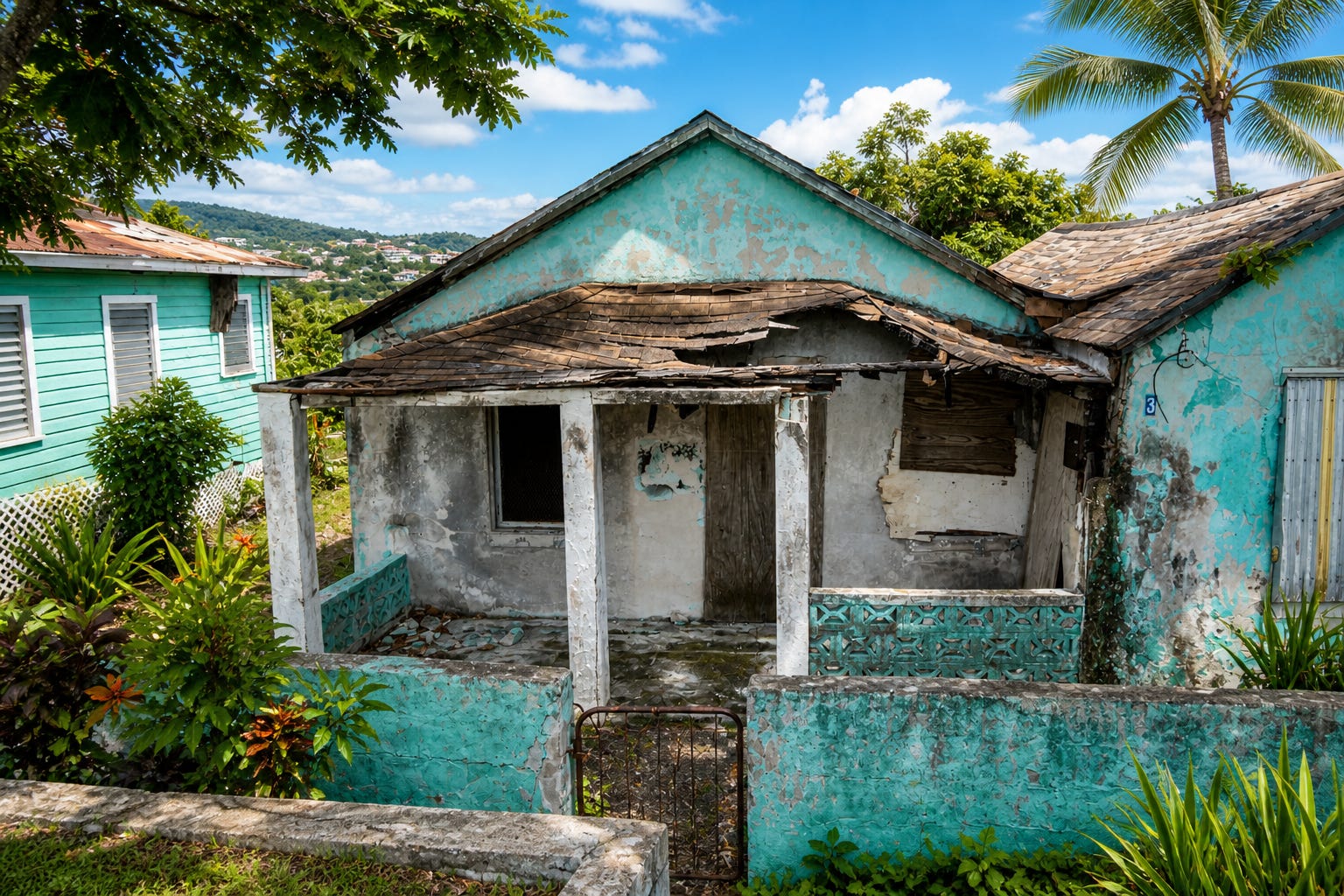
They arrive with confidence. Titles in hand. Receipts for land tax stretching back years. Stories of a grandmother, or a great-aunt, who “left the land for the family.”
Then comes the pause.
A quiet shift in the room.
And a sentence that stops everything: You can’t sell this.
Across Jamaica, a growing number of property transactions are collapsing at the same point - inheritance without probate. What Jamaicans call “dead lef” has become one of the most persistent and misunderstood barriers in the country’s housing market, locking up land for decades and exposing deep fractures between law, culture, and the diaspora.
The Illusion of Ownership
For many, especially those living overseas, ownership feels simple:
If you’ve paid the taxes, maintained the land, or inherited it through family understanding, then it’s yours.
But legally, that assumption often falls apart.
“People come forward with a blank expression,” said Dean Jones, founder of Jamaica Homes. “They genuinely believe they own the property. But in law, they don’t,not yet.”
In Jamaica, ownership does not pass automatically on death. Without a formal legal process, probate, the estate remains frozen. No sale. No transfer. No mortgage.
And in many cases, no clarity.
A System Few Understand Until It’s Too Late
At its core, probate is the legal mechanism that allows an estate to be administered and transferred. It is overseen by the Supreme Court of Jamaica and involves verifying a will, appointing an executor, valuing assets, settling debts, and distributing property.
The process is not quick. Nor is it simple.
Legal practitioners outline a structured path: gathering original documents, drafting sworn statements, securing tax assessments, and ultimately obtaining a court-issued grant before any property can legally change hands.
Even where a will exists, the process can take months. Without one, it can stretch into years.
Diaspora Dreams, Legal Reality
The problem is particularly acute among Jamaica’s diaspora.
From the United Kingdom to the United States and Canada, second- and third-generation descendants are returning to claim or sell family land,often for the first time.
What they find is not what they expected.
Documents are missing. Titles are outdated. Multiple relatives may have a claim. In some cases, the person named on the title died decades ago.
And sometimes, the land itself has changed.
Houses have been built. Families have moved in. Entire communities have formed.
“The assumption is that paying property tax equals ownership,” Jones said. “It doesn’t. It helps, but it doesn’t give you legal title.”
When Time Changes Ownership
In the absence of formal administration, something else begins to take hold: occupation.
Across Jamaica, there are properties where:
No probate was ever completed
No formal transfer took place
But someone has been living there, openly, for years
Over time, this can evolve into legal claims.
The result is a quiet but profound shift:
ownership begins to move away from paper and toward possession.
For families abroad, this can come as a shock.
The Hidden Cost to the Housing Market
This is not just a legal issue. It is an economic one.
Real estate professionals report:
Deals collapsing at late stages
Buyers walking away from unclear titles
Properties sitting idle for decades
Entire developments delayed due to unresolved estates
In a country already facing housing pressure, the impact is significant.
Land exists, but cannot move.
Wealth exists, but cannot transfer.
Opportunity exists, but cannot be realised.
The Process That Stops Everything
To unlock an estate, the process must be followed, step by step.
It begins with identifying the executor and gathering original documents. It moves through sworn legal applications, tax assessments, and court submissions. It ends, if all goes well, with a grant that allows the estate to be distributed.
But each stage carries friction.
Lost titles require replacement. Overseas executors must navigate notarisation rules that vary by country. Tax assessments can take time. Court backlogs add further delay.
And all the while, the property remains in limbo.
A Cultural Gap in Legal Planning
Part of the problem lies in a gap between tradition and law.
In many Jamaican families, property is understood collectively. Land is “family land.” Decisions are made informally. Intentions are spoken, not written.
But the legal system does not recognise intention.
It recognises documentation.
Without a valid will, or without completing probate, even the clearest family understanding can unravel under legal scrutiny.
Warnings from the Legal Profession
Attorneys consistently caution against informal transactions, particularly those involving “family land” without proper title.
While it is possible to structure private agreements, they carry risk. Without probate, there is no guarantee that the seller has the legal authority to transfer the property.
And where multiple beneficiaries exist, disputes can arise long after the transaction is complete.
The advice is consistent:
do it properly, or don’t do it at all.
A System Under Pressure
As more members of the diaspora reconnect with Jamaica, whether to invest, retire, or return, the pressure on the system is increasing.
More estates are being opened. More historical ownership questions are being tested. More families are confronting the gap between what they believed and what the law requires.
At the same time, the country’s housing ambitions, faster development, broader ownership, greater access, depend on land being legally transferable.
Without reform, or at least greater public understanding, the bottleneck may widen.
The Human Reality Behind the Paperwork
Behind every stalled transaction is a story.
A family trying to sell a house to fund education.
A returnee hoping to build on ancestral land.
A sibling dispute that hardens over time.
A property left empty, slowly deteriorating.
“Dead lef” is not just about death.
It is about what happens after, and whether the system can keep pace with the lives people are trying to rebuild.
The Way Forward
The solutions are not complicated, but they require action:
Writing clear, valid wills
Updating titles during one’s lifetime
Beginning probate early
Seeking legal advice before attempting to sell
For the diaspora, it may also mean confronting a difficult truth:
inheritance is not automatic. It must be formalised.
A Market Waiting to Be Unlocked
Jamaica’s property market is often described in terms of growth, demand, and opportunity.
But beneath the surface lies something quieter.
Land that cannot move.
Ownership that cannot be proven.
Wealth that cannot be realised.
Until “dead lef” is properly dealt with, a significant part of the country’s housing story will remain stuck, caught between generations, jurisdictions, and expectations.
And for many families, the realisation comes too late, standing in a lawyer’s office, documents in hand, hearing the words they never expected:
You don’t own this yet.