

Is Jamaica Still a Christian Nation?
An island with more churches per square mile than perhaps anywhere else on Earth is confronting a question that reaches far beyond religion and into the heart of what Jamaica is becoming.


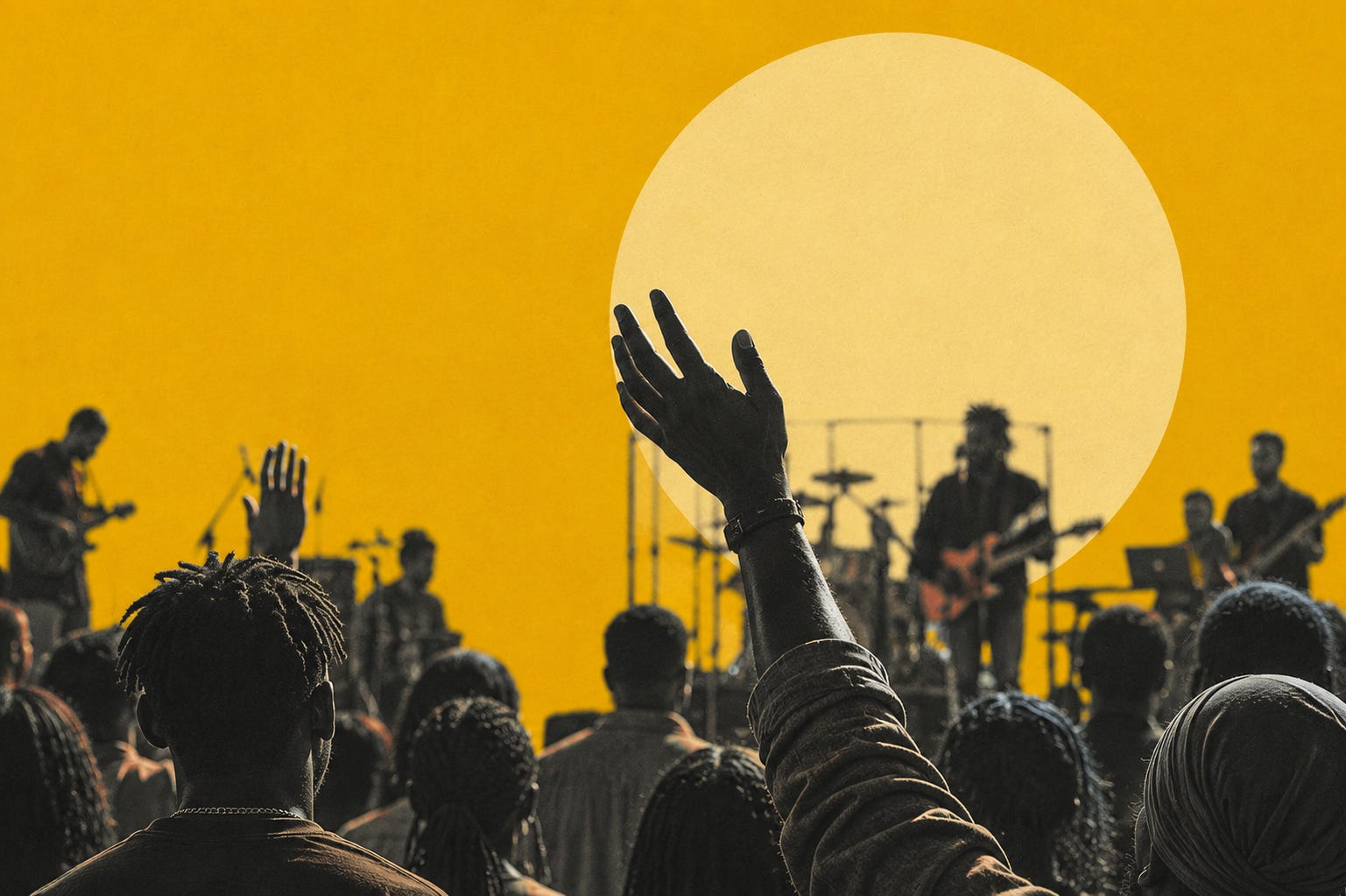
There are few places in the world where churches occupy the landscape quite like they do in Jamaica.
Drive through the hills of St. Thomas. Follow the winding roads of St. Mary. Pass through the market towns of Clarendon or the rapidly expanding suburbs of St. Catherine. Again and again they appear. Sometimes grand and imposing. Sometimes modest and weathered. Sometimes occupying a purpose-built sanctuary. Sometimes tucked inside a former shop, a converted house, a garage, or beneath a zinc roof.
They are everywhere.
For many Jamaicans, this is so normal that it barely attracts attention. Churches are as much a part of the scenery as rum bars, mango trees, football fields, and roadside vendors.
Yet viewed from almost anywhere else in the world, the numbers are astonishing.
According to figures widely cited by Jamaican institutions, there are more than 1,600 churches spread across an island measuring just over 4,240 square miles. That works out to roughly 2.75 churches for every square mile of land.
Imagine a square of countryside measuring ten miles by ten miles. Statistically, there would be around 275 churches within it.
Few countries come close.
The United States may have hundreds of thousands of churches, but spread across its vast geography, the density falls to roughly 0.11 churches per square mile. The United Kingdom, despite its long Christian history, averages around 0.41 churches per square mile. Canada, because of its immense wilderness, barely registers by comparison.
On a like for like basis, Jamaica has around twenty five times the church density of the United States and almost seven times that of the United Kingdom.
The figures are so unusual that for years Jamaica has been widely recognised as holding the distinction of having the highest concentration of churches per square mile anywhere in the world.
And yet those numbers raise a fascinating question.
What exactly do they tell us?
Do they prove that Jamaica remains a Christian nation?
Or do they merely reveal something about its past?
The Architecture Of Faith
The story begins long before independence.
Christianity arrived with Spanish colonisation in the late fifteenth century. Catholic influence came first. British rule later introduced Anglicanism, alongside a growing variety of Protestant denominations that would spread across the island during the centuries that followed.
As communities developed, churches often arrived before almost everything else.
Before there were paved roads, there were churches.
Before there were health centres, there were churches.
Before many communities had secondary schools, libraries, or community halls, they often had churches.
Faith became woven into the architecture of Jamaican life.
Not simply as a spiritual practice, but as a social institution.
Churches taught literacy. They cared for the vulnerable. They organised communities. They helped educate generations of Jamaicans. They provided leadership in moments of national uncertainty and local hardship.
Many of the institutions Jamaicans rely upon today were shaped, directly or indirectly, by religious organisations.
That legacy still stretches across the island.
Even people who rarely enter a church remain surrounded by structures and traditions that Christianity helped create.
A Nation Of Churches
The sheer scale of church presence remains remarkable.
Official figures suggest more than 100 Christian denominations are represented across Jamaica.
They range from historic traditions such as Anglicanism, Catholicism, Methodism, Moravianism and Baptism to Pentecostal movements, Seventh-day Adventists, Church of God congregations, New Testament churches, independent ministries, and countless smaller fellowships.
The official figure of 1,600 churches is widely regarded as conservative.
Across the island there are congregations meeting in homes, rented premises, community centres and temporary buildings that may never appear in formal records.
In reality, nobody seems entirely certain where the final number ends.
That uncertainty perhaps says something in itself.
Jamaica’s religious landscape has never been neat.
It has always been energetic, entrepreneurial, decentralised and intensely local.
Every community seems capable of producing another congregation.
Every generation appears capable of producing another preacher.
The Numbers Still Matter
If church buildings alone determined national identity, the debate would end here.
But buildings are only part of the story.
The more revealing figures concern people.
Recent census data indicates that approximately 67 to 69 percent of Jamaicans identify as Christian.
No other religious group comes remotely close.
Around one fifth of the population now reports no religious affiliation. Rastafari, Islam, Hinduism, Judaism, Baháʼí and other faith traditions collectively represent much smaller percentages.
The significance of these numbers should not be understated.
In a world where many Western countries have experienced dramatic declines in Christian identification, Jamaica remains overwhelmingly Christian by demographic standards.
Seven out of every ten citizens still identify with the faith.
That fact alone places Jamaica among the more Christian societies in the Western world.
Yet numbers can conceal as much as they reveal.
Identifying as Christian is not necessarily the same as practising Christianity.
Nor is it the same as attending church.
And this is where the story becomes more interesting.
A Society In Transition
The Jamaica of 2026 is not the Jamaica of 1976.
Nor is it the Jamaica of 1996.
Younger generations have grown up in a world transformed by technology, migration, global media, and cultural change.
Religious authority is no longer assumed in the way it once was.
Church attendance has generally declined.
A growing number of people describe themselves as spiritual rather than religious.
Others reject organised religion altogether.
For some observers, these trends suggest Christianity is losing its grip on Jamaican society.
For others, they simply reflect a shift in how faith is expressed.
The distinction is important.
Because while attendance patterns may be changing, Christianity remains embedded in countless aspects of national life.
Christmas and Easter continue to shape the national calendar.
School assemblies often begin with prayer.
State ceremonies frequently include religious observances.
Political leaders regularly invoke God in public speeches.
National crises continue to prompt calls for prayer and reflection.
Faith may be evolving, but it remains visible.
The Jamaican Contradiction
Perhaps nowhere is the complexity of this discussion more apparent than in the contradiction that Jamaicans themselves frequently acknowledge.
How can a country with one of the highest concentrations of churches on Earth continue to struggle with violence, crime, corruption, poverty and social division?
It is a question that surfaces repeatedly in public discourse.
The criticism is familiar.
If there are so many churches, why do so many problems persist?
Yet the question itself reveals something important.
Nobody asks whether churches matter because they are irrelevant.
People ask because they continue to expect them to matter.
Few institutions occupy such a visible place within Jamaican society.
Few institutions are still expected to provide moral leadership, community support, and social guidance.
The debate itself is evidence of continuing influence.
A society does not endlessly discuss institutions it has stopped caring about.
Not A Christian State
There is, however, an important distinction.
Jamaica is not legally a Christian country.
The Constitution guarantees freedom of conscience and freedom of religion.
Citizens may worship as they choose, change religions, reject religion entirely, or follow alternative belief systems without state interference.
No church enjoys constitutional supremacy.
No denomination occupies a privileged legal position.
In that sense, Jamaica is a secular democracy.
But there is a difference between a secular state and a secular society.
Those two realities are often confused.
A nation may be constitutionally secular while remaining culturally religious.
Jamaica sits squarely within that category.
The More Interesting Question
Perhaps the real question is not whether Jamaica remains Christian.
The evidence suggests that it does.
The more revealing question is whether Christianity occupies the same place in Jamaican life that it once did.
The answer appears to be no.
Not because Christianity has disappeared.
Not because churches have vanished from the landscape.
Not because the majority has abandoned the faith.
But because Jamaica itself is changing.
The island is becoming more diverse, more connected to the wider world, and more willing to question assumptions that previous generations accepted without hesitation.
Yet despite all of that change, one fact remains difficult to ignore.
More than sixteen hundred churches still stand across a nation of just over four thousand square miles.
Millions of Jamaicans still mark life’s most significant moments through Christian traditions.
National celebrations, national tragedies, and national conversations still regularly return to the language of faith.
For a country supposedly becoming less religious, Christianity remains remarkably visible.
Which may explain why the question continues to endure.
The evidence suggests Jamaica remains one of the most Christian societies in the Caribbean and one of the most church saturated nations on Earth.
The real uncertainty is not whether Christianity shaped Jamaica’s past.
It unquestionably did.
The question now is whether it will shape Jamaica’s future with the same force, confidence and influence that once helped define the nation itself.