

IShowSpeed in Jamaica
Jamaicas encounter with IShowSpeed revealed more than celebrity culture. It exposed how influence, tourism, identity & even industries like real estate are being reshaped by a generation raised online


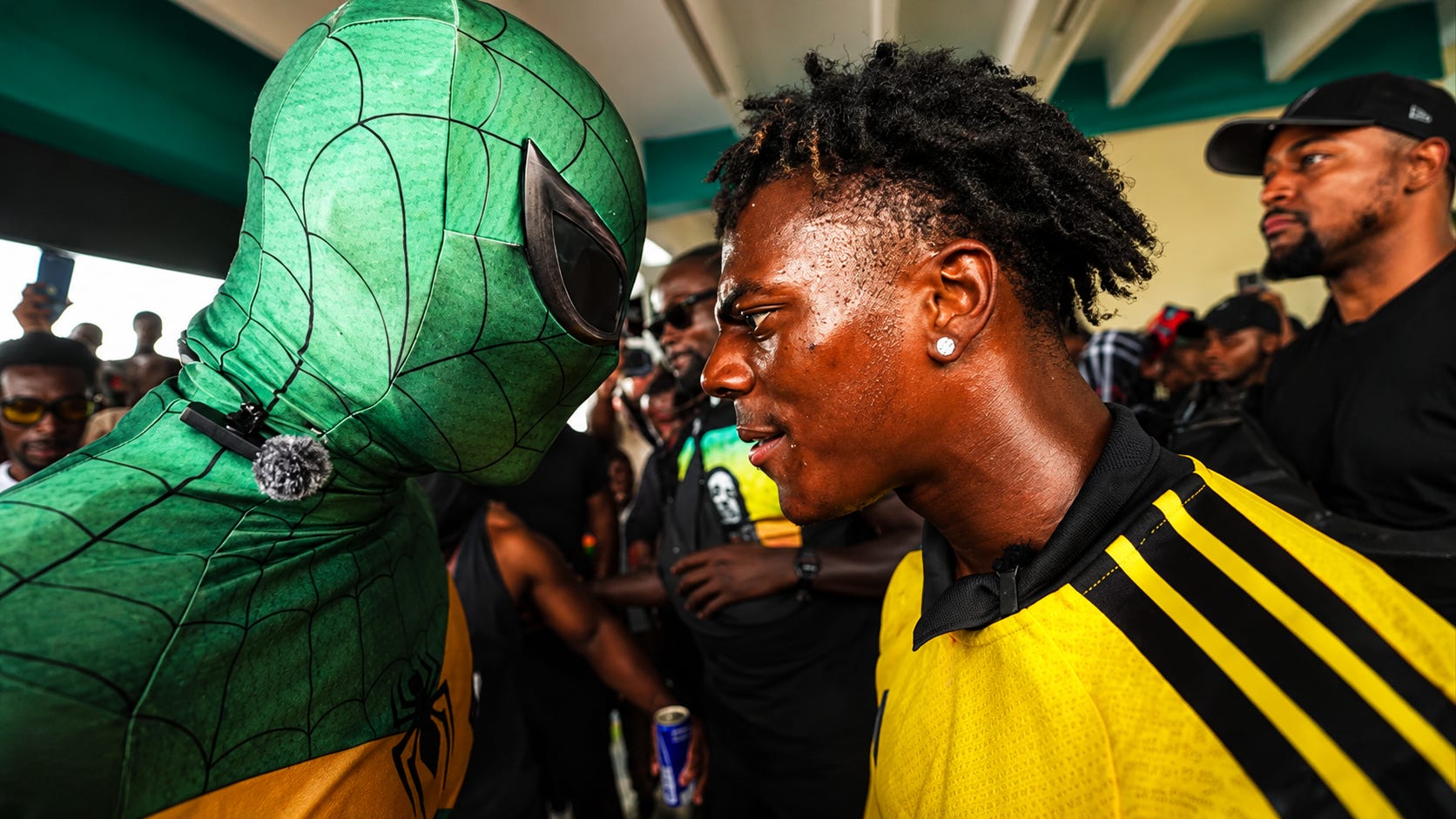
There was a moment during American streamer IShowSpeed’s recent visit to Jamaica when the country seemed to collectively pause and ask a very modern question.
Who exactly counts as a celebrity anymore?
For older generations, fame traditionally arrived through cinema, music, royalty, politics, or sport. It was filtered through television networks, newspaper editors, radio stations, record labels, and Hollywood studios. Fame was expensive to manufacture and difficult to maintain.
Then a young man with a camera, a livestream, explosive reactions, gaming content, and an internet connection arrived in Kingston and drew hundreds into the streets while millions watched online.
And suddenly Jamaica found itself staring directly into the future.
The visit by IShowSpeed, whose real name is Darren Watkins Jr., generated enormous online engagement during the Jamaican leg of his Caribbean tour. Millions tuned into livestreams and clips spread rapidly across YouTube, TikTok, Instagram, X, and reaction channels. His Kingston broadcast alone reportedly drew more than 2.8 million views, peaked at over 194,000 live viewers, generated hundreds of thousands of live chat messages, and attracted tens of thousands of new subscribers.
For Jamaica, this was not merely entertainment.
It was a real time demonstration of what modern influence looks like.
The livestream carried viewers through sections of Kingston, Payne Land, Devon House, the Bob Marley Museum, the National Stadium, Port Royal, and other cultural landmarks. Along the way, Jamaica was presented not through polished tourism commercials, but through spontaneity, noise, humour, confusion, excitement, music, food, traffic, personalities, crowds, and unpredictable street moments.
In other words, Jamaica looked like Jamaica.
That authenticity matters more than many institutions perhaps realise.
Director of Tourism Donovan White described the exposure as something traditional tourism campaigns cannot easily replicate. And he may be right. Younger audiences increasingly trust creators more than advertisements. They trust livestreams more than brochures. They trust chaotic experiences more than polished slogans.
For Gen Z audiences especially, destinations are no longer discovered only through airlines and travel agencies. They are discovered through creators eating street food at midnight, arguing with taxi drivers, getting lost in unfamiliar places, laughing with locals, or accidentally sweating through their shirts in Caribbean heat while trying to dance.
Tourism has become immersive content.
And Jamaica, intentionally or not, performed extremely well inside that environment.
Yet the visit also triggered criticism, debate, and confusion online after entertainer Yaksta appeared during part of the stream and later suggested he had been placed into a situation he did not fully understand. Clips circulating online sparked backlash, commentary, and renewed conversations about authenticity, clout culture, and the growing pressure entertainers face when engaging with global internet personalities.
But underneath the controversy sat a much larger cultural story.
One that extends far beyond entertainment.
Dean Jones, founder of Jamaica Homes, believes the moment represented something deeper about the modern economy and how influence itself is evolving.
“In another era, you’d expect that kind of welcome for royalty, a head of state, or maybe someone like Michael Jackson. Not necessarily a young man who built his empire from streaming, reactions, gaming, and social media.”
Jones admits he initially did not fully understand the scale of IShowSpeed’s influence. Like many older observers, the phenomenon seemed unusual at first glance.
Why would a gamer receive a red carpet welcome?
Why would government agencies facilitate the visit?
Why would crowds gather around someone many older Jamaicans had never heard of?
Then the numbers began telling their own story.
“The new celebrities are creators. Streamers. YouTubers. TikTok personalities. Young people who turned phones, personalities, humour, gaming, and consistency into multi million dollar businesses.”
That shift may sound obvious to younger audiences, but for traditional industries in Jamaica, the implications are profound.
Real estate is one of them.
It may seem strange at first to connect a livestreaming celebrity to housing, property, or investment, but the relationship is becoming increasingly direct. Visibility changes perception. Perception changes desirability. Desirability changes economics.
A viral livestream can influence tourism trends faster than some government campaigns.
A creator walking through a neighbourhood can suddenly make unfamiliar areas globally recognisable.
A single clip can shape how international audiences emotionally perceive a country.
That emotional connection matters because property markets do not operate only on economics. They operate on aspiration, identity, imagination, and attention.
For years, Jamaica marketed itself internationally through beaches, resorts, reggae, and postcard imagery. But livestream culture introduces something different. It exports atmosphere.
The noise.
The humour.
The energy.
The people.
The unpredictability.
The feeling of being there.
That emotional realism is increasingly valuable in a world dominated by digital attention.
Jones believes the effects are already visible.
“From my perspective in real estate and media, I genuinely think that visit created a wave of extra attention online. Traffic patterns shifted. Interest increased.”
That observation may sound anecdotal, but it aligns with broader global trends. Across multiple industries, creators increasingly drive consumer behaviour more effectively than traditional institutions. Restaurants go viral overnight. Fashion items sell out after a single appearance online. Entire towns experience tourism surges after influencers visit.
Now countries themselves are entering that same ecosystem.
Jamaica’s advantage is that it naturally produces content.
The island does not struggle for personality. It overflows with it.
That may sound humorous, but it is economically significant.
A creator arriving in Jamaica rarely lacks material. There is always music nearby. Somebody is cooking something. Somebody is arguing about football. Somebody is dancing. Somebody is selling mangoes under a zinc roof while dancehall leaks from a passing car loud enough to shake your bloodstream slightly out of alignment.
That chaos translates well online because it feels human.
And humanity travels.
There is another uncomfortable reality beneath all of this too.
Traditional gatekeepers are weakening.
For decades, global visibility depended heavily on institutional approval. Record labels chose stars. Television executives chose personalities. Newspapers decided which stories mattered.
Now audiences decide much faster.
Sometimes within minutes.
Sometimes from a bedroom.
Sometimes while eating cereal.
The rise of creators like MrBeast, Kai Cenat, and IShowSpeed reflects a decentralisation of influence unlike anything seen before. Their audiences rival major broadcasters. Their reach sometimes exceeds governments. Their impact on tourism, fashion, gaming, music, and culture can move faster than policy itself.
That reality can feel destabilising for older institutions.
But it also creates opportunity.
Especially for countries like Jamaica that already possess strong cultural export power.
The island’s music, language, humour, athletic identity, food culture, and visual recognisability give it a unique advantage within the creator economy. Jamaica performs exceptionally well in short form digital environments because its culture is expressive, emotionally readable, and globally recognisable.
Even Jamaican patois functions online almost like a form of cultural branding.
People imitate it.
Quote it.
Sample it.
Remix it.
Sometimes badly.
Sometimes painfully badly.
But constantly.
And that matters in an economy increasingly driven by attention.
The challenge now is whether Jamaica can strategically adapt to this shift rather than simply react to it.
Because livestream tourism is not entirely risk free.
The same spontaneity that creates authenticity can also create embarrassment. Uncontrolled moments travel instantly. Misunderstandings become viral clips. Cultural nuance can disappear beneath meme culture within hours.
The internet moves fast and rarely explains itself twice.
That creates tension for public officials, entertainers, businesses, and even ordinary citizens suddenly placed before global audiences.
Still, the overall direction appears irreversible.
The creator economy is no longer some niche internet subculture. It is becoming a major economic force influencing travel, property, advertising, entertainment, retail, and public identity itself.
And Jamaica, perhaps more than many countries, is naturally positioned inside that transformation.
Jones believes the lesson from the weekend is ultimately bigger than one streamer.
“The way properties are marketed, the way people discover countries, the way influence drives economies, tourism, and investment, it’s all changing in front of us.”
That may be the most important takeaway from the entire spectacle.
Not the controversy.
Not the memes.
Not the clips.
Not even the millions of views.
But the realisation that influence itself has fundamentally changed shape.
And Jamaica just watched that transformation walk through Kingston holding a livestream camera while thousands chased behind him trying to get into frame.