

Jamaica, Cuba, Ghana and the Politics of Need


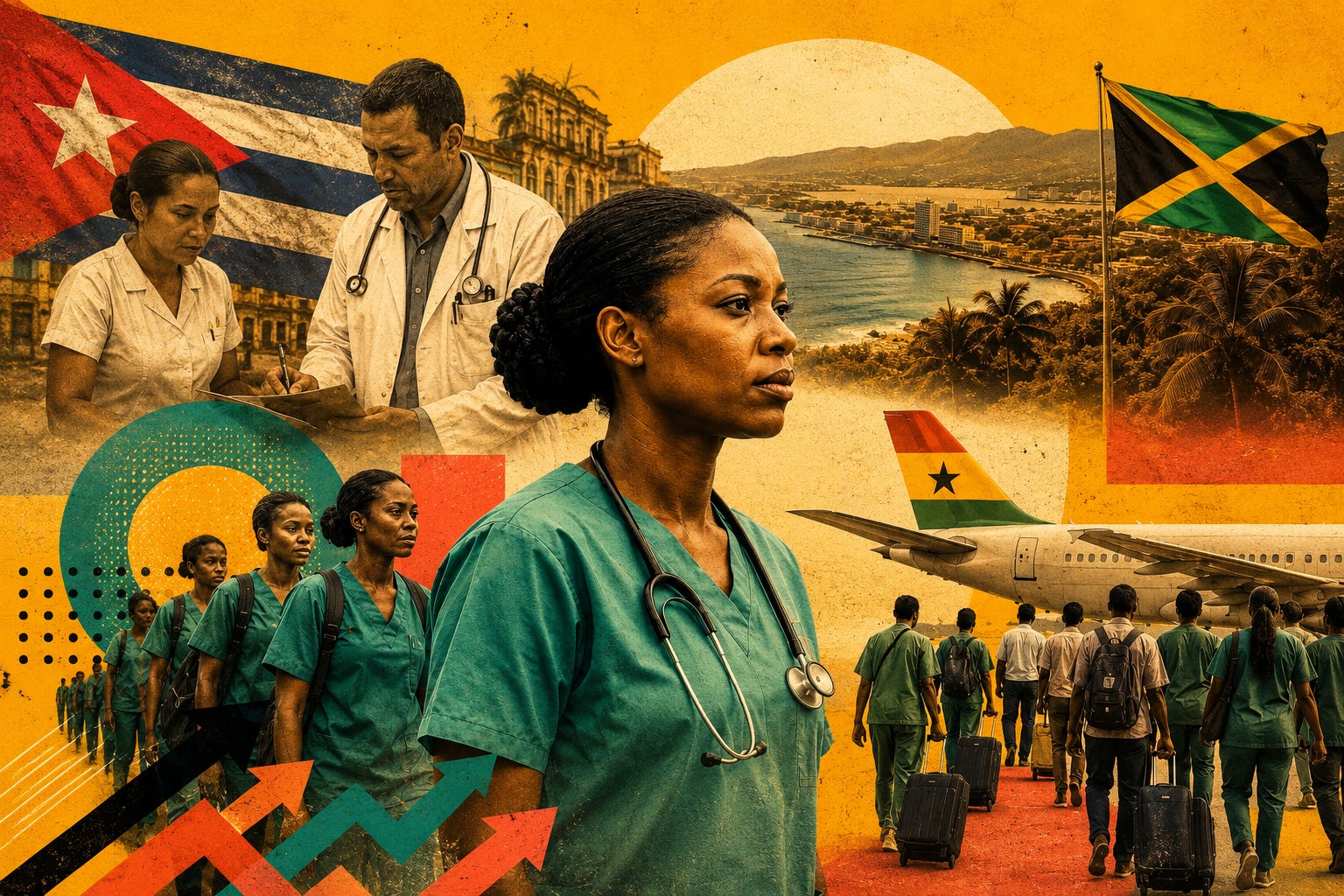
Jamaica’s decision to recruit nurses from Ghana after ending its long-standing Cuban medical programme has sparked an uncomfortable question. Did the country make a pragmatic choice in a changing world, or did it simply swallow Washington’s red pill instead of keeping its own yellow one?
The answer depends on how honestly we are willing to examine power.
For more than half a century, Cuban doctors, nurses and medical specialists became part of the fabric of healthcare across the Caribbean. They worked in remote communities, understaffed hospitals and places where local systems struggled to attract enough professionals. Whatever criticisms could be made of the Cuban programme, many Caribbean citizens know from personal experience that Cuban medical workers helped save lives.
Then came a new reality. The United States, under the Trump administration, intensified pressure on countries participating in Cuban medical missions. Officials openly questioned the arrangements, raised concerns about labour rights and warned of possible consequences for governments involved. Caribbean leaders suddenly found themselves balancing healthcare needs against diplomatic realities.
Small countries often face this dilemma. Principles are important. So is survival.
The arrival of Ghanaian nurses does not mean Jamaica has abandoned Cuba. Nor does it mean Ghana is somehow a lesser choice. Ghana is producing thousands of qualified healthcare workers, many of whom cannot find employment at home despite desperately wanting to work. Jamaica needs nurses. Ghana has nurses. On paper, it looks like a perfect match.
But politics rarely happens on paper.
Timing matters. Context matters. If the Cuban programme had remained untouched by American pressure, would Jamaica have moved so quickly to diversify its recruitment strategy? It is a question many people are asking, even if few officials are willing to answer directly.
The truth is that Jamaica may not have swallowed either pill. It may simply have chosen the medicine available.
For decades, Caribbean governments have operated within a world where Washington remains the dominant economic, financial and diplomatic force. The United States is Jamaica’s largest trading partner, one of its most important tourism markets and a critical source of investment and remittances. Defying Washington is not a theoretical exercise. It carries consequences.
Critics will say Jamaica bowed to pressure. Supporters will argue Jamaica adapted to reality. Both views contain elements of truth.
What should concern Jamaicans is not whether the nurses come from Cuba, Ghana, Nigeria or India. The deeper issue is why a country of nearly three million people remains dependent on importing healthcare workers in the first place. Every discussion about foreign nurses should eventually lead back to the same question: how do we build a healthcare system capable of training, retaining and rewarding enough professionals to meet our own needs?
That is the conversation often missing from the headlines.
The Cuba-versus-Ghana debate makes for compelling politics. It creates heroes and villains. It feeds ideological battles that stretch back to the Cold War. But patients sitting in hospital waiting rooms are rarely concerned with geopolitics. They care whether a nurse is available when they need one.
Perhaps the real lesson is that Jamaica is entering a more complicated world. The old certainties are fading. Cuba is no longer the only source of healthcare support. The United States is asserting its influence more aggressively. African nations are becoming increasingly important partners. Labour itself is becoming a global commodity.
In that environment, the challenge for Jamaica is not choosing between red pills and yellow pills.
It is ensuring that whatever pill it takes serves Jamaican interests first.