

Jamaica Homes account
The Story Behind the Platform, the Vision, and the Journey

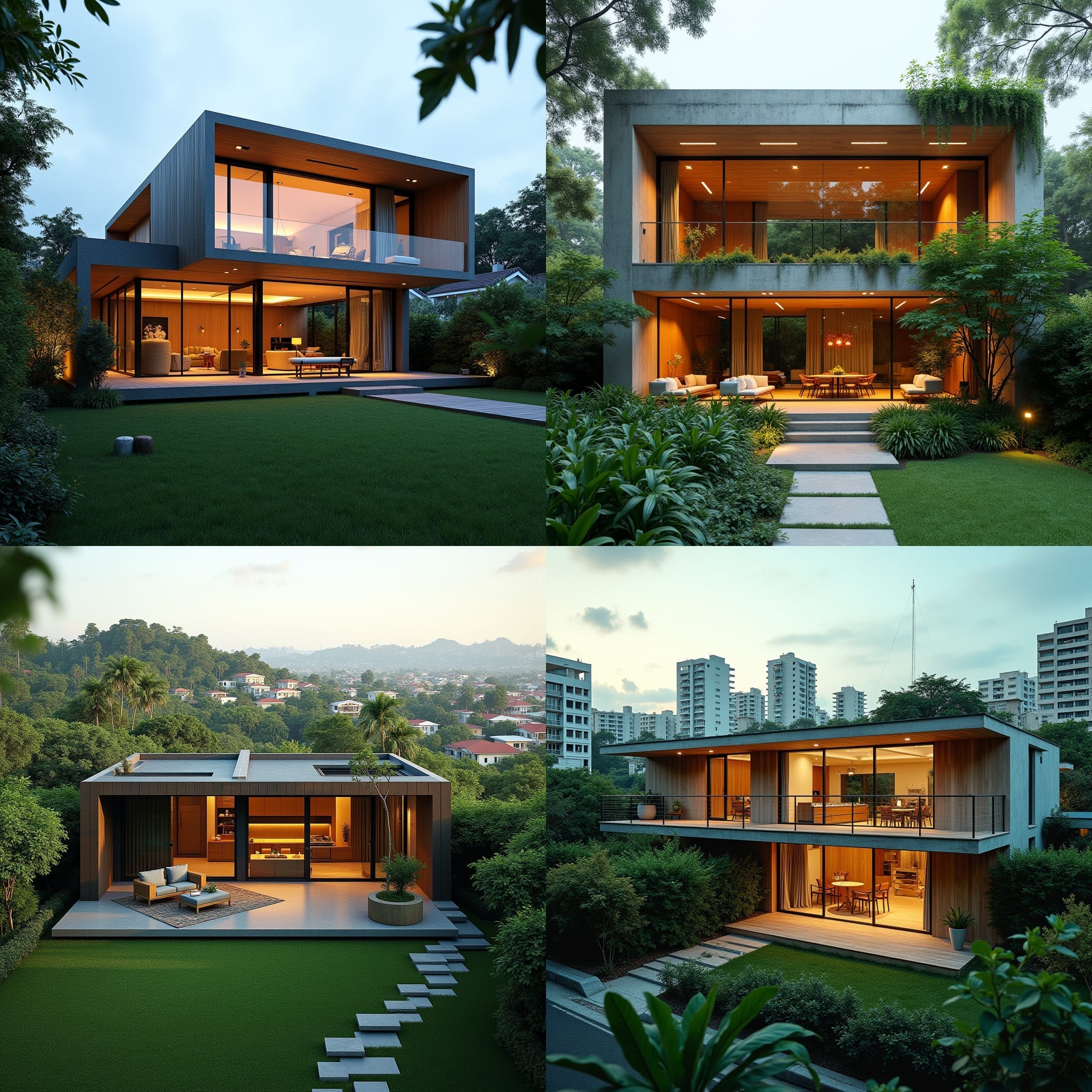
In Jamaica, houses are rarely just houses.
They are memories. Aspirations. Migration stories. Remittance stories. Family stories. Concrete poured one room at a time over decades. Verandas added after a good year abroad. Gates painted before Christmas. Generations layered into walls.
Long before glossy property portals and social media advertisements became common, real estate in Jamaica operated through something more informal and deeply human. A neighbour knew somebody selling land. A family member overseas sent money to start a build. A hand-painted sign stood at the roadside saying “House For Sale.” Deals moved through trust, community, word of mouth, and instinct.
It was within that reality that Jamaica Homes slowly emerged.
Not as a Silicon Valley-style startup built overnight inside a glass office tower, but as a gradual response to something missing in Jamaica’s property market: structure, visibility, accessibility, storytelling, and digital transformation.
The roots of Jamaica Homes stretch back far beyond the website itself. Its foundation is deeply tied to the life journey of its founder, Dean Jones, whose experiences moved between Jamaica and the United Kingdom, between construction and technology, between project management and property.
Born with strong connections to Jamaica while also shaped by life in Britain, Dean’s background reflected two worlds at once. London offered exposure to infrastructure, systems, urban planning, and major construction projects. Jamaica offered something different: identity, culture, land, family, belonging, and the emotional meaning of home itself.
Before Jamaica Homes became publicly recognised, the early years were shaped by careers in surveying, construction, strategic projects, and digital systems. Dean worked across large-scale developments and complex programmes, including housing initiatives and national infrastructure-related environments in the UK.
That experience mattered.
Because when he looked at Jamaica’s real estate landscape, he saw enormous potential but also fragmentation.
Listings were scattered.
Information was inconsistent.
Photographs were often poor quality.
Diaspora buyers struggled to navigate the market remotely.
Many developments lacked proper digital visibility.
Smaller sellers and landlords had limited reach.
The storytelling around Jamaican housing was often weak despite the island possessing one of the most visually striking property landscapes in the Caribbean.
Jamaica Homes was created to bridge that gap.
At first, the platform operated primarily as a property listing and marketing space. But over time it evolved into something much broader: a hybrid between real estate marketplace, media publication, digital branding platform, architectural showcase, housing commentary outlet, and cultural conversation about Jamaican living itself.
That evolution mirrors Jamaica’s own changing housing story.
The Jamaica of the 1980s and 1990s was largely dominated by standalone family homes, incremental construction, and traditional ideas of ownership. But by the 2000s and 2010s, urban density, overseas investment, tourism growth, rising land values, and changing lifestyles began reshaping the island. Apartment developments increased. Gated communities expanded. Townhouses spread into former single-family areas. Coastal developments accelerated. Luxury real estate became increasingly globalised.
Jamaica Homes arrived during this wider transformation.
The platform leaned heavily into digital visibility at a time when many parts of the market were still adapting to the internet era. Professional photography, searchable listings, social media promotion, digital branding, and online property discovery became increasingly central to how Jamaicans and overseas buyers searched for homes.
Importantly, Jamaica Homes also recognised something many traditional property companies overlooked: people do not only buy square footage. They buy aspiration, security, identity, scenery, lifestyle, and emotional connection.
A hillside house in St. Mary is different from a waterfront apartment in Montego Bay.
A townhouse in Kingston represents something different from a family home in Clarendon.
Diaspora buyers often search not just for investment, but for reconnection.
The platform began speaking to all of those emotional layers.
Over time, Jamaica Homes expanded beyond listings into publishing housing commentary, market analysis, architectural concepts, development discussions, economic observations, and wider reflections on Jamaican life. The platform increasingly positioned itself not only as a marketplace, but also as a media voice within the property space.
That shift became especially visible during periods when conversations around housing affordability, tourism expansion, foreign ownership, urbanisation, climate vulnerability, and infrastructure began intensifying across Jamaica.
The platform started exploring difficult questions.
Who is Jamaica being built for?
Can ordinary Jamaicans still afford homes?
What happens to coastal communities under development pressure?
How should Jamaica balance foreign investment with local accessibility?
What does modern Jamaican architecture look like?
How should the island prepare for climate change and stronger storms?
Can technology modernise property transactions?
What does “home” even mean in a country shaped by migration?
Those themes helped Jamaica Homes develop a personality beyond traditional real estate advertising.
The visual identity evolved too.
The platform increasingly embraced dramatic architectural imagery, stylised development concepts, yellow-and-grey visual themes, cinematic cityscapes, and emotionally driven storytelling around housing and urban change. In many ways, Jamaica Homes became part property portal and part ongoing visual documentary about Jamaica’s transformation.
At the centre of it all remained the idea of access.
Access for Jamaicans abroad wanting to reconnect with the island.
Access for developers wanting visibility.
Access for landlords seeking tenants.
Access for buyers trying to understand a complicated market.
Access for everyday people who simply wanted to browse, imagine, compare, dream, and participate.
Technology became central to that mission. Jamaica Homes increasingly leaned into digital marketing, social media, online video, virtual visibility, and platform-based real estate communication.
But perhaps the most interesting part of Jamaica Homes is that it emerged during a moment when Jamaica itself was changing psychologically.
For decades, many Jamaicans viewed property primarily as shelter or inheritance. Increasingly, it became viewed as investment, retirement strategy, passive income, short-term rental opportunity, lifestyle branding, or diaspora anchor.
The island itself became more globally visible.
Tourism expanded.
Remote work changed migration patterns.
Luxury developments accelerated.
Infrastructure improved in key corridors.
Digital culture altered how people searched for homes.
Jamaica Homes positioned itself directly inside that changing reality.
Today, the platform sits somewhere between traditional real estate company, digital publication, architectural media brand, and property technology ecosystem.
It reflects modern Jamaica itself: ambitious, uneven, evolving, creative, entrepreneurial, globally connected, locally rooted, hopeful, and still trying to define what development should look like.
The story of Jamaica Homes is ultimately not just about a website.
It is about how Jamaica’s housing conversation moved from roadside signs and newspaper classifieds into the digital age.
It is about the blending of construction knowledge, media storytelling, architecture, technology, and identity.
It is about the idea that homes are never simply buildings. They are emotional geography. They are economics. They are migration. They are memory.
And in Jamaica, perhaps more than most places, they are part of the national story itself.