

Jamaica Is Small, But It Is Not Sheltered
How Global Geopolitics Is Reaching the Island’s Homes, Prices and Future

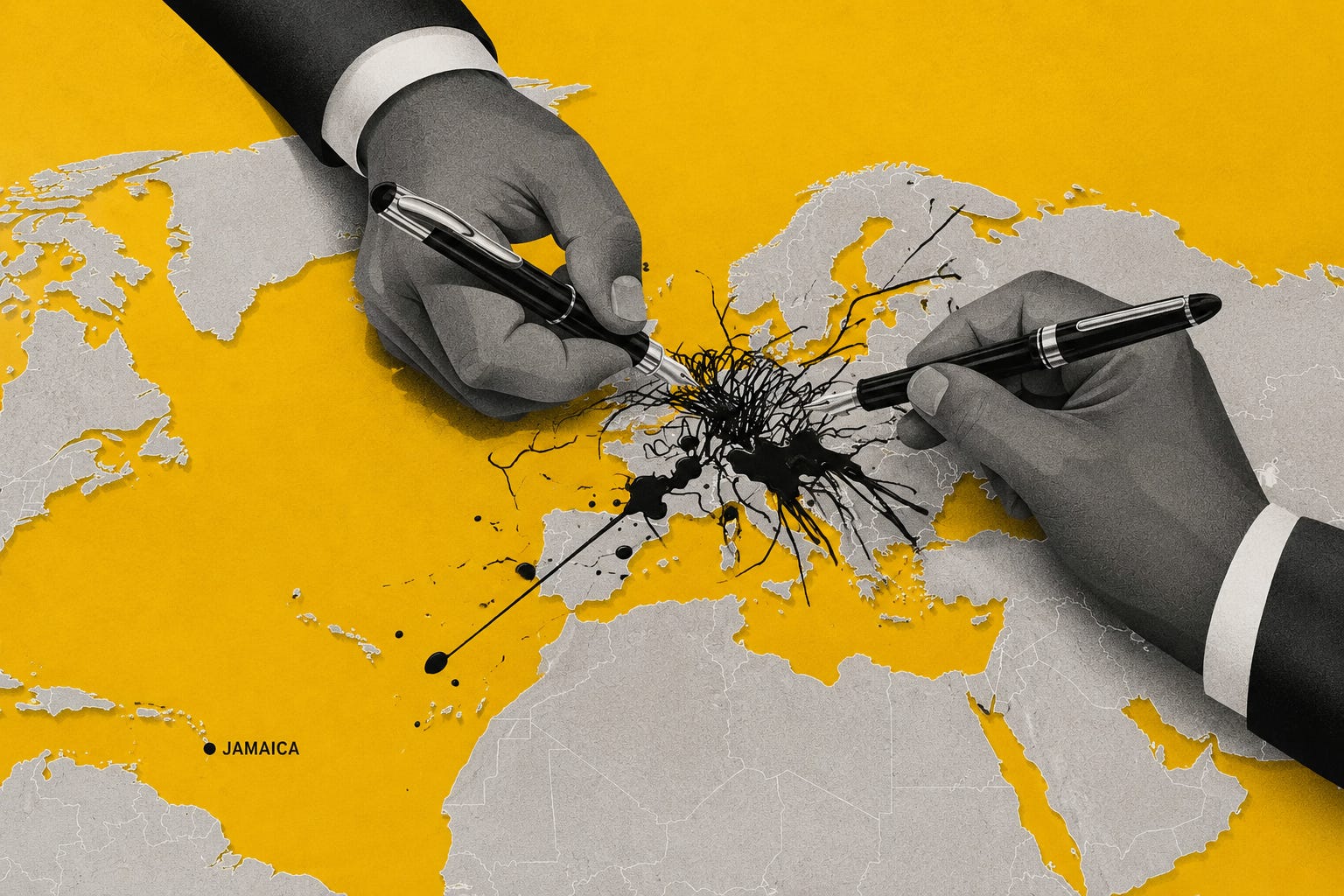
From Middle East conflict and US interest rates to China’s infrastructure reach, climate finance and diaspora money, Jamaica’s economy is being shaped by forces far beyond its shores.
Kingston, Jamaica, 17 May 2026
Jamaicans are being urged to adopt more disciplined financial habits as rising geopolitical tensions and global economic uncertainty continue to place pressure on household budgets, transport costs, food prices and long term financial security. Concerns are also growing over how international instability is increasingly affecting Jamaica’s economy, including housing affordability, construction costs and mortgage pressures.
Recent financial literacy discussions and economic reports have highlighted the need for households to rethink spending habits, adjust shopping behaviour and become more deliberate about budgeting as imported inflation continues filtering into the local economy.
Those concerns come at a time when global markets remain unsettled by conflict in the Middle East, fluctuating oil prices, shipping disruptions and broader concerns about inflation and interest rates worldwide.
“For many Jamaicans, geopolitics no longer feels distant,” Dean Jones, founder of Jamaica Homes, said. “People are experiencing it through supermarket prices, fuel costs, mortgage pressure, construction expenses and the rising cost of simply maintaining a household.”
“For a small island economy like Jamaica, global instability can reach families very quickly, sometimes faster than people realise,” he added. “That is why financial discipline, planning and adaptability are becoming increasingly important.”
For Jamaica, these issues are not abstract foreign policy matters. They are increasingly visible in electricity bills, transportation costs, insurance premiums and the wider property market.
Imported Inflation Is Reaching Jamaican Households
Jamaica remains heavily dependent on imported fuel, food, fertiliser and construction materials. As global shipping and commodity prices rise, local consumers often feel the effects quickly.
The Bank of Jamaica has already warned that geopolitical tensions are contributing to higher global commodity and shipping costs, pressures that may continue feeding into local inflation throughout 2026.
That matters not only for daily living expenses but also for housing and development. Higher fuel and transport costs can increase the price of building materials, construction logistics and property maintenance, placing further strain on developers, homeowners and renters.
“In Jamaica, even international conflicts thousands of miles away can eventually affect the cost of building a home or paying a mortgage,” Jones said. “That interconnectedness is now part of modern island life.”
Mortgage Pressure and Borrowing Risks
Global instability also affects interest rates. If inflation remains elevated internationally, central banks often become more cautious about reducing borrowing costs.
For Jamaica, that creates implications for mortgages, construction financing and business lending.
Higher or prolonged interest rates can weaken affordability for first time buyers and place additional pressure on households already managing debt obligations.
Financial analysts and educators have increasingly encouraged Jamaicans to think carefully before taking on new loans and to explore practical strategies that create more financial breathing room each month.
Tourism and the Wider Property Economy
Tourism remains one of Jamaica’s most important economic sectors and continues to influence real estate demand, investment confidence and employment across the island.
Jamaica generated approximately US$956 million from more than one million visitor arrivals during the first quarter of 2026. However, the sector remains vulnerable to global shocks, including rising travel costs, hurricanes, insurance pressures and weakening consumer confidence in key overseas markets.
A slowdown in tourism can eventually affect everything from short term rentals and hotel expansion to employment levels and spending within local communities.
Jamaica’s Delicate Global Balancing Act
Jamaica also continues navigating an increasingly complex international landscape involving the United States, China, Canada, the United Kingdom and wider CARICOM relationships.
The island’s challenge is not necessarily choosing sides but balancing economic opportunities while protecting long term financial stability, sovereignty and policy independence.
Infrastructure investment, climate finance and international partnerships are now deeply connected to housing resilience, coastal protection and national development planning.
Climate vulnerability has also become both an economic and geopolitical issue. Hurricanes, coastal erosion and rebuilding costs increasingly shape conversations around insurance, infrastructure and the future of development in vulnerable areas.
“The reality is that Jamaica is small, but it is not sheltered,” Jones said. “Global pressures now shape local living conditions far more directly than they once did.”
For many households, resilience may increasingly depend not only on income, but on adaptability, planning and financial discipline in a rapidly changing world.