


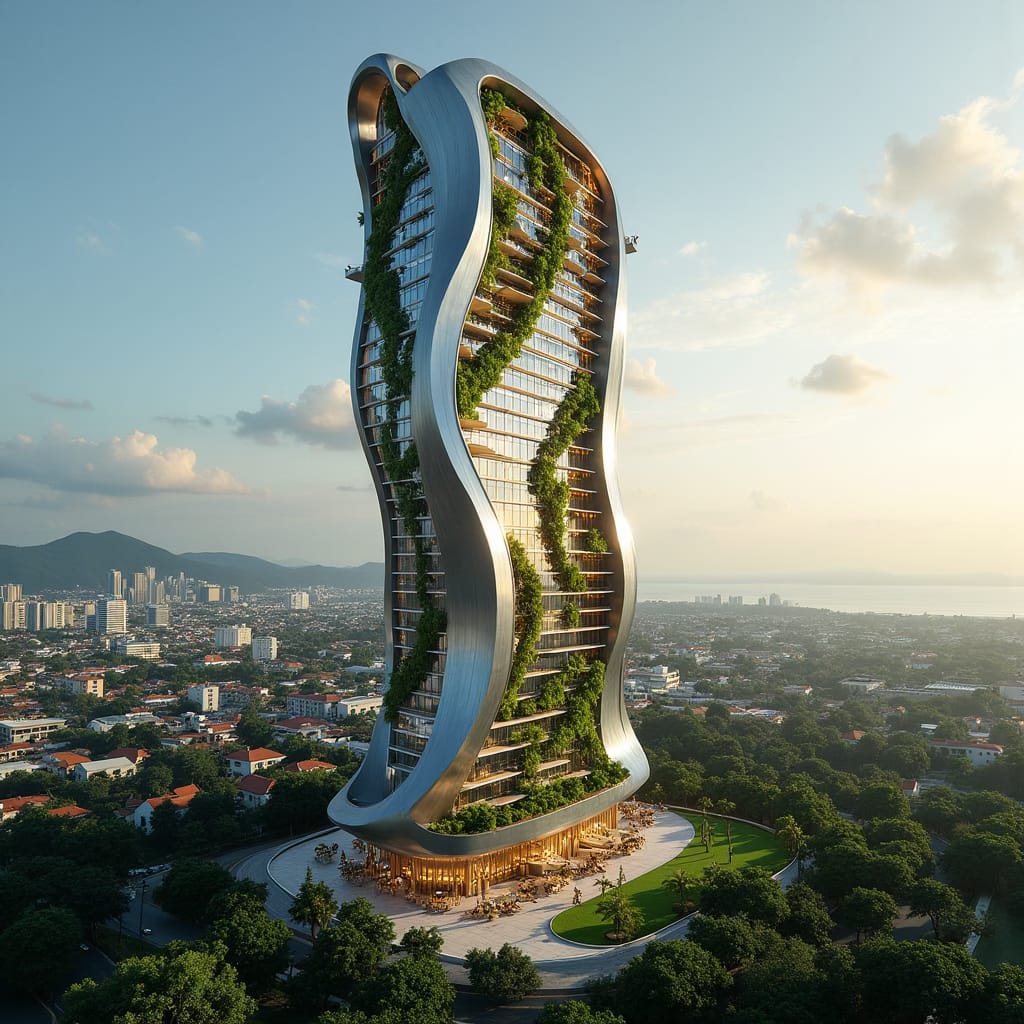
Yesterday, Vertical Living Reimagined sparked a strong response. That reaction points to something deeper:
Jamaicans are ready to rethink how we use land, how we build, and how we shape the future.
But this conversation was never really about buildings.
It was about direction.
This Was Never About Height
Too many discussions around vertical development begin and end with surface questions.
How tall
Where
Luxury or middle income
Those questions are not wrong. They are simply incomplete.
The real issue is intelligence.
Jamaica is approaching a moment where buildings can no longer be treated as static concrete structures. They must become responsive systems that adapt, protect, and perform over time.
Imagine structures that monitor their own condition.
Buildings that anticipate hurricane stress.
Designs that absorb seismic movement.
Fire systems that isolate risk automatically.
Energy systems that learn how people actually live.
Communities that reduce the need to move constantly across the city.
Without this shift, building upward simply multiplies the same problems we already face.
Why This Matters for Jamaica Now
Jamaica’s realities are not abstract.
We are an island.
We are exposed to hurricanes.
We sit within an active seismic zone.
Flat, accessible land near economic centres is limited.
Urban growth is accelerating.
These conditions demand precision.
If we build vertically without intelligence, we create long-term burdens. Maintenance becomes costly. Insurance becomes strained. Structural vulnerabilities compound over time.
If we build with intelligence, the outcome changes.
Lower long-term operating costs
Stronger safety resilience
Greater investor confidence
More efficient urban density
Reduced pressure on infrastructure
This is not speculation. It is disciplined foresight applied to real conditions.
The Shift Beneath the Surface
Vertical living is not simply a construction trend.
It represents a shift in national thinking.
The move is from short-term, build-and-sell models toward lifecycle design. Buildings must be planned to perform over decades, not just to be delivered and occupied.
Digital infrastructure cannot be an afterthought. It must be embedded from the beginning.
And no building can stand alone in its logic. The future lies in connected systems, where developments function as part of a wider urban ecosystem.
This level of thinking requires alignment across sectors.
Developers
Engineers
Urban planners
Policymakers
Investors
Financial institutions
Insurers
Progress depends on how well these forces move together.
Not Imitation, but Intelligence
Jamaica does not need to replicate skylines from elsewhere.
Spectacle is not the objective. Suitability is.
The opportunity lies in designing buildings that respond specifically to local conditions.
Caribbean wind loads
Salt air corrosion
Seismic movement
Tropical heat and cooling demands
Cultural patterns of living
Informal economic activity
The advantage is not scale. It is specificity.
Countries that understand their own conditions deeply often outperform those that build for appearance.
A Different Kind of Conversation
This is not a theoretical discussion.
It is about execution.
The future of vertical development in Jamaica sits at the intersection of multiple disciplines. Engineering alone is not enough. The conversation must include finance, policy, resilience, and long-term value.
When these elements align, development becomes more than construction. It becomes nation-building.
Jamaica Looks Up
But looking up is not enough.
The question is how we build when we get there.
Height without intelligence creates risk.
Height with intelligence creates opportunity.
Jamaica is at a point where the decisions made now will define the performance of its cities for generations.
Building upward is inevitable.
Doing it wisely is the real task.