



When you stand on a Jamaican hill, wind brushing across the cane fields, it’s hard to imagine the centuries of blood, sweat, and hope that shaped this island. British colonial rule, beginning in 1655 with the seizure of Jamaica from Spain, left marks that are still visible in our towns, landscapes, and even in the architecture of the homes we now cherish.
“Building a home is about more than walls—it’s reclaiming a story that was never meant to be yours, and making it your own.” —Dean Jones
Sugar, Slavery, and Survival
The British did not come to Jamaica to admire its beauty. They came for sugar, for wealth, and for control. Enslaved Africans were brought in by the hundreds of thousands, forced to labour on plantations under conditions so brutal that even the strongest spirits were tested. Families were torn apart, lives were commoditized, and the very air seemed weighed down with suffering.
Yet resilience found its way. Communities formed, rhythms were passed down, and culture became an act of rebellion. Maroon societies rose in the hills, outwitting British troops and preserving African traditions. Leaders like Nanny of the Maroons and Cudjoe turned the mountains into fortresses of freedom.
Even today, as you walk through the narrow lanes of Spanish Town or the hills of St. Elizabeth, you can feel echoes of that resistance. It is in the architecture, in the communal spaces, and in the pride Jamaicans carry.
From Rebellion to Recognition
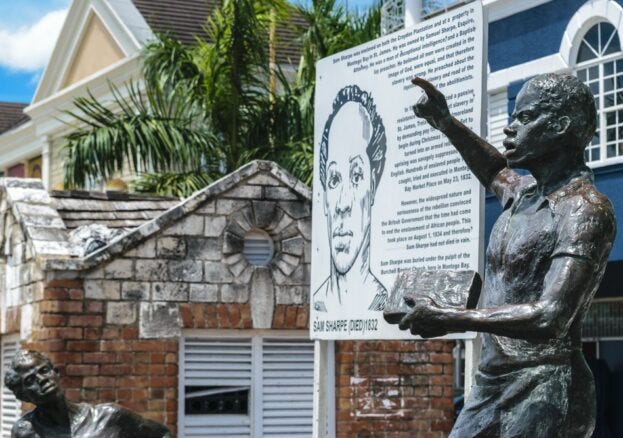
The 19th century brought a mix of triumph and bitter irony. The Baptist War of 1831, led by Samuel Sharpe, was a strike that became a rebellion—a desperate demand for dignity and fair treatment. Britain’s response was merciless, yet it ultimately hastened the end of slavery. When emancipation came in 1834, the freed had no land, no reparations, and no safety net.
Paul Bogle’s Morant Bay Rebellion of 1865 showed that political struggle did not end with emancipation. Over 400 lives were lost, and Crown Colony rule tightened London’s grip. Jamaica’s leaders would have to fight, negotiate, and inspire for generations to come.
“Every brick you lay, every home you build, carries a little defiance. It says: ‘We belong here, and we are claiming what was denied.’” —Dean Jones
Windrush, Love, and the Diaspora
Jump to the 20th century: the Empire Windrush carried hundreds of Jamaicans to Britain in 1948. They came with hope, faith, and the courage to rebuild a war-torn nation. But their journey wasn’t only about labour; it was about identity, love, and connection. Families intermarried, cultural fusion took root, and the Jamaican presence began reshaping Britain from the inside out.
Romance flourished in the unlikeliest of places, mixing heritage with hope. It was a quiet revolution, proving that survival was not only political but also deeply personal.
Independence and Nation-Building
August 6, 1962: Jamaica became sovereign. The black, green, and gold rose proudly against a Caribbean sky. Leaders like Alexander Bustamante, Norman Manley, Michael Manley, and Edward Seaga faced the enormous task of forging a new nation from the legacies of slavery, Crown Colony rule, and economic dependency. Theirs were not easy decisions—balancing social justice with economic growth, pride with pragmatism.
“The best foundations are those that honour the past while building for the future.” —Dean Jones
The Real Estate Renaissance
In recent decades, another story unfolded: return. Many Windrush descendants, or those long abroad, sought to reconnect with their roots. Real estate became more than an investment; it became a declaration of identity. Gated communities in Kingston, villas in Montego Bay, and countryside retreats in St. Elizabeth embody this return. These homes are bricks-and-mortar proof of a people reclaiming their narrative.
It hasn’t been simple. Rising property prices, luxury developments, and local tensions remind us that the past’s inequalities still echo. Yet, returnees bring capital, expertise, and vitality, blending tradition with modernity.
“You can’t just build a house; you have to build a story, a legacy that your children will inherit with pride.” —Dean Jones
Culture as Resistance
Through music, language, and art, Jamaica’s culture became a force in its own right. Reggae, dancehall, ska—these aren’t merely genres; they are histories set to rhythm. Bob Marley’s lyrics, Nanny’s legacy, and the daily resilience of the people remind us that culture is an unbreakable form of resistance.
Even in architecture and urban planning, there’s a story: communities reimagined, spaces reclaimed, homes built to last against hurricanes and time. A witty aside: a Jamaican roof may sag under the weight of history, but it still keeps the heart dry.
Legacy, Reflection, and the Future
The shadow of colonial exploitation lingers, but Jamaica has always turned hardship into opportunity. From slavery to Morant Bay, from Windrush to independence, and from diaspora returnees to today’s homeowners, the story is one of resilience and reclamation.
The Caribbean’s beauty is matched only by its history: painful, complex, and profoundly inspiring. Real estate, in many ways, embodies this journey—it is where memory meets ambition, where the past is honoured even as the future is imagined.
“In every home we build, there is a conversation with history. If walls could talk, they’d tell you about resilience, hope, and a little mischief.” —Dean Jones