


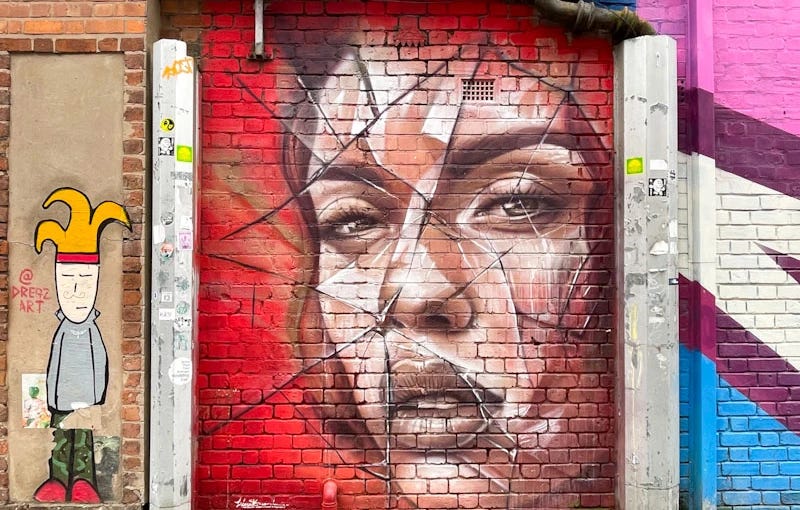
Walk along Jamaica Street in Liverpool today and it is almost impossible to imagine the past that underpins it. This is an area now buzzing with creativity—murals, start-up workspaces, coffee shops spilling onto pavements—but beneath the colour lies a weightier story.
Both Liverpool and Bristol share an uncomfortable parallel. Their rise to prominence in the 18th and 19th centuries was not simply the result of industrious innovation but was funded, in part, by trading routes with America and the West Indies. The prosperity of these cities was tied to a grim economy of slaves, alcohol, and tobacco—though, of course, there was also trade in less controversial goods. Street names, etched into the very geography of our cities, act as signposts to that past. “Jamaica Street” is no coincidence. It is an imprint of trade, of exploitation, but also of global connection.
Liverpool’s Jamaica Street today sits at the edge of the Baltic Triangle, a district reborn through urban regeneration. What was once a quarter of warehouses and industry is now a hub of design studios, independent venues, and some of the most striking street art in the country. For those with an eye on real estate, the transformation here is textbook: industrial decline repurposed into creative capital, with property values rising steadily as the cultural cachet of the area grows.
On my visit in July 2024, I encountered a piece by Liam Bononi—an artist whose reputation now stretches far beyond Europe. His work is known for its fractured, sometimes tortured faces, canvases that feel like cracked mirrors reflecting something unsettled in our own humanity. The mural here, on Jamaica Street, is no exception. The face, distorted yet beautiful, seems almost stitched into the old brickwork of Liverpool’s past—an unsettling reminder that regeneration often overlays history rather than erasing it.
There’s something fitting about his work being here. These streets carry a complex legacy: wealth and growth on the one hand, exploitation and suffering on the other. The real estate of Jamaica Street is layered with those contradictions—old warehouses converted into loft apartments, cafés now thriving where dock workers once hauled cargo. Bononi’s cracked portraits mirror that same sense of fracture: a surface beauty that still betrays its scars.
And perhaps that’s the real estate lesson here. Cities evolve, they rebrand, they revalue. Investors see opportunity, artists see a canvas, and communities see a place to live and breathe. Yet beneath every converted flat and every repainted façade lies a story that cannot be painted over. Jamaica Street in Liverpool is not merely a postcode or an investment opportunity—it is a palimpsest, where commerce, culture, and conscience all co-exist.
For Jamaica itself, the street name is a faint echo of centuries of exchange, both exploitative and cultural. While there may not be a direct line linking this mural to Kingston or Montego Bay, the very fact that such a street exists here is testament to the Caribbean’s role in shaping British cities. For modern Jamaica, its own real estate market is experiencing similar currents of change—foreign investment, cultural resurgence, and the re-use of spaces in ways that honour both heritage and progress.
Back on Jamaica Street, Liverpool, as you stand before Bononi’s mural, you can almost feel that tension between past and present pressing through the paint. It is haunting, yes, but also strangely hopeful. The building becomes more than just real estate—it becomes a monument to survival, creativity, and the possibility of rewriting a place without discarding its history.