


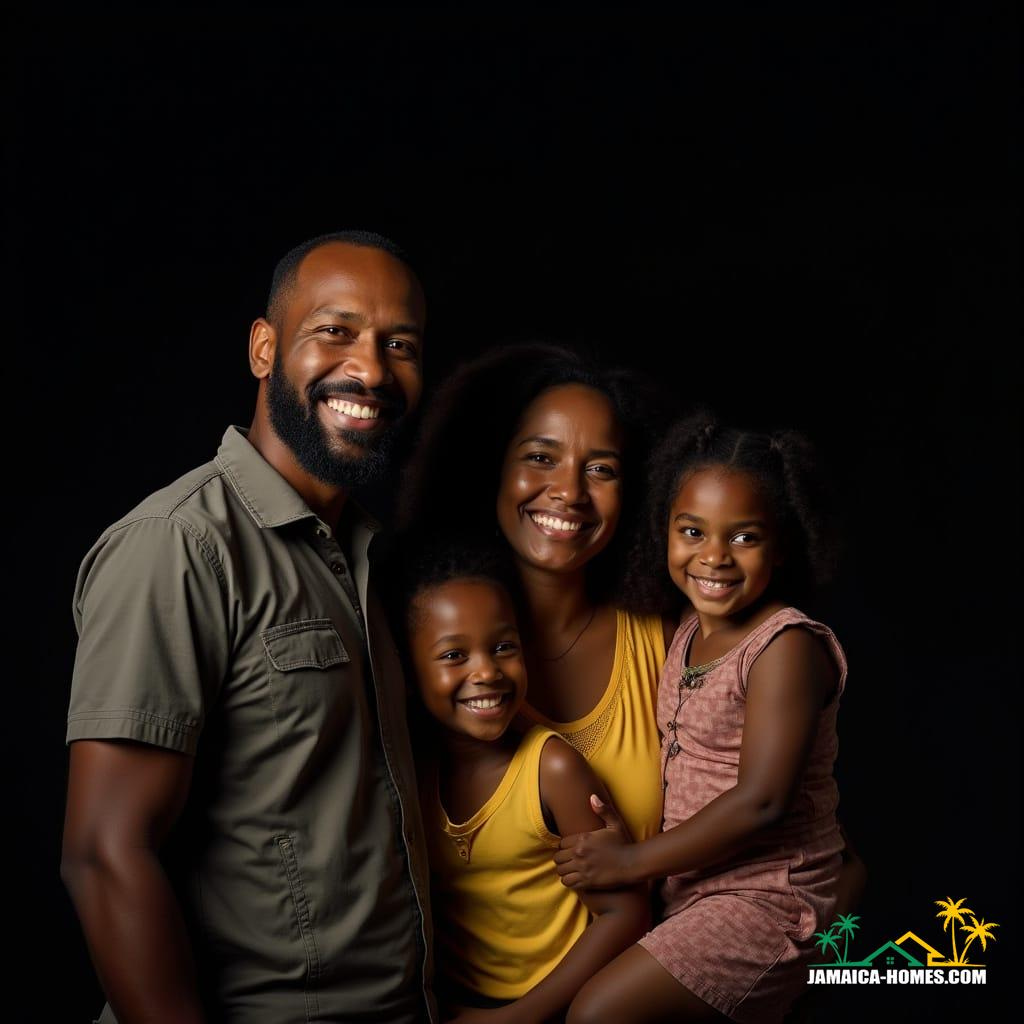
There are moments in a nation’s story when the landscape—both physical and emotional—is reshaped in a matter of hours. Hurricane Melissa was one such moment. In her wake, she left a collage of broken walls, sodden earth, fallen wires, and families displaced. Yet here, on this small but mighty island, the debris has become something else entirely: the foundation of a remarkable, collective rebuild.
Jamaica is accustomed to nature’s tempests. Hurricanes, earthquakes, torrential rains—these are not rare acts of drama, but recurring characters in the island’s long-running narrative. And still, every time, Jamaicans respond with something astonishingly beautiful: defiant optimism.
A new song, “Jamaica Strong”, written by Aiden Barrett, Aiesha Barrett, and Jermaine Crooks, captures this resilience superbly. It begins with the island “crying,” but almost immediately pivots to the irrepressible declaration that even amidst ruin, we rise. The melody becomes a kind of scaffolding for the nation’s hope.
As I read through the lyrics, it strikes me that Jamaica isn’t merely rebuilding structures. It is rebuilding stories, relationships, communities—crafting, yet again, one of the grandest of human designs.
Storms Tear Down Walls. Jamaicans Build Something Better.
There’s a line in the song that speaks of rain tearing down walls. It’s a stark image—almost architectural in its brutality. But what fascinates me, as someone who has spent years observing people rebuilding their lives through architecture, is what happens next.
Walls can be rebuilt. Render can be replaced. Concrete can be poured again.
But what Jamaicans manage—effortlessly, instinctively—is to preserve the invisible architecture: the social fabric, the humour, the faith, the startling ability to sit in the dark for hours and still find something to laugh about.
In neighbourhoods from Portland to St. Andrew, people stepped outside after Melissa not with despair, but with purpose. They fetched buckets. Cleared drains. Comforted strangers. Shared a single workable stove. Passed extension cords from verandah to verandah for one precious hour of light.
This, to me, is the architecture of community. The kind that outlives storms.
As Dean Jones, Chartered Builder, Surveyor, Realtor Associate, and Founder of Jamaica Homes, says:
“Every hurricane damages structures. But it also reveals the strength of the people who build them back.”
The Blueprint of Identity
Reading—and storytelling, in general—is the scaffolding that holds a nation’s identity intact. In a moment when some Jamaicans face the harshness of mud-filled homes and washed-out roads, turning to stories is not escapism. It is repair.
Garvey’s speeches, Miss Lou’s humour, the legends of Nanny, the struggles of Sam Sharpe, the wit of Anansi—these tales form the reinforcing steel within Jamaica’s cultural foundation.
The new song enters this canon of resilience effortlessly. Not as entertainment, but as documentation. As testament.
An Unsettled World and a Nation That Refuses to Flinch
Elsewhere on our planet, the earth groans. A volcano in Ethiopia reminds us how volatile the ground beneath our feet can be. Wars fracture nations. Climate change redraws coastlines without permission.
And through it all, Jamaica—a small island in a seismic stretch of sea—remains remarkably steady in spirit.
Stronger hurricanes? We rebuild.
Torrential rain? We adapt.
Rising temperatures? We innovate.
Global uncertainty? We find community.
As Dean Jones notes:
“Jamaica may be geographically small, but our courage is built to scale.”
In a world that is constantly shifting, Jamaica’s resilience is an architectural marvel—organic, unplanned, yet utterly robust.
The Sacredness of Land in a Changing Climate
There’s an expression in real estate: “They’re not making any more land.”
In Jamaica, this is particularly true—and it gives the island’s property market a certain gravity.
Melissa’s destruction underlines something essential: land is not merely resource. It is identity. It is heritage. It is memory.
Across Jamaica, families rebuild because the soil means something. It is where children take their first steps. Where mango trees are climbed. Where cookouts spill into the yard. Where entire generations root themselves.
The real estate market here remains buoyant not because of speculation, but because of connection. It is a relationship between people and place—deep, emotional, irreplaceable.
Even after a hurricane, this relationship strengthens.
The Architecture of Togetherness
What stands out most in the song is a line about neighbours helping neighbours. This is the essence of the Jamaican blueprint.
After Melissa, we saw:
Youth forming human chains to help elders cross floodwaters
Communities cooking in bulk to share meals
The diaspora mobilising funds and supplies
Churches offering shelter almost instantaneously
Farmers distributing food freely to those in need
This is not charity. It is culture.
It is the invisible engineering that keeps Jamaica standing long after the winds stop.
Dean puts it perfectly:
“You can rebuild a house in weeks. But rebuilding community requires heart—and Jamaica has an abundance of that.”
The Future: A New Dawn in the Design
If you stand on any Jamaican hillside at sunrise after a storm, you’ll see something remarkable. The light returns slowly, warming the battered landscape, revealing both the damage and the possibilities.
Jamaica is now in that sunrise moment.
Yes, the storm has passed.
Yes, the road ahead includes mud, paperwork, repairs, and patience.
Yes, the global climate continues to pose threats.
But in every Jamaican I’ve met—every builder, every mother, every teenager sweeping a flooded walkway—you find something that no storm can erode:
A refusal to lose hope.
Jamaica’s future is not bright because life is easy here.
It is bright because Jamaicans insist on making it so.
Dean Jones frames it as a philosophy:
“Jamaica’s destiny isn’t decided by the hurricanes we face, but by the courage we summon when the sun comes out.”
And that courage is everywhere.
Jamaica Strong — A National Masterpiece in Progress
The song ends by calling Jamaica “one people”—and this is, perhaps, the most accurate architectural description of all.
Jamaica is a structure built out of unity.
Out of love.
Out of stubborn hope.
Out of music and memory.
Out of sweat and shared labour.
Out of tears and laughter and prayer.
Out of everything that storms cannot wash away.
If you were to draw Jamaica on paper—not as a map, but as a design—it would be a mosaic. A strong, living structure held together not by concrete, but by shared resilience.
And like every great building, it endures—not because the weather is kind, but because the foundation is extraordinary.
This is Jamaica.
A masterpiece.
A work in constant reconstruction.
A testament to the human spirit.
Jamaica Strong — today, tomorrow, and always.
Disclaimer:
This content is provided for general information only and is not legal or technical advice. References to the song “Jamaica Strong” are used for commentary and inspiration only. All rights remain with the original creators.
Inspired By: “Jamaica Strong” written by Aiden Barrett, Aiesha Barrett, and Jermaine Crooks.