


Jamaican Architecture
A living record of climate, culture, and survival shaped in timber, stone, and breeze
Jamaican architecture is not a single style but a layered story, built over centuries by necessity, adaptation, and identity. It is the quiet intelligence of a veranda catching the wind, the endurance of stone against storm, the memory of Africa, Europe, and the Caribbean meeting in form. To understand it is to read Jamaica itself, not only in its buildings, but in how people have learned to live with heat, rain, history, and change.
Before formal planning systems and modern materials, early structures in Jamaica were shaped by indigenous knowledge and later by the realities of plantation life. The island’s original inhabitants, the Taíno, built simple, circular huts known as bohíos, constructed from timber, thatch, and earth. These structures were light, breathable, and suited to the tropical climate. When the Spanish arrived in the late fifteenth century, and later the British in the seventeenth, architecture shifted toward permanence and control. Stone and brick began to appear, particularly in military and administrative buildings, while plantation houses evolved into elevated timber structures designed to capture breeze and reduce heat.
The Great House became the dominant architectural symbol of the plantation era. These were not only homes but centres of power, often set on raised ground, with wide verandas, high ceilings, and shuttered windows. The design was practical. Air moved freely through the building, protecting against humidity and heat. Beneath the elegance, however, lay a deeper truth. These houses were built within a system of enslavement, and the surrounding outbuildings, kitchens, and quarters reflected a stark social order embedded in the landscape.
After emancipation in 1838, architecture began to shift again. Freed communities built what they could with what they had. Timber became the primary material, often reused, reshaped, and adapted. The Jamaican vernacular house emerged in this period. Typically small, rectangular, and raised slightly above ground, these homes featured zinc or shingle roofs, jalousie windows, and simple layouts. They were not designed by architects, but by lived experience. They responded to rain, to sun, to the need for airflow, and to limited resources.
By the late nineteenth and early twentieth centuries, urban centres such as Kingston began to develop more formal architectural identities. Georgian and Victorian influences appeared, adapted for the Caribbean climate. Buildings retained symmetry and proportion but were modified with deeper verandas, larger openings, and lighter materials. The devastating earthquake of 1907 marked a turning point. Much of Kingston was destroyed, and reconstruction introduced new building techniques and materials, including reinforced concrete. The city that followed was more modern, but also more cautious.
The twentieth century brought further transformation. Concrete replaced timber as the dominant material, driven by durability, cost, and the need for hurricane resistance. Bungalows and modest suburban homes spread across expanding urban areas, particularly in Kingston and St Andrew. At the same time, public housing schemes began to shape the landscape, especially in St Catherine. These developments prioritised scale and efficiency, often at the expense of architectural character, but they addressed a growing need for shelter in a rapidly urbanising society.
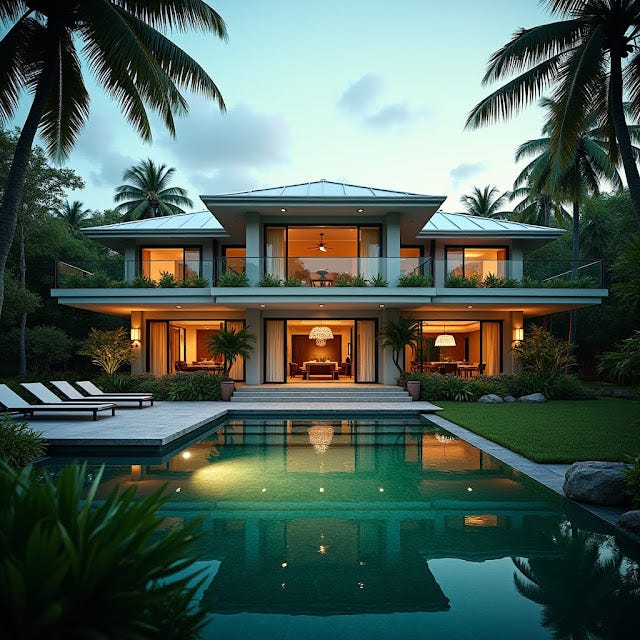
Tourism also left its mark on Jamaican architecture. Along the north coast, hotels and villas blended international design with local elements. Open plan layouts, natural ventilation, and integration with landscape became defining features. In places like Montego Bay and Negril, architecture began to sell not only shelter, but experience. The line between indoor and outdoor space blurred, reflecting both climate and lifestyle.
In recent decades, Jamaican architecture has become more diverse, but also more divided. On one side, there is a surge in modern development. Gated communities, apartment complexes, and high rise buildings are increasingly common, particularly in Kingston. These structures often draw on global design trends, with glass, steel, and concrete forming clean, minimalist lines. On the other side, there remains a strong presence of informal and self built housing, particularly in rural areas and on the urban fringe. These homes continue the tradition of vernacular design, shaped by necessity rather than formal planning.
Climate remains the most constant influence. Jamaica sits within a hurricane belt, and buildings must withstand wind, rain, and seismic activity. This has reinforced the use of concrete and steel, but it has also revived interest in passive design principles. Orientation, shading, ventilation, and material choice are once again central to how buildings perform. In a country where energy costs are high, the ability of a building to stay cool without mechanical systems is not a luxury. It is a necessity.
There is also a growing conversation about identity. As Jamaica develops, questions arise about what its architecture should represent. Should it follow global trends, or draw more deeply from local traditions. Should new buildings reflect history, or signal a break from it. The answer, in practice, is a blend. Some architects are revisiting traditional forms, reinterpreting the veranda, the courtyard, and the use of natural materials in contemporary ways. Others are pushing toward a more international aesthetic, particularly in commercial and high end residential projects.
Jamaican architecture today is therefore not static. It is in motion. It carries the weight of history, from the simplicity of Taíno structures to the complexity of colonial estates, from the resilience of post emancipation homes to the ambition of modern developments. It is shaped by climate, by economics, and by the enduring human need to belong to a place.
To walk through Jamaica is to see this story unfold in real time. A timber house sits beside a concrete block structure. A colonial building faces a glass fronted apartment tower. A rural yard opens into a suburban development. Each tells part of the same narrative. Jamaican architecture is not defined by a single style or period. It is defined by adaptation, by survival, and by the quiet determination to build, rebuild, and remain.