

Jamaica’s Economy Shrinks After Hurricane Shock
A 5.9 per cent quarterly contraction shows how deeply storms, tourism disruption and weak demand can move through housing, construction, land use and household security.

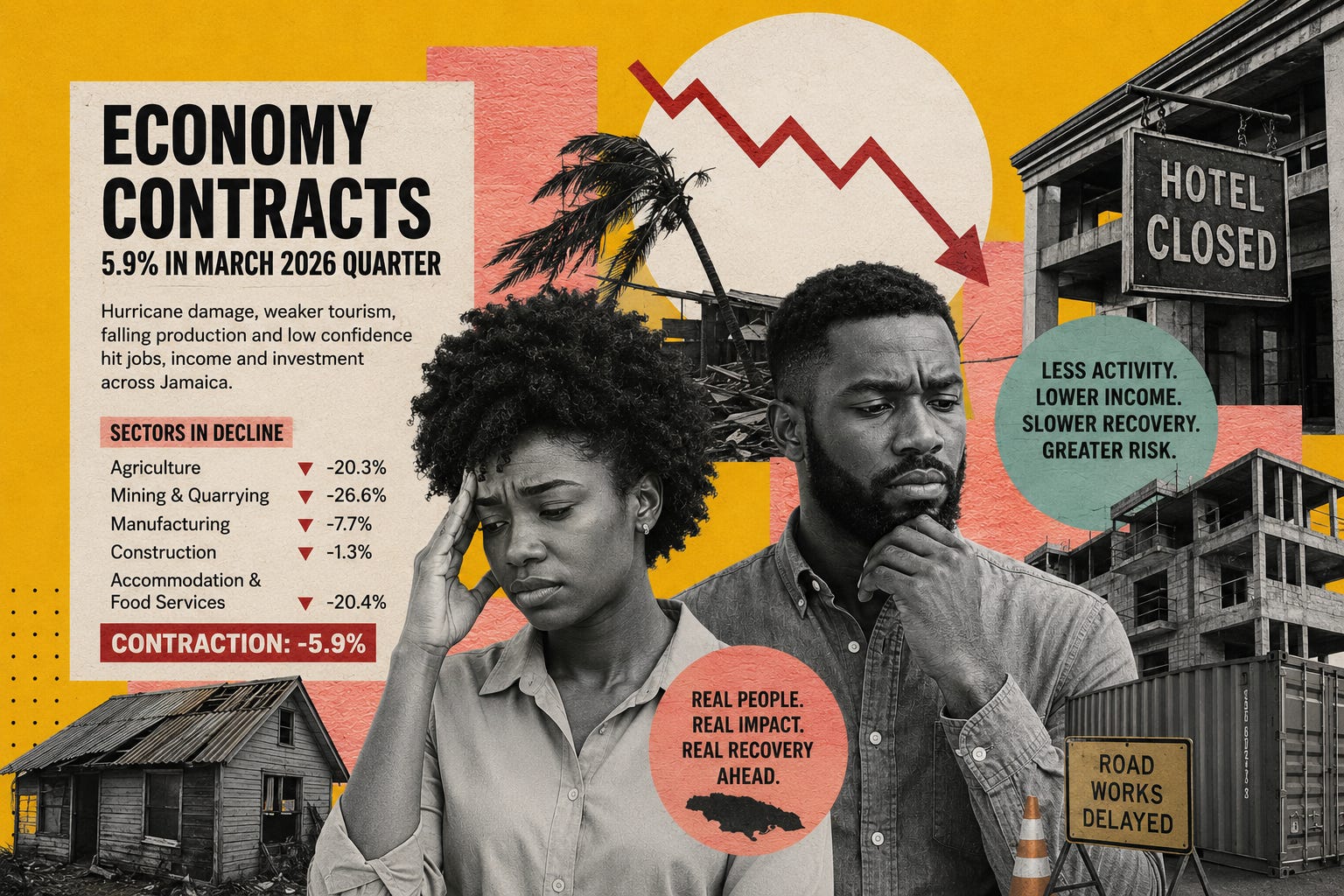
Jamaica’s economy contracted by an estimated 5.9 per cent in the January to March 2026 quarter, as the lingering effects of Hurricane Melissa continued to disrupt production, tourism, construction and domestic demand.
The Planning Institute of Jamaica said the downturn reflected contractions across most major industries, with agriculture, mining, manufacturing, construction and tourism all affected. The figures point to a wider national problem for Jamaica’s property and housing outlook, because economic shocks do not remain inside one sector. They move through jobs, household income, rebuilding costs, investor confidence, mortgage affordability and the pace at which homes, roads, hotels and communities can recover.
The goods producing industry fell by an estimated 11.2 per cent, with agriculture down 20.3 per cent after storm damage to crops, livestock, aquaculture, infrastructure and equipment valued at approximately $43.9 billion. Mining and quarrying declined by 26.6 per cent, while manufacturing fell by 7.7 per cent.
Construction also contracted, though more modestly, by 1.3 per cent. That matters because construction is one of the clearest links between the wider economy and real estate. When infrastructure projects slow, household rebuilding becomes more expensive, developers face delays, and communities wait longer for the physical repairs that support daily life and market confidence.
Tourism, another major pillar of property demand and coastal investment, showed sharper weakness. Accommodation and food service activities contracted by an estimated 20.4 per cent. Visitor arrivals fell by 17 per cent to just over one million, while stopover arrivals dropped by 27.5 per cent. Visitor expenditure declined by 21.3 per cent to US$976.4 million.
For Jamaica’s real estate market, the message is not simply that the economy shrank. It is that storm damage, external pressures and reduced confidence are now feeding into the practical conditions under which people buy, rent, build, insure and rebuild.
A weaker tourism quarter can affect short term rentals, resort area investment, hotel linked construction and employment in communities where property values are tied closely to visitor spending. A damaged agricultural sector can reduce rural incomes and weaken household capacity to repair homes, service loans or invest in land. A slower construction sector can place further pressure on supply, costs and delivery timelines.
The financial and insurance sector grew by an estimated 1.8 per cent, while public administration and defence rose by 1.9 per cent. That resilience may provide some support, but it does not remove the broader strain facing households and businesses still absorbing the cost of the hurricane.
The deeper issue is resilience. Jamaica’s homes, farms, hotels, roads and public infrastructure are increasingly exposed to shocks that arrive quickly but take years to work through. The March quarter figures show that recovery is not only about reopening businesses or repairing roofs. It is about whether the country can rebuild in a way that protects household security, supports investment and reduces the cost of the next disaster.
For property owners, buyers and developers, the figures are a warning that Jamaica’s housing and land markets cannot be separated from climate risk, tourism performance, construction capacity and national income. The economy may recover in later quarters, but the pressure on affordability, rebuilding and confidence will remain central to the real estate outlook.