

Jamaica’s Housing Market Is Not Crashing. It Is Holding Its Breath
After hurricanes, COVID 19, and global instability, Jamaica’s property market is revealing the quiet pressure facing vulnerable economies worldwide.


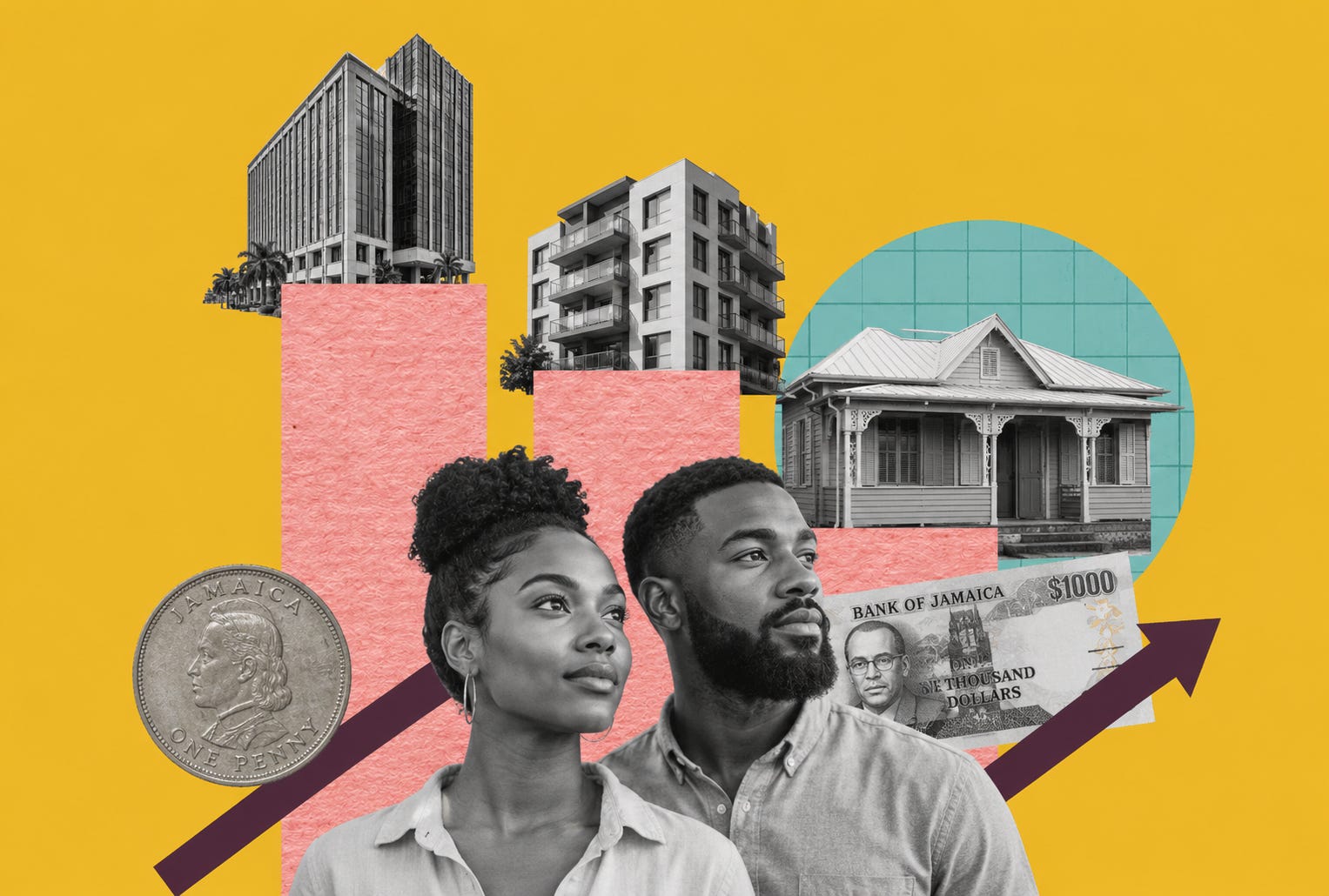
As of May 2026, Jamaica’s housing market is not collapsing. In many ways, that is the story.
Property prices across much of the island are still holding firm despite high interest rates, rising construction costs, geopolitical instability, and an affordability crisis that is quietly reshaping the country. On paper, the market appears surprisingly resilient. In reality, something more complicated is happening beneath the surface.
The Jamaican housing market is not frozen. Buyers are still searching. Sellers are still listing. Developments are still breaking ground. But the atmosphere has changed.
There is hesitation now.
Not panic. Not paralysis. Hesitation.
Across Kingston, Montego Bay, and growing suburban communities, many prospective buyers appear financially capable of purchasing property. They attend viewings, request valuations, discuss financing, and show genuine intent. Yet a growing number stop just short of making offers. They linger at the edge of commitment, waiting for clarity that may not arrive anytime soon.
That hesitation matters because markets often shift psychologically before they shift statistically.
And Jamaica, perhaps more than many countries, is especially sensitive to shifts in confidence.
This is a small island nation that imports most of what it consumes. Fuel, food, steel, cement, machinery, lumber, and countless household goods arrive by sea. When global shipping costs rise, Jamaica feels it quickly. When oil prices jump, the effects ripple almost immediately through electricity, transportation, food prices, and construction.
What happens in the Strait of Hormuz does not stay in the Strait of Hormuz.
The ongoing geopolitical tensions involving Iran, the United States, Israel, Russia, and Ukraine may seem geographically distant from the Caribbean. Economically, however, they are much closer. Energy markets remain deeply interconnected. Shipping routes remain vulnerable. Insurance premiums on freight continue to rise. Interest rates globally remain elevated as central banks attempt to contain inflation that never fully disappeared after the pandemic.
For Jamaica, these are not abstract international headlines. They translate into higher mortgage costs, more expensive building materials, rising rents, and slower decision making across the property sector.
And all of this is happening while the country is still recovering from multiple shocks of its own.
Jamaica has emerged from the long economic shadow of COVID 19 only to face successive climate disasters. The island experienced a Category 5 hurricane last year. Another significant hurricane struck the year before that. Entire communities are still rebuilding. Some households exhausted their insurance coverage during previous recovery efforts and remain vulnerable heading into another hurricane season.
That may be one of the least discussed risks facing the Jamaican economy today.
Many Jamaicans are effectively entering a new season of uncertainty already financially fatigued from the last one.
There is an old Caribbean instinct that says people will always “find a way.” Jamaicans, in particular, have built a global reputation for resilience, adaptability, and humor under pressure. The country’s culture, tourism industry, diaspora networks, music, and international identity have repeatedly helped it withstand crises that would destabilize larger economies.
There is truth in that optimism.
The Jamaica brand remains remarkably strong. Visitors continue returning to the island. Diaspora investment continues flowing into property and business. International demand for Jamaican lifestyle, culture, and tourism has not disappeared. In some respects, global instability elsewhere has even redirected interest toward relatively stable tourism destinations like Jamaica.
But resilience should not be mistaken for invulnerability.
The housing market today reflects a country under strain, even if the strain is not yet fully visible in pricing data.
Mortgage rates are hovering roughly between 7 and 12 percent depending on borrower profile and institution. Developers are becoming more selective about which projects move forward. Construction timelines are lengthening. Smaller units and unfinished “shell” apartments are becoming more common as affordability pressures intensify.
At the same time, Jamaica still faces a housing shortage estimated at more than 150,000 units. That supply deficit is one reason property prices have not collapsed despite weaker affordability. Demand still exceeds available inventory in many parts of the island, especially in and around Kingston.
The result is a strange contradiction.
The market feels pressured, but prices remain relatively firm.
Prime properties in strong locations continue attracting interest. Overpriced inventory, however, lingers longer. Sellers who expected bidding wars in previous years are discovering that buyers have become more patient and more analytical. Cash buyers now hold greater negotiating power while middle income borrowers face increasing barriers to entry.
This is not the dramatic crash many predicted after the pandemic. It is something quieter.
A slow squeeze.
And the direction of that squeeze may depend heavily on what happens globally over the next several months.
If geopolitical tensions de escalate and energy markets stabilize, Jamaica could gradually regain momentum. Lower oil prices would ease shipping costs and inflationary pressure. Mortgage conditions could slowly improve. Consumer confidence might strengthen again by late 2026 or early 2027. The housing market would likely remain selective, but stable.
Under that scenario, Jamaica’s underlying housing demand could once again become the dominant story. Urbanization, diaspora investment, population growth, and limited supply would continue supporting long term property values. Developers could resume delayed projects with greater confidence. Buyers currently waiting on the sidelines may finally begin moving forward.
That is the optimistic path.
The more concerning scenario is not necessarily a single event, but a combination of overlapping pressures.
If the wider conflicts continue escalating through the summer, if oil prices surge again, if tourism softens because of global recession fears, and if Jamaica experiences another major hurricane during recovery season, the country could face an extremely difficult economic environment.
A small island economy can absorb one shock. Sometimes even two.
But repeated shocks begin compounding each other.
High fuel prices raise transportation and electricity costs. Higher costs reduce consumer spending. Slower spending weakens business confidence. Tourism declines affect employment and foreign exchange earnings. Rising borrowing costs suppress real estate activity. Hurricanes then create additional infrastructure and insurance burdens on top of an already strained system.
The danger is not one dramatic collapse overnight. The danger is exhaustion.
Economic exhaustion.
Institutional exhaustion.
Household exhaustion.
There is also a growing conversation globally about what a “reset” might look like if geopolitical instability continues deep into 2026 and beyond. While apocalyptic predictions often dominate online discussions, the more realistic outcome is likely a prolonged restructuring of how economies operate.
The era of cheap money appears over for now. Cheap shipping is no longer guaranteed. Stable globalization can no longer be assumed. Countries everywhere are reassessing supply chains, energy dependence, and economic resilience.
Jamaica is part of that global transition whether it wants to be or not.
And yet, even amid uncertainty, there are reasons for cautious optimism.
The Jamaican property market still possesses qualities many countries would envy. Demand remains real. The diaspora remains emotionally and financially connected to the island. Tourism continues generating international attention and foreign exchange. Unlike some overbuilt global markets, Jamaica still fundamentally needs more housing.
That need creates a floor beneath the market.
The question is not whether Jamaica needs homes. It unquestionably does.
The question is who will still be able to afford them if global instability persists.
For now, the market exists in a state somewhere between resilience and restraint. People still want to buy. Developers still want to build. Investors still see opportunity. But many are watching the horizon carefully before taking the next step.
And perhaps that is the clearest reflection of the times we are living in.
The world economy itself seems caught in hesitation.
Waiting to see whether the next chapter brings stabilization or another storm.