


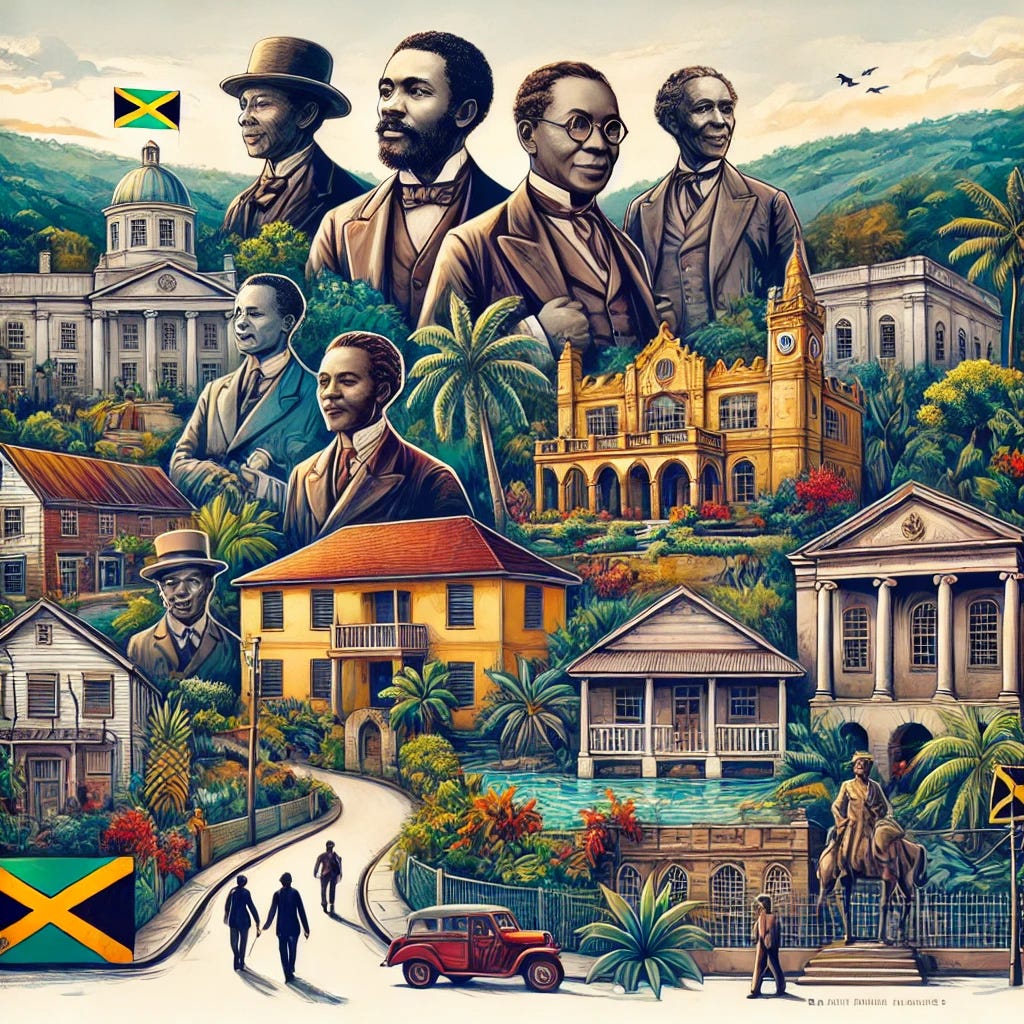
Jamaica’s history is full of ups and downs, marked by challenges, survival, and reinvention. Over the centuries, the island has faced hardship, but it’s also built a reputation for resilience and strength. As Howard Pyle famously said, “Jamaica has lived through it all in a few years.” This journey—filled with triumphs, struggles, and transformations—has shaped the island into what it is today.
The Taíno People and the Land of Xaymaca
Long before the Europeans arrived, Jamaica was home to the Taíno people, an Arawak group who settled on the island around 2,500 years ago. They called it Xaymaca, meaning “land of wood and water,” and lived in harmony with nature, growing crops like cassava, sweet potatoes, maize, and tobacco. Their villages were spread across the island, often near rivers and coasts, thriving off the land and sea. But when Christopher Columbus arrived in 1494, their peaceful way of life was destroyed. The Taíno people were devastated by disease, violence, and exploitation, nearly wiping out their population.
Columbus and the Spanish Era
On May 5, 1494, Columbus landed in Jamaica on his second voyage, claiming the island for Spain. While there was initial resistance from the Taíno people, the Spanish eventually took control. They established a few settlements, but their focus was more on using Jamaica as a supply base for Spain’s larger ambitions in the Americas. Due to neglect from Spain and constant pirate raids, Jamaica struggled to grow under Spanish rule. The island’s lack of development and internal conflict laid the groundwork for change in the coming decades.
The English Takeover: Pirates and the Maroons
In 1655, the English captured Jamaica, led by Admiral William Penn and General Robert Venables. The Spanish fled, and their enslaved Africans were freed, many of whom formed independent communities in Jamaica’s mountains, becoming known as the Maroons. Under British control, Jamaica became a hotspot for pirates—especially in Port Royal, where pirates like Henry Morgan raided Spanish ships and filled the city with wealth from stolen goods. Port Royal quickly became infamous as the “wickedest city in the world.”
But in 1692, a massive earthquake hit Port Royal, sinking much of the city. The survivors moved to Kingston, which would eventually become Jamaica’s capital. Despite this setback, Port Royal remained important as a British naval base in the 18th century.
Sugar and Slavery
With the English in charge, Jamaica’s fertile land became perfect for sugar plantations. The demand for labor led to the forced importation of Africans through the transatlantic slave trade. Enslaved people worked under brutal conditions on the sugar estates, suffering immense hardship. However, many slaves resisted by running away or joining the Maroons, who had established strongholds in the mountains.
After two Maroon Wars, treaties were signed between the Maroons and the British, granting land and freedom in exchange for their help in recapturing runaway slaves. However, not all Maroons agreed to the terms, leading to tension. Throughout the 18th century, uprisings continued, including the Easter Rebellion of 1760 and the Christmas Rebellion of 1831, led by Sam Sharpe, who became a national hero for his role in the fight for freedom.
The Road to Emancipation and Independence
The abolition of the slave trade in 1808 was a major turning point for Jamaica. But it wasn’t until the Slavery Abolition Act of 1833, which went into effect in 1834, that slavery itself ended. Abolitionists like William Wilberforce and the Quakers played a huge role in pushing for this change.
As the 20th century began, Jamaica’s society started to shift. The fight for political rights and economic reforms, along with a growing sense of nationalism, set the stage for self-governance. In 1944, Jamaica gained self-government, and on August 6, 1962, the country gained full independence from Britain.
Jamaica’s Complex Property Landscape
Jamaica’s history is one of survival, resilience, and transformation, and this spirit extends into the realm of real estate. From the early days of indigenous Taíno settlements to the impact of European colonization, Jamaica’s land has experienced dramatic changes. Following the shift from Spanish to British control, the development of plantations, and the rise of sugar, Jamaica’s land ownership landscape evolved. The legacy of plantation estates and the emergence of new towns and cities in the post-colonial era continue to shape the real estate market today. This rich history has created a complex property landscape where past struggles and triumphs intertwine with modern developments.
Modern Jamaica: Resilient and Culturally Rich
Today, Jamaica stands as a symbol of resilience. Despite centuries of struggle, its people have created a powerful cultural identity that is recognized worldwide, especially through music, art, and dance. The island’s story is one of survival, reinvention, and strength, a reflection of the indomitable spirit of its people.
Jamaica’s journey through adversity has shaped it into a nation proud of its roots and achievements. As Howard Pyle said, “Jamaica has lived through it all in a few years,” and today it shines as a beacon of hope, success, and resilience in the world.
Disclaimer
The information provided on this website/article is for general informational purposes only. While we strive to ensure the accuracy and reliability of the content, we make no representations or warranties regarding the completeness, accuracy, or suitability of the information for any particular purpose. Any reliance you place on such information is strictly at your own risk. We are not responsible for any loss, damage, or inconvenience caused by the use of this website or the information provided. External links provided on this site are for convenience and do not imply endorsement of the content. By using this website or reading the content, you agree to these terms and conditions.