

Jamaica’s Long Road Home
The Prime Minister Wants the Diaspora to Come Back. Dean Jones Says Many Never Really Left.

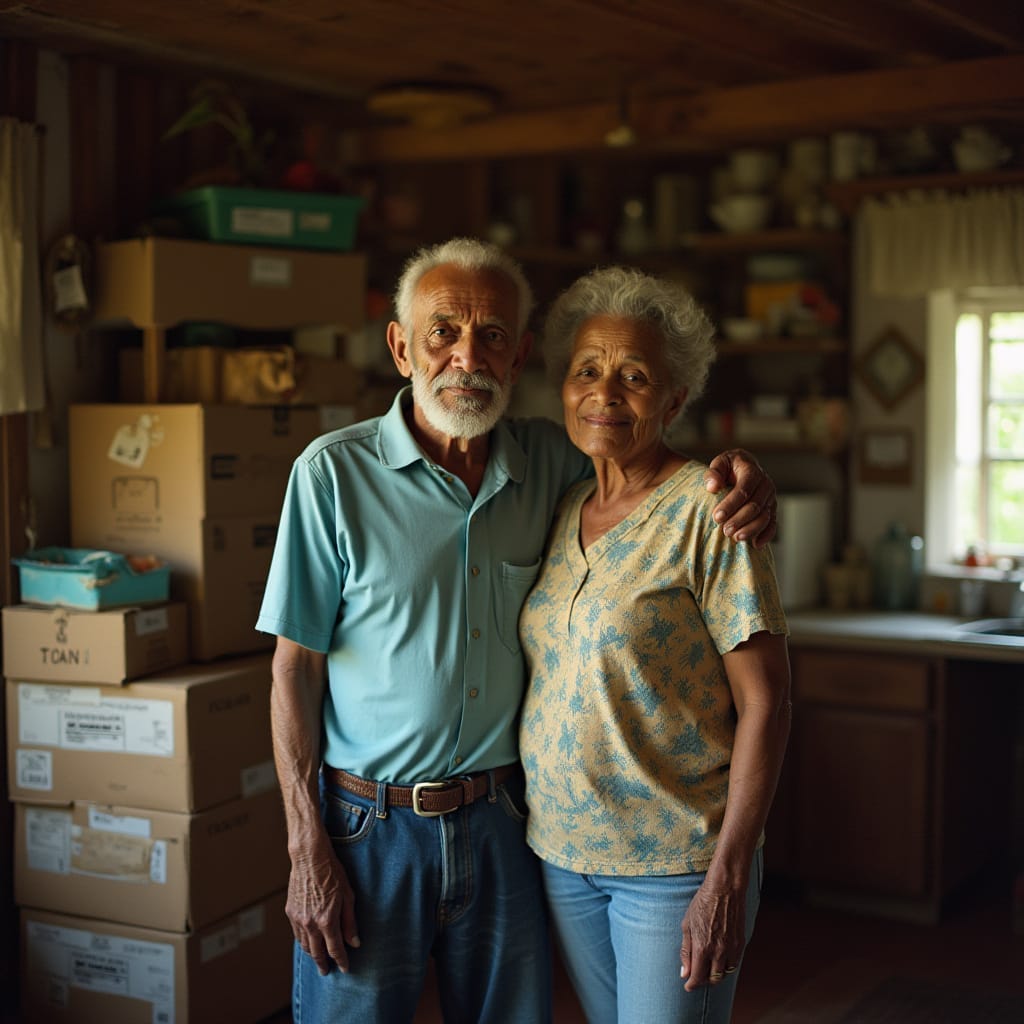
Jamaica has always had a complicated relationship with leaving. People leave for work, for school, for safety, for opportunity, for love, for survival, and sometimes simply because somebody in the family had to go first. Then, from somewhere cold, crowded, industrial, expensive, or unfamiliar, they begin doing what Jamaicans have done for generations. They send money home. They call home. They build back home. They argue about home. They defend home. They complain about home. They dream about home. And sometimes, after years of saying “one day,” they begin to ask whether one day has finally arrived.
The Call From Miramar
That question moved sharply back into public life when Prime Minister Dr Andrew Holness urged Jamaicans overseas to contribute to Jamaica beyond remittances. Speaking at a diaspora forum at ChristWay Baptist Church in Miramar, Florida, in April 2025, Holness told Jamaicans abroad that the country still needed their remittances and philanthropy, but that it now needed something more ambitious. It needed them to return, invest, buy homes, bring new industries, transfer skills, and help build an economy capable of producing more, earning more, and sustaining a higher standard of life.
His message was direct. Jamaica did not only need money sent from abroad to ease the pressure on families. It needed people, ideas, businesses, technology, expertise, ownership, and long term confidence. “Yes, we want the remittances. Yes, we want the great philanthropy that you exercise for our country. But I want you to buy homes in Jamaica. I want you to come back with the AI technology. I want you to come back with the cybersecurity expertise and set up businesses. Yes, I want you to come back to Jamaica and invest in Jamaica and help us build that economy,” Holness said.
There was politics in the speech, of course. There always is. The diaspora vote, national development, economic management, migration, labour force productivity, public frustration, and the next phase of Jamaica’s transformation all sat somewhere in the background. But the emotional weight of the message reached beyond party colours. It touched a deeper Jamaican nerve. For a country that has watched so many of its sons and daughters leave, the call to come back home is never just an economic appeal. It is a family conversation. It is a history conversation. It is a property conversation. It is a question about whether Jamaica is still only a place people remember, or whether it can become again a place where they build.
The Family That Never Left Jamaica Emotionally
Dean Jones, founder of Jamaica Homes, understands that question from the inside. Born in 1978 to Jamaican parents, Jones grew up between British concrete and Jamaican soil, shaped by Windrush sacrifice, Jamaican household discipline, music, church, property lessons, market stalls, construction sites, public institutions, technology, and the constant pull of an island that never quite released him. His life does not fit neatly into one category. He is a Realtor Associate with Coldwell Banker Jamaica Realty, founder of Jamaica Homes, Chairman of the IT Committee for the Real Estate Association of Jamaica, a Justice of the Peace in Jamaica, a chartered construction professional, and a man whose professional life has moved through design, surveying, construction management, strategic projects, media, and real estate. Yet long before any of those titles, there was a Jamaican family trying to survive Britain while keeping Jamaica alive inside the home.
His grandfather, Mr Isaacs, arrived from Jamaica during the Windrush era, part of a generation that crossed the Atlantic with discipline, ambition, pain, humour, and a belief that work could open doors even in a country that often tried to keep those doors closed. Britain in those years was not a soft landing. Caribbean migrants faced open racism, housing discrimination, exclusion, cold weather, hard labour, and the daily humiliation of being treated as outsiders in a country that had invited them to help rebuild it. Yet that generation built anyway. They built families. They built churches. They built savings. They built homes. They built reputations. They built routes for others to follow.
“He never left Jamaica emotionally,” Jones says.
That sentence explains more than it first appears to. The family settled in London, but Jamaica remained present in the food, the music, the discipline, the sayings, the church life, the saving habits, the arguments, the humour, and the expectation that land and property mattered. Jones remembers his grandfather repeating one lesson until it became almost spiritual inside the household. “Save, save, save.” Not as a slogan. Not as financial branding. As survival.
His grandfather bought a large property near Highbury and Islington. It was not bought for show. It became a place where Jamaican families rented rooms and found footing in Britain. Later came another property. Then land back home in Jamaica. Then more building. The lesson was bigger than real estate. It was ownership. It was permanence. It was a way of saying that even when the world tries to move you around, you can still create ground beneath your feet.
Beyond Barrels and Remittances
This is why the Prime Minister’s call to buy homes, bring expertise, and invest in Jamaica sits inside a much older story. Jamaicans abroad have been building Jamaica from a distance for decades. They have paid school fees, sent barrels, supported funerals, built rooms, finished roofs, bought blocks, laid foundations, fixed verandas, helped cousins, rescued parents, paid hospital bills, and carried entire households through hard seasons. The remittance economy is not abstract. It is the hand of a daughter in New York helping her mother in Clarendon. It is a son in London paying for a sister’s exam fees. It is a nurse in Toronto wiring money so a roof can go on before the rain comes. It is love turned into foreign exchange.
But remittances alone cannot transform a country. They can protect families from falling, but they cannot by themselves build the industries, systems, jobs, wages, infrastructure, and confidence needed to keep people from leaving in the first place. That was the difficult centre of Holness’s message. Jamaica needs the diaspora not only as rescuers of households, but as builders of capacity. Not only as senders of money, but as creators of output. Not only as relatives abroad, but as participants in the economy itself.
That is an ambitious ask, and it will not be answered by nostalgia alone.
The Reality Jamaicans Abroad Already Know
Jamaica is not a postcard. Jamaicans abroad know that better than anyone. They may miss the island deeply, but they also remember the reasons people leave. They know about wages that do not always match living costs. They know about healthcare anxieties. They know about road conditions, bureaucracy, crime, insurance pressures, land disputes, title complications, school concerns, and the quiet fear of investing life savings into a system that can feel slow, personal, and unpredictable. Holness acknowledged some of those barriers, including poor road conditions and healthcare concerns. That acknowledgement matters because a serious return conversation cannot begin with fantasy.
Jones speaks about Jamaica with deep optimism, but not with tourist optimism. His optimism has edges. It knows about unfinished houses, inheritance arguments, underinsurance, affordability, bureaucracy, and the emotional difficulty of building in a place where almost everything costs more than people expect. Through Jamaica Homes, his writing has repeatedly returned to one central idea: property in Jamaica is never only property. It is family history, migration, memory, ambition, conflict, sacrifice, pride, and sometimes pain wrapped in concrete.
The Unfinished House as a Jamaican Symbol
There are thousands of unfinished houses across Jamaica. Some stand on hillsides with steel rods reaching upward like fingers. Some have a ground floor complete and a second floor waiting for a future that has been delayed by school fees, illness, exchange rates, migration papers, funeral costs, inflation, or simply life. Some sit behind zinc fences, slowly being claimed by bush. Some were started by parents who died before the dream was finished. Some belong to families that no longer agree on who owns what. Some are not abandoned at all. They are paused. A bag of cement here. A few blocks there. A roof when the money comes. A dream built in instalments.
To outsiders, these houses may look like failure. In Jamaica, many are evidence of persistence. They show how people build when they do not have easy access to cheap credit, inherited wealth, predictable wages, or simple mortgages. They show the Jamaican habit of moving forward one block at a time. They show a people who often refuse to wait for perfect conditions before beginning.
“The key with incremental building is staying power,” Jones says.
That staying power is the heart of the Jamaican diaspora story. The person abroad may not be physically present, but the house rising slowly in St Mary, Manchester, Clarendon, St Elizabeth, St Ann, Westmoreland, or St Catherine tells you that absence is not always abandonment. Sometimes absence is the method by which home is funded.
Jamaica’s Next Economy
Holness’s appeal lands at a moment when Jamaica is trying to define what its next economy should look like. Tourism remains vital, but tourism alone cannot carry the future. Remittances remain important, but remittances alone cannot build national productivity. Construction is active, but construction without affordability creates another kind of pressure. The country needs new businesses, better skills, stronger digital capacity, more resilient infrastructure, and industries capable of keeping young talent from seeing migration as the only serious career plan.
That is why his reference to artificial intelligence and cybersecurity was significant. These were not decorative buzzwords. They pointed toward the industries small countries must now take seriously if they want to compete. Jamaica has always exported talent. The new challenge is whether Jamaica can create enough opportunity for talent to remain connected to the island while serving the world.
Jones has been drawn to that possibility for years. If anything, it sharpened his belief that modern tools can open doors previous generations never had. Online learning, artificial intelligence, digital platforms, remote working, private study, and global access to information have changed what is possible for Jamaicans at home and abroad.
“There’s almost no excuse now for not learning something,” he says. “This generation has tools previous generations could never dream of.”
That statement could sound harsh if it were not rooted in experience. Jones did not arrive by a straight professional road. Before construction and real estate, there was graphic design. Before strategic programmes, there were market stalls selling clothes and music. Before public commentary, there were sound systems, DJ work, side hustles, reinvention, and the long awkward business of finding a route through life. “Yes, there was construction and government work later,” he says. “But there was also music, market stalls, and trying to survive.”
That matters because Jamaica’s development story cannot be written only through polished résumés. The island has always run on reinvention. A carpenter becomes a contractor. A teacher becomes a business owner. A nurse abroad becomes a land investor. A returning resident becomes a developer. A market trader funds a degree. A young person with a phone starts a media business. A farmer’s child becomes a cybersecurity specialist. A diaspora grandchild returns with skills no one in the family could have named two generations earlier.
This is Jamaica’s hidden genius. Adaptation. Improvisation. Style under pressure. Reinvention without permission.
“There’s something inside Jamaican people,” Jones says. “Something powerful. The ability to adapt, reinvent, create.”
The question is whether the country can build systems strong enough to hold that power.
The Difficult Questions About Returning Home
For the diaspora, the decision to return is not only emotional. It is practical. A person may love Jamaica and still ask whether they can get reliable healthcare. They may want to build and still worry about construction costs. They may want to invest and still fear title disputes. They may want to retire and still wonder whether their pension will stretch far enough. They may want to bring children and still worry about schools, safety, opportunity, and adjustment. They may want to set up a business and still dread paperwork, delays, and unofficial obstacles.
A serious national invitation must answer those concerns honestly. “Come home” cannot mean “come home and figure it out alone.” It must mean that Jamaica is building the roads, systems, services, protections, professional standards, digital infrastructure, and investment climate necessary to receive its people properly. It must also mean that local Jamaicans are not pushed aside by diaspora capital, but included in the growth that return can create.
That balance will be delicate. Diaspora investment can bring skills, money, international networks, entrepreneurship, and confidence. It can help create jobs, raise standards, and expand industries. But if handled poorly, it can also intensify housing pressure, deepen resentment, inflate land values, and make local Jamaicans feel like spectators in their own country. Jamaica must avoid turning return into a contest between those who left and those who stayed.
The people who stayed built Jamaica too. They taught in classrooms, worked in hospitals, drove taxis, ran shops, farmed land, raised children, served in public offices, fixed roads, opened churches, kept communities alive, endured crime, survived storms, and held the country together through seasons when leaving was not an option. Any national call to the diaspora must honour them as well.
The future cannot be built by romanticising one group over another. It must be built by connecting them.
The Housing Question Nobody Can Ignore
That is where housing becomes central. When Holness says he wants the diaspora to buy homes in Jamaica, the statement carries both opportunity and risk. Home ownership can anchor people to the island. It can deepen commitment. It can bring construction activity, tax revenue, family stability, and long term investment. But Jamaica must also confront the fact that many ordinary workers already struggle to buy homes. The dream of return must not become another force pricing locals out of the places they made valuable.
A better vision is possible. Diaspora investment could help develop mixed housing, rental stock, senior living, rural renewal, digital work hubs, heritage tourism, agricultural ventures, climate resilient communities, and properly planned developments that benefit more than individual buyers. It could help modernise small towns, revive family lands, support local contractors, and create new routes for young Jamaicans who want to stay.
But that requires discipline. It requires planning. It requires transparent processes. It requires serious estate planning and proper paperwork.
Jones is blunt on this point. Sort out the paperwork. Get wills in order. Fix titles. Stop leaving confusion for children to inherit.
That advice may not sound glamorous, but it may be one of the most important things any Jamaican family can hear. Across the island and the diaspora, too much wealth is trapped in confusion. Family land without clear title. Houses built without proper documentation. Verbal promises treated like legal arrangements. Relatives appearing after death with claims no one can prove. Siblings who once ate from the same plate ending up in bitter conflict over land their grandparents fought to secure.
“The same people who grew up eating from the same plate can end up in war over property,” Jones says.
Land, Titles, Wills, and Family Conflict
This is not a small issue. If Jamaica wants returning residents and diaspora families to invest confidently, the country must deal seriously with land administration, probate delays, title clarity, planning processes, construction standards, and consumer protection. The emotional appeal of home must be matched by legal and practical certainty.
The same is true for business. Jamaicans abroad may want to bring AI, cybersecurity, logistics, healthcare innovation, renewable energy, creative industries, advanced agriculture, and professional services to the island. But they will need systems that are fast, fair, transparent, and internationally credible. Patriotism may open the door. Efficiency determines whether people stay.
This is the hard truth beneath the Prime Minister’s speech. Jamaica does not only need the diaspora to believe in Jamaica. Jamaica must become a country that makes belief easier to act on.
The New Version of Return
Still, something important is shifting.
For decades, many Jamaicans abroad thought of return primarily as retirement. Work hard in England, America, or Canada. Pay off the mortgage. Build a house in Jamaica. Come back when the children are grown and the pension starts. Sit on the veranda. Plant something. Go church. Complain about the heat. Argue politics. Watch the road. Tell young people how things used to be.
That version of return still exists, and it still has beauty. But the new return could be different. It could include younger professionals, entrepreneurs, digital workers, creatives, researchers, engineers, nurses, builders, educators, investors, and second generation Jamaicans looking for meaning as much as opportunity. It could include people who do not want to wait until retirement to belong somewhere fully.
Jamaica should prepare for that possibility.
The world has changed. Remote work has weakened the old assumption that serious careers must happen in New York, London, Toronto, Miami, or Atlanta. Digital businesses can be built from almost anywhere with stable infrastructure, talent, regulation, and trust. Cultural industries already prove that Jamaica can influence the world from a small island. The next test is whether Jamaica can turn cultural influence into broader economic architecture.
Jones sees the potential clearly. He imagines a Jamaica known not only for beaches and music, but for systems, invention, engineering, architecture, digital creativity, film, design, education, and global competitiveness. Not a Jamaica that rejects tourism, but a Jamaica that refuses to be reduced to it. Not a Jamaica that begs its diaspora for help, but a Jamaica that invites its global family into a serious national project.
That distinction matters.
A country does not build confidence by pleading. It builds confidence by organising itself around possibility.
The Butterfly and the Backlash
Holness’s butterfly metaphor was meant to describe national transformation. But transformation is uncomfortable. The caterpillar does not become a butterfly by remaining recognisable. Something dissolves. Something reforms. Something struggles out of its old shape. Jamaica’s transformation will not feel comfortable to everyone. Some will feel displaced. Some will mistrust the language of progress. Some will ask who benefits. Some will worry that development is moving faster than fairness.
Those concerns must not be dismissed. Progress that excludes people eventually creates resistance. Growth that does not feel fair becomes politically fragile. Development that prices out ordinary citizens becomes morally thin.
That is why the diaspora conversation must be framed carefully. The point is not to replace local Jamaica with overseas Jamaica. The point is to reconnect a scattered nation with itself.
Jamaica Beyond Jamaica
Jamaica is larger than its geography. It lives in Kingston and Montego Bay, but also in Brixton, Brooklyn, Birmingham, Bronx, Brampton, Fort Lauderdale, Atlanta, and Toronto. It lives in WhatsApp groups, funeral programmes, barrels, Sunday dinners, dancehall sessions, church conventions, family land arguments, passport renewals, remittance lines, property searches, and the accent that returns the moment somebody gets emotional.
The diaspora is not outside Jamaica in any simple sense. It is one of Jamaica’s extended rooms.
That does not mean everyone abroad understands present day Jamaica. Some left decades ago and remember a country that no longer exists. Some romanticise rural life while underestimating local hardship. Some arrive with foreign expectations and little patience for Jamaican processes. Some speak as though money gives them greater authority than those who remained. Those attitudes can cause real friction.
But the opposite mistake is also dangerous. Jamaicans at home should not dismiss the diaspora as outsiders. Many overseas Jamaicans have carried families, funded education, built houses, supported communities, promoted Jamaican culture, defended the island internationally, and kept emotional faith with a country that did not always make return easy.
The relationship is imperfect because family relationships usually are.
But it is still family.
More Than a Return. A National Reconnection
That may be the real meaning of this moment. Jamaica is not simply asking its diaspora for cash. It is asking whether a scattered people can organise themselves into something more powerful than memory. Whether the nurse in New York, the builder in London, the engineer in Toronto, the teacher in Birmingham, the entrepreneur in Miami, the student in Atlanta, and the retiree in Fort Lauderdale can see themselves not as former Jamaicans, but as part of Jamaica’s next chapter.
For that to happen, Jamaica must offer more than sentiment. It must offer credible pathways. Investment channels that are transparent. Housing opportunities that are fair. Business registration that is efficient. Digital systems that work. Roads that improve. Healthcare that inspires confidence. Schools that prepare children for the world. Communities that are safe. Public institutions that treat people with respect. A planning culture that protects both development and dignity.
And the diaspora must bring more than complaint. It must bring humility, patience, skills, capital, partnership, and respect for the Jamaicans who kept the island going in their absence.
What a Successful Return Could Actually Look Like
The best return will not be loud. It will be useful.
It will look like businesses that employ people well. It will look like family land brought into proper title. It will look like homes built safely and insured properly. It will look like digital firms training young Jamaicans. It will look like returning professionals mentoring local talent. It will look like diaspora investors partnering with local builders rather than bypassing them. It will look like rural properties restored without erasing community character. It will look like knowledge flowing both ways.
Because Jamaica has things to teach the diaspora too.
Resilience. Humour. Community intelligence. Survival creativity. Cultural confidence. The ability to make something from little. The discipline of continuing when systems are imperfect. The instinct to turn hardship into rhythm, argument, food, faith, business, and style.
Jones’s own life carries that lesson. The designer became a surveyor. The surveyor became a strategist. The strategist became a publisher. The publisher became a Realtor. The Realtor became a public voice in Jamaica’s housing conversation. Underneath all of it remained the early lesson of a Jamaican grandfather who saved, bought, built, helped others, and never emotionally left the island.
Save. Build. Keep going.
Even if the house takes years to finish.
Even if the dream arrives one block at a time.
Jamaica Is Still Building
That is why Jamaica’s long road home cannot be reduced to a speech, a policy, or a property purchase. It is a national reckoning with memory and possibility. It asks whether leaving must always mean loss. It asks whether return can be more than retirement. It asks whether the country can become organised enough to receive the people it once had to export.
The answer is not simple.
Some will come back. Some will not. Some will invest from abroad. Some will test the waters. Some will buy land and wait. Some will return and struggle. Some will return and thrive. Some will discover that the Jamaica of memory and the Jamaica of daily life are not the same place. Others will discover that the island was never asking them to relive the past, but to help build the future.
Home is not always where you were born.
Sometimes home is where your grandfather kept saving for.
Sometimes home is the house your mother talked about finishing.
Sometimes home is the land nobody in the family quite knows how to divide.
Sometimes home is the place you left but never stopped defending.
Sometimes home is the country that frustrates you because it still matters so much.
And sometimes, home is the unfinished thing calling you back not because it is perfect, but because it is yours.
Jamaica is still building.
The question now is who will help finish the house.