

Jamaica’s US$200 Million Hurricane Shield
New World Bank catastrophe bond expands protection, but raises deeper questions about who is still financially exposed when storms hit Jamaica

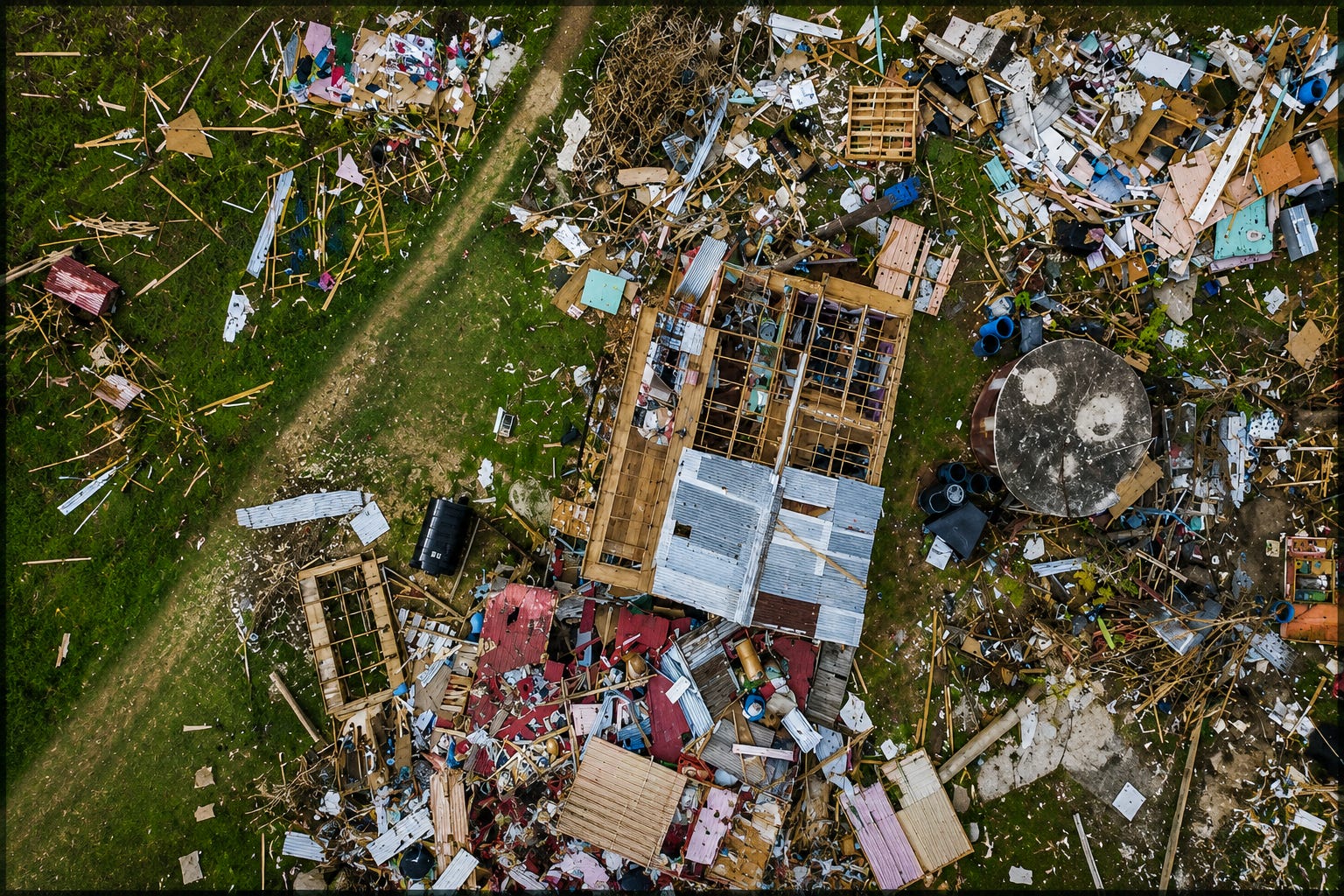
The World Bank has priced a new catastrophe bond providing Jamaica with US$200 million in hurricane insurance coverage, replacing the island’s previous US$150 million bond that paid out in full after Hurricane Melissa struck in 2025. The new transaction, which was reportedly oversubscribed by global investors, gives Jamaica another layer of rapid disaster financing at a time when climate risks across the Caribbean continue to intensify.
For many Jamaicans, however, the bigger question is not simply whether the government can access emergency money after a storm, but whether ordinary households themselves remain financially protected when roofs disappear, walls collapse, and entire communities are left exposed.
That is where the story becomes more complicated.
The catastrophe bond is designed to help the Jamaican state, not individual homeowners directly. If a qualifying hurricane strikes, the payout goes to the Government of Jamaica to help fund emergency response, infrastructure repairs, recovery operations, and wider economic stabilisation. It can support roads, bridges, utilities, drainage systems, schools, hospitals, and national recovery efforts. It can also reduce pressure on public borrowing immediately after a disaster.
What it does not do is replace private home insurance.
That distinction matters enormously in Jamaica, where insurance penetration remains relatively low compared to many developed countries. Estimates often suggest that only around 10 to 20 per cent of homeowners carry comprehensive property insurance, with many homes either uninsured or significantly underinsured.
In practical terms, this means two Jamaicas can emerge after the same hurricane.
One household may receive insurance funds relatively quickly to begin rebuilding a roof, repairing walls, replacing furniture, or paying contractors. Another family, perhaps living only streets away, may receive little or no direct financial compensation at all, relying instead on savings, relatives abroad, community support, charity, government relief programmes, or years of gradual rebuilding.
The catastrophe bond helps the country survive financially at a national level. But it does not remove the vulnerability felt at the household level.
That gap has become one of the defining housing realities across parts of the Caribbean. In Jamaica especially, many families build homes incrementally over decades, often funding extensions room by room as money becomes available. Some homes may not meet the full requirements insurers prefer. Others may never formally enter the insurance system because premiums are viewed as unaffordable, unnecessary, or simply out of reach amid rising living costs.
There is also the reality that many Jamaicans continue to underestimate storm risk until a major event arrives.
After Hurricane Beryl in 2024 and Hurricane Melissa in 2025, conversations around insurance, resilience, and rebuilding intensified again. Yet across the island, countless households remain exposed not only to storms themselves, but to the financial aftermath that follows.
This is where the new catastrophe bond reveals both Jamaica’s progress and its wider structural challenge.
On one hand, Jamaica is increasingly being viewed internationally as a leader among small island developing states in the use of climate risk financing. The fact that global investors reportedly oversubscribed the transaction despite recent hurricane losses suggests markets still believe these instruments are viable and attractive.
That matters because small island economies face a difficult reality. A single hurricane can wipe out years of infrastructure spending in days. Tourism can slow. Agricultural production can collapse. Roads, bridges, schools, and electricity networks can suffer severe damage simultaneously. Governments then face pressure to borrow heavily just as economic activity weakens.
The catastrophe bond is designed to inject liquidity quickly before fiscal strain deepens.
Unlike traditional insurance claims, the payout is parametric. Jamaica does not have to wait months for assessors to calculate every damaged building or kilometre of road. If agreed hurricane conditions are met, based on factors like storm intensity and path, funds are released automatically.
Speed becomes part of the protection.
For a country where post-disaster delays can worsen economic hardship, that rapid access to money can be critical. Temporary shelters can be funded faster. Roads can reopen sooner. Emergency repairs can begin earlier. Basic public systems can stabilise more quickly.
But for uninsured households, recovery may still remain painfully slow.
A major issue is that many Jamaicans assume government disaster support will function like private insurance. In reality, government assistance after hurricanes is often limited, targeted, and insufficient to fully rebuild private homes at scale. Public resources must also be spread across hospitals, schools, utilities, roads, welfare support, and national recovery efforts.
The catastrophe bond strengthens Jamaica’s ability to respond nationally. It does not guarantee that every damaged homeowner will receive enough support to restore their property fully.
That reality may increasingly shape the future of housing policy and resilience planning in Jamaica.
As storms intensify, conversations around building standards, insurance accessibility, resilient construction, and informal housing are likely to grow more urgent. Some experts argue that resilience is no longer simply an environmental issue. It is becoming a property issue, a banking issue, a planning issue, and ultimately a social stability issue.
A hurricane does not only destroy buildings. It can interrupt generational progress.
Homes in Jamaica often represent decades of sacrifice, migration income, family labour, and inherited aspiration. When uninsured properties are destroyed, families can lose not only shelter, but long-term financial security and intergenerational wealth.
This is partly why catastrophe financing instruments are gaining international attention. They acknowledge that climate disasters are no longer occasional interruptions. For vulnerable island states, they are becoming recurring economic realities that require permanent financial architecture.
The new World Bank-backed catastrophe bond therefore represents more than an insurance transaction. It signals how Jamaica is increasingly positioning itself within a global climate finance system where countries attempt to spread disaster risk beyond their own borders and into international capital markets.
Yet for ordinary Jamaicans, the deeper question may remain far simpler.
When the next major storm arrives, who can truly afford to rebuild quickly, and who cannot?
That answer may continue to define the island’s housing resilience long after the hurricane season ends.