

Jamaica’s Waste Crisis Is Becoming a Housing Crisis
As Andrew Holness calls for a national behavioural shift, mounting evidence shows that poor waste disposal is quietly eroding property values, undermining communities, and reshaping how Jamaicans live

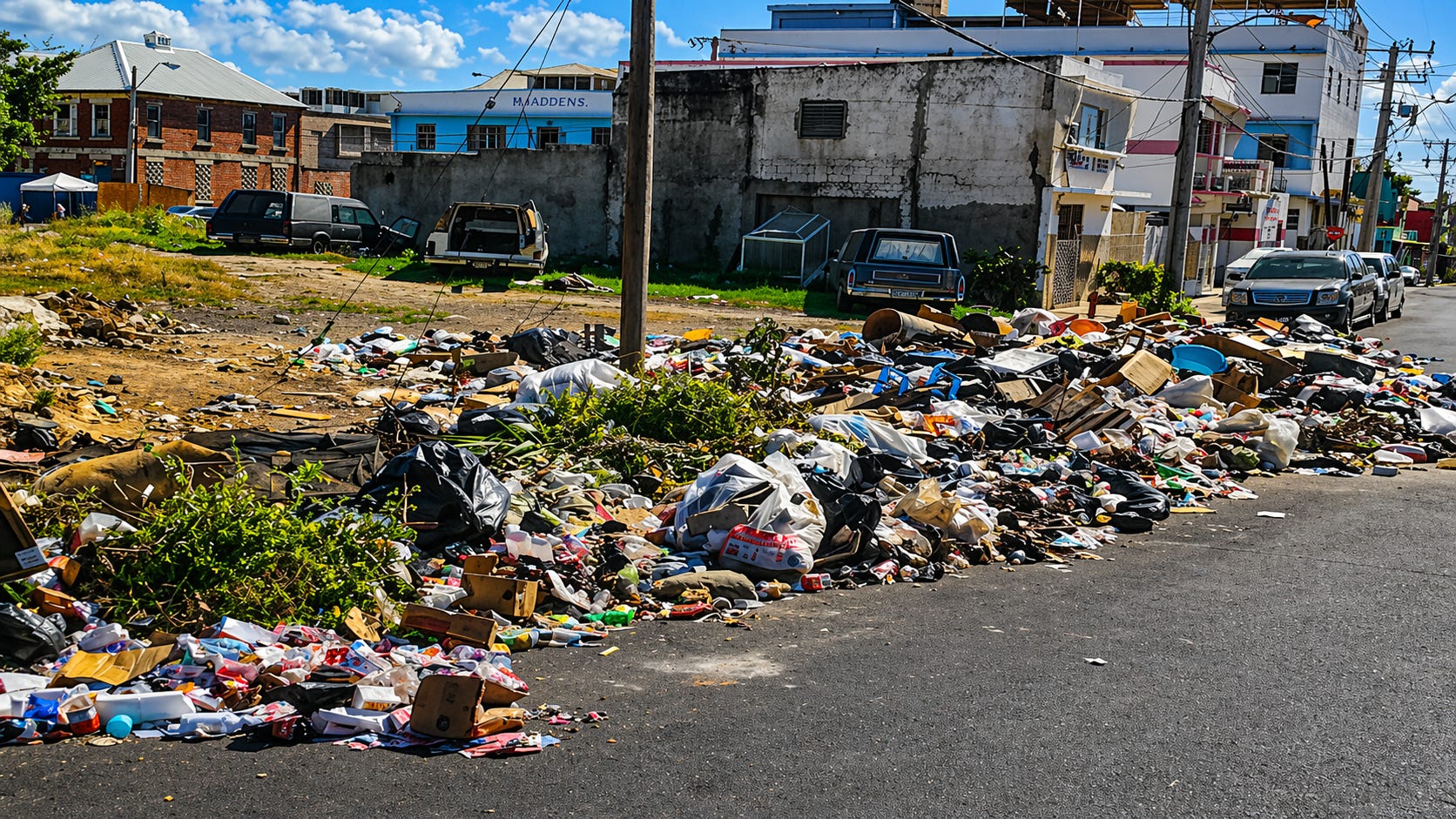
Prime Minister Andrew Holness warns that widespread littering reflects a deeper national issue in how Jamaicans treat their environment
Poor waste disposal is increasingly affecting property values, community appeal, and long-term investment in housing
Irregular garbage collection and reliance on informal disposal methods are contributing to environmental decline
The Government plans stronger enforcement, expanded garbage fleets, and mandatory plastic separation across public bodies
Cultural change, not just infrastructure, is being positioned as the key to solving Jamaica’s waste crisis
Dean Jones says neglecting surroundings is “quietly eroding” the value of homes and communities across the island
Prime Minister Andrew Holness has issued one of his most direct warnings yet on the state of Jamaica’s environment, calling for a national shift in how citizens dispose of waste and care for the spaces they inhabit. His message, delivered in West Central St. Andrew this week, was not framed as a matter of infrastructure alone, but as something deeper, more structural, and more uncomfortable. It is, he suggested, a question of standards.
“There’s scarcely a road that you can drive on in Jamaica that you don’t see littered along the way,” he said, pointing to what has become a visible and normalised condition across the island. But beneath that observation sits a more consequential reality. Waste is no longer just an environmental issue. It is increasingly a housing issue, a community issue, and ultimately, an economic one.
Across Jamaica, from urban corridors to coastal settlements, the relationship between how people live and how they dispose of waste is beginning to shape the value of the very homes they occupy. Streets lined with uncollected garbage, gullies clogged with plastic, and informal dumping in bushes and vacant lots are not just unsightly. They alter perception, discourage investment, and quietly erode property values over time.
The Prime Minister’s intervention reflects a growing recognition that the problem cannot be solved by trucks and schedules alone. While the Government has committed to expanding the fleet of garbage collection vehicles and strengthening the regulatory role of the National Solid Waste Management Authority, there is an implicit acknowledgment that the system, even when functioning, is being undermined by behaviour.
This is where the issue becomes more complex, and more revealing. In many communities, waste collection is inconsistent, often dependent on private arrangements or irregular schedules. Residents adapt. They create routines based on uncertainty. And in that gap between expectation and delivery, informal practices take root. Disposal in nearby bushes. Waste pushed over cliffs. Bottles and plastics discarded into waterways. These are not abstract concerns. They are daily realities observed across the island.
Yet adaptation does not equate to justification. The cumulative effect is a slow degradation of the environment that directly surrounds homes, families, and communities.
“Waste is not just what we throw away,” said Dean Jones, founder of Jamaica Homes. “It becomes the environment we live in, and over time, it becomes the story people tell about a community. That story affects whether people want to invest, whether they want to stay, and ultimately, what those homes are worth.”
In real estate terms, the consequences are both immediate and long-term. A community struggling with visible waste issues is less attractive to buyers and tenants. Infrastructure strain increases. Drainage systems fail more easily during heavy rainfall, contributing to flooding that can damage property. Insurance risks rise. Maintenance costs follow. What begins as a behavioural issue ends as a financial one.
The Government’s proposed measures, including mandatory plastic separation across public institutions and expanded recycling initiatives, signal an attempt to move beyond reactive cleanup toward systemic change. There is also an increased emphasis on enforcement, with the National Solid Waste Management Authority expected to take on a stronger regulatory posture. But enforcement, while necessary, addresses only part of the equation.
The Prime Minister’s more pointed question may prove harder to answer. Have Jamaicans become desensitised to the conditions around them? Have lower standards become acceptable simply because they are widespread?
“That is not the Jamaica I know,” he said, framing the issue not just as policy failure but as a departure from national identity.
For a country where home ownership remains a central aspiration, this framing matters. The idea of “home” extends beyond the structure itself. It includes the street, the drainage, the nearby gully, the shared spaces that define daily life. When those spaces deteriorate, the value of the home, both financially and socially, diminishes with them.
“There is a direct line between how we treat our surroundings and how our homes perform as assets,” Jones added. “You can build a beautiful house, but if the environment around it is neglected, you are quietly losing value. It is as simple, and as serious, as that.”
There is also a generational dimension to the problem. Public education campaigns, particularly those targeting younger Jamaicans, are being positioned as a long-term solution. The aim is to embed different habits early, to normalise recycling, and to create a culture where proper disposal is not seen as optional or dependent on circumstance.
But cultural shifts are slow, and they require consistency. They also require visible alignment between public messaging and service delivery. Where collection is unreliable, trust erodes. Where enforcement is selective, compliance weakens. The system, in other words, must meet citizens halfway.
Still, the broader direction is becoming clearer. Waste management in Jamaica is no longer a peripheral issue. It sits at the intersection of public health, environmental sustainability, and economic stability. And increasingly, it is tied to how communities are valued, both by those who live in them and those who might choose to invest.
“This is not about perfection,” Jones said. “It is about a baseline standard for how we live. If we raise that standard, everything else follows. If we don’t, we will continue to see the same patterns repeated, and the same opportunities lost.”
The Prime Minister’s call for a behavioural shift may, at first glance, seem familiar. Governments often appeal to personal responsibility. But in this instance, the stakes are more tangible. The condition of Jamaica’s environment is being written, quite literally, into the value of its homes.
And that is a reality that cannot be ignored.