


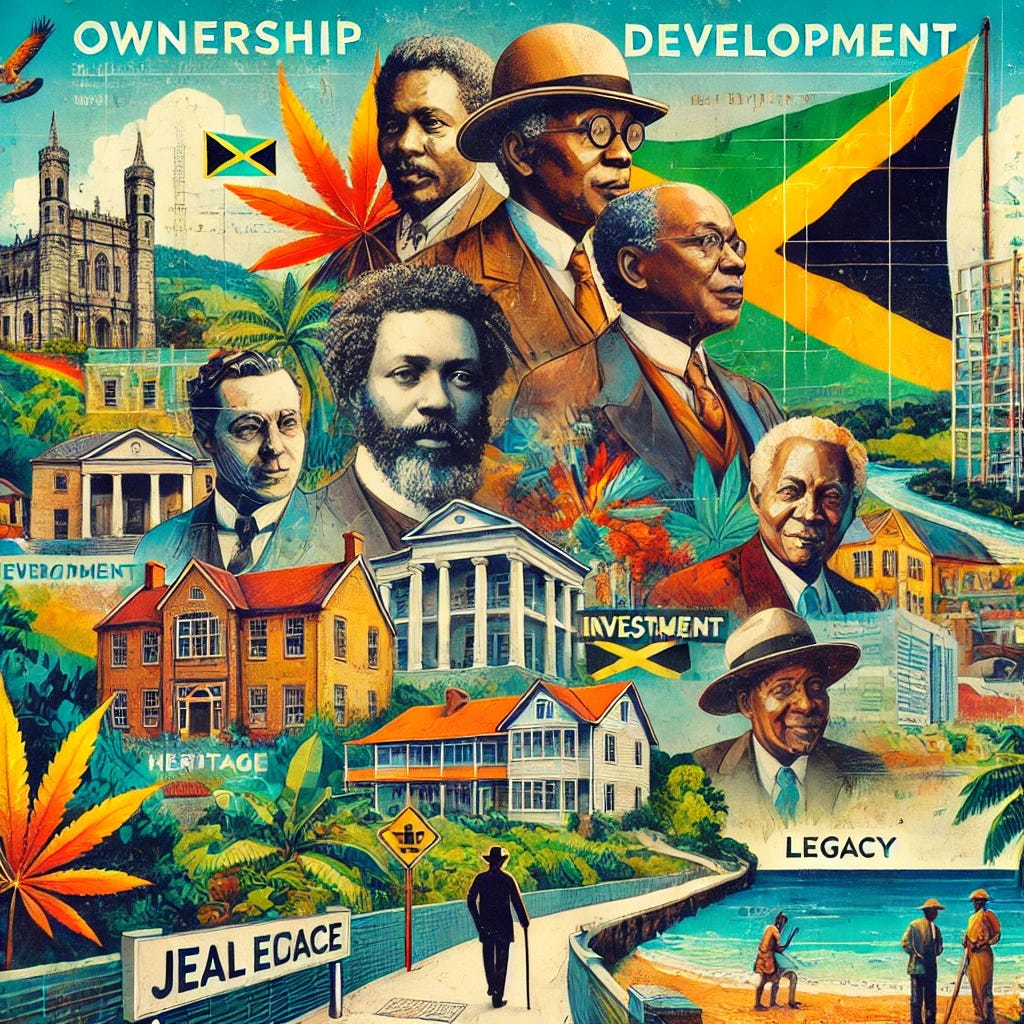
With the recent commemoration of Emancipation in Jamaica, one cannot help but reflect on what land truly meant for the newly freed in 1838. Four years after slavery had been declared abolished and the Apprenticeship period ended, ownership of land became the first great aspiration. It was not simply soil to till, but dignity, permanence, and the promise of independence. Now, more than 150 years later, so much has changed—yet so much remains the same.
This, then, is not just the history of ownership. It is the story of how Jamaicans have fought, built, and legislated their way into a modern land system that still bears the scars of its past.
Cusp of Emancipation (1830–1837)
On the brink of freedom, men like Baptist minister James Phillippo and his fellow missionaries William Knibb and Thomas Burchell set their minds not only on emancipation but on permanence. They understood that freedom without a home was only partial freedom. And so, in anticipation, they purchased tracts of land—Sligoville in 1835 being the very first Free Village. Here, the newly emancipated could live without fear of eviction, build modest homes, plant food, and establish trades. It was a small seed, but one that germinated across the island in the years that followed.
Full Freedom (1838)
When freedom finally came in 1838, the euphoria was tempered by the reality of access. Crown lands—those held by the British monarch—were largely mountainous and unfit for settlement. “Back lands” on abandoned estates were left idle, while fertile estates remained firmly in the hands of the planter class. Freedmen could rent, yes—but rents were high, and security of tenure was poor. Yet still, they carved out spaces, often in defiance of landlords, driven by the conviction that the land was the foundation of their newfound liberty.
Struggles with Land “Ownership” (1838–1865)
What followed were decades of frustration. Laws were passed to protect landowners against squatting; toll gates and heavy taxes burdened those who tried to bring produce to market. For freedmen, it was as if liberty had been granted with one hand and constrained with the other.
By 1865, the grievances boiled over. Led by Baptist preacher Paul Bogle, peasants petitioned Queen Victoria, pleading for access to land and relief from oppressive tolls. Their voices went largely unheard. The Morant Bay Rebellion erupted, searing the island’s consciousness and reshaping its political destiny.
Crown Colony and Monumental Changes (1865–1889)
In the rebellion’s aftermath, Jamaica became a Crown Colony. The local Assembly was dissolved, and sweeping legal reforms began to codify land dealings.
Three changes stand tall from this era:
The Aliens Law Amendment Act (1871), which permitted foreigners to own land.
The Married Women’s Property Rights Law (1886), granting married women the right to hold and transfer land independently.
And, most significantly, the Registration of Titles Act (1889), which introduced the Torrens system—a revolutionary approach that replaced complex chains of deeds with a simple, state-guaranteed certificate of title.
It was this last change that provided certainty, efficiency, and a framework still used to this day. Ownership, once contested in shadowy corners of history, could now be validated by the weight of the law and the seal of the state.
The Torrens System and Modern Jamaica
Under the Torrens system, land is no longer defined by the fragile memory of deeds but by an official certificate of title. As the Privy Council put it in the 1891 case of Gibbs v Messer, the purpose is to save every honest purchaser from the burden of digging through a murky past. One buys from a registered owner, and that certificate is final, indefeasible, and secure.
Yet, despite its brilliance, the system has not embraced the entire island. To this day, around 40 percent of Jamaica’s lands remain unregistered. Titles exist in pockets; in others, generations have passed down land informally, without the protection or clarity that registration provides.
Where We Stand Today
Jamaica’s story of ownership is therefore unfinished. On one hand, we have a system of registered land, grounded in law, designed for certainty. On the other, there are unregistered lands, where ownership is recognised in practice but not secured in title.
This duality—formal and informal, registered and unregistered—shapes the modern Jamaican landscape. And yet, programmes such as those under the Land Administration and Management Division are bringing hope. They extend the promise that every farmer, every family, every person who calls a piece of land their own, can one day have a certificate to prove it.
Closing Reflections
From Sligoville to Spanish Town, from Morant Bay to Kingston, this story has always been about more than just acreage or boundaries. Land in Jamaica has carried the weight of freedom, rebellion, law, and aspiration. It has sparked conflict, inspired legislation, and shaped communities.
And while the journey from emancipation to registration is far from complete, one truth remains constant: land is not merely property. It is the canvas upon which Jamaicans have painted their freedom, their families, and their future.
Disclaimer:
This article is intended for informational and educational purposes only. It provides a general overview of the history of land ownership and development in Jamaica and does not constitute legal advice. Readers are encouraged to seek professional guidance for matters relating to property law, land titling, or real estate transactions.