

Mammee River: Jamaica’s New Coastal Sanctuary — A Vision Rising from the Roaring River

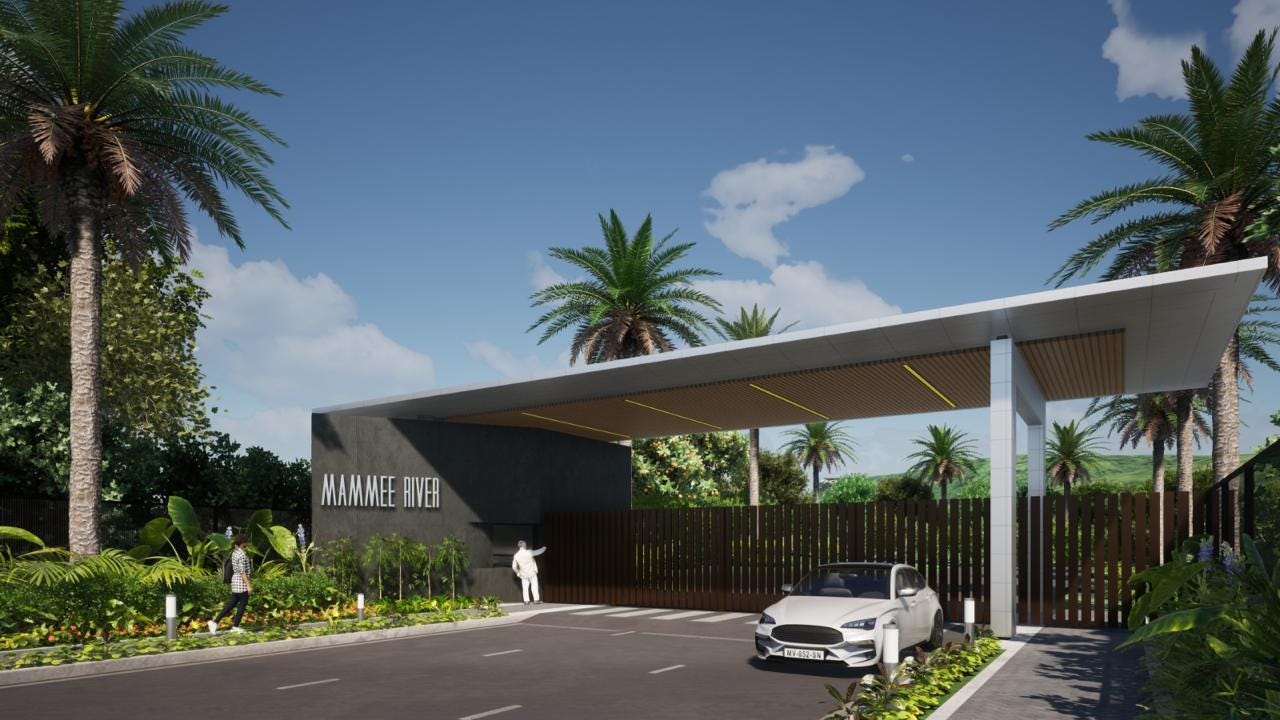
There’s a stretch along Jamaica’s North Coast where the sea light softens, and the hills seem to lean closer to the water. Just beyond the Mammee Bay interchange, a new landscape is unfolding — one that’s set to redefine modern living in St Ann.
The Mammee River Development, conceived by China Harbour Engineering Company Ltd. (CHEC), is one of the most ambitious residential projects ever planned for Jamaica’s North Coast. It’s not just a housing scheme; it’s a complete community — one designed around the principles of space, light, and belonging.
A Landscape in Transition
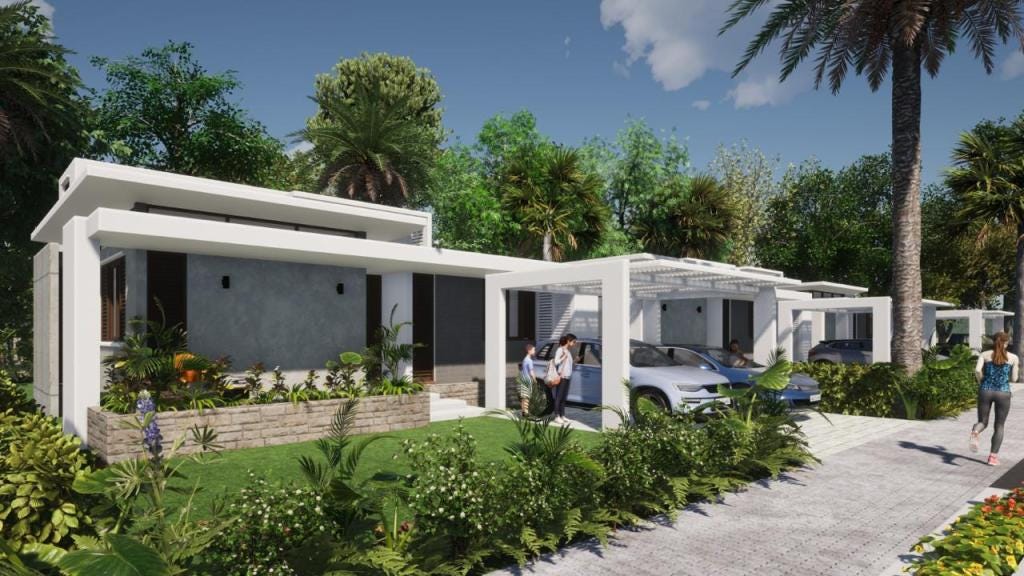
Set on roughly 740 acres of gently undulating terrain between Mammee Bay and the Roaring River, the development is part of CHEC’s broader vision to invest beyond infrastructure and into Jamaica’s residential landscape.
The Mammee River Masterplan calls for over 800 homes — a mix of apartments, townhouses, and detached bungalows — arranged across six phases. Each phase will introduce new residential clusters, green parks, and community facilities, eventually forming an integrated township.
But what makes this project remarkable isn’t its scale alone. It’s the landscape balance: more than 40 per cent of the site will remain dedicated to open space, green reserves, and landscaped corridors. That’s a bold statement in a region where coastline land is increasingly pressured by density.
From above, the masterplan resembles a leaf unfurling — the roads tracing its veins, and the green spaces filling its body. It’s a fitting metaphor for a project built on renewal: of land, lifestyle, and design standards in Jamaican housing.
The Masterplan: A City in a Garden
CHEC’s planning team has re-imagined the “city in a garden” concept for the tropics. The 740 acres are organised into distinct yet connected zones:
Residential: low-density detached homes, mid-rise apartments, and townhouses that step with the natural topography.
Commercial: select parcels at the site’s northern edge, offering convenience retail, cafés, and essential services.
Green Reserves: long swathes of open space with parks, walking trails, and natural buffers around the river and hillside.
Infrastructure: including a sewage treatment facility and modern utilities, designed to support thousands of future residents.
It’s a plan that prioritises the human experience — not simply access or density. Streets curve naturally, parks interrupt monotony, and homes are set to frame the Caribbean light rather than block it. The community is designed for walking, for neighbourhood life, and for that uniquely Jamaican rhythm of sociability.
Design Philosophy: Contemporary Caribbean Living
Inside the model homes, the design language feels at once modern and grounded.
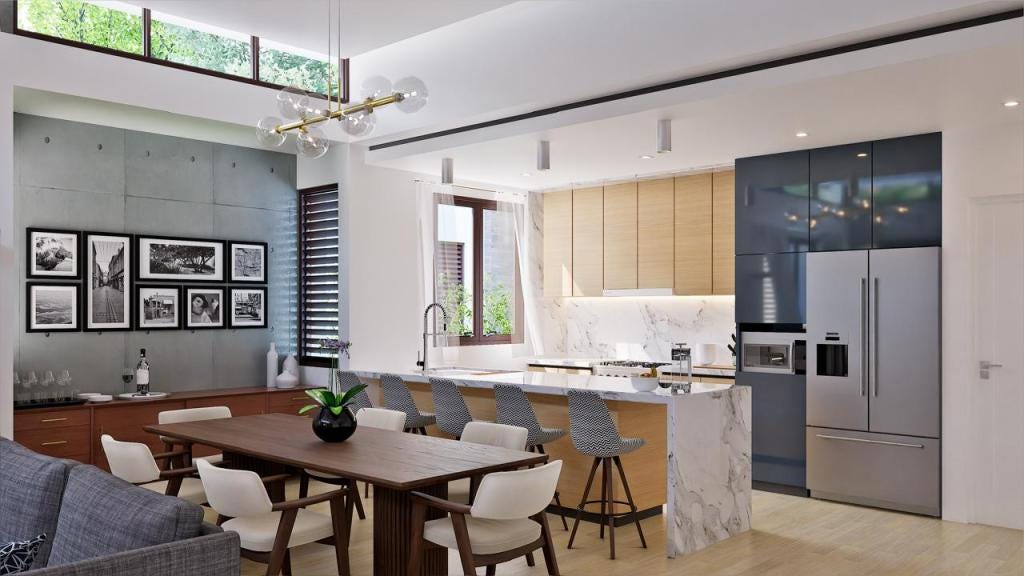
The interiors are spacious and fluid, where the living, dining, and kitchen areas merge under high ceilings and generous windows. Natural light filters through clerestory panes, creating a luminous calm throughout the space.
Finishes are simple but elegant — warm timber tones, soft-neutral walls, and textured tiles that stay cool underfoot. Every detail reflects a conversation between minimalism and comfort: ceiling fans are sculptural, furniture understated, and greenery integrated as part of the décor rather than an afterthought.
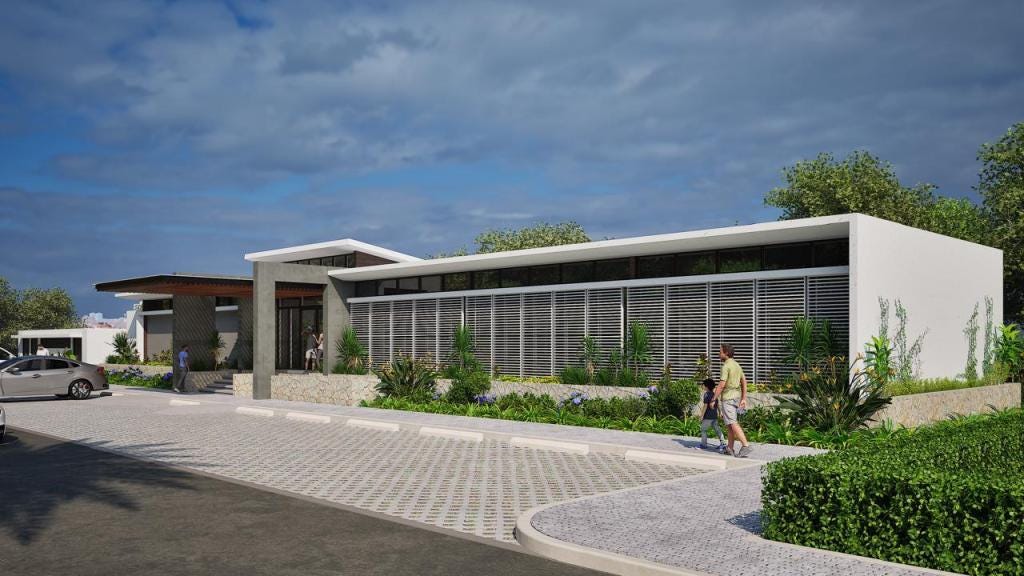
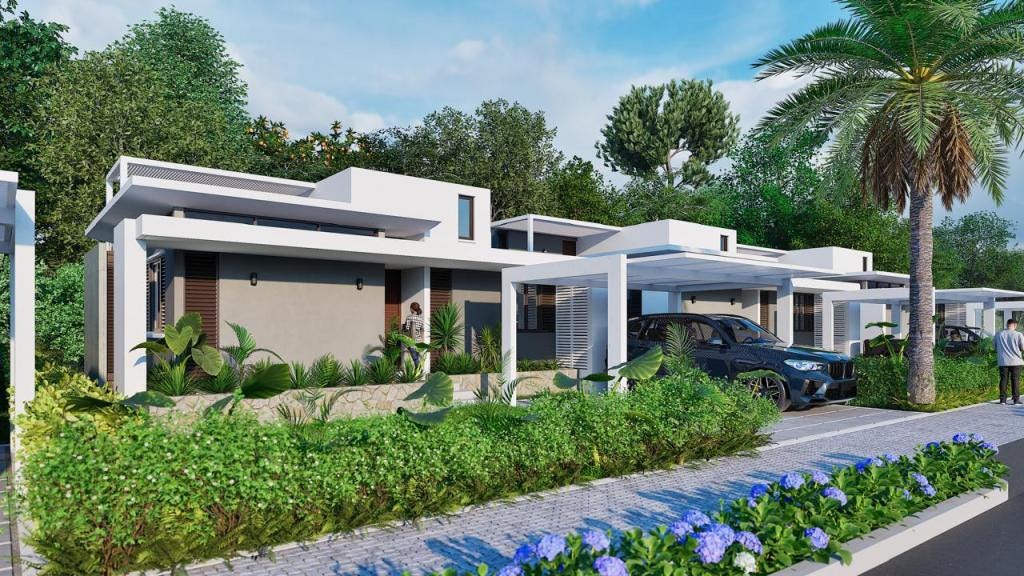
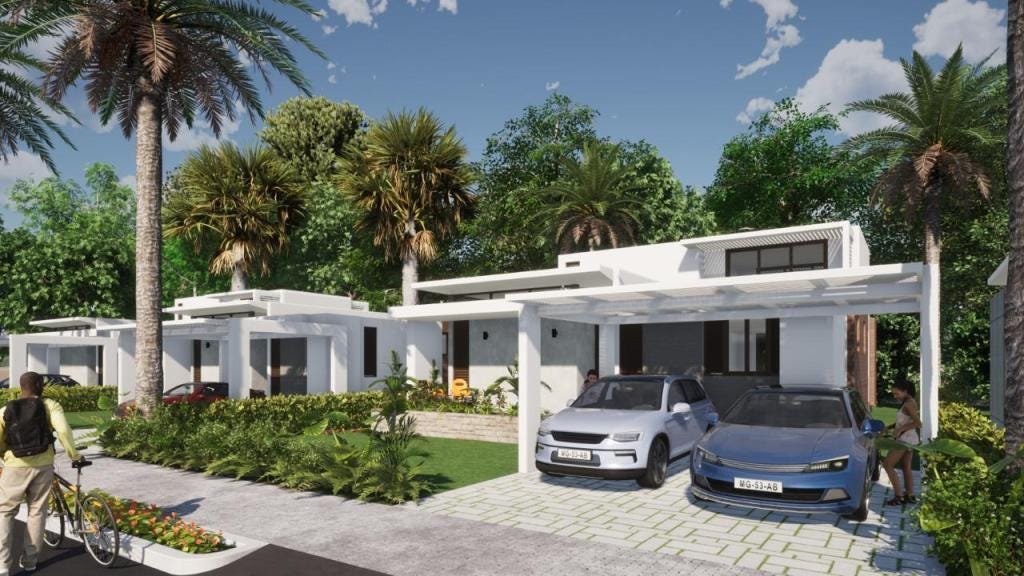
The architecture borrows cues from both Caribbean modernism and contemporary resort design — wide overhangs for shade, cross-ventilation for airflow, and materials that harmonise with the climate. It’s not about grandeur; it’s about grace.
A Vision of Homes and Horizons
The detached bungalows, townhouses, and apartments within Mammee River each play a distinct role in shaping the community’s texture.
The bungalows bring a sense of serenity — single-storey homes with wide verandas, open-concept interiors, and an emphasis on natural light. They’re designed for those seeking privacy and simplicity within a secure, landscaped environment.
The townhouses offer a contemporary alternative for growing families — compact yet spacious, with terraces and garden spaces that encourage outdoor living.
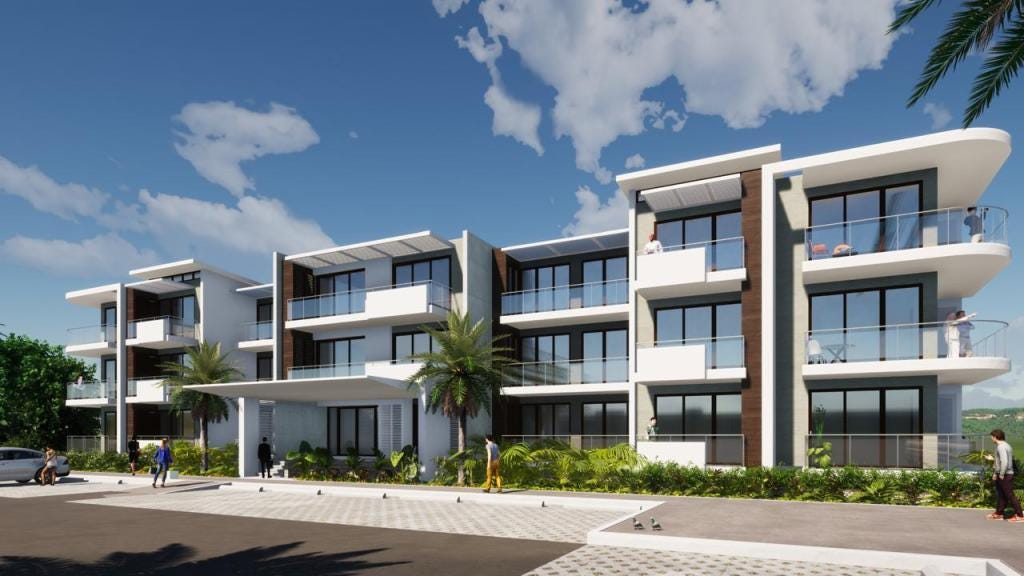
Meanwhile, the apartment clusters anchor the development’s social life. Each block of 47 units sits around landscaped courtyards, creating shared spaces where residents can meet, relax, or work remotely. The architecture uses clean lines, subtle shading screens, and a restrained palette to balance privacy with community.
Together, these housing types form a tapestry of lifestyles — from young professionals and returning residents to families and retirees.
A Dialogue Between Architecture and Nature
In the tropics, design is inseparable from climate. Mammee River’s architecture acknowledges this by choreographing light, air, and material in precise balance.
Large windows are positioned for cross-breezes, not just views. Deep eaves and roof overhangs filter the intense Jamaican sun, while pale surfaces reflect heat. The result is homes that breathe — naturally cooled, bright, and energy-efficient.
Inside, the interplay of texture is subtle: cool ceramic tiles meet warm wooden accents; crisp white walls meet indoor greenery. The design invites the outdoors in, echoing the rhythm of life on the island — doors open, verandas active, mornings bright.
Even the orientation of buildings responds to the landscape’s slope and prevailing winds. It’s architecture not imposed upon the land, but composed with it.
Amenities: Life in Motion
Beyond the homes, the heart of Mammee River lies in its amenities.
A clubhouse forms the social centre — a space for gatherings, celebrations, or quiet reflection by the pool. There’s a gym, jogging trails, and landscaped parks designed for both recreation and rest.
For families, these elements turn a housing development into a living community. The green networks ensure that residents can walk, exercise, and connect without ever leaving the neighbourhood.
In time, cafés, shops, and small offices in the commercial zones will complete the picture, allowing daily life to unfold locally rather than through long commutes.
Sustainability and Environmental Care
Building in the Roaring River watershed comes with both opportunity and responsibility.
CHEC’s Environmental Impact Assessment (EIA), prepared by Environmental Solutions Limited, acknowledges the site’s sensitivity and outlines mitigation strategies: preserving riparian buffers, managing storm-water naturally, and maintaining vegetation corridors for wildlife.
Open spaces are not ornamental; they serve as green infrastructure — cooling the microclimate, reducing runoff, and restoring biodiversity where possible.
The inclusion of an on-site sewage treatment facility further signals a move toward self-sufficiency and environmental compliance. For a development of this magnitude, such foresight is essential to ensure resilience against both ecological and infrastructural strain.
In the long view, how the project handles its environmental obligations may well determine its legacy — not just as a residential success, but as a model for responsible Caribbean urbanism.
Cultural and Historical Context
The land surrounding Mammee Bay is storied. The area is known for its proximity to historic estates, Taino archaeological zones, and natural landmarks that predate modern settlement.
Within this context, the Mammee River project exists not as an isolated gesture, but as part of Jamaica’s continuing dialogue between history and progress.
Development here must therefore be both respectful and forward-looking — acknowledging heritage sites and community memory while meeting the needs of a growing population.
In many ways, Mammee River stands at that intersection: where the colonial past gives way to a new, locally-driven vision of home ownership and community building.
Infrastructure and Connectivity
Accessibility has always been one of Mammee Bay’s strongest cards. The North–South Highway cuts travel time dramatically, placing Kingston, Ocho Rios, and Montego Bay within easy reach.
This level of connectivity transforms the meaning of coastal living — making St Ann not merely a destination, but a viable base for full-time life and work.
The development’s planned utilities — from broadband and electricity to water and wastewater systems — are being designed for reliability and future expansion. In a country where infrastructure often lags behind growth, the foresight here is refreshing.
Good design begins with logistics, and Mammee River’s backbone of roads, drainage, and public utilities demonstrates that attention to function precedes form.
A Vision Still Unfolding
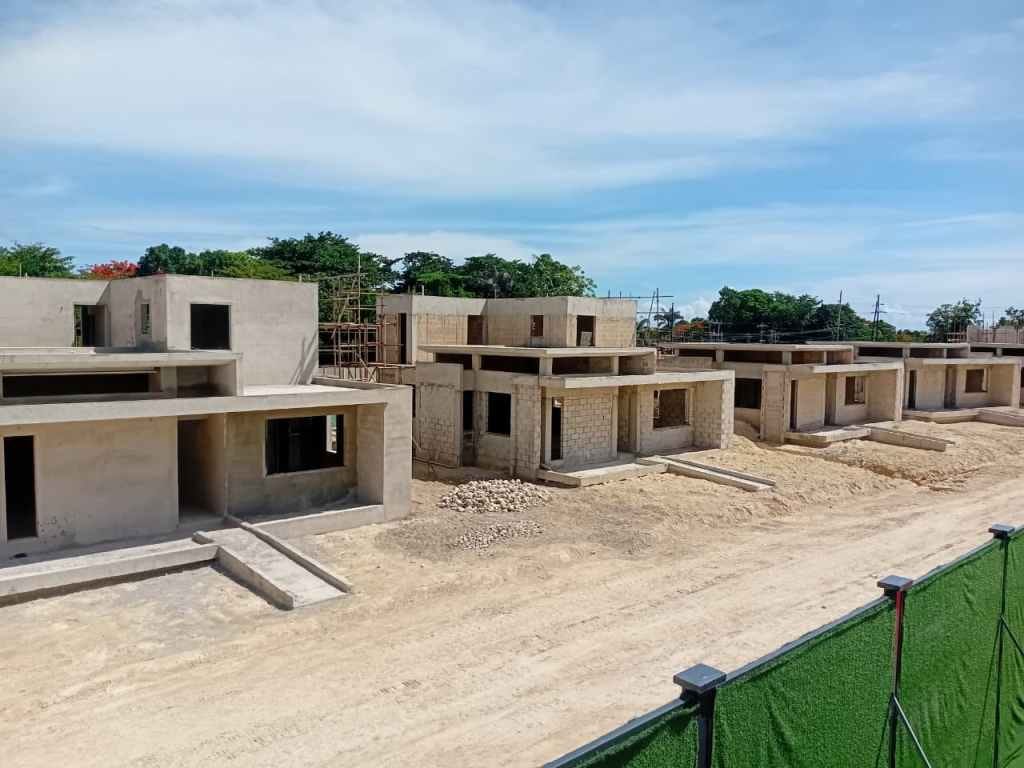
At this stage, Mammee River is both concept and construction — a series of evolving forms, test houses, and emerging streetscapes.
The energy on site is one of transformation: rows of unfinished concrete homes, their skeletal frames already hinting at light-filled interiors to come. Workers move between scaffolds; trucks hum in the distance; and slowly, a new kind of community is taking shape.
The masterplan’s progression — from the northern clusters to the southern hillside — ensures that each phase builds upon the last, refining the layout as the landscape and market respond.
It’s a process, not a product. And that’s what makes it fascinating: Jamaica is watching, in real time, as one of its most ambitious residential visions comes to life.
A New Era for St Ann’s North Coast
For years, St Ann’s coastline has been defined by resorts — spaces made for visitors. Mammee River signals a quiet shift: toward living, not just vacationing.
It’s a sign of confidence that Jamaicans — both local and diaspora — are investing in the idea of permanence here. Schools, digital infrastructure, and proximity to Ocho Rios make this region ripe for a new chapter of residential growth.
If done thoughtfully, developments like Mammee River could inspire a broader movement: sustainable communities that combine the freedom of the coast with the design sensibility of modern architecture.
It’s about creating homes that reflect the rhythm of Jamaican life — where morning light, evening breezes, and human connection matter more than square footage.
Architecture as Landscape Memory
In the end, the Mammee River Development is as much about memory as it is about modernity.
To walk the site today is to see a place in flux — the red soil exposed, the outlines of future homes etched into the earth. But around the edges, the hills remain green, the river flows steady, and the sea glints in the distance.
If the vision holds true, the final community will not erase what came before. It will interpret it — turning landscape into architecture, and architecture into living memory.
This is Jamaica’s architectural story in motion: a balance between ambition and authenticity, between nature and nurture.
And perhaps, years from now, when the homes are filled and the parks alive with laughter, Mammee River will stand as proof that modern Caribbean design can be both visionary and rooted in place.
Disclaimer: Jamaica Homes is an independent real-estate information platform and is not affiliated with China Harbour Engineering Company Ltd. (CHEC) or any of its subsidiaries. This article is for informational and editorial purposes only. Jamaica Homes does not sell, manage, or promote properties within the Mammee River or Mammee Bay Roaring River development and holds no commercial or contractual relationship with the developer or its agents. All details are drawn from publicly available information and may be subject to change by the relevant authorities or project owners.