


Parish: Westmoreland
Manning’s School, one of Jamaica’s oldest educational institutions, has a rich history that reflects the early philanthropic efforts and colonial influences in the development of education in the island. The school’s origins date back to 1711, when Thomas Manning, a Westmoreland planter, bequeathed land for the establishment of a free school to serve the children of the parish. This visionary gift set the foundation for an institution that would stand the test of time.
Establishment and Early Years
While Manning’s intention was clear, the formal establishment of the school did not occur until decades later. In 1738, after many years of legal wrangling, the Jamaica Assembly passed an Act (Eleventh George II, Chapter 9), which allowed for the creation of the Manning’s Free School. This legislative action was crucial in turning Manning’s bequest into a reality.
Interestingly, the school was not built on the original land left by Thomas Manning at Burnt Savannah Pen, located in the northern part of George’s Plain. Instead, it was constructed near Savanna-la-Mar, the capital of Westmoreland, where it remains to this day.
Hurricane Damage and Recovery
In 1780, the school suffered significant damage during a powerful hurricane. The disaster prompted the Board of Governors to appeal to the House of Assembly for financial assistance to repair the school. This event highlighted the resilience of the institution and its importance to the local community, as it quickly recovered and continued to serve the educational needs of the parish.
20th Century Transformation
As Jamaica moved into the 20th century, Manning’s School underwent a significant transformation. The school was reorganized into a Modern Grammar School, offering a broader and more structured curriculum that aligned with the evolving educational standards of the time. This shift marked the beginning of a new chapter in the school’s history, as it sought to meet the growing demand for quality education in Westmoreland.
Thomas Manning Building
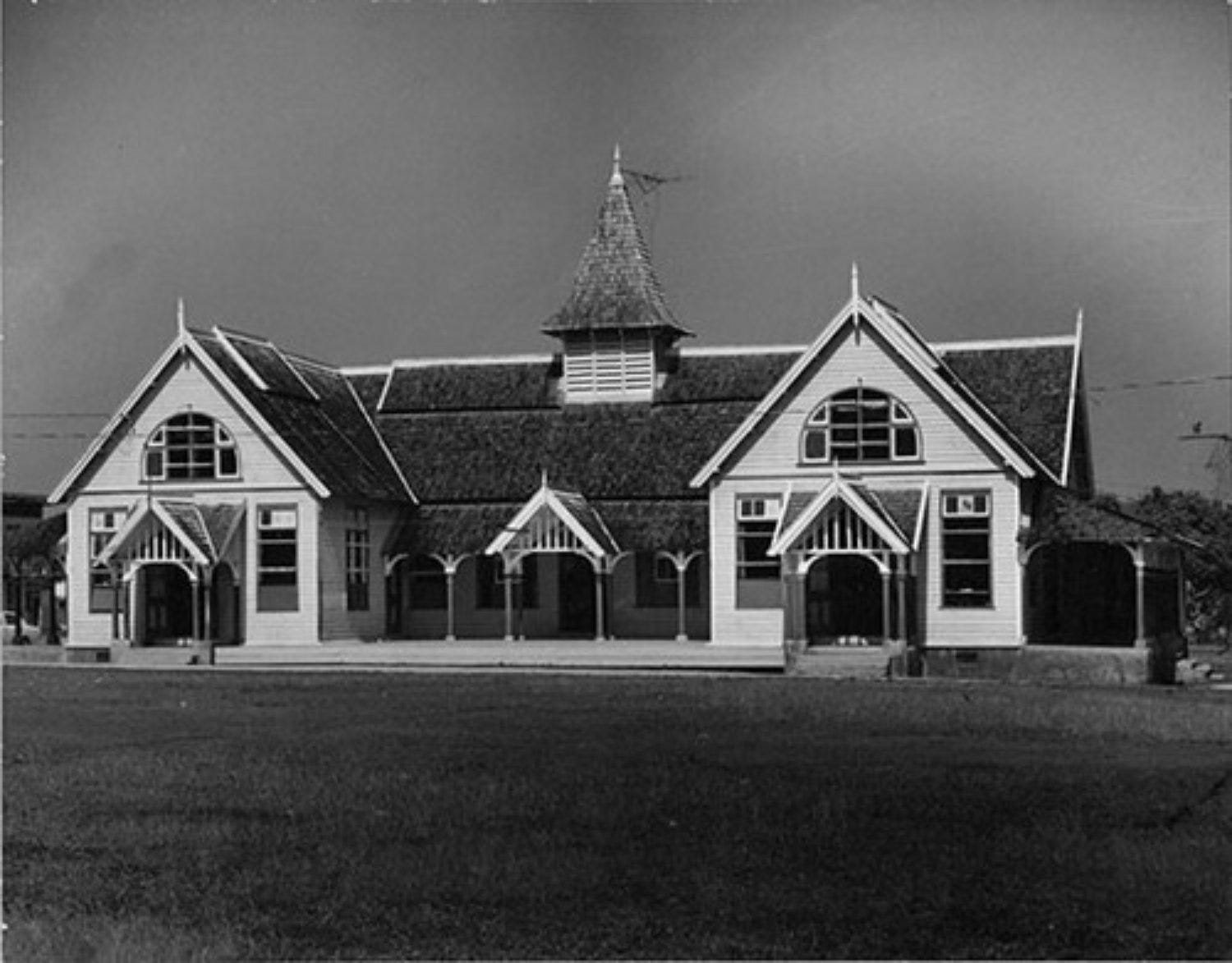
One of the most important landmarks of the school is the Thomas Manning Building, named in honor of the school’s founder. This building, constructed in the early 20th century, remains the oldest and most prominent structure on the school grounds. It serves as a library and classrooms today, continuing to support the academic mission of the school.
The Thomas Manning Building is a striking example of Georgian architecture. The building’s design is perfectly symmetrical, a hallmark of the Georgian style. However, given the tropical climate of Jamaica, the building was thoughtfully designed to maximize comfort and functionality. Deep verandas surround the structure, offering ample shade and coolness, while the vented steep gable roof helps to expel hot air, ensuring proper ventilation. A cupola with fixed jalousies (louvered windows) further aids in air circulation, preventing the buildup of warm air in the roof space.
This blend of traditional Georgian style with practical features designed for tropical living makes the Thomas Manning Building a perfect example of colonial architecture. It stands as a testament to both the vision of Thomas Manning and the adaptability of architecture to meet the needs of its environment.
Legacy and Ongoing Impact
Over its centuries-long history, Manning’s School has established itself as a cornerstone of education in Westmoreland. From its humble beginnings as a free school in the 18th century to its modern-day status as a grammar school, Manning’s has played a crucial role in shaping the educational landscape of Jamaica. The Thomas Manning Building, with its rich historical significance and architectural beauty, remains an enduring symbol of the school’s legacy and its continued commitment to excellence in education.