


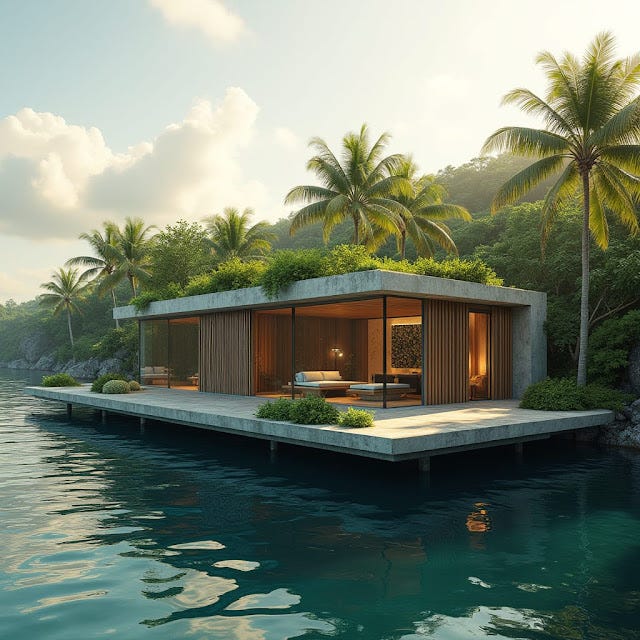
Modern architecture in Jamaica is not merely a style. It is a response.
At its simplest, modern architecture refers to a design approach that prioritises function, clean lines, and the honest use of materials over ornament. In Jamaica, that definition takes on a distinct character shaped by climate, history, and the island’s ongoing dialogue between tradition and change.
The roots of Jamaican modernism can be traced to the mid twentieth century, when independence was on the horizon and a new national identity was being imagined. Architects began to move away from colonial forms, seeking buildings that reflected both local conditions and a forward looking confidence. Concrete replaced timber in many cases, flat planes replaced decorative excess, and structures opened themselves to light, breeze, and landscape.
What emerged was not a copy of European modernism, but an adaptation. Deep overhangs shield interiors from the sun. Louvered windows allow constant airflow, reducing reliance on mechanical cooling. Verandahs and shaded outdoor spaces blur the boundary between inside and out, acknowledging that in Jamaica, living does not stop at the wall.
Today, modern architecture on the island continues to evolve. Glass, steel, and reinforced concrete dominate new developments, particularly in urban centres such as Kingston. Hillside homes step carefully into the terrain, often designed to capture views while respecting drainage and slope. In more rural settings, contemporary homes sit alongside traditional structures, creating a visual conversation between past and present.
Sustainability has become a defining layer of this modern expression. Solar panels, rainwater harvesting systems, and passive cooling strategies are no longer optional features but practical necessities in a region exposed to heat, storms, and rising energy costs. Modern architecture in Jamaica is increasingly about resilience as much as aesthetics.
Yet there is a tension beneath the surface. For some, modern homes represent progress, aspiration, and global connection. For others, they risk eroding the architectural language that once defined Jamaican communities, from wooden board houses to Georgian influenced town layouts. The question is not whether modern architecture belongs, but how it belongs.
In the end, modern architecture in Jamaica is less about sharp edges and minimalist ideals, and more about adaptation. It is the act of designing for a place that demands openness, durability, and respect for its environment. A modern Jamaican building is not just built to be seen. It is built to endure, to breathe, and to live with the island rather than against it.