

Britain’s Housing Crisis Is Accelerating the Push Toward Modular Construction
As governments and developers struggle with rising costs and housing shortages in 2015, volumetric construction systems like MoVoCoSy are gaining serious attention

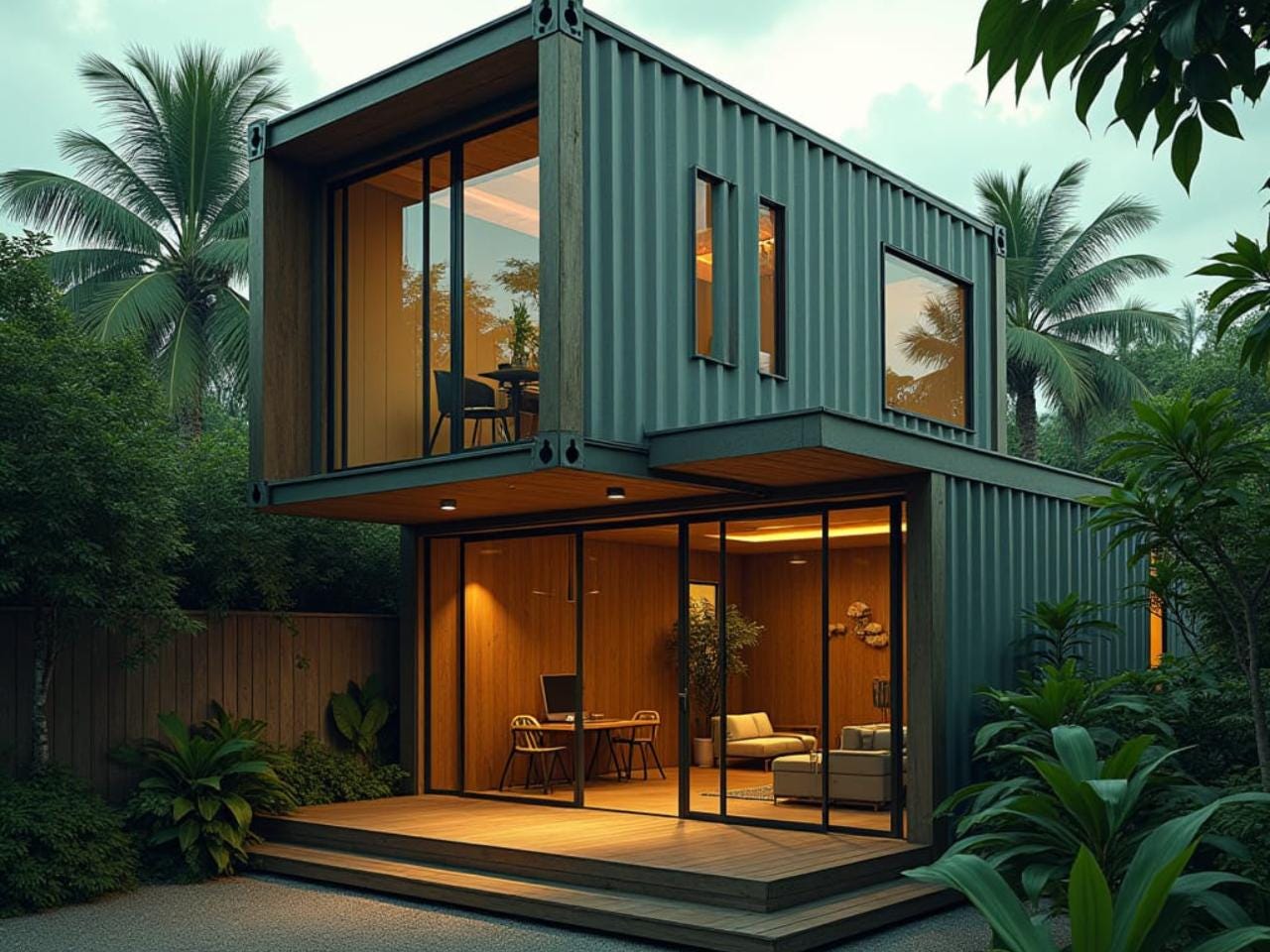
The global construction industry is entering a period of profound change.
Across Europe and parts of North America, housing shortages, rising labour costs, land pressures, and tightening development budgets are forcing governments, engineers, and developers to rethink how homes are designed and built. Traditional construction methods, long dependent on labour intensive site work and slow delivery timelines, are increasingly being questioned in an era demanding faster, cheaper, and more sustainable housing solutions.
At the centre of that conversation is a growing interest in modular and volumetric construction systems.
One of the more ambitious examples emerging in 2015 is the MoVoCoSy system developed by the global engineering firm Arup, which seeks to radically rethink how medium rise housing developments can be manufactured, assembled, and delivered.
The proposal reflects a wider movement that many within the construction industry believe could transform housing delivery over the next generation.
The Traditional Building Model Is Under Pressure
For decades, housing construction across much of the world has relied on relatively similar methods: labour intensive site based building, sequential trade work, and lengthy project delivery periods vulnerable to weather delays, labour shortages, and material waste.
But in 2015, that model is facing increasing strain.
In the United Kingdom, growing housing demand and political pressure to increase supply have intensified discussions around modern methods of construction. Developers are under pressure to build faster while maintaining quality and reducing costs. At the same time, skilled labour shortages continue affecting sections of the industry.
The challenge is particularly acute in London and other high demand urban centres where affordability has become a national political issue.
Increasingly, the construction industry is looking toward factory based manufacturing systems as a possible answer.
What Makes MoVoCoSy Different
The MoVoCoSy system, short for Modular Volumetric Construction System, approaches housing more like industrial production than traditional construction.
Rather than building large portions of a development entirely on site, the system relies on reinforced concrete modules manufactured in controlled factory conditions before being transported and assembled into completed buildings.
The approach offers several potential advantages.
Factory production reduces weather related delays and allows tighter quality control. Prefabrication can significantly reduce material waste while accelerating project timelines. Concrete modules also offer strong acoustic, thermal, and structural performance, particularly important in dense urban environments.
The system is designed for buildings ranging between three and twelve storeys, with layouts capable of accommodating one, two, and three bedroom apartments.
Perhaps most strikingly, the design attempts to rethink internal spatial efficiency itself.
Modules project outward from a central circulation spine at slight angles, reducing unnecessary corridor space while maximising natural light, privacy, and views from living areas and balconies.
A Wider Revolution Is Quietly Taking Shape
Projects like MoVoCoSy represent something much larger than a single architectural experiment.
They reflect a broader industrial shift where architects, engineers, material scientists, and manufacturers are increasingly collaborating to redesign housing from the ground up.
Traditional craftsmanship still matters enormously within construction. Yet many conventional building techniques are now being supplemented or replaced by engineered systems, precision manufacturing, advanced structural modelling, and new composite materials.
Fire performance, wind loading, structural movement, energy efficiency, acoustic separation, and assembly tolerances are now analysed with levels of technical precision that would have been difficult only decades ago.
The modern construction site increasingly begins inside the factory.
Why This Matters Beyond Britain
Although much of the current discussion around modular housing is centred in Europe and parts of Asia, the implications may eventually become significant for small island nations including Jamaica.
Jamaica continues facing housing demand pressures, infrastructure challenges, rising construction costs, and urban density concerns, particularly around Kingston and expanding suburban communities.
Factory based modular systems could potentially offer advantages in reducing build times, minimising material waste, and accelerating housing delivery in areas facing labour or infrastructure constraints.
They may also become increasingly relevant in disaster recovery scenarios across hurricane prone regions where speed and resilience matter enormously.
At the same time, questions remain about transportation logistics, local manufacturing capacity, financing structures, cultural acceptance, and long term maintenance.
The Future of Housing May Be Manufactured
Not everyone within the construction industry is convinced that modular systems represent a complete solution to global housing pressures.
Critics argue that prefabrication can risk uniformity, limit architectural flexibility, or create dependency on industrial manufacturing systems that may not suit every market.
Yet even sceptics increasingly acknowledge that the pressure to deliver housing faster and more affordably is unlikely to disappear.
That pressure is pushing the industry toward experimentation.
In many ways, systems like MoVoCoSy are less about replacing architecture than about redesigning the process of construction itself.
And as cities continue growing and housing shortages intensify, the question may no longer be whether modular construction becomes more common.
It may simply be how quickly the industry adapts to a future where homes are increasingly manufactured as much as they are built.
Editor’s Note: This article was updated in May 2026 to provide additional historical context, editorial clarity, and relevance for modern readers. Based on the Jamaica Homes editorial conversion brief.